30 stories · 30 original illustrations · An Incoprea long read
A hand reaches out inside a ship on the ocean floor. A teenager survives a falling aircraft and then has to walk out of the Amazon. A doctor in Antarctica discovers that the only available surgeon is himself. These are the kinds of incidents that can make a film seem implausible—until the records show that something very like them actually happened.
Thirty extraordinary escapes, grounded in rescue footage, museum collections, medical papers and survivor accounts. Where a famous detail is disputed or known chiefly through a memoir, the telling keeps that distinction visible.
The companion collection: 30 Wild Folktales and Legends: Stories Too Strange to Forget.
Watch the illustrated film
16:46 · All 30 stories · Narration and an original Suno score
AI-generated interpretive illustrations and synthetic narration. Watch on YouTube for chapters and captions.
Browse all 30 stories
- Harrison Okene: a living man inside a sunken ship
- Vesna Vulović: the flight attendant who survived the fall
- Nicholas Alkemade: the parachute was already burning
- Juliane Koepcke: first the fall, then the rainforest
- Poon Lim: 133 days on a wooden raft
- Ada Blackjack: the expedition’s seamstress became its sole survivor
- Douglas Mawson: the journey home kept becoming impossible
- Shackleton’s James Caird: a lifeboat aimed at a speck of land
- The Andes survivors: 72 days beyond the search
- Tsutomu Yamaguchi: he escaped Hiroshima and went home to Nagasaki
- Violet Jessop: three sister ships, three disasters
- Phineas Gage: the iron went through his head
- Roy Sullivan: lightning found him seven times
- Ann Hodges: the meteorite arrived during her nap
- Aron Ralston: the canyon would not let go
- Beck Weathers: he walked back into camp after being left for dead
- Mary Vincent: the teenager who made it back to the road
- Maurice and Maralyn Bailey: a whale ended the voyage, but not their lives
- Steven Callahan: a raft became his entire world for 76 days
- Tami Oldham Ashcraft: sailing a wreck toward home
- Joe Simpson: the cut rope was not the end
- Anatoli Bugorski: a particle beam passed through his head
- Apollo 13: the Moon ship became a lifeboat
- USS Squalus: a rescue bell reached the men on the seabed
- The 33 Chilean miners: the mountain finally gave them back
- The Thai cave rescue: finding the boys was only half the problem
- Reshma Begum: a voice beneath 17 days of rubble
- Leonid Rogozov: Antarctica’s doctor became his own patient
- John Paul Stapp: he rode a rocket sled to learn how people survive
- Anna Bågenholm: the ice-cold patient whose heart started again
1. Harrison Okene: a living man inside a sunken ship
Off Nigeria · May 2013
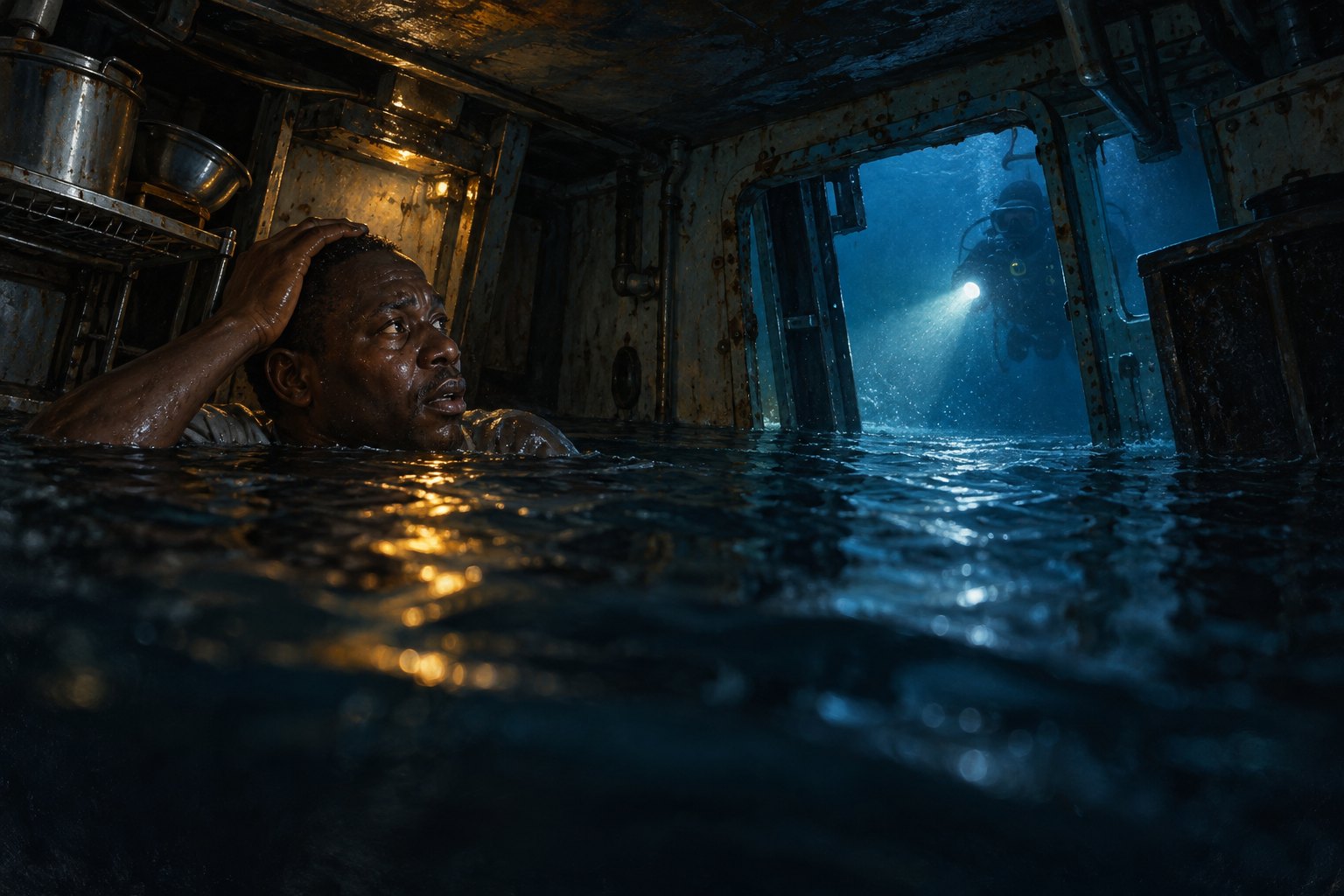
The divers were searching a shipwreck for bodies. Inside the overturned tug Jascon-4, roughly 30 metres below the Atlantic, one of those bodies suddenly reached toward a diver. Harrison Okene, the ship’s cook, was alive. The recording of that encounter is disturbing for a simple reason: the rescuers’ astonishment is real.
The tug had capsized on 26 May 2013. Okene escaped the first rush of water but became trapped inside the inverted vessel. An air pocket remained above him, turning part of the wreck into a temporary, shrinking refuge. He endured darkness, cold and thirst for about 60 hours. He later described stripping away cabin material to get more of his body out of the water. Eleven other people aboard did not survive.
Finding him was only the beginning. He had spent days breathing air under pressure, so rescuers could not simply pull him straight to the surface and send him home. They supplied diving equipment and transferred him into a controlled decompression process. The extraordinary part is therefore two rescues joined together: a man kept himself alive in a place nobody expected to contain life, and a diving team then had to bring that life safely back into the world.
Sources and further reading: Reuters report and interview, via NDTV · ITV: footage of the discovery
2. Vesna Vulović: the flight attendant who survived the fall
Czechoslovakia, now Czechia · January 1972
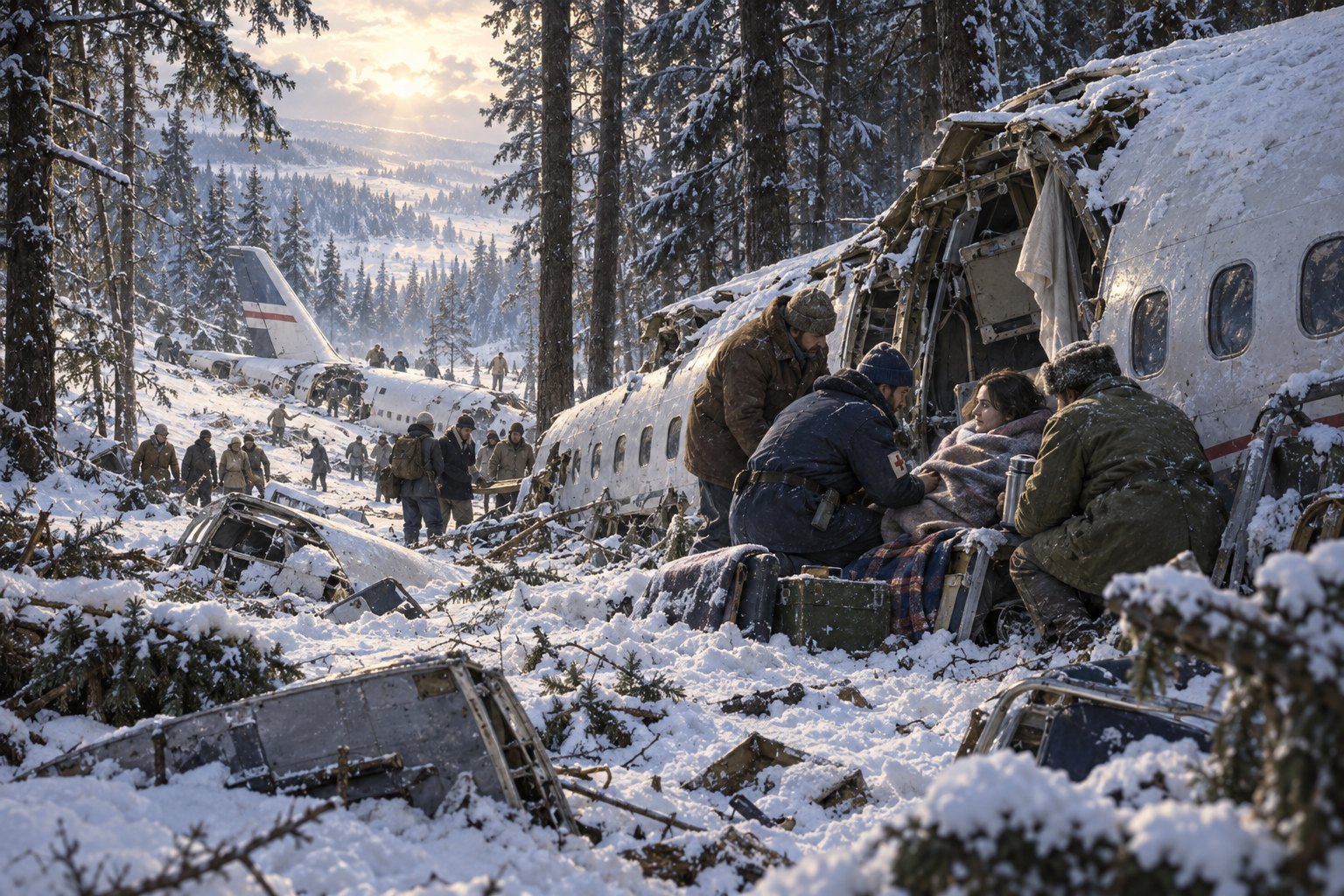
An airliner broke apart high above Czechoslovakia on 26 January 1972. Twenty-seven people died. Flight attendant Vesna Vulović was found alive among the wreckage near the village of Srbská Kamenice, beginning a recovery almost as difficult to comprehend as the crash itself.
Guinness recognizes her survival from an officially recorded altitude of 10,160 metres, or 33,333 feet. That statement needs its essential companion: she came down within part of the aircraft. This was not a person falling unprotected through six miles of open air and standing up unharmed. Wreckage, terrain and the circumstances of impact belong to the story. She suffered severe injuries, spent weeks in a coma and faced a long period in hospital before rebuilding her life.
A later journalistic theory suggested the aircraft actually broke up much lower. Guinness continues to accept the official finding, saying the alternative evidence has not justified withdrawing the record. That uncertainty can be acknowledged without treating an unproved theory as a replacement investigation. Vulović’s central ordeal is securely established: she alone survived a catastrophic airliner breakup. She eventually returned to airline work in an office role, and died in 2016. The headline gives us an astonishing height; the rest of her life reminds us that survival was a beginning, not an instant recovery.
Sources and further reading: Guinness: record and disputed-altitude context · Guinness: highest fall survived without a parachute
3. Nicholas Alkemade: the parachute was already burning
Germany · March 1944
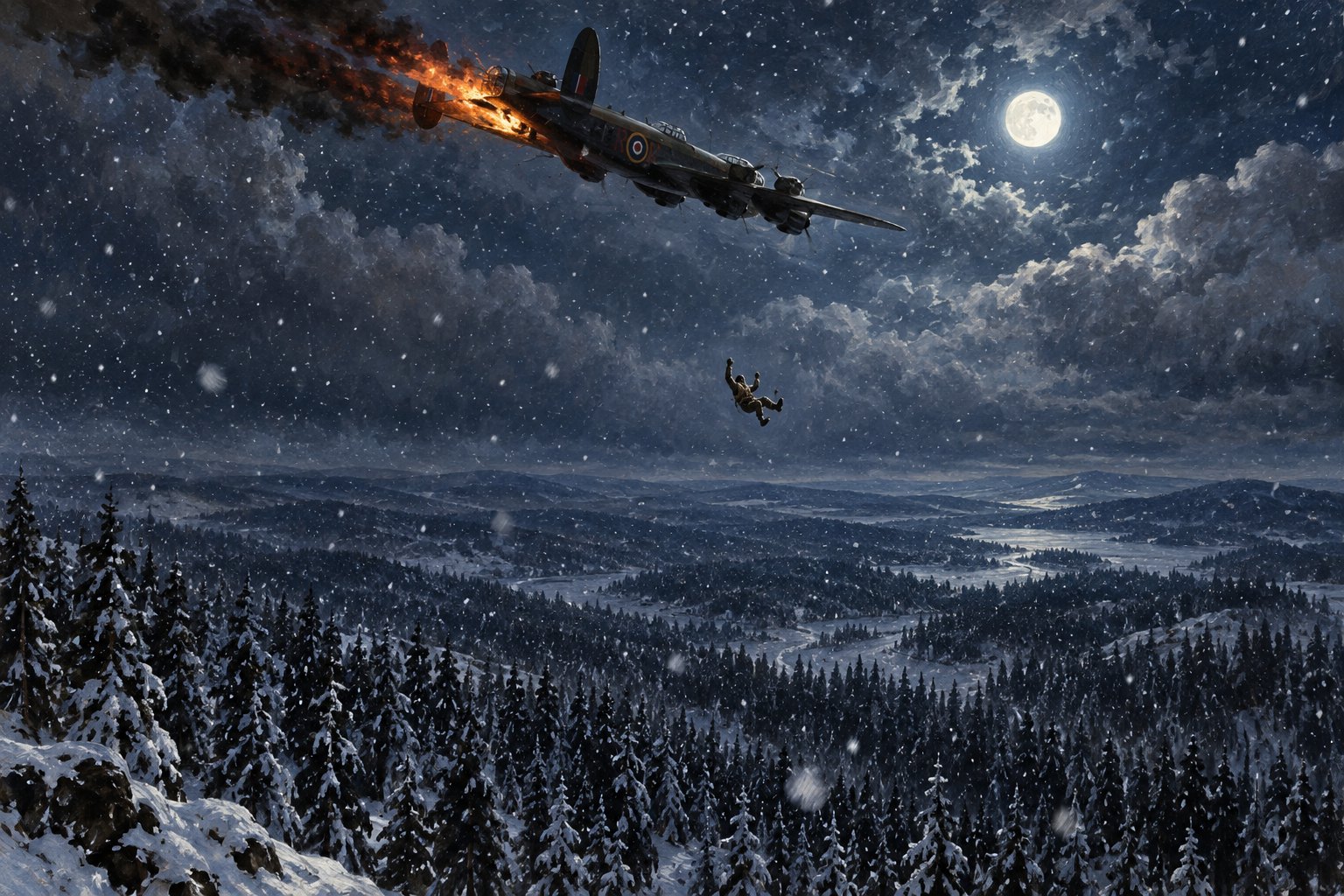
Nicholas Alkemade’s parachute was not strapped to his back. The rear turret of his Lancaster bomber was too cramped for that, so the parachute waited inside the aircraft until needed. When a night fighter attacked on 24–25 March 1944, that practical arrangement became a trap: the bomber was burning, and so was the equipment meant to save him.
With flames entering the turret, Alkemade jumped from about 18,000 feet. He expected the fall to kill him. Instead, he passed through pine branches and landed in snow. When he regained consciousness, he had burns and cuts from the aircraft, bruising and an injured knee, but no broken bones. He could not simply stroll away; he attracted help with his whistle and was taken for treatment.
His captors initially suspected that the missing parachute meant he was a spy. The RAF Museum’s account describes how his harness and the burned aircraft supplied corroborating evidence, and records the certificate acknowledging his escape. Four of the Lancaster’s seven crew members died that night. Alkemade went on to endure imprisonment and a forced winter march before liberation. The night sky had delivered him into pine trees and snow; what happened next required him to survive the remaining months of a war that had already come within seconds of killing him.
Sources and further reading: RAF Museum: The Indestructible Alkemade · International Bomber Command Centre: Alkemade archive
4. Juliane Koepcke: first the fall, then the rainforest
Peruvian Amazon · December 1971–January 1972

Juliane Koepcke survived an event that should have been the entire story. On Christmas Eve 1971, LANSA Flight 508 broke apart during a storm over Peru. Seventeen-year-old Koepcke fell with her seat assembly into the Amazon rainforest and lived. Her mother, travelling beside her, did not survive the disaster.
When Koepcke could move again, she had a broken collarbone, wounds, damaged vision and no useful route to safety. The forest hid her from search aircraft. Yet it was not wholly unfamiliar country: her biologist parents had raised her partly at their Amazon research station. Remembering what they had taught her, she followed water, expecting small streams to lead toward larger waterways and eventually people. She avoided treating every unfamiliar plant as food.
After roughly 11 days, she reached a riverside shelter and encountered local men who helped her get out. Much of the journey is known through her own recollections, while the crash and her emergence as its sole survivor are documented. Explanations for the fall itself remain hypotheses, not a laboratory reconstruction of every second. What distinguishes her story is the change of scale: a few terrible moments in the sky became days of small decisions on the ground. Her family’s knowledge of the forest mattered when the machinery around her had failed.
Sources and further reading: ABC News: Koepcke’s survival and rainforest knowledge
5. Poon Lim: 133 days on a wooden raft
South Atlantic · November 1942–April 1943
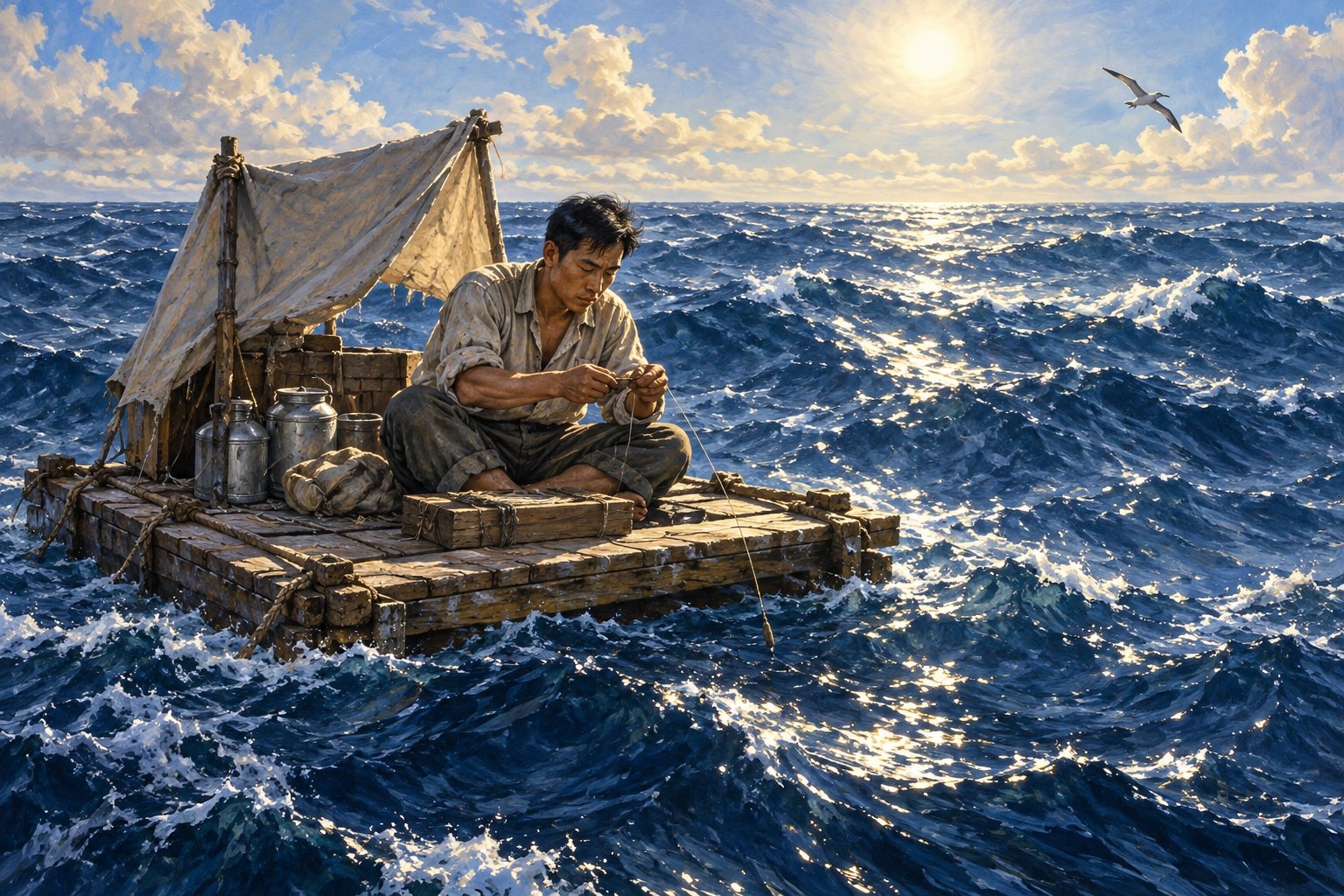
When a German submarine torpedoed the merchant ship Ben Lomond in November 1942, second steward Poon Lim escaped into the Atlantic. Eventually he reached a wooden life raft. It was a rescue device, but there was no rescuer in sight, and its emergency supplies could not possibly cover what was coming.
Lim remained adrift for 133 days. The first problem was staying alive after the ship sank; the next was turning the raft into a place where life could continue. Accounts of his ordeal describe improvised fishing equipment, fish and seabirds for food, and rainwater collected whenever weather allowed. Each successful catch bought time, while a storm could take away what he had painstakingly saved. The ocean around him contained food, but obtaining it from a small platform demanded repeated invention.
Brazilian fishermen found him in April 1943. Guinness records that he was able to walk ashore, and his endurance later earned the British Empire Medal. The raft’s emergency provisions had been a temporary reserve; his improvised fishing made the longer survival possible. Four months passed between a ship’s destruction and a stranger’s fishing boat. Throughout that interval, the horizon could look unchanged while nearly everything necessary for survival had to be made again. A hook that brought in one fish was also a way of reaching the next morning.
Sources and further reading: Guinness: Poon Lim’s 133-day raft survival · Contemporary press clippings, Polish Institute and Sikorski Museum archive
6. Ada Blackjack: the expedition’s seamstress became its sole survivor
Wrangel Island · 1921–1923
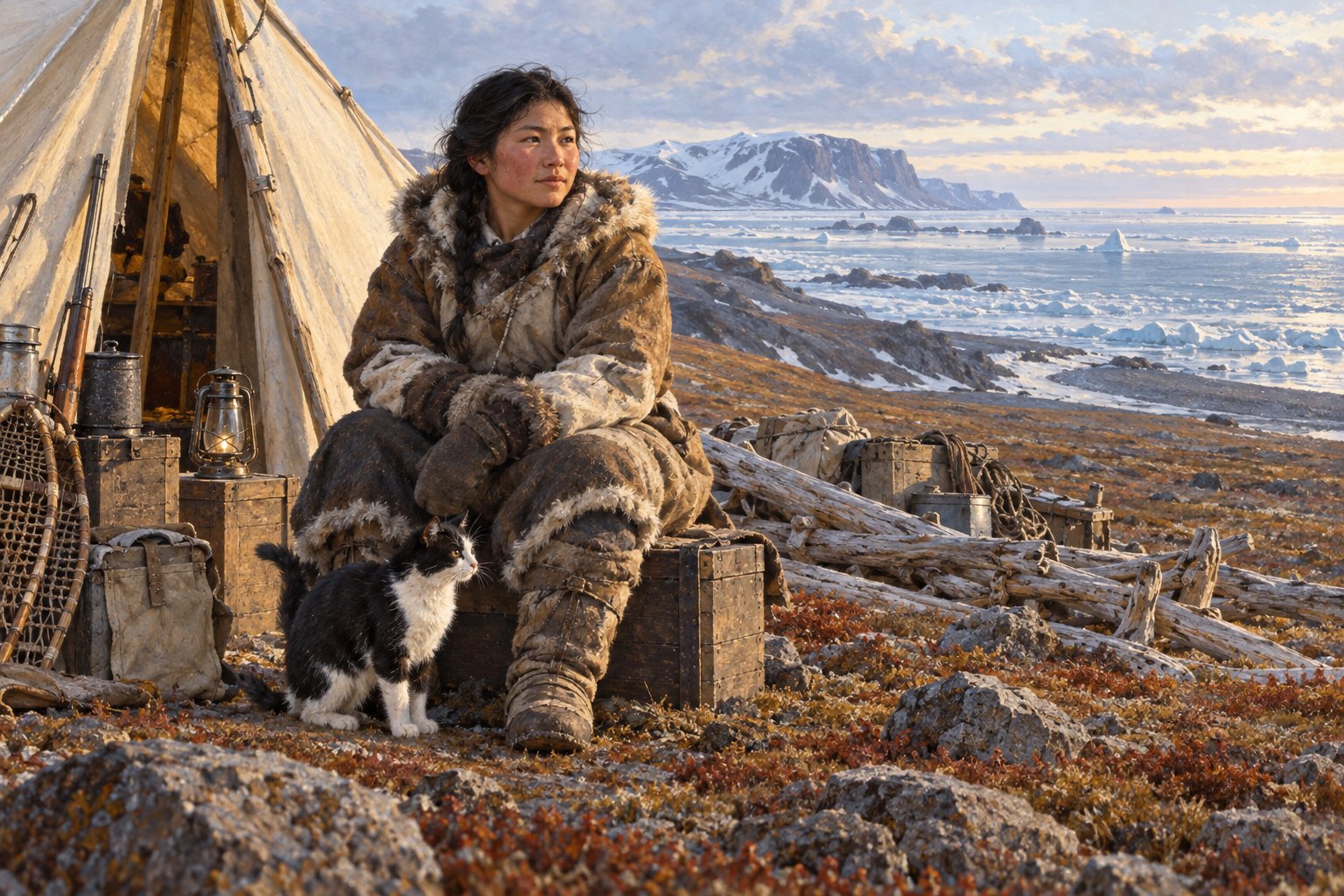
Ada Blackjack joined the Wrangel Island expedition to earn money for her son. The Iñupiat seamstress was hired for practical work, including sewing, rather than as the expedition’s celebrated explorer. In September 1921 she travelled north with four men and a cat, into a venture whose confidence would prove much stronger than its planning.
When a relief ship failed to reach the island, supplies dwindled. Three men set out across the ice to seek help and never returned. Blackjack remained with Lorne Knight, who was ill with scurvy. She cared for him until his death in June 1923, then faced the island with only the cat, Vic, for company. She learned to hunt and trap, reinforced her shelter and kept watch for polar bears. Her diary records the work of continuing, day after day.
A ship finally reached her in August. She had spent almost two years on the island, although only the last part entirely without human company. That distinction prevents a good story from becoming a false one. Another matters just as much: she did not return to a life automatically transformed by fame and wealth. The National Park Service records continued hardship and promises of compensation that went unfulfilled. Her survival deserves its own place in history, rather than a supporting role in someone else’s Arctic adventure.
Sources and further reading: National Park Service: Ada Blackjack on Wrangel Island · Dartmouth Libraries: Ada Blackjack’s diary
7. Douglas Mawson: the journey home kept becoming impossible
Antarctica · December 1912–February 1913
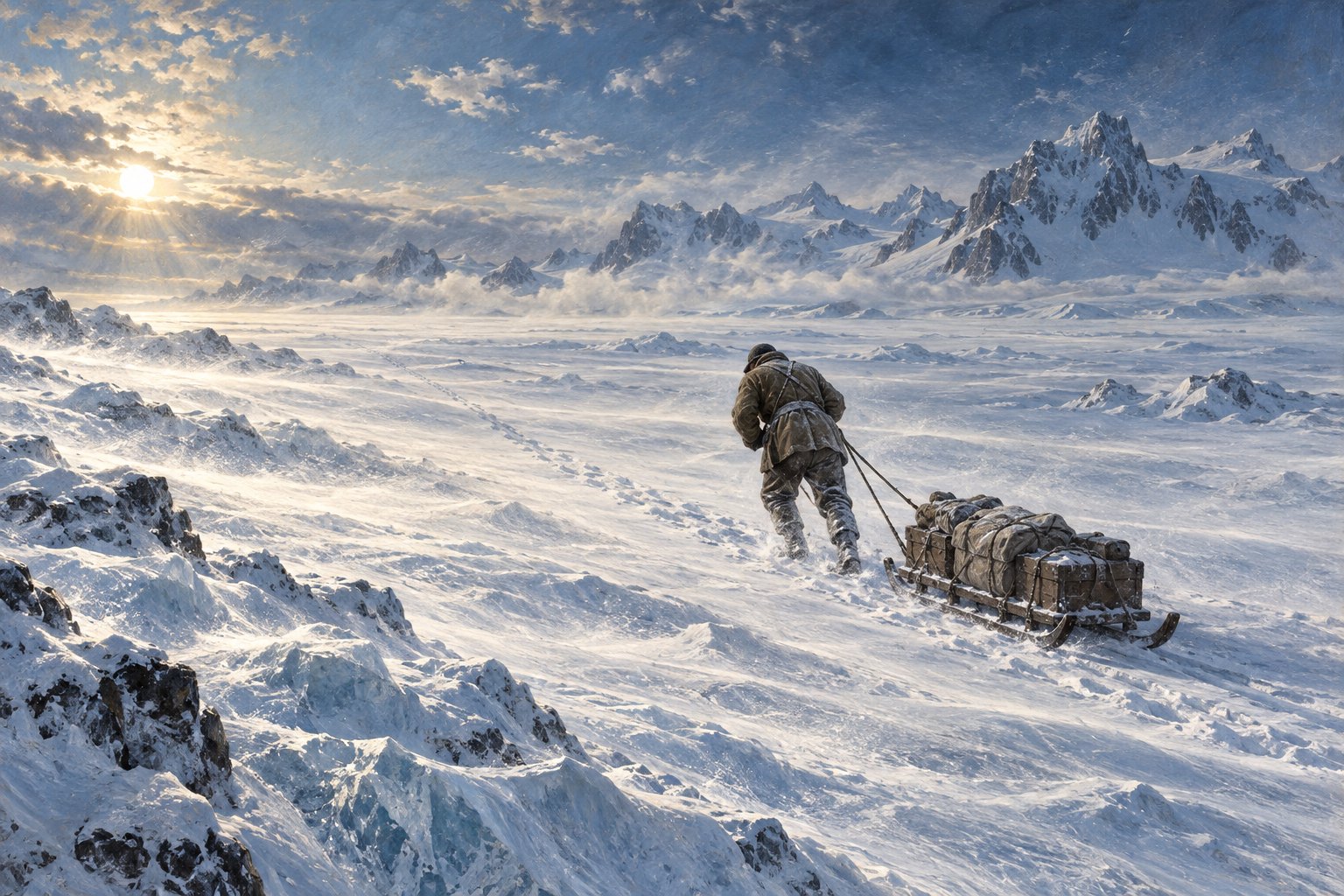
Douglas Mawson’s sledging party was hundreds of kilometres from its Antarctic base when Belgrave Ninnis disappeared into a crevasse. The fall also took a sledge, dogs and most of their food. Mawson and Xavier Mertz could neither reach their companion nor recover the supplies. Their scientific journey became a race back to the coast.
They ate their remaining dogs as provisions ran out. Both men became desperately ill; Mertz died in early January 1913. Mawson then had roughly 100 miles still to cover alone. He reduced his load, hauled the sledge onward and endured deteriorating feet and prolonged bad weather. When he too fell into a crevasse, the sledge caught above him. He climbed back up the rope instead of vanishing as Ninnis had.
After about another month, Mawson reached the hut in early February, only to find that the relief ship Aurora had just departed. Six men had stayed behind to search for his party. They sheltered him, but worsening conditions meant another Antarctic winter before departure. His return is documented by diaries and a contemporary radio telegram. Later medical explanations for the illness, including possible vitamin A poisoning, remain retrospective interpretations. The undeniable sequence is already terrible enough: one companion lost, another buried, the leader surviving the same kind of hidden opening that had begun the disaster.
Sources and further reading: National Museum of Australia: Mawson in the Antarctic · National Archives of Australia: Mawson’s contemporary radio telegram
8. Shackleton’s James Caird: a lifeboat aimed at a speck of land
Southern Ocean · April–August 1916
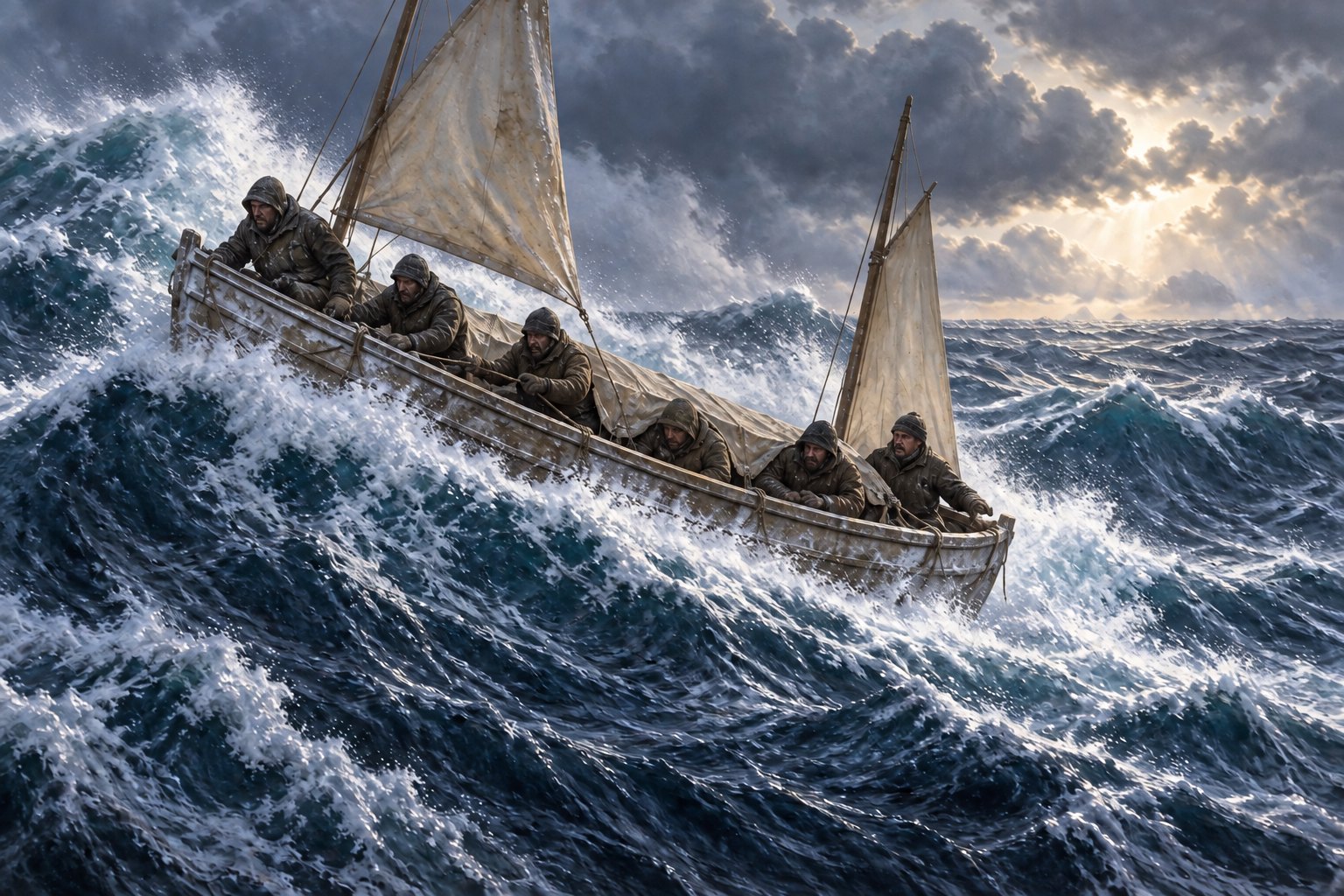
After Endurance was crushed by ice, Ernest Shackleton’s men lived on drifting floes and eventually reached Elephant Island in small boats. Land offered a place to stand, but not a realistic expectation of discovery. Someone had to cross the Southern Ocean and find help.
Shackleton and five companions left in the James Caird, a lifeboat about 23 feet long that carpenter Harry McNish had strengthened for the voyage. Their target was South Georgia, roughly 800 miles away. Navigator Frank Worsley had to work out their position in weather that made sightings difficult. Missing the island would mean sailing into far more empty ocean. After more than two weeks, they reached it—but on the opposite side from the whaling stations.
Shackleton, Worsley and Tom Crean then crossed its mountainous interior. Even contact with other people did not immediately solve the problem. Several rescue attempts were defeated by ice before the Chilean vessel Yelcho, commanded by Luis Pardo, reached Elephant Island on 30 August. All 22 men waiting there were alive. Every member of the Endurance party ultimately survived; the separate Ross Sea support party suffered deaths. Remembering that boundary, and the carpenter, navigator, sailors and rescuers who made success possible, gives this famous expedition its full scale: survival depended on an entire chain of people getting their part right.
Sources and further reading: New Zealand History: the expedition’s two parties · James Caird Society: the boat and its voyage · Royal Collection Trust: Elephant Island, 1916
9. The Andes survivors: 72 days beyond the search
Andes, Argentina–Chile · October–December 1972
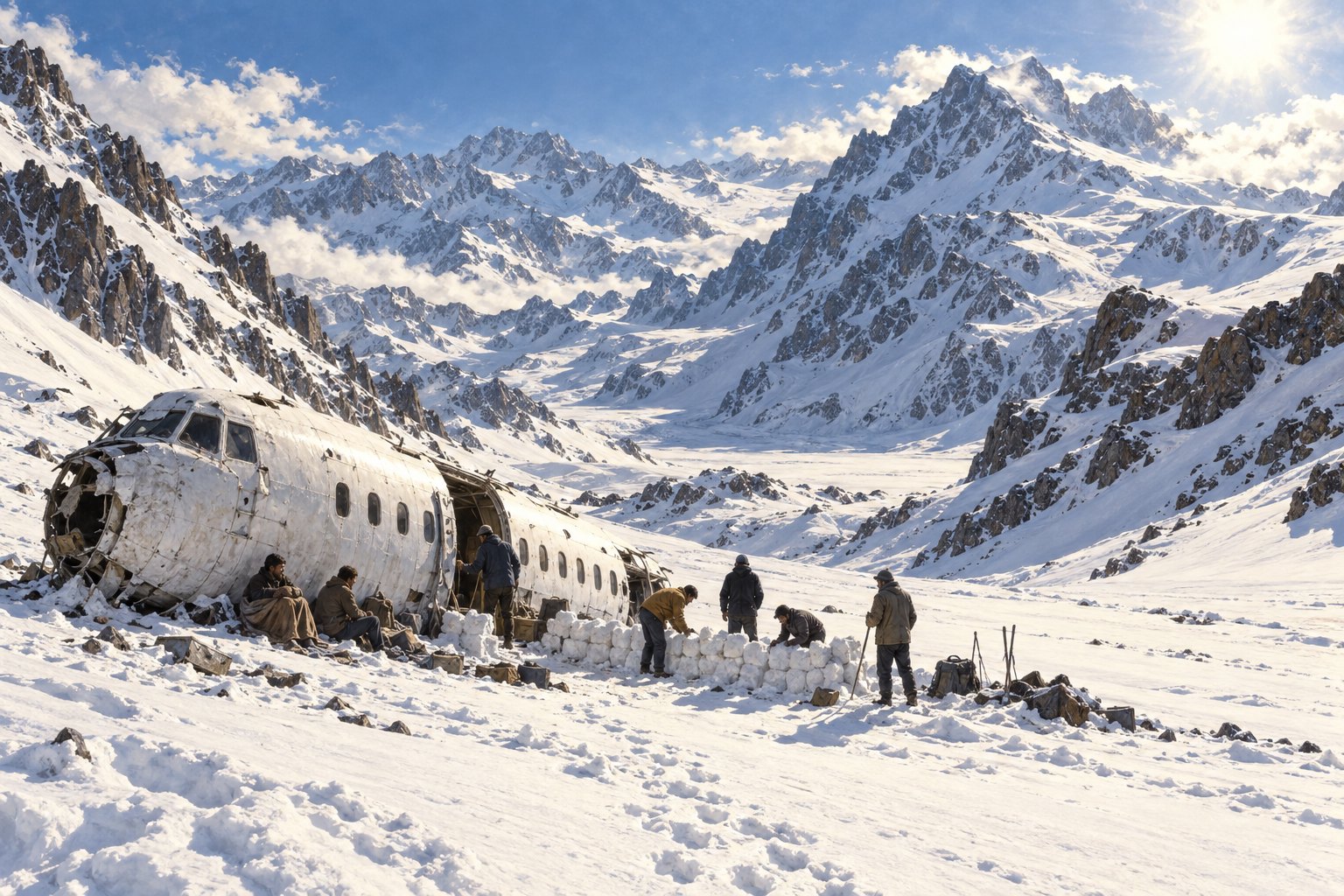
The aircraft carried 45 people, including members of a Uruguayan rugby team and their companions. On 13 October 1972 it struck the Andes, leaving survivors in a broken fuselage surrounded by snow and mountains. They lacked the equipment, clothing and food for a prolonged stay. Then a small radio brought a devastating message: the official search had been suspended.
They made the wreck into shelter, melted snow and shared work that no one had expected to perform. With ordinary food exhausted, they made the agonizing decision to eat the bodies of those who had died. An avalanche then buried the fuselage and killed eight more people. The story is often reduced to its most shocking detail, obscuring the losses, cooperation and repeated attempts to find a way out.
In December, Nando Parrado and Roberto Canessa completed a punishing trek toward help. Muleteer Sergio Catalán saw them and alerted the authorities. Helicopters evacuated the remaining group on 22 and 23 December; 16 people survived the disaster. The Andes museum preserves this as the history of everyone aboard, not simply an adventure won by its eventual survivors. Their escape depended on the people who walked, those who kept the group functioning at the wreck and a stranger who understood that two figures across a river were asking for their lives.
Sources and further reading: Museo Andes 1972: the tragedy and rescue · Chile’s National Aeronautical Museum: rescuers and rescue dates
10. Tsutomu Yamaguchi: he escaped Hiroshima and went home to Nagasaki
Japan · August 1945
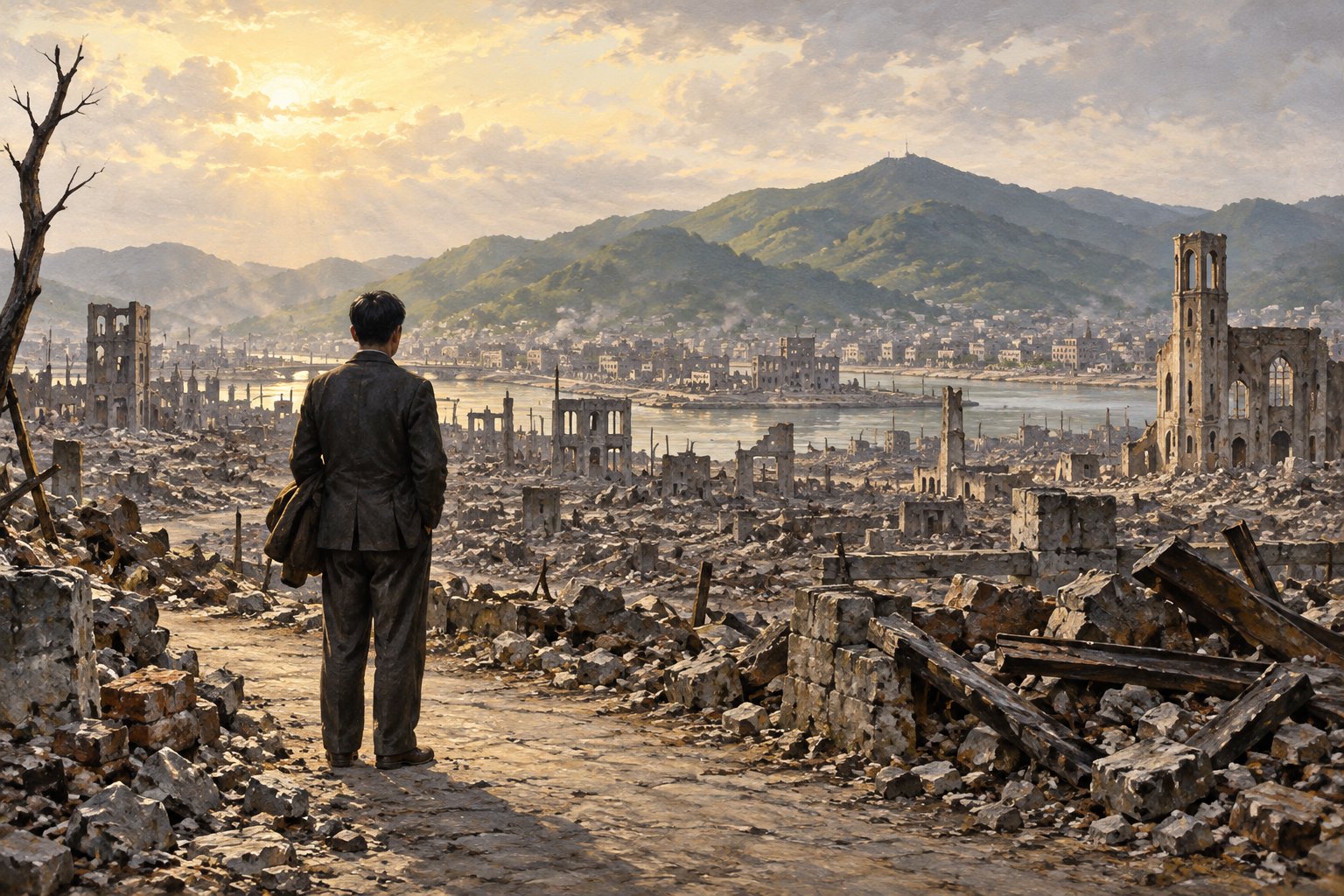
Tsutomu Yamaguchi was away from home on business when the atomic bomb exploded over Hiroshima on 6 August 1945. The young Mitsubishi engineer survived with serious burns and other injuries. After a night in the devastated city, he made the journey back to Nagasaki, where his wife and child lived.
Three days after Hiroshima, he was in Nagasaki when the second atomic bomb detonated. A return home—normally the end of a frightening journey—had placed him inside another catastrophe. He survived that attack as well, but the phrase “survived two atomic bombs” must not flatten the experience into a trick of luck. These were mass civilian disasters whose injuries, bereavement and radiation effects continued long after the explosions.
Yamaguchi lived until 2010 and became an advocate against nuclear weapons. Japanese authorities formally recognized his presence at both bombings in 2009. He was not the only person who experienced both cities’ attacks; his distinction was that official double recognition. His account is especially difficult to absorb because the two chapters are separated by such an ordinary action: going home from a work trip. The geography that usually makes a person safer instead repeated the danger, while his later testimony asked listeners to look beyond his exceptional survival to everyone who could not tell their own story.
Sources and further reading: ABC News: Yamaguchi and the two bombings · HISTORY: the man who survived two atomic bombs
11. Violet Jessop: three sister ships, three disasters
North Atlantic and Aegean Sea · 1911–1916
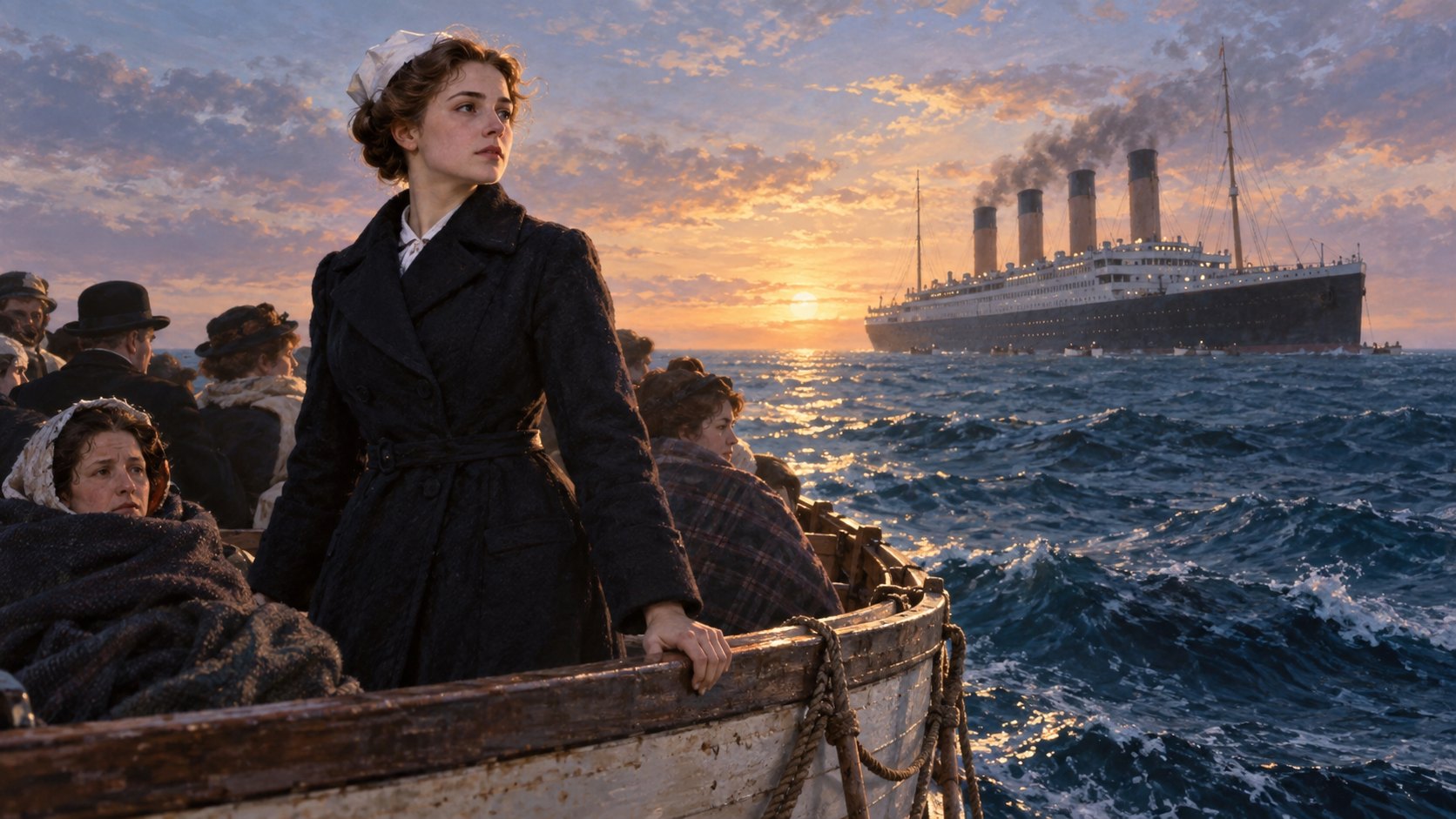
Violet Jessop made her living aboard ocean liners. That profession placed her inside a coincidence a novelist might hesitate to use. She was aboard Olympic when it collided with the warship HMS Hawke in 1911, survived Titanic’s sinking in 1912, and escaped when Britannic sank during the First World War.
The ships were sisters: three enormous liners associated with the same ambitious class of passenger travel. Olympic remained afloat after its collision. Titanic struck an iceberg and went down on its maiden voyage. Britannic, converted into a hospital ship, sank in the Aegean in November 1916 after striking a mine. Jessop’s work carried her from one to another, connecting events usually remembered as separate chapters of maritime history.
Some colourful details come from her memoirs and should retain that attribution. The foundation is her documented service and survival, rather than the nickname “Miss Unsinkable” or the idea that every ship she boarded sank. She continued working at sea for many years and eventually retired to Suffolk. Her story becomes more interesting when imagined from the working crew’s perspective: a famous ship was also an employer, a berth, a wage and a place to spend long hours on duty. Returning to sea meant resuming a life, even when that life had intersected with disaster more than once.
Sources and further reading: Encyclopedia Titanica: Jessop’s documented service and memoir
12. Phineas Gage: the iron went through his head
Vermont, United States · September 1848
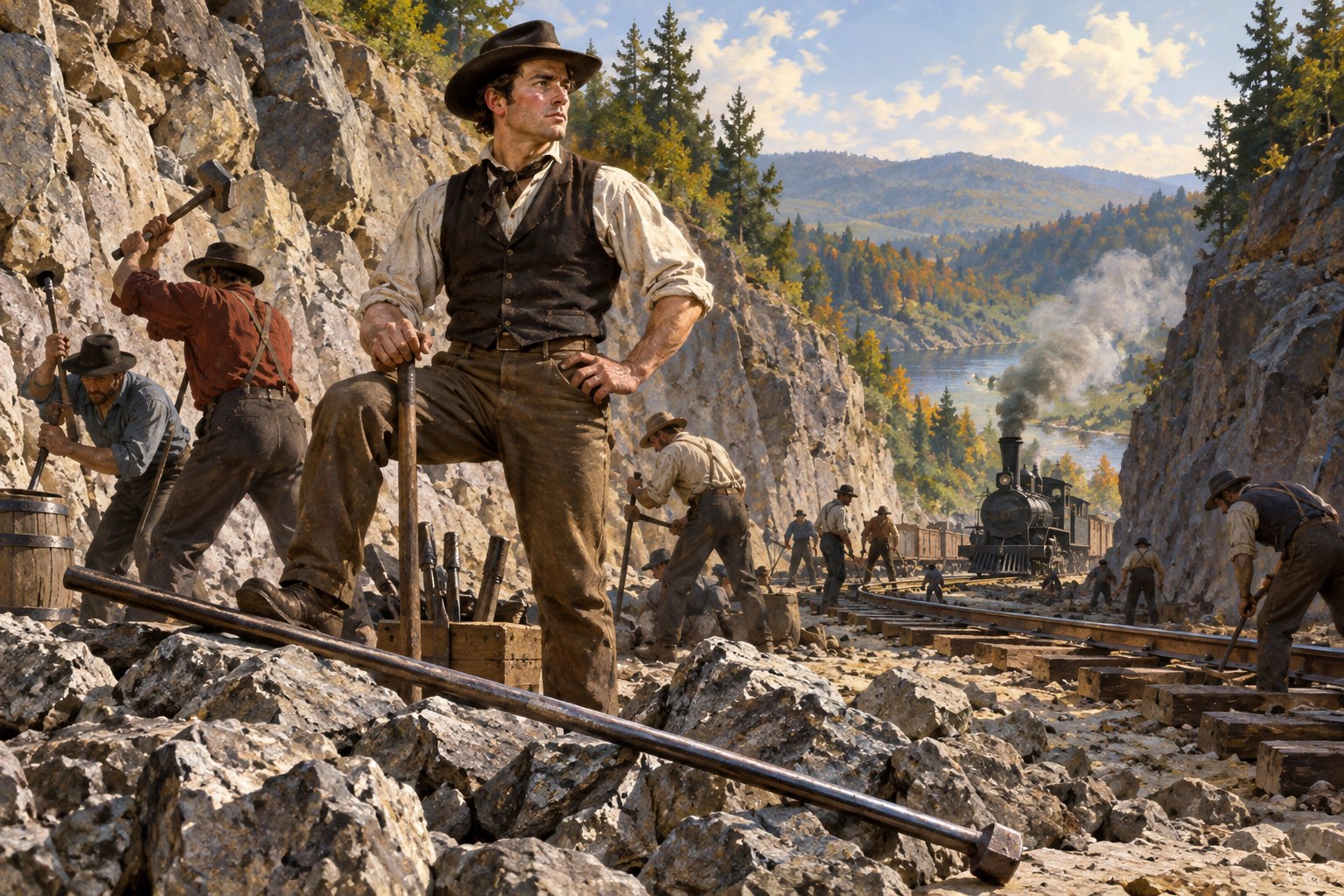
Railway foreman Phineas Gage was preparing a blasting charge when an explosion launched his tamping iron through his head. The rod was more than a metre long. It entered through his face, passed through part of his brain and came out above. Gage survived the immediate accident and lived for nearly another twelve years.
His physician, John Martyn Harlow, recorded the case. Gage lost an eye, suffered a grave infection and experienced changes in behaviour that helped make him central to the history of neuroscience. The material evidence did not disappear into anecdote: Harvard’s Warren Anatomical Museum collection still holds his skull and the actual iron, donated by Harlow after Gage’s death.
The caution belongs to the familiar personality story. Later retellings have sometimes turned limited observations into a complete portrait of a man permanently transformed into a violent or immoral stranger. The surviving record is more complicated, including later employment that suggests meaningful adaptation. His injury supports questions about brain function; it does not let us reconstruct every aspect of his character. A rod through a skull is the astonishing opening. The longer history—illness, work, adjustment and the way other people interpreted him—is what keeps Gage from becoming merely a gruesome classroom prop. The human being survived an accident, and his reputation has had to survive generations of simplified explanations.
Sources and further reading: Harvard Countway Library: Gage’s skull and tamping iron · Peer-reviewed historical review: Phineas Gage’s great legacy · Psychology Today: historical limits of the personality story
13. Roy Sullivan: lightning found him seven times
Virginia, United States · 1942–1977
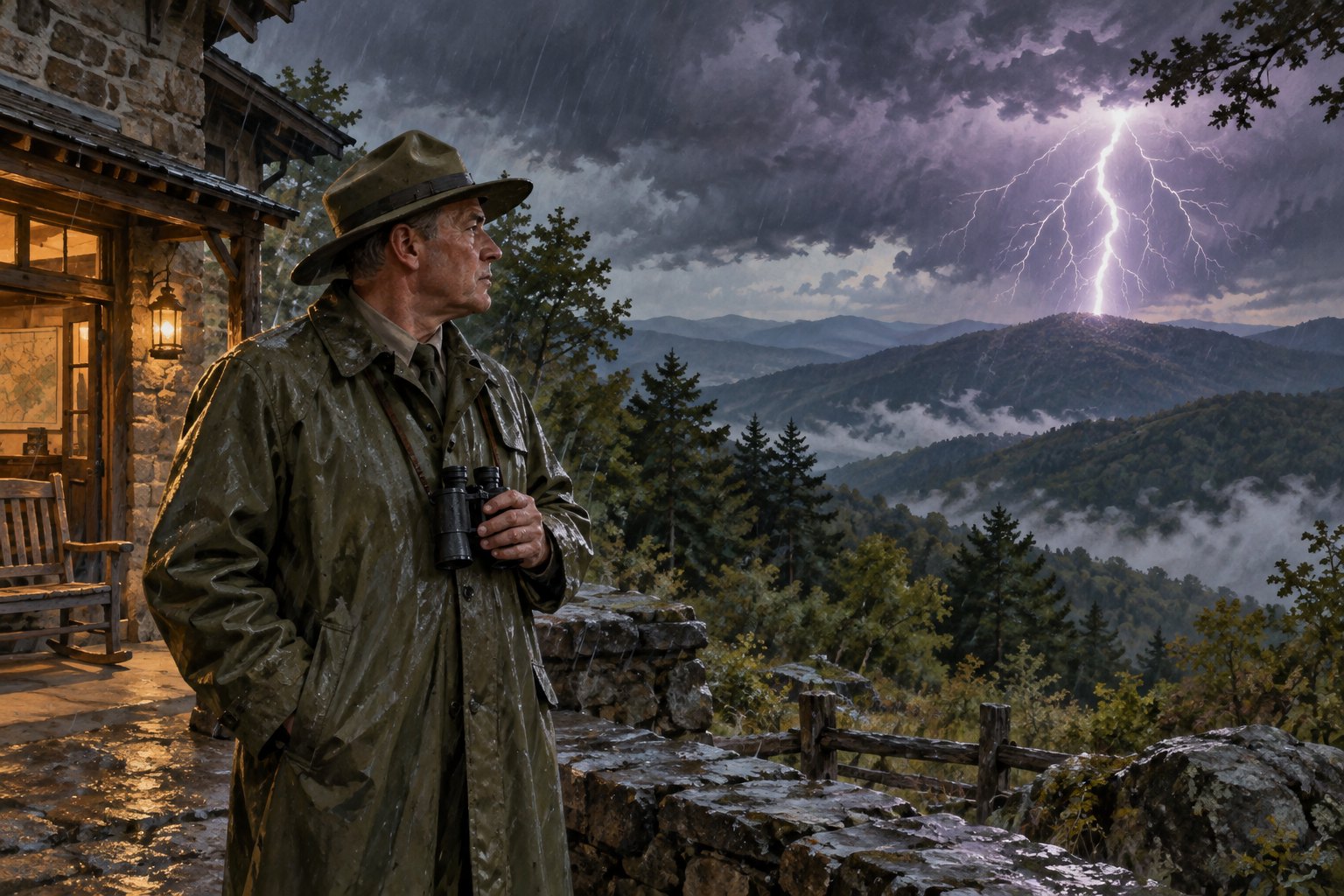
Most people would consider one lightning strike a lifetime’s supply of improbable misfortune. Virginia park ranger Roy Sullivan survived seven incidents recognized by Guinness, spread across 35 years. The repetition is the unsettling part: an extraordinary accident happened, he recovered, and then it happened again.
His first recorded strike came in 1942 while he was fleeing a burning watchtower in Shenandoah National Park. In 1969, another struck while he was driving his truck, leaving him unconscious with burned eyebrows and a ruined watch. A year later he was injured in his garden. In 1972, lightning set his hair alight while he was in a guardhouse. The locations kept changing; the pattern did not.
More encounters followed, and the seventh recognized incident occurred in 1977. Each left another injury or another story to explain. Sullivan’s outdoor work placed storms close to everyday life, but the sequence carried him far beyond ordinary occupational bad luck. His name became attached to a record nobody would reasonably want to challenge. There is something almost folkloric about a man who seems to attract the sky. In this case, the storms had dates and the injured man had a job to return to: a ranger repeatedly recovered and went back into a landscape that had already struck him down.
Sources and further reading: Guinness: most lightning strikes survived · Guinness: Sullivan’s seven recorded incidents
14. Ann Hodges: the meteorite arrived during her nap
Alabama, United States · November 1954
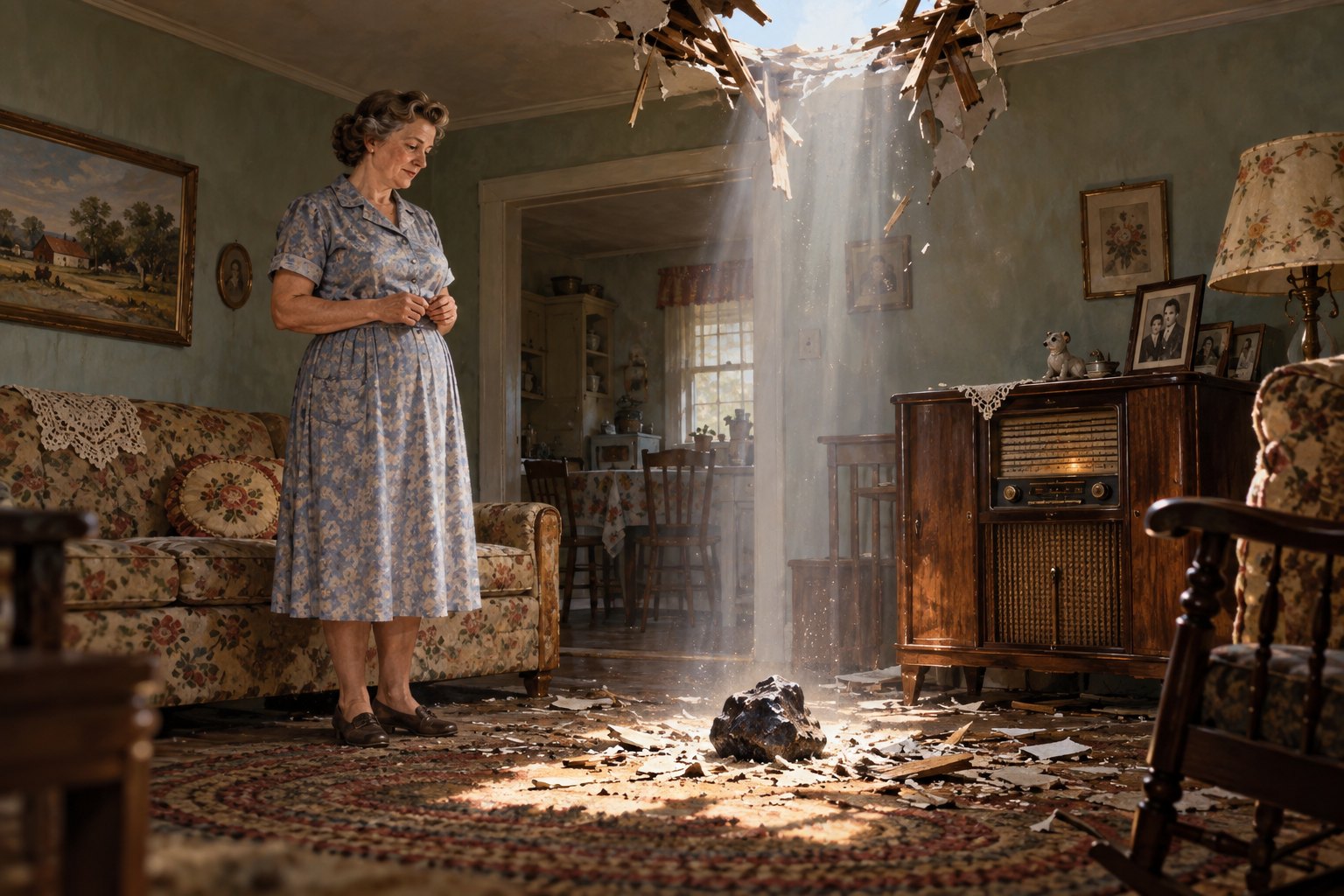
Ann Hodges was asleep on a sofa beneath quilts when a piece of space entered her afternoon. On 30 November 1954, a meteorite broke through the roof of her rented house in Sylacauga, Alabama, hit a radio and struck her. She survived with a large bruise and one of the least believable explanations ever offered for a household injury.
Other people had seen the fireball. Inside the house, the first impression was more ordinary: dust, a damaged ceiling and confusion about what had broken. The rock supplied the answer. It was part of the Sylacauga meteorite fall, and another fragment entered the Smithsonian’s collections. The piece associated with Hodges eventually went to the Alabama Museum of Natural History.
Being struck did not lead to a carefree windfall. The object’s ownership became a dispute with the landlady, and public attention unsettled Hodges’s life. Her case is best described as a firmly documented meteorite injury, rather than an excuse to dismiss every other reported impact in history. The appeal is its collision of scales: an ancient extraterrestrial stone completed its journey through someone’s roof and bounced off an appliance. Nothing about the sofa, the radio or the afternoon required an expedition. The universe supplied the unlikely adventure while she was at home trying to sleep.
Sources and further reading: Smithsonian: Hodges and the Sylacauga meteorite · Smithsonian: the aftermath of the impact
15. Aron Ralston: the canyon would not let go
Utah, United States · April–May 2003
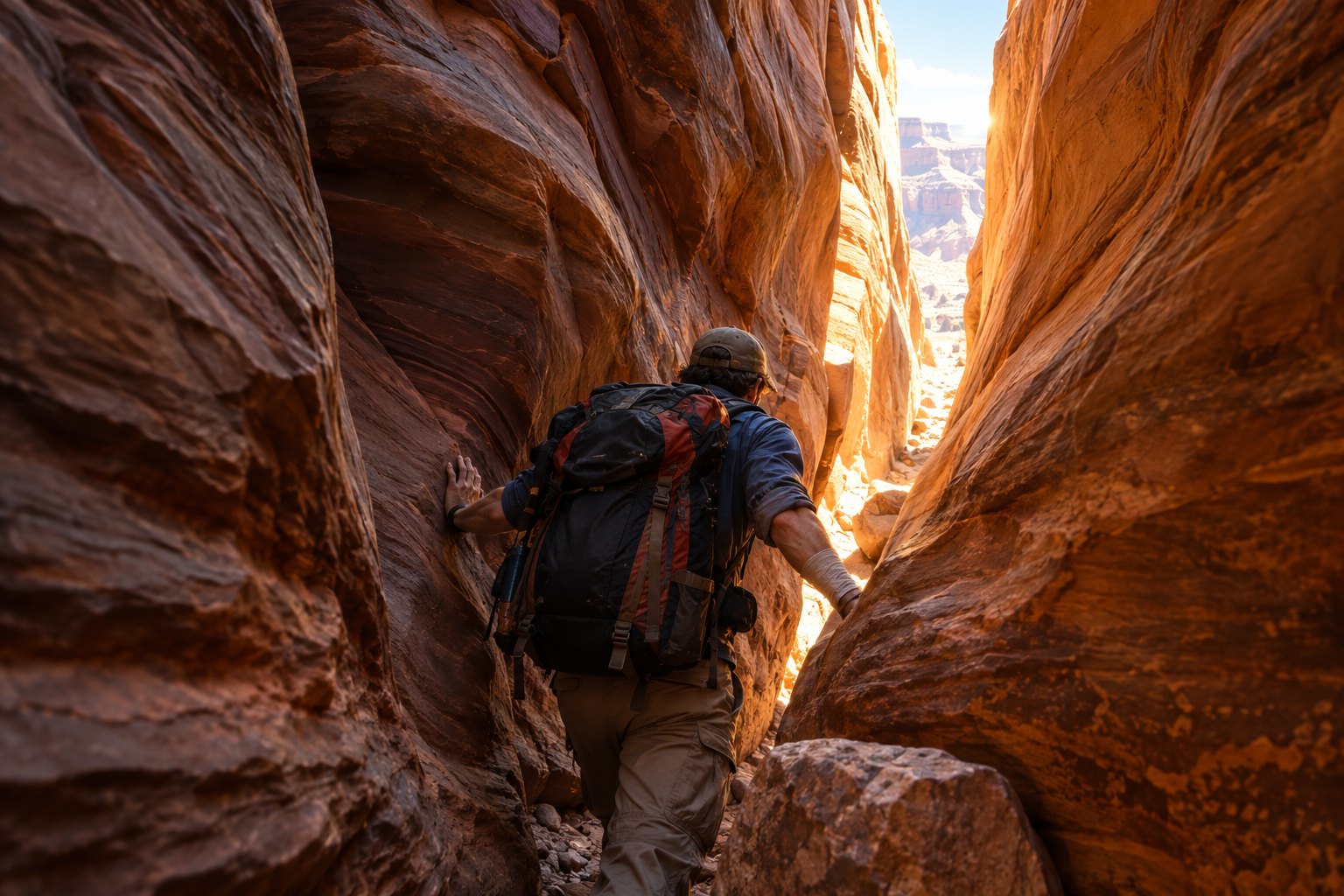
Aron Ralston expected a day of canyoneering. Instead, a boulder shifted in Bluejohn Canyon and trapped his right forearm against the narrow rock wall. He was alone. No one had been given a precise itinerary that would immediately direct rescuers to that slot in the desert.
For five days he tried to move the stone or find another way free while his supplies ran out. On 1 May 2003, he amputated the trapped part of his arm using a small multitool. That is the moment everyone remembers, but it did not transport him to safety. He still had to descend farther through the canyon, rappel and make his way toward people. Hikers encountered him, and a rescue helicopter ultimately evacuated him.
Contemporary reporting includes the accounts of the people involved in finding and treating him, giving the story a foundation beyond the later film 127 Hours. The rescue operation connected desert search teams, hikers and a helicopter crew. A canyon narrow enough to touch both walls had become a prison hidden inside an enormous landscape. Ralston’s escape required his own terrible decision, then enough strength to reach a place where other people could help him. The helicopter ended a journey that had begun only a few days earlier as an ordinary outing.
Sources and further reading: National Geographic: rescue commander on Ralston’s ordeal · Deseret News: contemporary rescue reporting
16. Beck Weathers: he walked back into camp after being left for dead
Mount Everest · May 1996
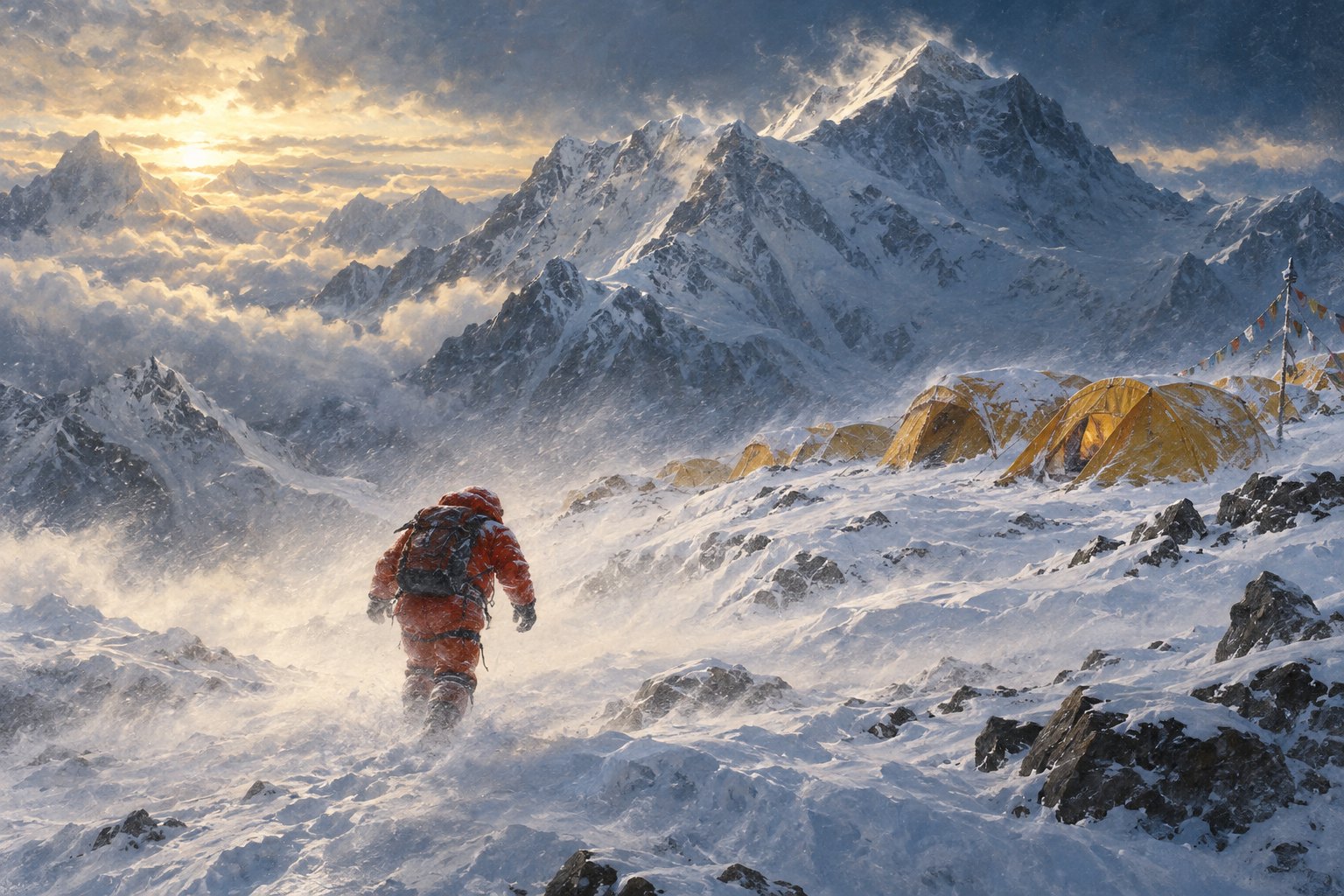
During the storm that devastated Everest climbing teams in May 1996, Beck Weathers became stranded high on the mountain. Cold, exhaustion and failing vision left him in desperate condition. Other climbers trying to save lives judged that he was beyond help and concentrated their limited strength elsewhere.
Then Weathers did something the people at camp were not expecting: he appeared. After prolonged exposure, he had regained enough awareness to get up and struggle through the snow toward shelter. Returning to a tent did not settle his fate. His condition remained critical, and a further effort was needed to help him descend. David Breashears’s contemporary account records the work of climbers and Sherpas in the rescue, followed by helicopter evacuation from a lower camp.
Weathers survived with devastating frostbite and later underwent amputations and reconstructive surgery. “Came back from the dead” is a figure of speech, not a medical diagnosis. The documented achievement is that someone believed too close to death to rescue recovered enough movement to change that judgment. Accounts differ in emphasis about the decisions made during the disaster, when rescuers were themselves at risk. His story is most powerful with that difficulty intact: an unexpected act of movement reopened a possibility that exhausted people, in appalling conditions, thought had already closed.
Sources and further reading: PBS NOVA: David Breashears interviewed in May 1996 · Deutsche Welle: interview with Beck Weathers
17. Mary Vincent: the teenager who made it back to the road
California, United States · September 1978

Mary Vincent was fifteen when a man who had offered her a ride attacked her in California. He sexually assaulted her, severed both of her forearms and left her away from the road, expecting her to die. She survived, reached help and later identified him in court.
Vincent’s survival brought investigators a witness who could identify the man who had attacked her. Her testimony helped secure his conviction. Years later, after he was charged with murdering another woman in Florida, she faced him again in court. In 1998 she testified during the penalty phase of that trial, recounting an ordeal that had begun twenty years earlier. The teenager he expected never to speak again had become the witness he could not erase.
Rebuilding life took much longer than the first rescue. A 1999 newspaper profile found her practising a baseball throw with a prosthesis before an event supporting victims of violence. It also described motherhood, daily domestic skills and years of fear that had made public life difficult. That glimpse carries the story beyond the road where help finally arrived: a woman preparing to step onto a ballfield, doing something playful and public with a body she had spent years learning to use differently. Survival had opened the possibility of those later, ordinary afternoons.
Sources and further reading: Las Vegas Sun: Vincent’s 1998 testimony · UPI: 1988 reporting on the case and her testimony · San Francisco Chronicle: Vincent’s later life and advocacy
18. Maurice and Maralyn Bailey: a whale ended the voyage, but not their lives
Pacific Ocean · March–June 1973
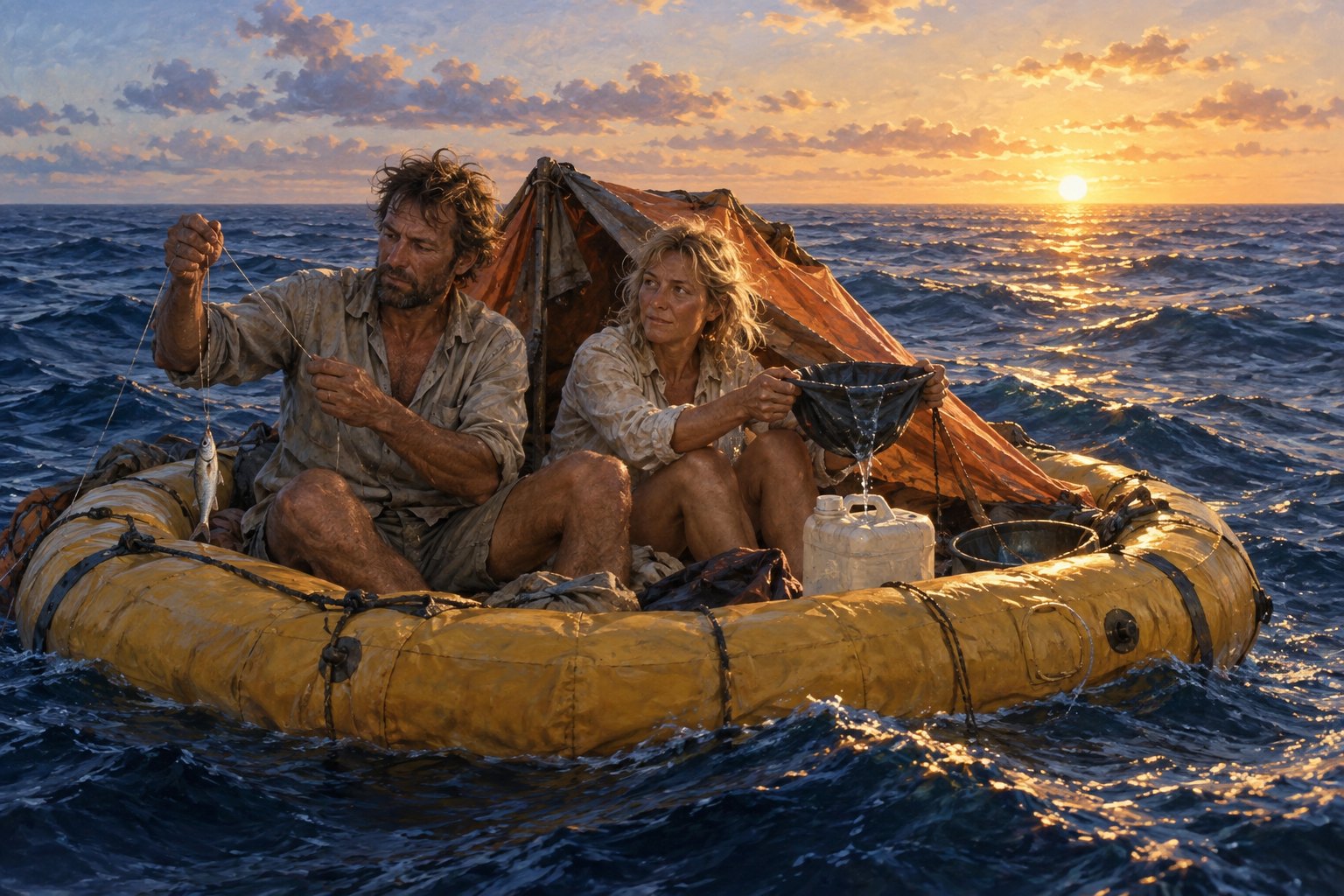
Maurice and Maralyn Bailey had exchanged a conventional life in Britain for a sailing adventure. In March 1973, their yacht Auralyn was struck by a whale in the Pacific and sank. The couple escaped with supplies into a life raft and dinghy. Their new world was small enough to cross in a few steps, had they possessed a stable surface on which to walk.
They survived for nearly four months, remembered in their own book as 117 Days Adrift. Fish, turtles and seabirds supplemented dwindling provisions; rain became essential water. The inflatable craft had to remain usable while the people inside weakened. Passing ships did not automatically notice them. Rescue finally came from a South Korean fishing vessel, ending an ordeal during which each person was the other’s principal company and source of help.
Their account became the book 117 Days Adrift and was revisited decades later through their records and recollections. Some narrative details therefore come from the couple themselves, while their sinking, rescue and extended ordeal were reported at the time. What separates this from the solitary-castaway story is the relationship inside it. There were two sets of fears, two exhausted bodies and still a shared need to keep the little craft functioning. The ocean did not become less immense because they were together; the task of facing it became something they could divide.
Sources and further reading: TIME: contemporary review and 1973 sinking details · Penguin Random House: author interview and the Baileys’ records · Le Point: the voyage, rescue and surviving archives
19. Steven Callahan: a raft became his entire world for 76 days
Atlantic Ocean · February–April 1982
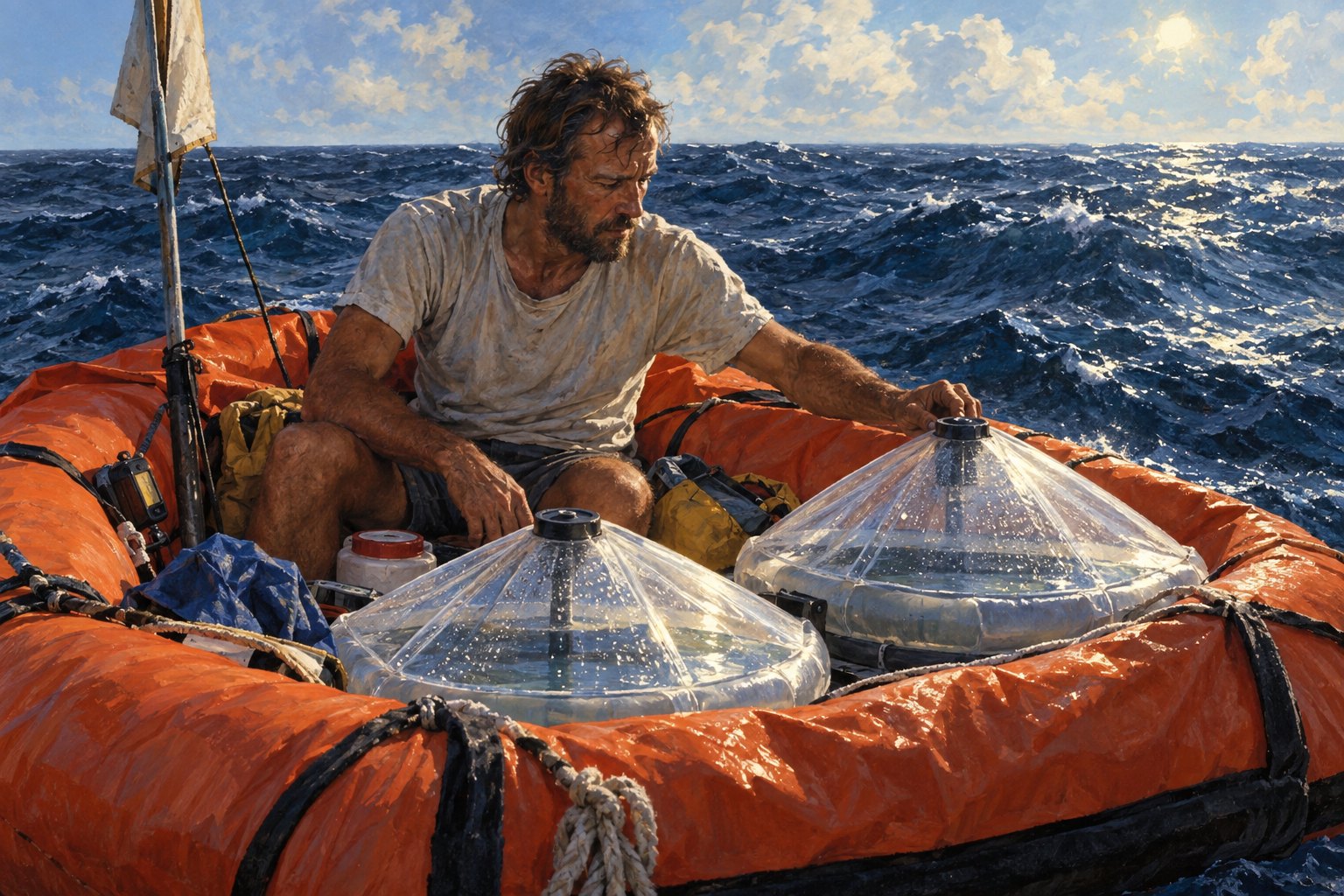
A week after leaving the Canary Islands, Steven Callahan’s small sailboat sank in the Atlantic. He escaped into an inflatable raft with emergency equipment, but no engine or practical way to choose where the ocean would take him. What followed was 76 days of trying to keep a fragile shelter and its sole occupant alive.
Callahan caught fish and used solar stills to obtain drinking water. Neither food nor water arrived reliably enough to make life secure. Equipment needed tending, the raft required repairs, and the sight of a ship could produce hope without producing rescue. In contemporary interviews, he described both the practical struggle and the strange intimacy of watching the marine life around his tiny floating home.
Fishermen found him near Guadeloupe. His later book Adrift became a widely read account of the ordeal, and he continued working on maritime survival subjects. The story is especially striking because the raft was not merely a place in which he waited. It was a workshop, a fishing platform and a water-making station, all subject to damage from the same sea supporting it. Its smallness makes the duration difficult to grasp: over two months in a space that could not offer a separate room, a walk ashore or even a night beyond the movement of the water.
Sources and further reading: Christian Science Monitor: 1982 interview · Cruising World: Callahan revisits the ordeal
20. Tami Oldham Ashcraft: sailing a wreck toward home
Pacific Ocean · October–November 1983
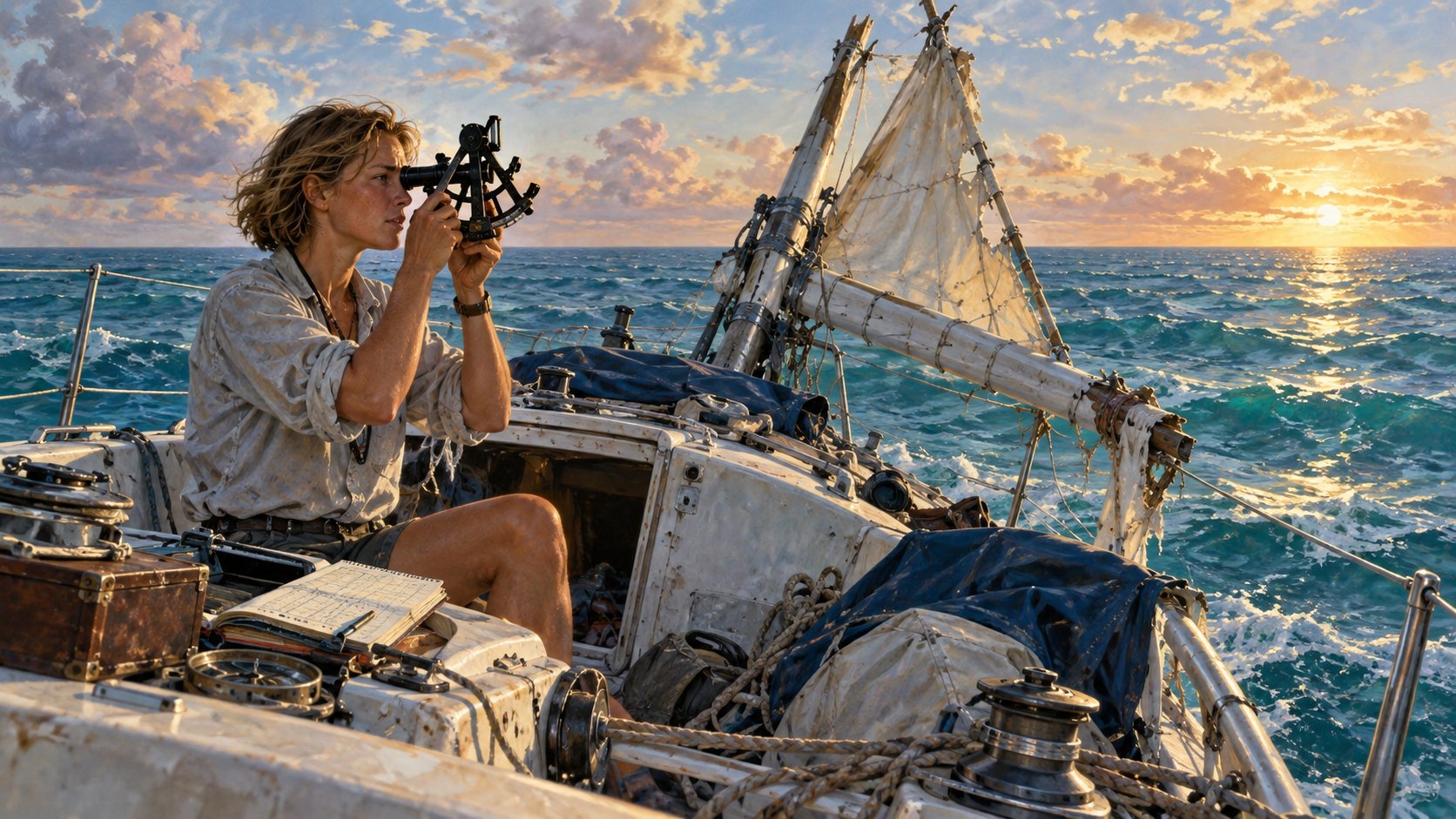
Tami Oldham Ashcraft and Richard Sharp were delivering a yacht from Tahiti toward California when Hurricane Raymond overtook them in 1983. The storm overturned and dismasted the vessel. Ashcraft was knocked unconscious. When she came to, Sharp was missing, and the yacht that had carried two people was a damaged shelter for one.
She had to make the boat move again. With the engine unavailable and the normal rig destroyed, she improvised a small sail and worked out a route toward Hawaii. Navigation, bailing, repairs and rationing became daily necessities while she dealt with injury and the loss of her fiancé. After about 41 days, she reached safety. The sea had removed almost everything that had made the voyage manageable, yet it had left enough hull and equipment for her to work with.
Ashcraft later told the story in Red Sky in Mourning, adapted for the film Adrift, and discussed it in interviews. The film is a dramatization; it should not supply independent proof for scenes or imagined conversations. Her actual achievement is concrete enough: an injured sailor brought a crippled yacht across a long stretch of Pacific by applying skills under extreme pressure. Grief did not wait conveniently until landfall. The voyage continued with both the work of staying alive and the knowledge that the person who should have shared it was gone.
Sources and further reading: KPBS: interview with Tami Oldham Ashcraft · TodayFM: Ashcraft’s survival interview
21. Joe Simpson: the cut rope was not the end
Siula Grande, Peru · 1985
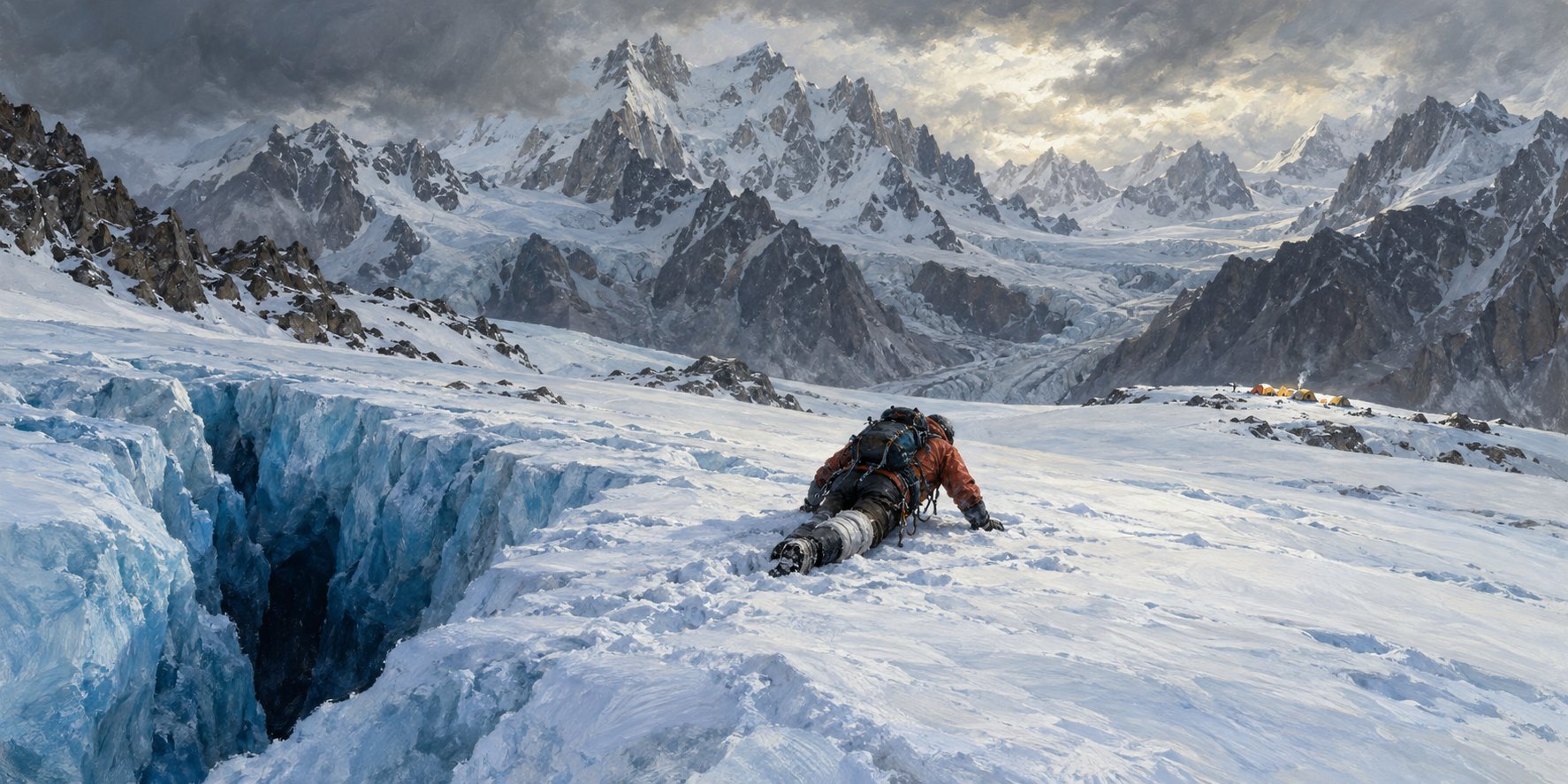
Joe Simpson and Simon Yates had climbed the west face of Siula Grande when their descent turned disastrous. Simpson fell and badly broke his leg. Yates began lowering his injured partner down the mountain, moving him in stages through worsening conditions instead of leaving him where he had fallen.
Then Simpson went over an unseen cliff and hung in empty space. With no way to communicate or take his weight off the rope, he could not help Yates, who was being pulled from his position above. Yates eventually cut the rope. Simpson fell into a crevasse, survived the impact and discovered that climbing back out the way he had entered was impossible. He lowered himself farther into the darkness and found another route toward daylight.
Over the following days he crawled and dragged himself back toward camp, arriving before his companions departed. Simpson has consistently defended Yates’s decision: keeping the rope intact could have killed them both. His account became Touching the Void, later adapted for film and stage. The most remarkable turn is not merely surviving the fall. It is that going deeper into the crevasse—apparently farther from rescue—became the way out. The ending also resists the easy revenge story. The man who had fallen understood why his friend had cut the line.
Sources and further reading: Joe Simpson’s first-person interview · Fresh Air archive: interviews with Simpson
22. Anatoli Bugorski: a particle beam passed through his head
Protvino, Soviet Union · 1978

In 1978, physicist Anatoli Bugorski leaned into malfunctioning accelerator equipment and placed his head in the path of a proton beam. He survived serious injury, including lasting facial paralysis, and continued scientific work. Masha Gessen’s 1997 reporting for WIRED described the accident, its consequences and his later life; it is an important source behind the much-repeated story.
An accelerator is not simply a very bright lamp. Electric fields increase the energy of charged particles, and magnets guide or focus the beam. The machinery is built to bring particles into controlled paths and interactions. A person entering such a path is an accident radically different from the harmless glow suggested by science-fiction laboratories. The invisible nature of a beam does not make the equipment around it an ordinary workspace.
This is also a case where the spectacular numerical versions deserve restraint. Internet retellings often repeat enormous radiation figures without explaining what was measured, where energy was deposited or how a localized exposure differs from a whole-body dose. Those numbers are unnecessary to the central event, so they are omitted here. No comic-book transformation is needed. A scientist was injured by the apparatus he worked with, lived through it and continued a career. The outcome is extraordinary without pretending that we possess a complete public medical record of every consequence.
Sources and further reading: WIRED: Gessen’s 1997 reporting on Bugorski · CERN: how accelerators work · CERN-hosted teaching material mentioning Bugorski
23. Apollo 13: the Moon ship became a lifeboat
Earth–Moon space · April 1970
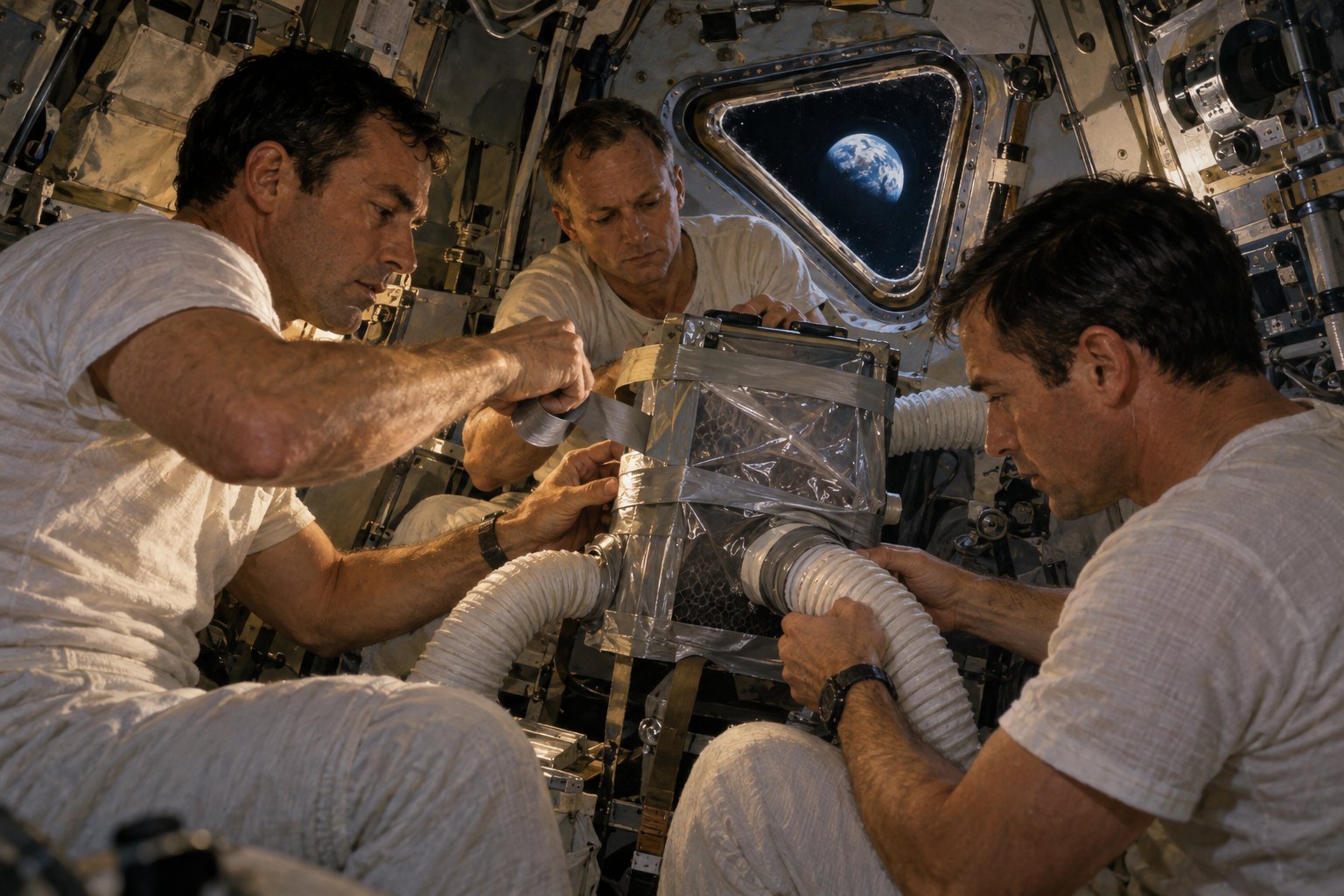
Apollo 13 was supposed to land on the Moon. On 13 April 1970, an oxygen tank in its service module ruptured, crippling the spacecraft while Jim Lovell, Jack Swigert and Fred Haise were far from Earth. A mission designed around exploration suddenly became a question of whether three people could get home at all.
The lunar module Aquarius became their lifeboat. Equipment intended for a shorter stay by two astronauts had to help sustain three men on the return journey. Power and water were restricted, the cabin grew cold and carbon dioxide accumulated. Engineers on the ground devised an adapter so filters from the command module could work with the lunar module’s incompatible system. The crew assembled it from materials they actually had aboard.
Controllers and astronauts also had to manage the route, conserve resources and prepare the command module for re-entry. All three returned safely on 17 April. NASA’s mission history makes clear how many separate problems lay inside the familiar phrase “Houston, we’ve had a problem.” This was a rescue conducted without another vehicle arriving to collect anyone. The spacecraft already surrounding the crew had to become its own improvised rescue system, while people on Earth tested ideas and transmitted procedures across the distance. A lunar landing failed; a coordinated effort to bring its crew home succeeded.
Sources and further reading: NASA: Apollo 13 mission details · NASA: carbon dioxide and the lunar-module lifeboat
24. USS Squalus: a rescue bell reached the men on the seabed
Off New Hampshire, United States · May 1939
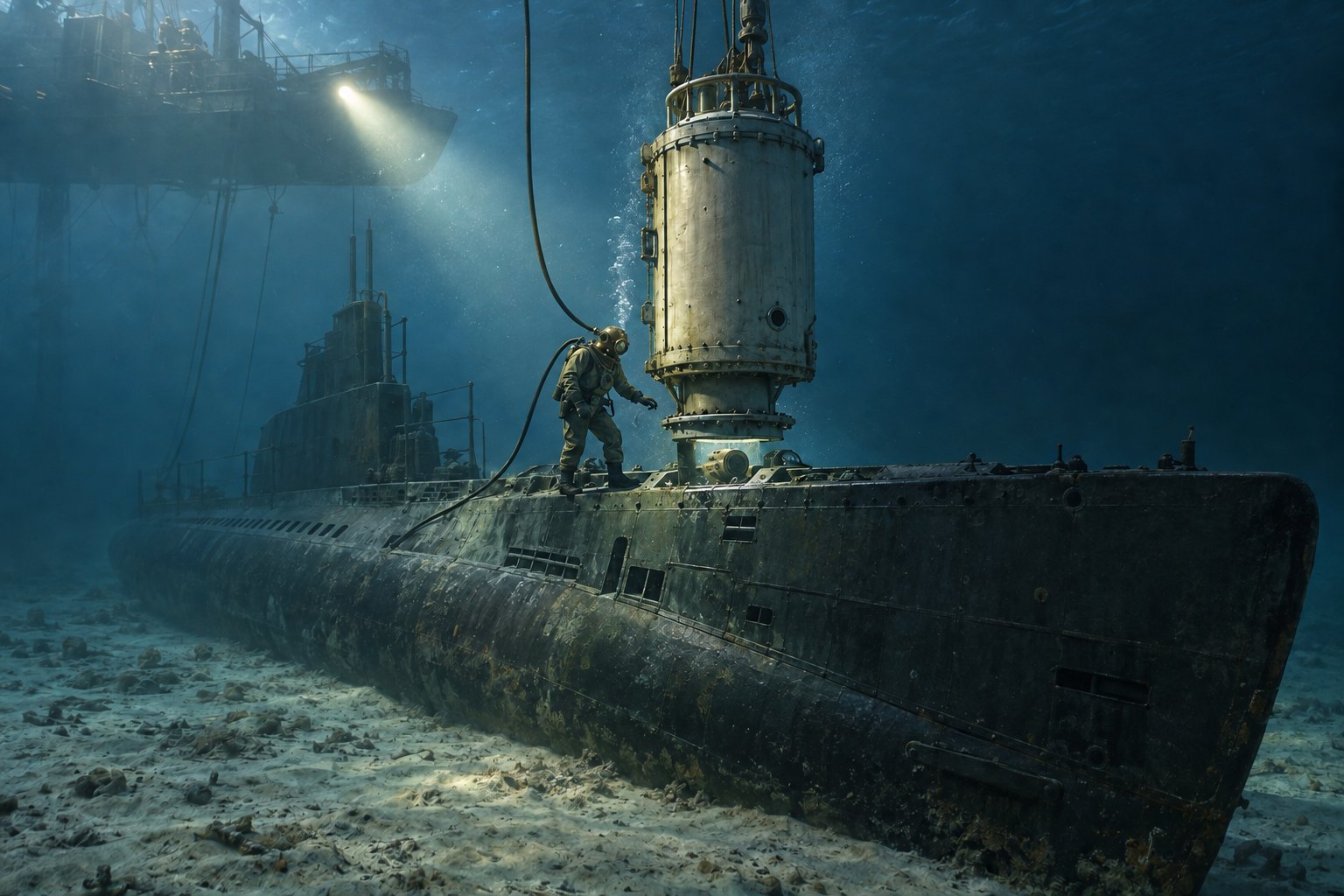
USS Squalus was a new submarine conducting a test dive when a valve failure let seawater enter. On 23 May 1939, it sank off the New Hampshire coast, coming to rest about 243 feet below the surface. Twenty-six people died in flooded compartments. Thirty-three remained alive in the forward part of the vessel.
Their problem was brutally simple. The ocean above them was too deep for an easy escape, and the submarine could not surface. Rescuers brought the McCann rescue chamber, a diving bell designed to connect with a submarine hatch. It could establish a protected passage between the trapped vessel and a chamber that would then carry people upward. Divers and the surface team had to make that system work on a real wreck, not merely during practice.
In four rescue trips beginning on 24 May and ending shortly after midnight on 25 May, all 33 survivors were brought to safety. The Navy later salvaged the submarine. Its official history preserves the rescue through operational accounts and the equipment involved. There is an unusual kind of suspense in this story: a machine invented for a disaster reached exactly the disaster it was built to solve. Preparation could not save everyone aboard, but it changed the fate of those still breathing. While they waited in a steel compartment on the seabed, people above were constructing a usable doorway through the sea.
Sources and further reading: Naval History and Heritage Command: rescue and salvage lecture · Naval History and Heritage Command: rescue overview · Naval Historical Center archive: the four rescue trips
25. The 33 Chilean miners: the mountain finally gave them back
Atacama Desert, Chile · August–October 2010
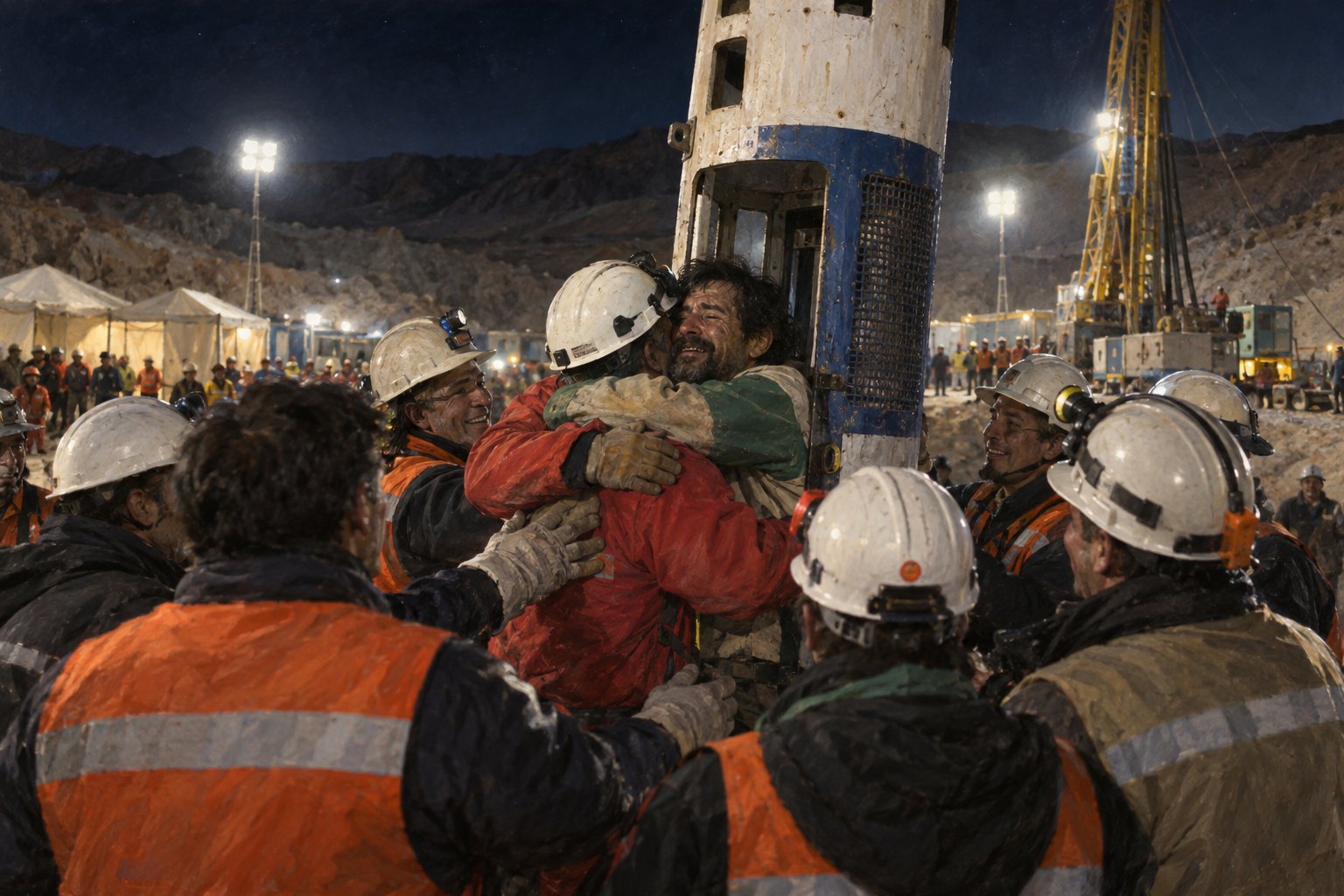
For 17 days, the people above the San José mine did not know whether the 33 men trapped underground were alive. A collapse on 5 August 2010 had cut off their route to the surface. When a drill finally reached them, the discovery changed the task from searching for possible survivors to sustaining a group known to be waiting deep below.
The miners had rationed the little food available to them. Once contact was established, narrow boreholes allowed supplies and communication, but bringing people out required a much larger route and a carefully managed rescue. Chilean teams led the operation, drawing on international drilling, engineering and medical expertise. NASA provided advice based on keeping people healthy in confined, isolated environments. That contribution was one part of a much larger effort.
In October, the men rose one at a time in a specially built capsule through a shaft connecting their refuge to the desert above. All 33 survived 69 days underground. The images of reunions made the ending seem immediate, but each ascent rested on weeks of planning and the miners’ own work to endure together. Few survival stories express distance so strangely. Families could stand on the same patch of land as the people they loved, separated not by an ocean or a country but by hundreds of metres of rock and the difficult business of making a hole.
Sources and further reading: NASA: Chilean miners rescue oral histories · NASA Goddard: the Chilean rescue experience
26. The Thai cave rescue: finding the boys was only half the problem
Tham Luang, Thailand · June–July 2018
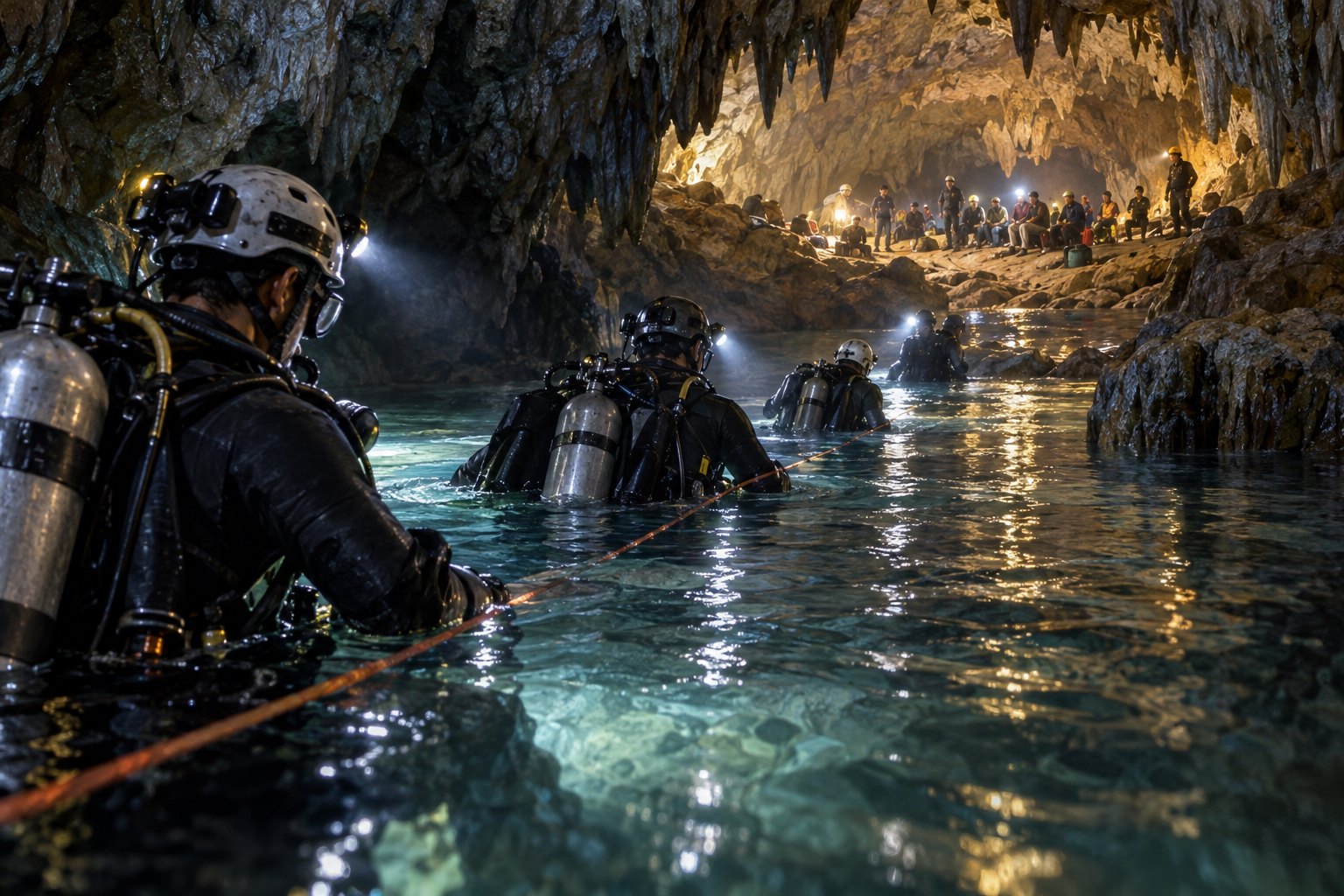
Twelve boys and their football coach entered Tham Luang cave in June 2018. Rising water trapped them far from the entrance. When divers finally found them alive on a ledge, the discovery seemed like the ending of a rescue story. Instead, it exposed the next problem: how could inexperienced swimmers travel through long, flooded, confined passages that challenged specialist divers?
The eventual plan was extraordinary. The team members were anaesthetized and carried through the submerged route by rescuers, wearing full-face breathing masks. Medical and diving specialists had to manage an operation in which panic, water entering a mask, falling body temperature or an airway problem could be disastrous. The evacuation depended on many people positioned throughout the cave and outside it, not simply on the divers whose names became famous.
All 13 were brought out alive in July. A former Thai Navy diver, Saman Kunan, died during preparations, and the rescue’s success should retain that loss. Published medical accounts describe the unusual techniques and warn against treating them as a generally safe method for transporting unconscious divers. The astonishing outcome belongs to this particular emergency and its exceptional team. A dark ledge became a place where children waited for adults to solve a problem with no comfortable option, and those adults turned an almost unthinkable plan into a route home.
Sources and further reading: Diving and Hyperbaric Medicine: rescue anaesthesia report · New England Journal of Medicine: care during the rescue · ABC News: Saman Kunan’s death during preparations
27. Reshma Begum: a voice beneath 17 days of rubble
Savar, Bangladesh · April–May 2013
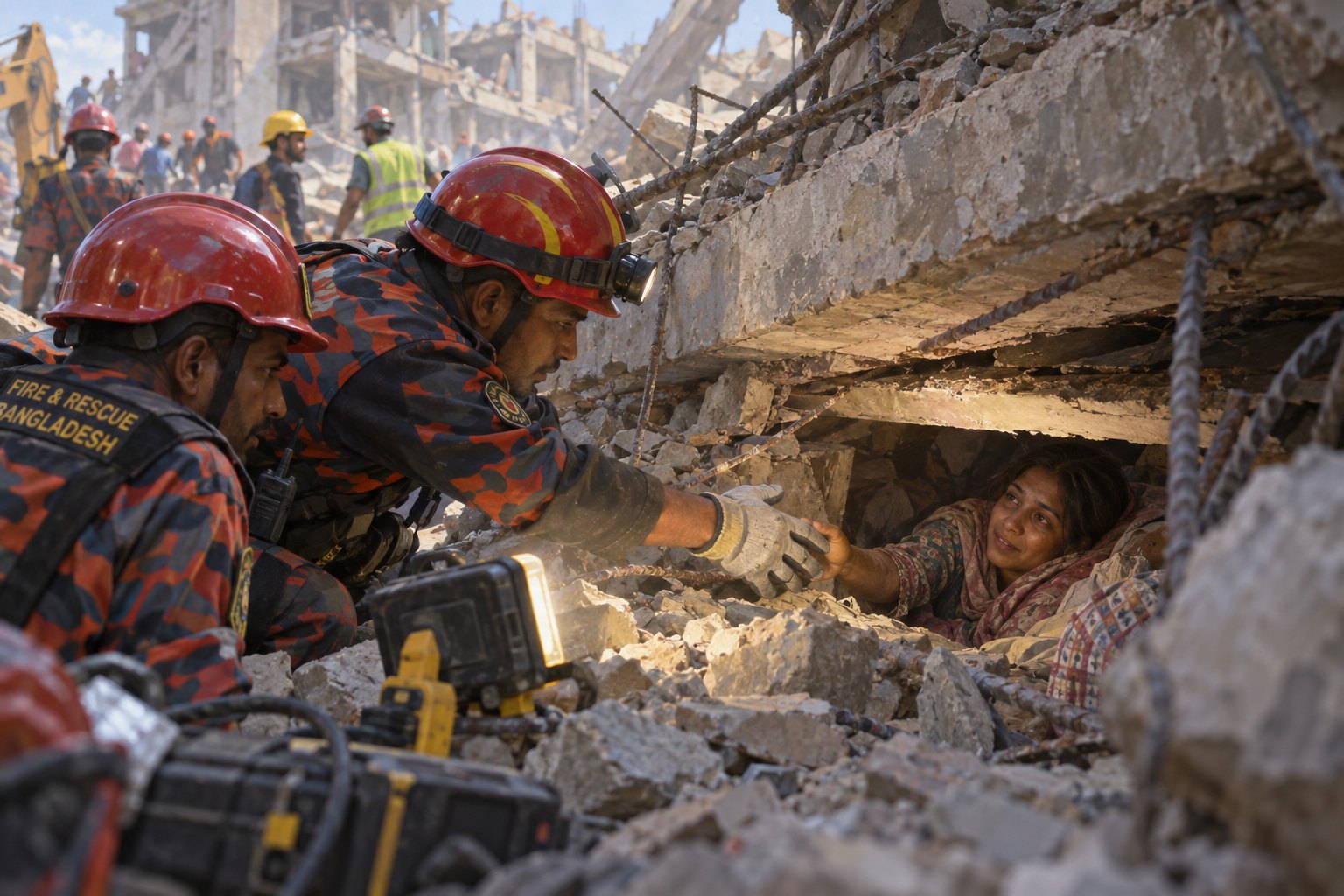
Workers clearing the collapsed Rana Plaza building were recovering bodies when they heard a living voice. It was 10 May 2013, seventeen days after the disaster. Reshma Begum, a garment worker trapped in a small space inside the ruins, was still alive.
The eight-storey building had collapsed on 24 April. Begum later said she had survived with water and small amounts of food available in the debris. Rescue workers discovered her while cutting through the wreckage, and cameras captured the effort to reach and lift her out. By then, the operation had been going on for so long that another live rescue felt scarcely imaginable. She was taken to hospital as people watching at the site and on television tried to comprehend the delay between collapse and discovery.
Contemporary Reuters reporting documents the rescue and the accounts given immediately afterward. Her survival must sit beside the scale of the tragedy: more than 1,100 people died at Rana Plaza. A remarkable rescue does not turn an industrial catastrophe into a happy ending. It gives us one life emerging from it. The detail that lingers is the gap between two kinds of work: clearing a place where death seems certain, then stopping everything because a person underneath the concrete is asking to be heard. For Begum, being alive and being found had become two separate ordeals.
Sources and further reading: Reuters: contemporary rescue reporting, via Stabroek News · International Labour Organization: Rana Plaza deaths and compensation
28. Leonid Rogozov: Antarctica’s doctor became his own patient
Novolazarevskaya Station, Antarctica · April–May 1961
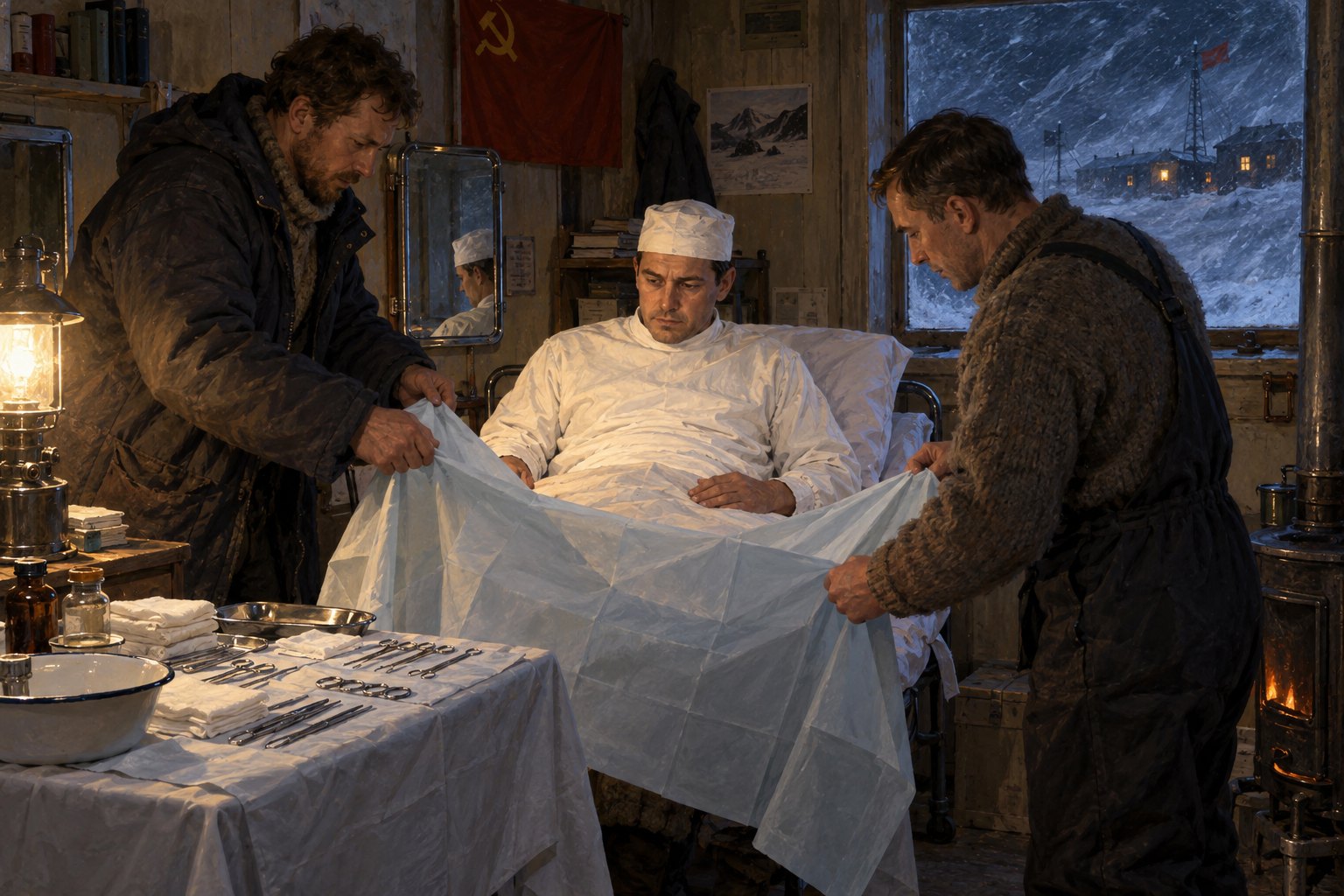
Leonid Rogozov was the only doctor at a remote Soviet Antarctic station when he developed the symptoms of appendicitis. The ship had departed, winter was approaching and evacuation was not a practical option. The person trained to perform the operation was also the person who needed it.
In late April 1961, the 27-year-old surgeon prepared to remove his own appendix. Other expedition members helped with lighting, instruments and observation, but none was another medical professional able to take over. Rogozov remained conscious under local anaesthesia and completed the operation on himself. After recovering, he resumed his duties. The surviving photographs make the scene seem almost staged: a small Antarctic room, ordinary assistants and a surgeon operating on his own body because there is no one else.
A later BMJ case report, co-authored by his son, draws on the historical account and family material. Rogozov had sailed south with an expedition establishing a new station; months later, that same remoteness had collapsed the usual division between doctor and patient. The supporting people remained essential even when they could not perform the surgery. He supplied the medical skill; the others helped create the conditions in which he could still use it. Outside the small room lay Antarctica, while inside it the expedition’s entire surgical team and its patient occupied the same bed.
Sources and further reading: BMJ: Auto-appendectomy in the Antarctic, case report · Peer-reviewed history: Three Centuries of Appendicectomy · South Pole Station historical archive: source note and photographs
29. John Paul Stapp: he rode a rocket sled to learn how people survive
New Mexico, United States · December 1954
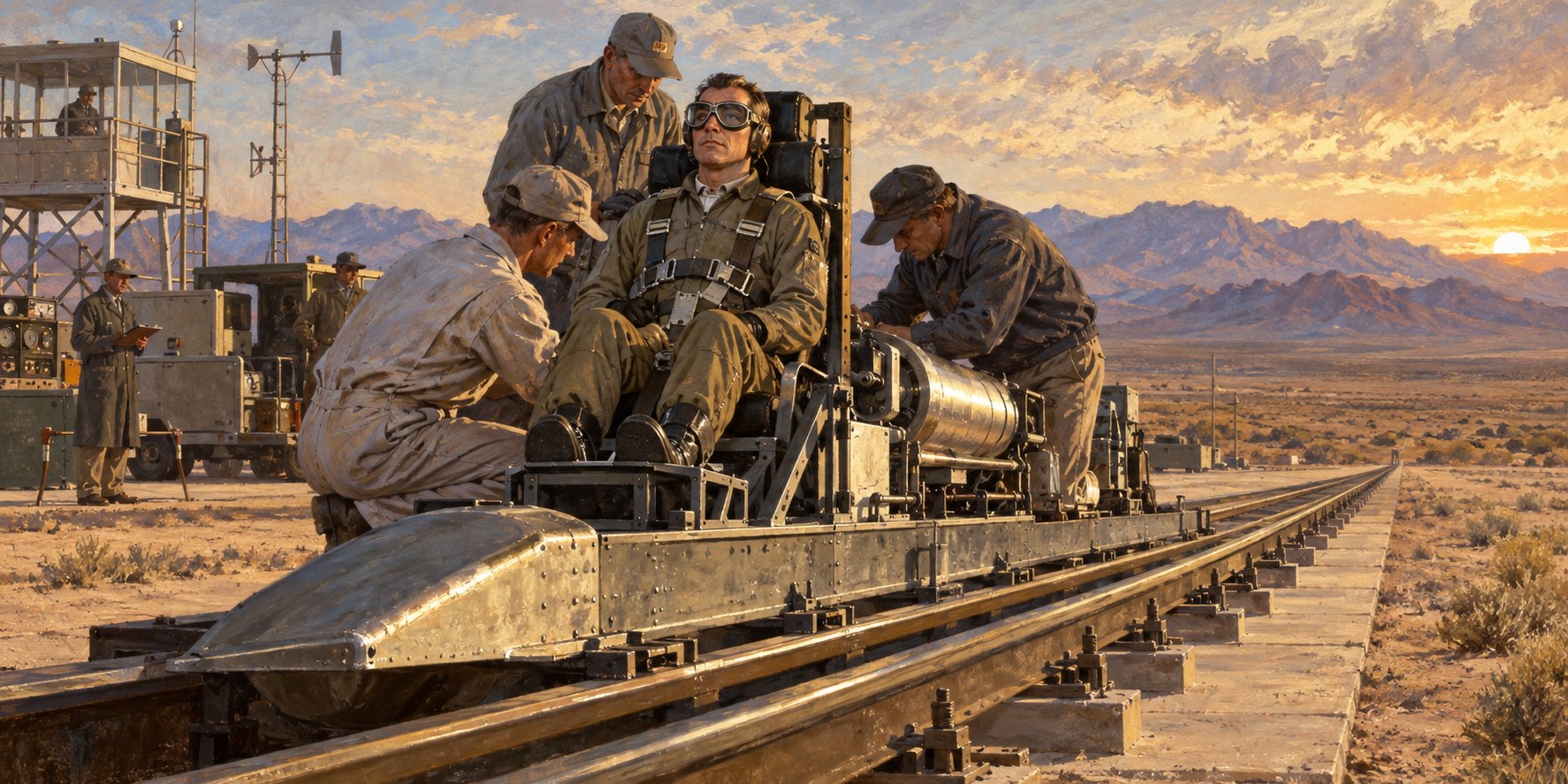
John Paul Stapp deliberately strapped himself into a rocket sled. The Air Force physician was studying what rapid acceleration and deceleration did to the human body, and he repeatedly served as a test subject. On 10 December 1954, his Sonic Wind No.1 run reached 632 miles per hour before a violent braking sequence brought it to a stop.
Stapp experienced a peak load of 46.2 g—more than 46 times ordinary gravitational acceleration. Those figures belong to a controlled test with a particular restraint system and body position; they are not a universal measure of what anyone can tolerate. He survived, but testing took a physical toll, including injuries and temporary visual problems. The point of the programme was to learn how equipment could keep people alive when speed changed violently.
The Smithsonian preserves the sled and explains the connection between Stapp’s work and improved safety standards. His findings helped challenge assumptions about survivable forces and supported better restraints. Unlike most people in this collection, he entered the danger intentionally as part of research. That makes the scene peculiar in another way: the person who most understood the medical risks was the one sitting in the seat. A spectacular run down a desert track became evidence that could help protect people who would never see a rocket sled, but might one day desperately need a seat belt.
Sources and further reading: Smithsonian National Air and Space Museum: Stapp and safety · US Air Force: Stapp’s aeromedical research and 1954 run
30. Anna Bågenholm: the ice-cold patient whose heart started again
Northern Norway · May 1999
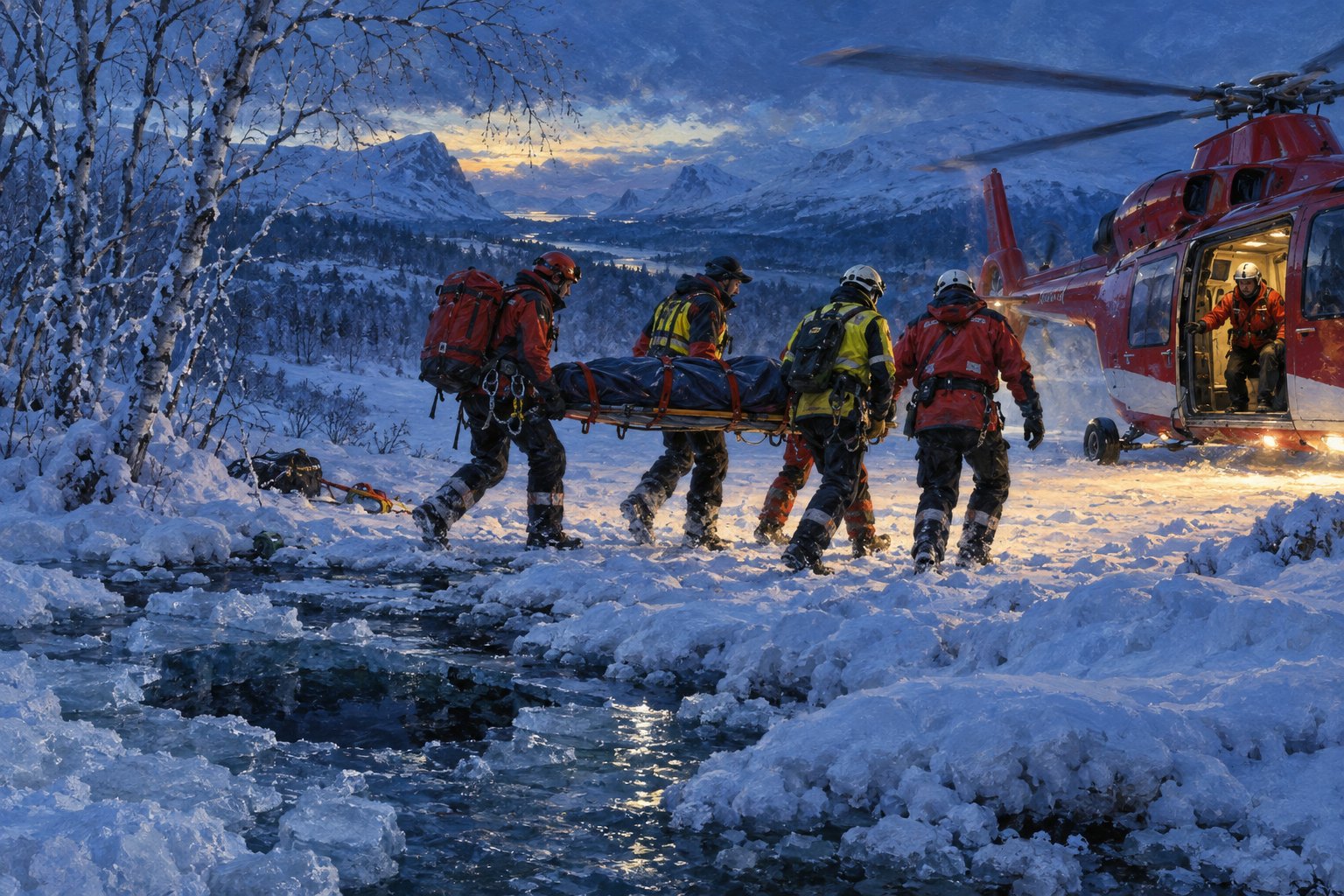
A skiing accident near Narvik sent doctor Anna Bågenholm beneath the ice of a rushing stream. Her companions struggled to free her while icy water poured over her body. By the time they got her out, she was no longer breathing and her heart had stopped. They began resuscitation instead of assuming that the appearance of death settled the outcome.
At the University Hospital of Northern Norway, her core temperature was recorded at just 13.7°C. A specialist team used cardiopulmonary bypass to restore circulation and rewarm her. The effort continued through hours of treatment. Her heart recovered, and after intensive care and lengthy rehabilitation she returned to medical work. The case was reported in The Lancet and later described by the hospital where she was treated.
She had suffered circulatory arrest; she had not been proven irreversibly dead and then resurrected. Profound hypothermia created an exceptional situation, and skilled rescue, transport, hospital care and rehabilitation all belonged to the outcome. The hospital’s account stresses that chain of teamwork. There is a final reversal as startling as the original accident: the patient who arrived without a heartbeat later worked as a physician in the institution that saved her. The number 13.7 can dominate the headline, but the story is really about people continuing to act while an apparently hopeless situation still contained a possibility.
Sources and further reading: University Hospital of Northern Norway: Bågenholm’s rescue and recovery · The Lancet: resuscitation from accidental hypothermia of 13.7°C · UiT research reporting: surviving hypothermia
What makes these accounts linger is not simply that the odds looked terrible. It is the moment when the expected ending failed to arrive: the diver found a hand that moved; the climber appeared outside a tent; the rescue crew heard a voice beneath concrete. Sometimes the explanation includes equipment or unusual physical circumstances. Sometimes the surviving record cannot tell us precisely why one person lived.
The strongest true stories do not need every uncertainty polished away. Their human scale is already astonishing: a little remaining air, a repaired raft, a path along water, a capsule wide enough for one miner. Set beside folklore, these events help explain why people keep telling seemingly impossible stories. Occasionally the impossible-sounding part is exactly what the witnesses had to report.
Continue reading: 30 Wild Folktales and Legends: Stories Too Strange to Forget.


