SCIENCE · TECHNOLOGY · POSSIBLE FUTURES
AI at the Edge
of Discovery
What artificial intelligence is doing in laboratories, hospitals, software, and the wider world—and three very different ways the next year could unfold.
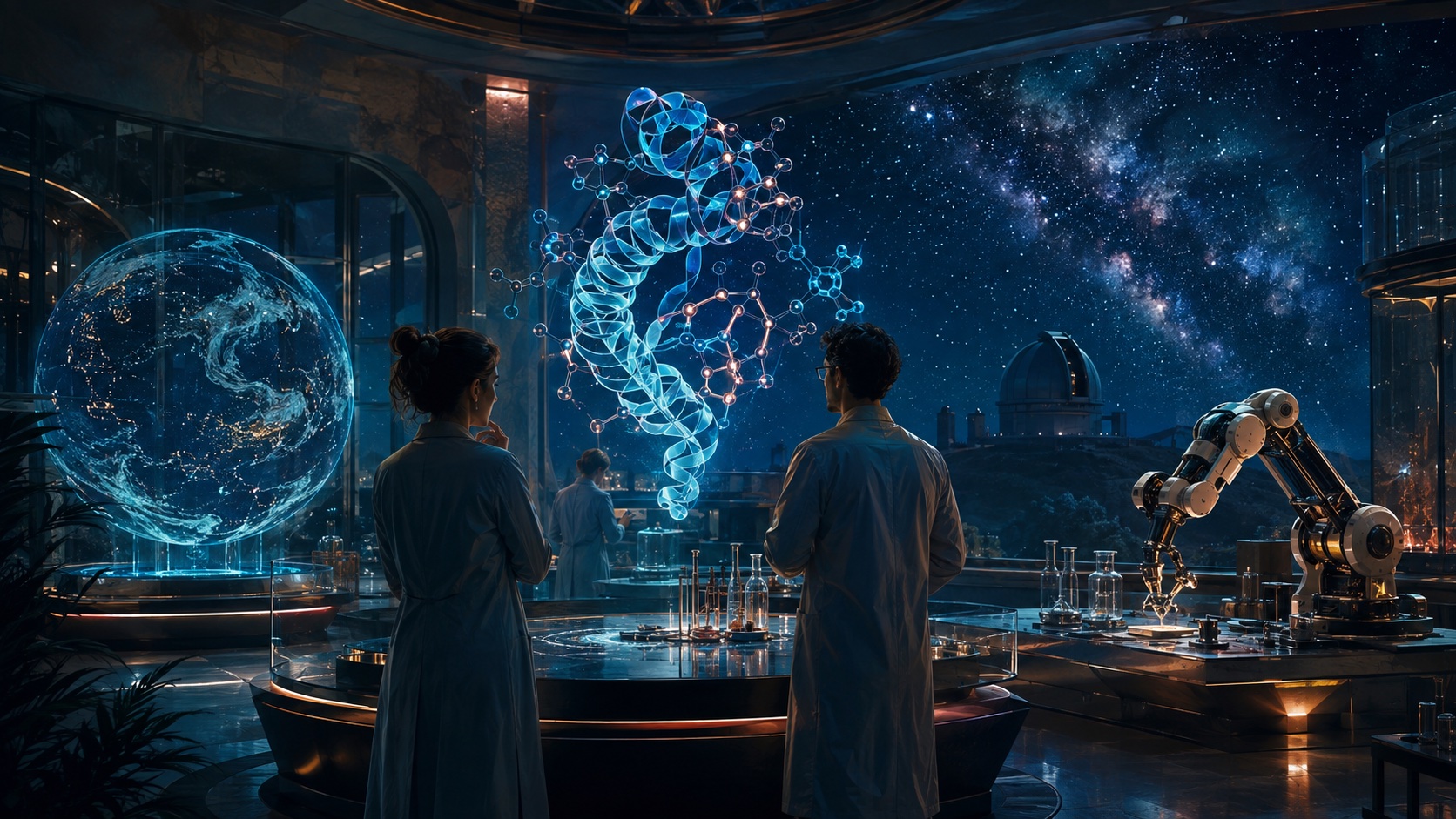
Imagine a laboratory at 2:17 in the morning. A machine has just rejected its forty-third idea. It has not become discouraged. It proposes a forty-fourth, checks the available equipment, and places another experiment in the queue. A human scientist will arrive at breakfast and decide whether the results mean anything.
That opening is an imagined scene, but it captures a real shift: computers are moving deeper into the work of discovery. They can help search the possibilities, and in some carefully constructed systems they can help decide what to try next. The extraordinary part is not that a machine appears to know everything. It is that it can help us investigate things we do not yet know.
AI is already useful enough to matter, unreliable enough to require care, and powerful enough to make the next year difficult to predict. Its future contains genuine hope: better forecasts, new treatments, more accessible technical tools. It also contains bad science at scale, concentrated power, damaged trust, and systems given more responsibility than their reliability deserves.