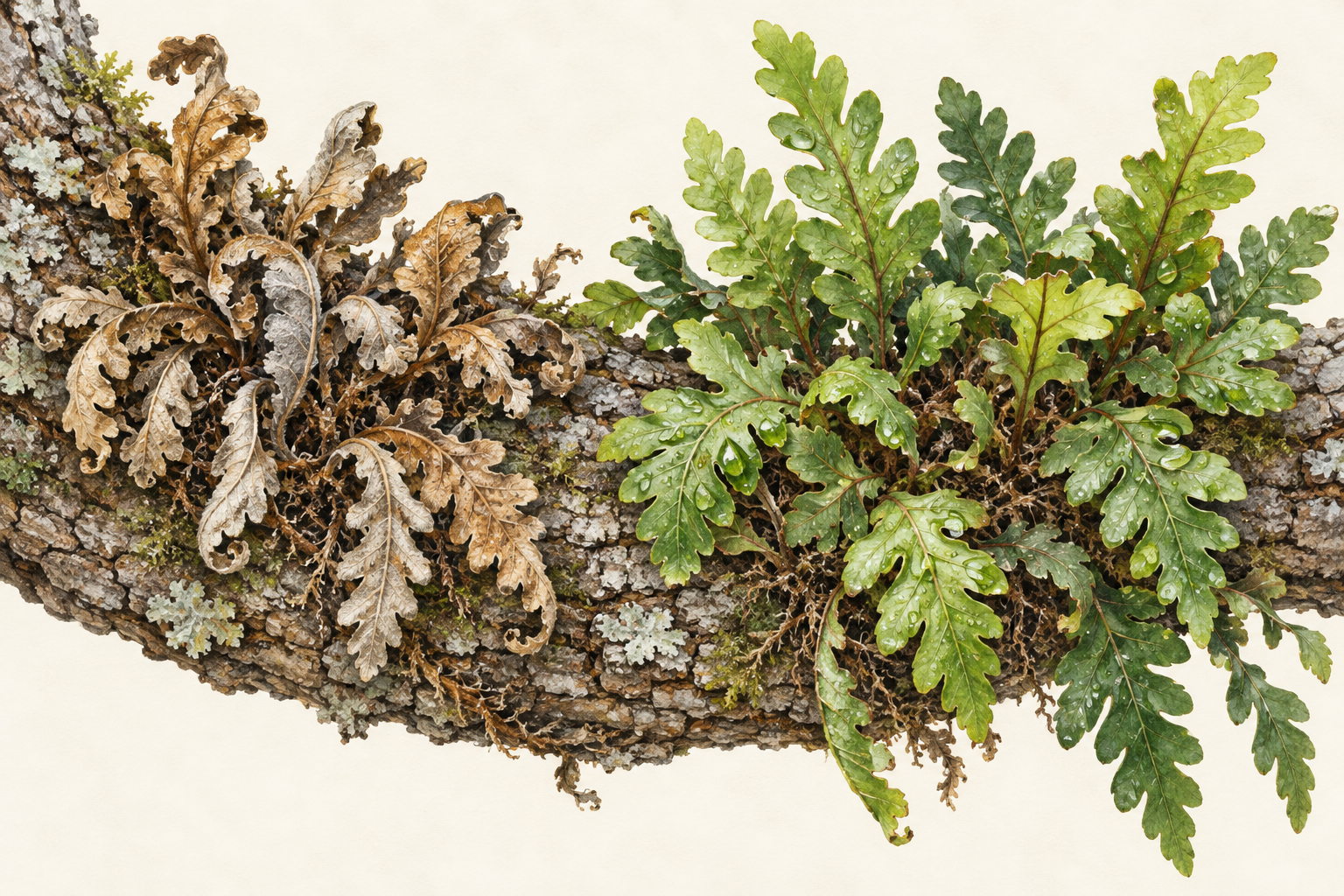
A small fern on an oak branch can seem to disappear into dead bark during a dry spell. Its fronds curl, fade, and look thoroughly finished. After rain, the same patch can open into fresh-looking green foliage within hours. The change is dramatic enough to have earned it the name resurrection fern.
The name describes an appearance, not a return from death. The living tissues have survived dehydration and resume activity when water becomes available. That distinction is the real biological achievement.
A plant living above the soil
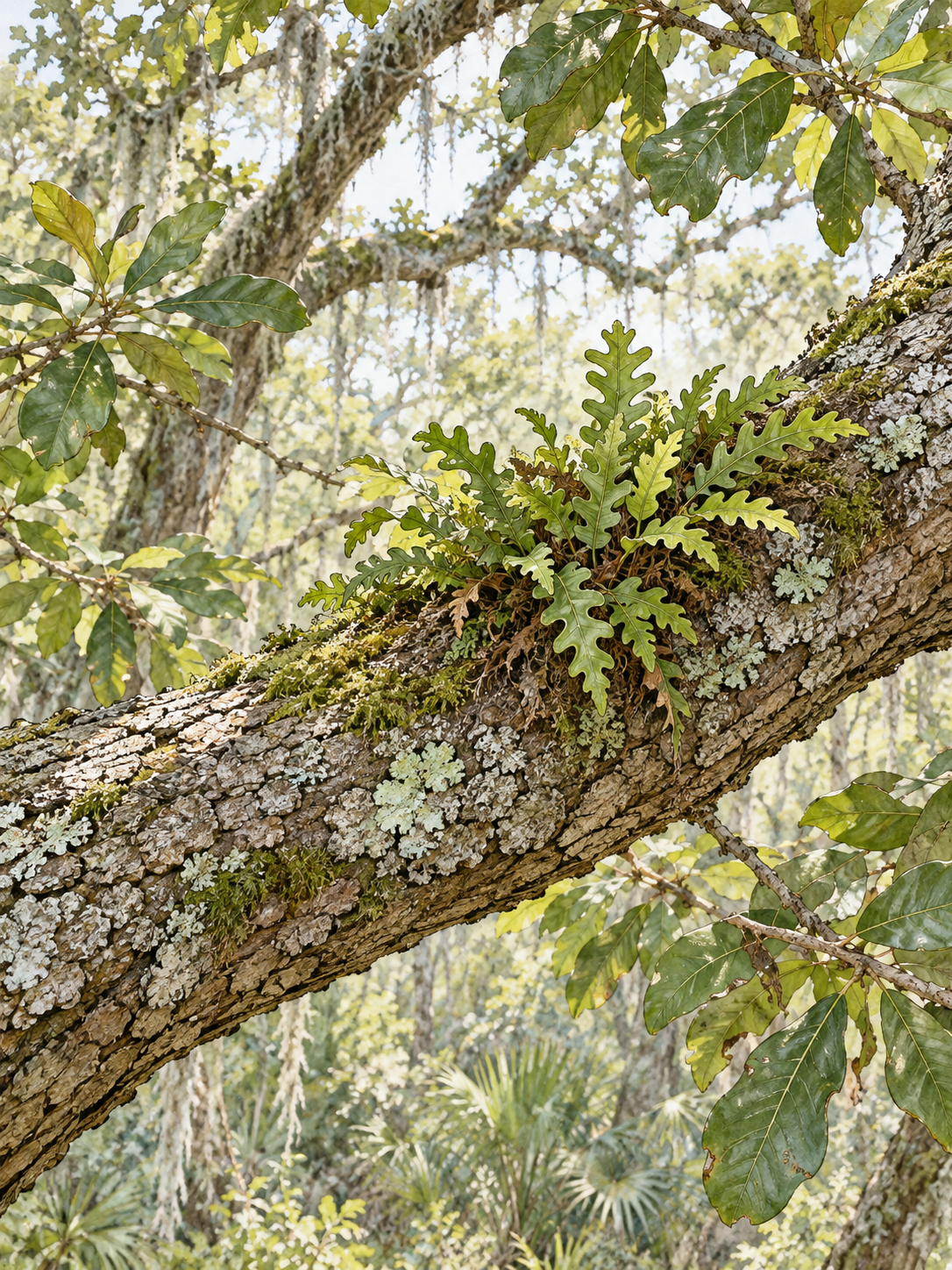
The resurrection fern familiar in the southeastern United States commonly grows on tree branches. It is an epiphyte: a plant using another plant as a place to live. It still performs its own photosynthesis, rather than drawing its food from the tree as a parasite would.
Bark offers a surface to occupy, but it provides a precarious water supply. Rain comes and goes, and an exposed branch can dry rapidly. A fern living there benefits from being able to withstand a loss of water that would severely damage many other plants.
University of Florida accounts also describe resurrection ferns growing on rocks, bricks, and fallen wood. A tree is a useful support, rather than an indispensable source of nourishment.
Curling is part of the response
As fronds dry, their form changes. Curling draws the upper leaf surface inward and exposes more of the underside. A 2021 study of desiccation and rehydration in Pleopeltis polypodioides examined these shape changes alongside the recovery of water transport and photosynthetic function.
Restoring a green appearance is only the visible part of recovery. Cells and the plant's internal transport system must withstand drying, then function again as water returns. Researchers distinguish the recovery of hydration from the recovery of photosynthesis, because those are related processes rather than one identical event.
The ability is called desiccation tolerance. It differs from simply keeping enough water inside a plant throughout a drought. The fern can tolerate a substantial reduction in water and then repair or restart the systems needed for ordinary activity.
A dramatic example with ordinary constraints
How quickly a fern reopens depends on its condition and surroundings. The University of Florida describes changes within hours after rain, while another extension account describes the apparent recovery over about a day. These are useful observations, rather than a universal stopwatch for every frond.
Likewise, the dry state is a survival strategy, not continuous productive growth without water. The plant benefits when suitable wet periods return and allow photosynthesis and development.
A brown patch on a branch can therefore represent waiting rather than failure. Looking at it over several weather changes reveals more than judging it from one dry afternoon.
The resurrection fern makes a large idea visible on a very small stage: staying alive does not always require maintaining the outward appearance of activity. Sometimes survival means changing form, protecting what remains, and being ready to resume when the environment offers another opportunity.
See or hear more: Watch the fern reopen in a UF/IFAS-linked video.
Sources and further reading: UF/IFAS: Resurrection Fern; UF/IFAS: Hardy Native Air Plants; Desiccation and rehydration dynamics in the resurrection fern.
Explore more creative work at Incoprea.