Showing posts with label Maritime History. Show all posts

Friday, October 23, 2026

Portolan Charts: A Sea of Directions Before the Familiar Map Grid

A sea chart can make land look like the margin of the story. Names crowd the coast. Fine lines cross open water. Inland places may receive much less attention. The pattern tells you something about the questions the chart was made to answer.
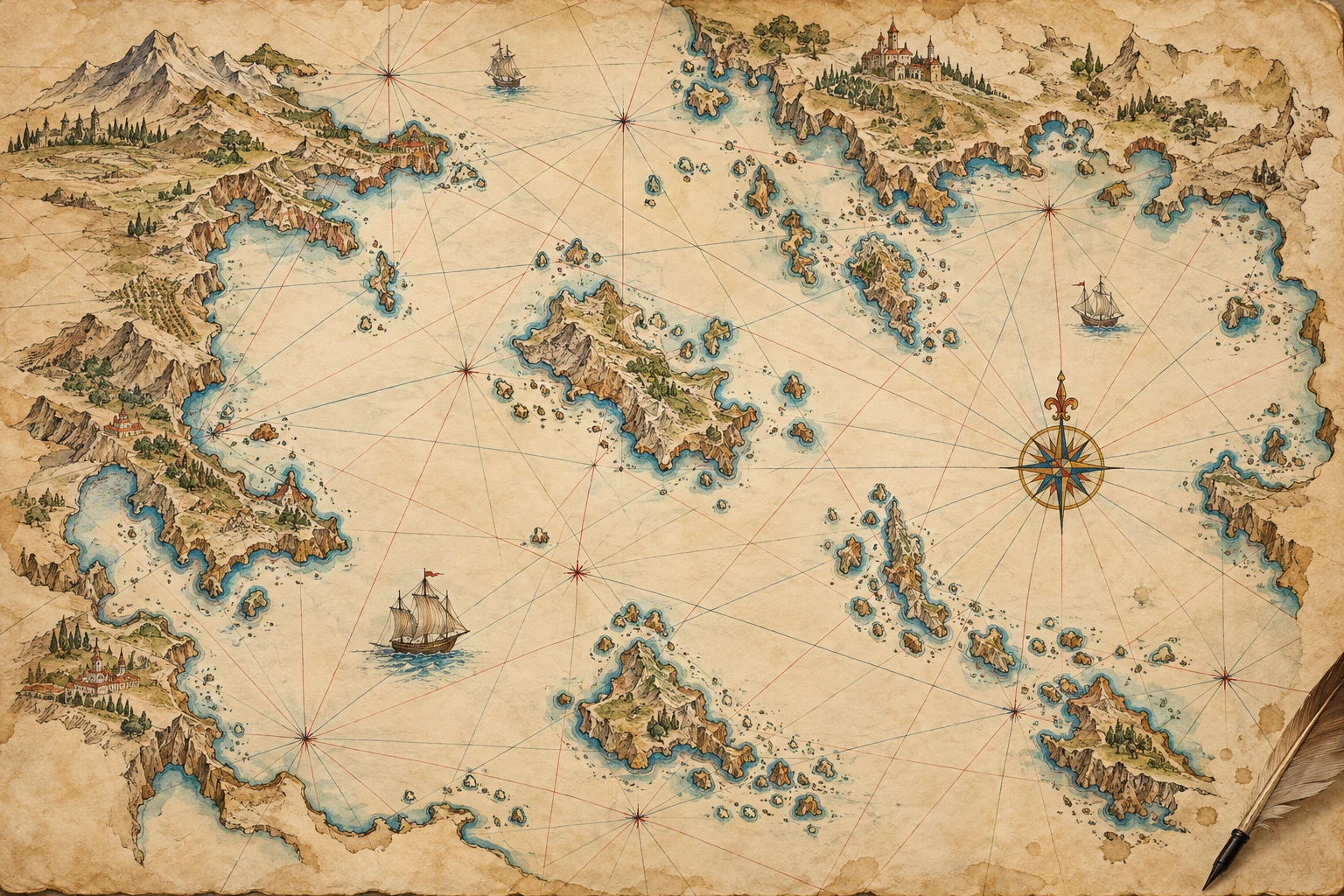
A fictional late-medieval Mediterranean-style sea chart on warm parchment viewed overhead, entirely invented coastline with bays and small islands, several fine multicolored bearing-line networks, one modest compass rose, no readable place names, no modern latitude-longitude grid, no exact historical chart.
Bearing lines organize a fictional coastline. Real portolan charts must be studied as individual objects with their own scale, geography, and labels.

The Library of Congress guide to portolan charts describes a tradition emerging in the late thirteenth century with a strong interest in coastlines, ports, and bearing lines. It also reminds readers that charts could be made for display as well as practical use. An impressive chart is not automatically evidence of a voyage.

Read the lines as directions

The crossing networks are commonly described as rhumb-line or bearing networks. They offer directions across the chart, often organized around compass roses or related centers. They are not simply decoration, but neither should every crossing line be read as the track of a ship that once sailed there.

Compare this with a familiar modern road map. The map may contain a grid, road symbols, scale, and labels. Those elements help organize possible movement; they do not all represent journeys already taken. A bearing network similarly belongs to the chart's way of arranging information.

A bearing line is one piece of a route

A unitless fictional coast and adjustable ray separate direction from distance, safety, and historical chart conventions.

Open a bearing line is one piece of a route in its own window.

The interactive ray begins at a fictional harbor. Changing its angle changes direction, while leaving distance unanswered. Turn it toward the land and the limitation becomes obvious: a line can point through an obstacle. The model supplies no safe route, current correction, wind allowance, or historical magnetic adjustment.

This deliberate incompleteness is useful. A direction is one ingredient of navigation. A chart's coastline, place names, distance scale, and other marks must be read with it. An attractive network does not remove the need to identify what the surrounding information actually says.

North may be somewhere you did not expect

A chart attributed to Placido Oliva in the Library of Congress is cataloged with north to the right, indicated by fleurs-de-lys. Its record notes multiple compass roses and two scale bars whose units are unidentified. Those details are excellent reminders not to import a modern map's conventions without checking.

Start by finding an orientation indicator rather than assuming the top edge means north. Then locate the scale and read what the catalog actually establishes. If the unit is unidentified, do not quietly turn its marks into miles or kilometers. A calculation can be perfectly performed on an unjustified assumption and still produce a misleading result.

The same record gives an uncertain date in the 1580s and mentions a fragmentary signature. A catalog's question marks and brackets are part of its information. Removing them makes the object seem more firmly identified than the evidence allows.

A tradition changes across centuries

The Library's anonymous Mediterranean chart dated approximately 1320–1350 offers an early comparison on vellum. Its catalog describes probable Genoese production. “Probably” is doing real work: an attribution can be persuasive without being a named maker's signed statement.

For a much later comparison, the 1633 chart by Pascoal Roiz covers the Atlantic and adjacent continents while remaining cataloged within the portolan tradition. This is why a short description of early Mediterranean charts should not become an absolute rule about every later object carrying the same category name.

Try a chart-reading sequence
  1. Locate the north indicator before orienting the image.
  2. Choose one coastline and note where its names are placed.
  3. Separate a bearing line from a drawn coastline.
  4. Find a scale, and record whether its units are established.
  5. Read the catalog date, maker attribution, and material with all qualifications intact.

Now compare the spaces that receive little detail. That absence may reflect purpose rather than ignorance. A chart designed around coastal movement need not answer the questions a political atlas or land survey would prioritize. Different maps distribute attention differently.

Portolan charts become easier to appreciate when their dense linework stops looking like a puzzle to decode in one glance. Read one element at a time, then put the elements back together. The result is a more specific encounter with a working visual language and its changing uses.

Sources and further exploration

Explore all 80 new articles · Browse the complete illustrated collection

Continue exploring art, ideas, and unexpected connections at Incoprea.

Fram: The Ship Built to Let the Ice Lift It

The usual answer to moving ice is to get away from it. Fram was built around a different intention: enter the pack, remain there, and survive long enough to be carried through an Arctic drift. The ship had to make confinement into a working condition.

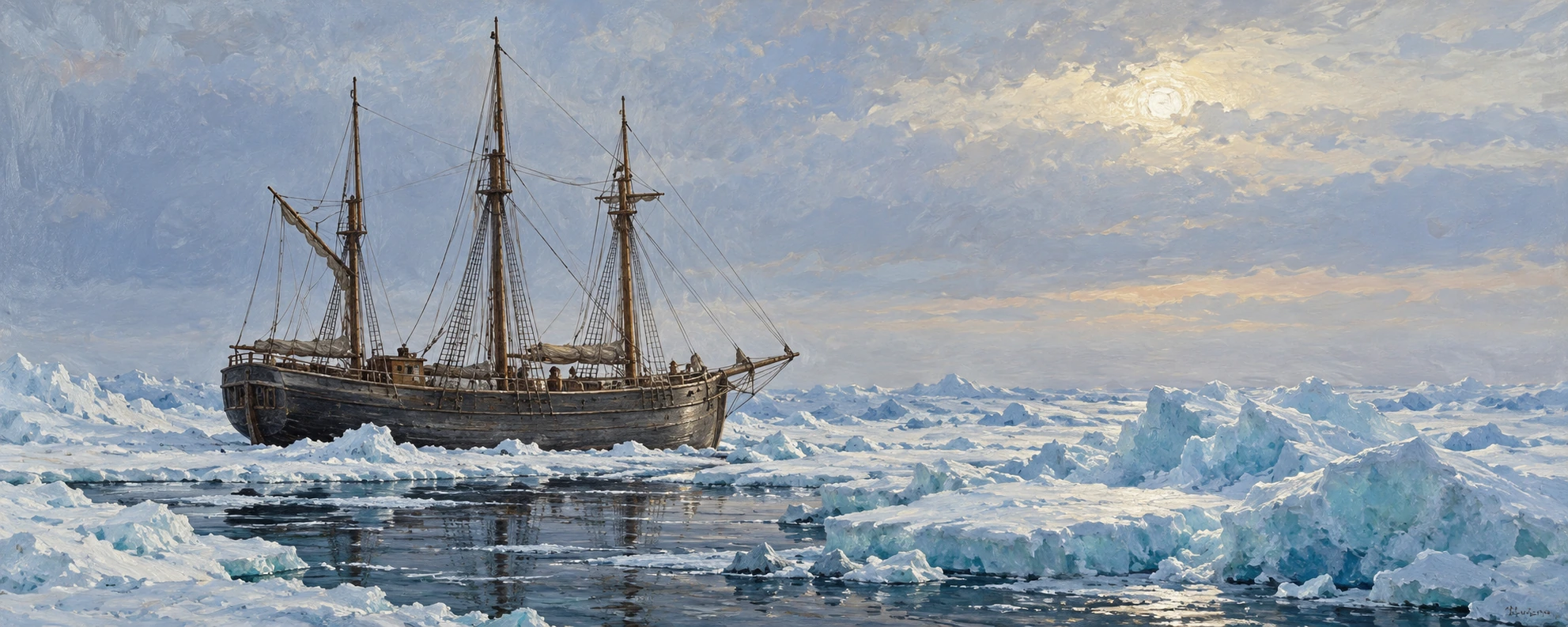
An interpretive side view of the wooden polar ship Fram at rest in Arctic pack ice, three masts and a robust rounded hull, small scale against low blue-white pressure ice and a dim pale sky.
Fram was designed for prolonged work in moving ice. This interpretive scene represents the design problem rather than a documented expedition moment.

Its unusual shape was not an isolated flash of inspiration. The Fram Museum's ship history describes close collaboration among Fridtjof Nansen, Otto Sverdrup, and the builder Colin Archer. Launched in 1892 at Larvik, Fram combined a broad, rounded hull with heavy construction and arrangements for prolonged life aboard.

Look at the direction a force is allowed to act

The design aim was to let pressure from the ice push the vessel upward instead of gripping and crushing a more conventional hull. The rounded cross-section was part of that aim. It makes more sense when understood as a relationship between shape and contact, rather than as a magical property of exceptionally thick wood.

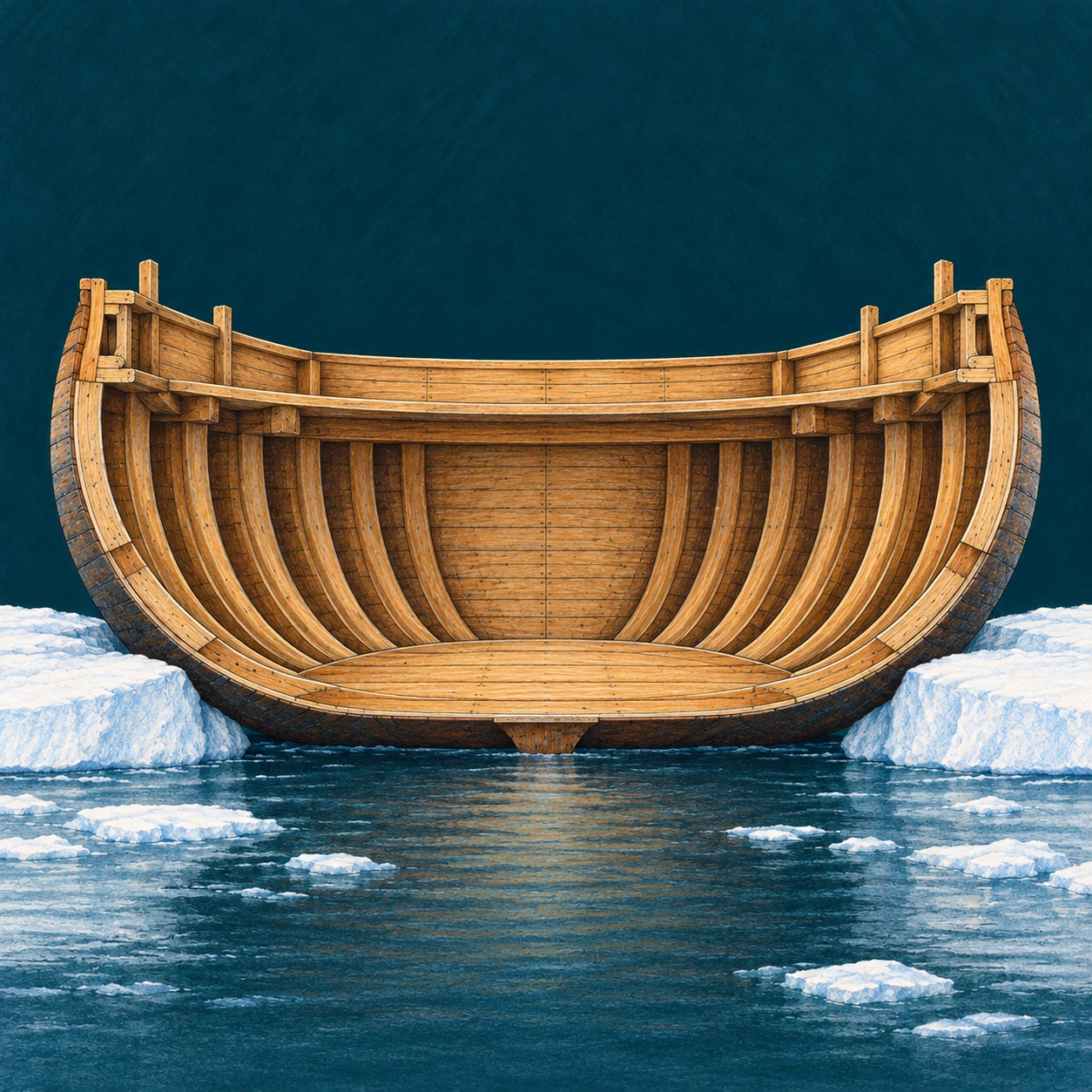
A simplified cross-section of a stout wooden polar ship inspired by Fram, showing a wide rounded exterior hull, many thick timber ribs and a clear inward-sloping lower hull; it sits between two low white ice slabs which touch the sides.
The rounded section is a simplified design study. It is not a measured Fram shipyard drawing or a calculation of ice loads.

The enlarged section above is a qualitative study. It shows a broad hull between simplified ice blocks, without supplying timber dimensions or calculated loads. Real ice does not press as a neat pair of identical blocks, and no small diagram can establish how a ship responds to every combination of pressure, cracking, friction, and motion.

A useful comparison is to ask what a shape encourages, not what it guarantees. An inward-sloping contact surface may help convert sideways pressure into upward movement. Strength is still necessary. So are details that protect vulnerable components and a plan for living with conditions that cannot be commanded.

A good answer in ice can be an uncomfortable answer at sea

The museum's technical account notes a consequence of Fram's broad proportions: uncomfortable rolling in open water. That is an unusually useful detail because it prevents the design from turning into a simple story of perfect engineering. A feature can improve performance in one setting while imposing a cost in another.

Before you admire any specialized machine, make a list of the conditions it was built to face. Then ask which conditions have been left off the list. Speed, steering, comfort, draft, cargo, endurance, and survival may compete. A sensible design is a set of choices among those demands, not the winner of a single abstract contest.

Fram also needed to function as an inhabited space. Research and daily routines had to continue during a journey whose timing was uncertain. The hull's survival and the crew's ability to live aboard were related problems. A ship that remains afloat but cannot support its occupants has not solved the expedition's whole task.

Drifting did not mean moving straight toward the goal

The museum's Nansen account describes the 1893 departure and the deliberate entry into the pack. It also describes drift that sometimes carried the ship north and sometimes south. The plan depended on a large natural movement without allowing the crew to steer each day's progress.

This distinction is central to understanding the expedition as an experiment. The investigators could choose equipment, provisions, observations, and an initial strategy. They could not turn the Arctic into a conveyor belt with a guaranteed schedule. The uncertainty was not a decorative adventure element added afterward; it was built into the method.

Read a polar ship as a set of linked requirements
RequirementQuestion to ask of the evidence
Survive ice pressureWhich features concern shape, and which concern strength?
Travel in open waterWhat compromises appear in handling or comfort?
Remain inhabitedWhere are storage, insulation, work, and living arrangements?
Serve another expeditionWhich parts were altered between journeys?

The preserved ship is also a record of revision

The museum's exhibition account explains that Fram was modified for successive expeditions and is presented in the configuration associated with Sverdrup's second voyage. A preserved vessel is therefore not automatically an untouched snapshot of its first departure.

That later history adds value. Repairs and alterations show how experience changed the working object. Fram's story is strongest when it includes revision, discomfort, and uncertain movement alongside the rounded hull. The remarkable achievement was not a ship that abolished the Arctic's demands. It was a carefully developed way to keep working within them.

Sources and further exploration

Explore all 80 new articles · Browse the complete illustrated collection

Continue exploring art, ideas, and unexpected connections at Incoprea.
Thursday, October 22, 2026

Inside the Mary Rose Carpenter’s Chest: A Working Life in Tools

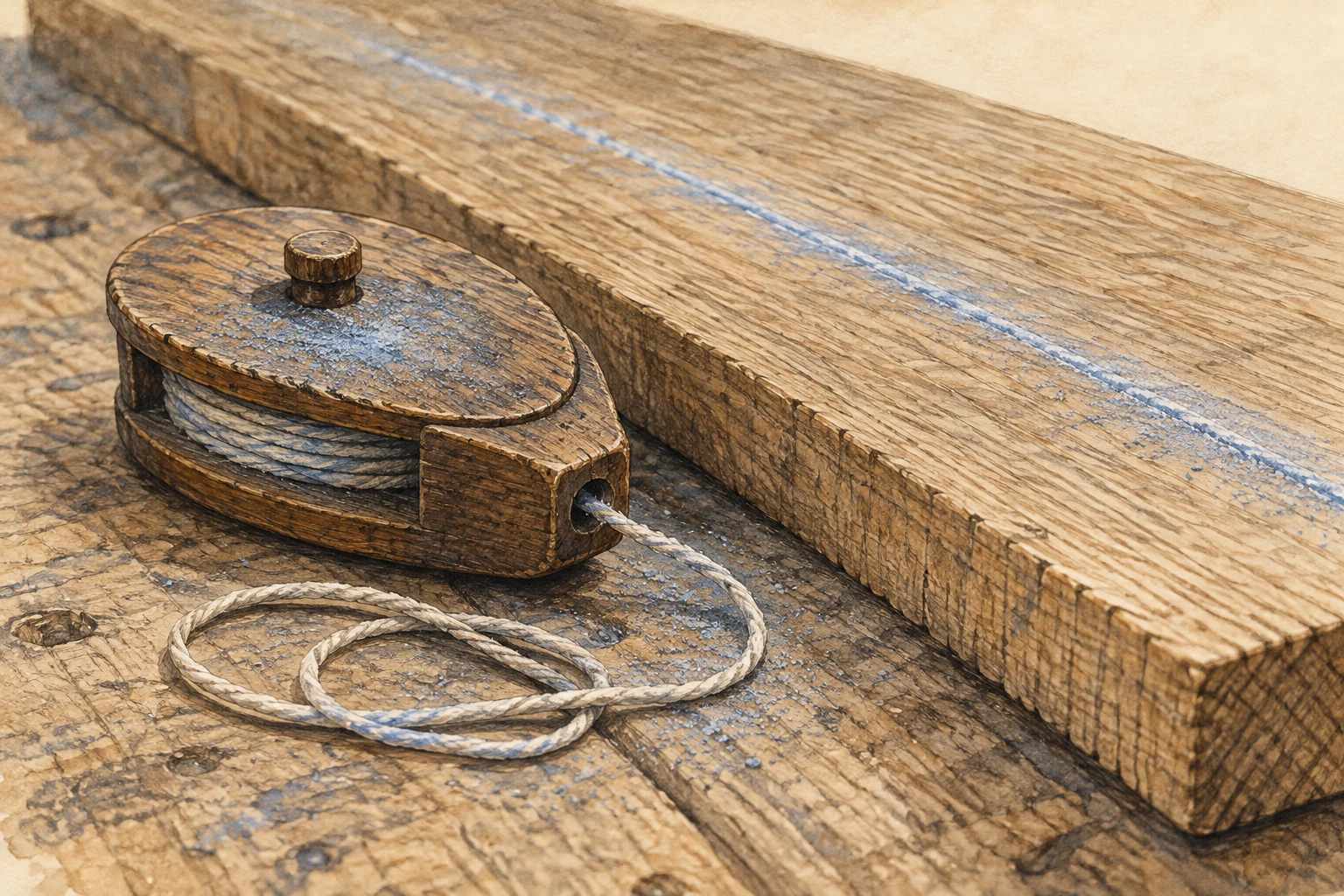
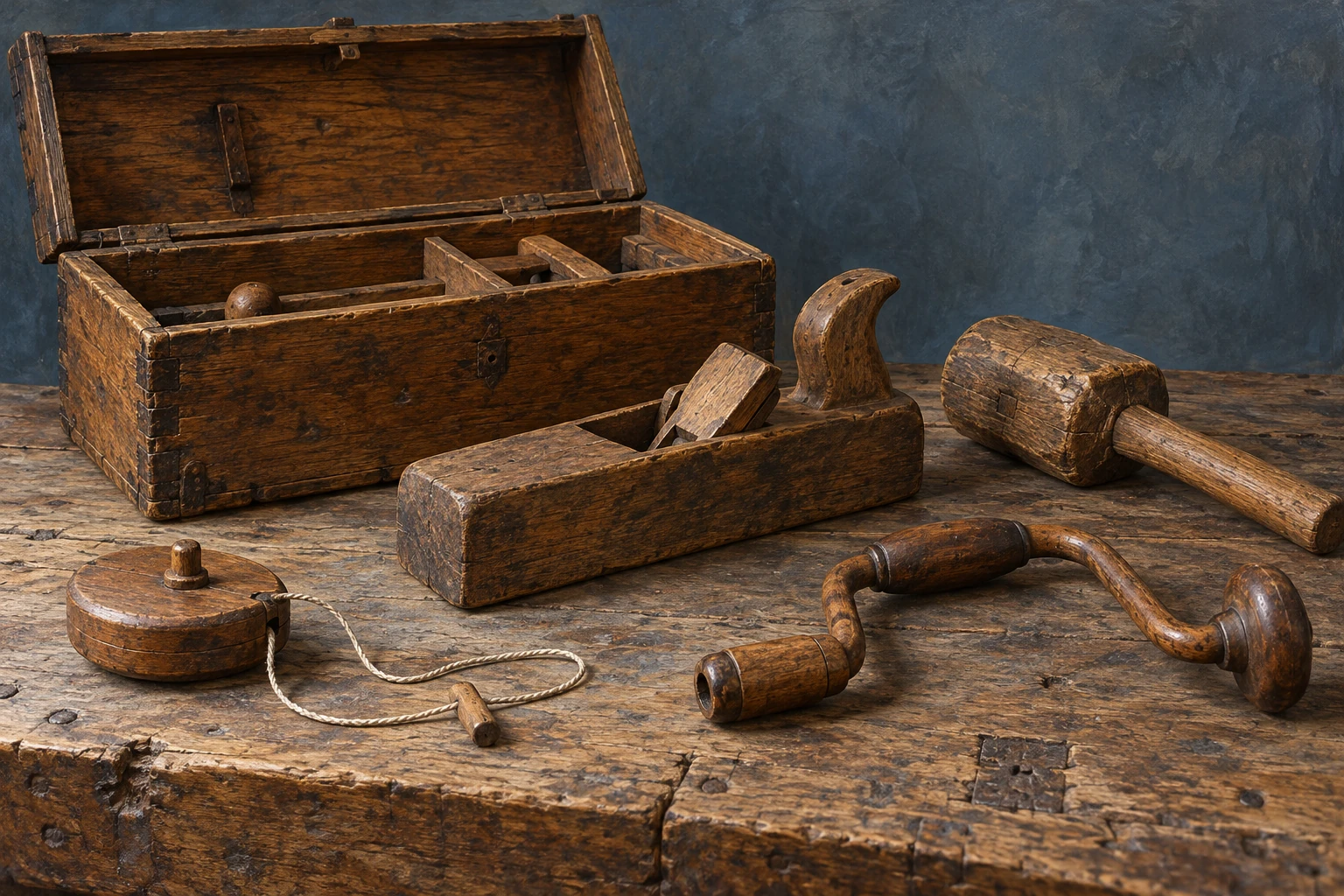
An open wooden chest with wooden plane, brace, mallet, and chalk reel arranged on a timber work surface.
Conceptual Tudor tool study. These are illustrative forms, not photographs or exact replicas of the Mary Rose finds.

The missing metal is the first surprise. In the Mary Rose’s carpenter’s equipment, a wooden handle may survive while the blade that made it a tool has disappeared. A visitor has to learn to see two things at once: the object now in the case and the working assembly that researchers reconstruct from its shape and comparisons.

The tools bring a skilled occupation close, but they also resist the easy fantasy of a perfectly preserved workshop. Water, burial, corrosion, excavation, and conservation have all selected what we can see.

Begin with a room, not a famous shipwreck

The Mary Rose Museum’s carpenter account describes a cabin with benches and three chests. Their contents differed: one held working tools and materials; another probably clothing; a more elaborate walnut chest contained personal possessions as well as a few small tools. Combining those contents into one wonderful “toolbox” would erase the distinctions the excavation recovered.

The same account discusses a man found below the cabin among equipment and asks whether he was one of the ship’s six carpenters. Isotope evidence suggests childhood in a warmer part of mainland Europe; Spanish tools raise another question. The museum presents Spain as a possibility. An engaging reconstruction should preserve that uncertainty rather than confidently assign him a birthplace and biography.

The ship’s documented timeline places the sinking at the Battle of the Solent on 19 July 1545. It is a dated event that helps frame the assemblage. The personal histories of the people and tools on board extend before that event, and do not all become known because the end is known.

Turn a brace with your eyes

The museum’s oak brace, object 81A3094, was a hand-powered drill. Its description separates the missing iron bit, the wooden handle, and the rotating pad that protected the user’s hand. Eleven braces were recovered, six in the carpenter’s cabin and five elsewhere.

Try following the movement without touching an artifact. One hand supplies pressure at the pad; the other turns the offset handle; the bit rotates against the timber. The surviving wood is shaped around a body performing work. A catalog photograph becomes easier to understand when you ask where the hands would be and what each part must do.

A missing bit also provides a useful lesson in reconstruction. A museum may show a suggested outline based on other surviving tools. The outline is interpretation supported by comparison, not newly visible iron. When looking at a display, ask which parts are original, which have been stabilized, and which are drawn or added to explain use.

A line in chalk can preserve an earlier moment

A beech chalk reel, object 83A0386, was found deep in the hull between beams and among wood chippings. Its design differed from two reels found in the carpenter’s cabin. The museum suggests it may have been lost during construction, making it possible evidence for work at Portsmouth Dockyard rather than equipment being used immediately before the sinking.

That is a beautiful example of context changing time. All the objects share the wreck site, yet they need not record the same moment. The reel’s location and form permit a more specific hypothesis about how it entered the ship’s fabric.

The tool’s principle remains easy to picture: a taut cord carrying chalk is lifted and released against timber, leaving a straight guide. For a safe analogy, stretch an ordinary piece of string across a sheet of paper and mark its ends with a pencil. Compare the long line implied by the string with the small reel needed to store it. A tool can control a space much larger than itself.

Wood surviving does not mean wood stayed unchanged

The museum’s artifact conservation explanation describes weakened wooden cell structures filled with water. Uncontrolled drying could cause shrinkage, cracking, or warping. Wooden objects were treated using polyethylene glycol, a bulking agent, and then freeze-dried under controlled conditions.

This is why “they pulled it out and put it on display” is an incomplete account. The object in the case owes part of its present survival to decisions made long after the ship sank. Conservation is not simply cosmetic cleaning. It can be the difference between a recoverable shape and a collapsing one.

The 1982 raising of the hull was itself the result of years of searching, excavation, recording, and engineering. Not every part of the wreck was raised. The site and the collection are related but not identical archives.

A useful second inventory sorts the objects by task rather than appearance. Put tools for measuring together, then those for marking, boring, cutting, and finishing where the museum record supports those functions. Some objects may serve more than one task. The rearrangement turns a case of separate finds into a picture of coordinated work.

The tool has a reverse side

The museum case and the website offer different kinds of access. In 2016, the Mary Rose Trust and Swansea University described the Virtual Tudors project, which included photogrammetric resources for a wood-plane and a whetstone holder as well as human remains. These are reports of a particular digital project. Their existence does not mean that a textured model reproduces every property of the original tool.

Wooden chalk reel beside a straight chalk line on a board.
Interpretive marking-tool study, not a replica of a recovered Mary Rose reel.

Photogrammetry builds a spatial representation from overlapping photographs. A model can make an awkward reverse or underside easier to inspect than it is through a case. It cannot let a remote visitor feel weight, test a joint, or learn how a blade once met a handle simply by spinning the object. Those missing experiences should not be supplied as confident prose.

Use an institutional model if its viewer is available, or compare two documented photographs. Begin with one fixed feature: the edge of a hole, the end of a handle, or the opening where another component fitted. Follow it while changing the view. Does it remain visible? Does it continue through the object? Does a shadow disappear when the viewpoint changes? Record the viewing condition beside the observation.

Now separate four statements. “There is a dark area” describes appearance. “There is a recess” makes a claim about shape. “A blade fitted here” interprets function. “This particular person used it on the day of the sinking” assigns an event. Each statement needs more support than the one before it. A detailed model may strengthen the second without establishing the fourth.

A useful challenge for two readers is to write independent descriptions of the same view. Exchange them without showing the image. Which phrases let the other person locate a feature precisely? “Near the narrow end, on the inner curve” is more useful than “the strange bit.” Shared observation depends on orientation and vocabulary as well as resolution.

Finally, return to the material catalog. Check whether the digital appearance suggests a missing metal part that the text explicitly says has disappeared. A convincing reconstructed outline can help explain use, while the surviving object remains the evidence being interpreted. Digital access is most rewarding when it gives us additional ways to examine that distinction, rather than making an incomplete tool appear miraculously complete.

Pack an imaginary working chest

Here is a useful thought experiment for anyone who makes things. Choose a job you know: repairing a shelf, sewing a seam, sketching a room, tuning an instrument. List the equipment you would put in a small portable chest. Then divide the list into four functions:

  • measuring or marking the intended result;
  • removing or reshaping material;
  • joining or fastening components;
  • maintaining the tools themselves.

Now imagine only the wooden parts survive. Which functions would become difficult to recognize? Which apparently unimportant handle would carry the best clue? This exercise does not recreate Tudor ship carpentry. It helps explain how an incomplete assemblage can still disclose a coordinated set of tasks.

Return to the carpenter’s cabin with that question in mind. The chests divide working and personal space; the brace translates bodily motion into a rotating cut; the chalk reel lets a short tool establish a long line. The fascination lies in a collection of practical decisions, made by people whose skills were indispensable even when their full names and stories have not survived.

Sources and a closer look

Mary Rose Museum: the carpenter, cabin and chests; Mary Rose Museum: ship timeline; Mary Rose Museum: brace 81A3094; Mary Rose Museum: chalk reel 83A0386; Mary Rose Museum: conserving artifacts; Mary Rose Museum: raising the ship.

Find more art, ideas, and unexpected connections at Incoprea.
Saving the Vasa Was the Beginning of a Much Longer Experiment

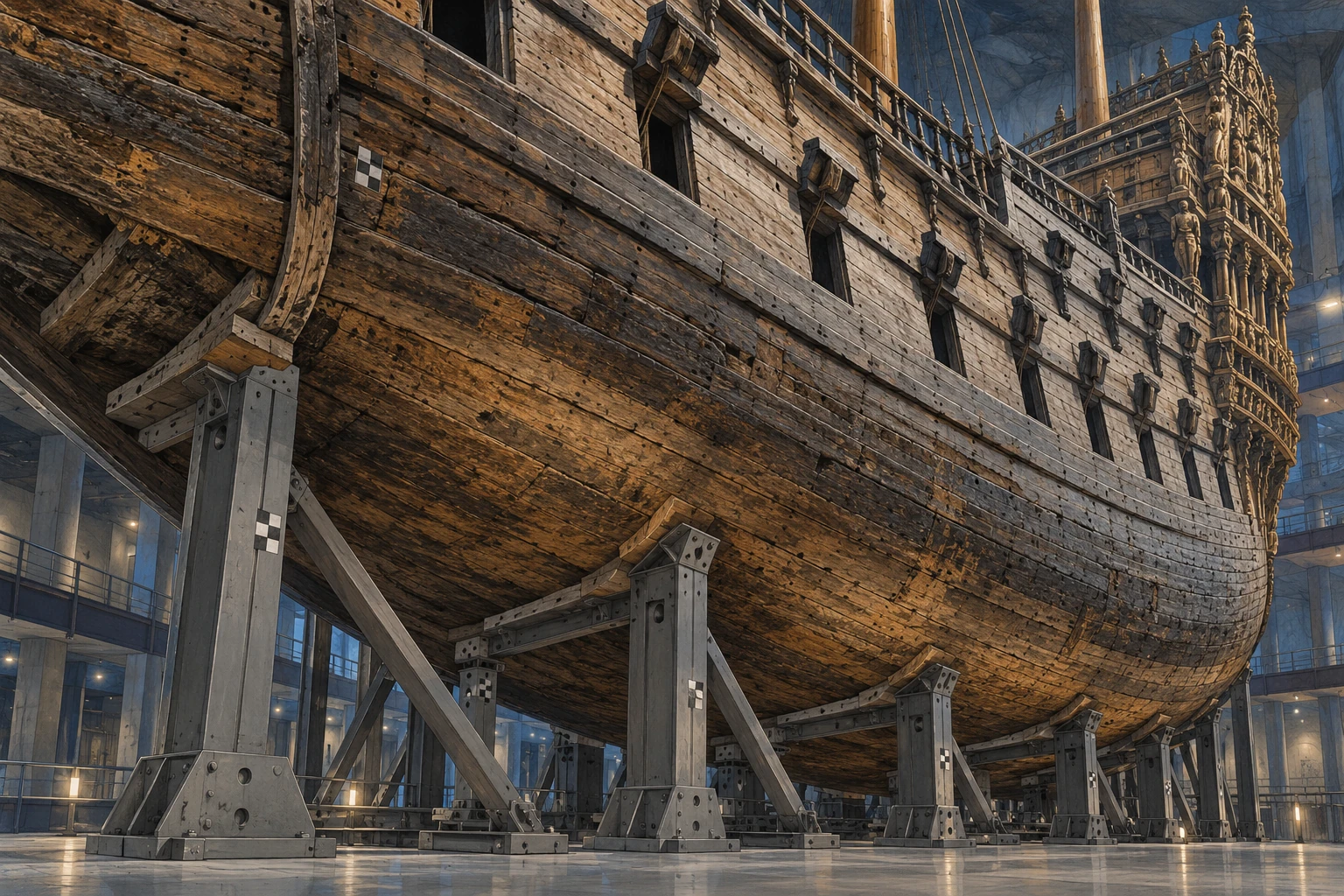
An illustrative preserved wooden ship hull indoors, viewed from below with modern steel cradle supports clearly visible.
Conceptual museum conservation scene, not a photograph or an exact model of Vasa’s current support system.

Raising a ship from the seabed looks like an ending. The vessel returns to daylight; the dramatic photographs are made; a lost object seems to have been rescued. For Vasa, raised in 1961, that moment began a much longer problem: how to preserve a heavy wooden structure whose material had changed underwater.

The ship in the museum is not merely waiting in a dry room. Its chemistry, moisture environment, weight, and support all matter. Conservation is an ongoing investigation into an object that must continue to carry itself—or be helped to do so.

Water can hold a weakened shape open

The Vasa Museum’s conservation history explains that waterlogged timber can look sound while its cells are weakened by decay. If the water leaves without suitable treatment, the wood can shrink and crack. Conservators chose polyethylene glycol, or PEG, to help replace water within the structure.

The scale changed the practical problem. Small objects can be treated in tanks; the ship required spraying. The museum records a spray treatment from 1962 to 1979, followed by nine years of slow air drying. A spectacular salvage became a project conducted over decades.

The key is to distinguish shape from strength. A form can remain recognizable while the material supporting it becomes fragile. Looking solid from a gallery balcony is not a measurement of what the wood can safely bear.

The first visible warning was only a surface clue

The museum’s account of ongoing preservation describes white and yellow surface deposits appearing after the museum opened in 1990. Sulfur and iron compounds with high acidity drew attention to reactions affecting the wood. Research then moved from the visible symptoms toward material conditions below the surface.

That sequence is a useful model of scientific care. A deposit is observed; its composition is investigated; possible causes are examined; measures are tested. The observation is not itself a complete diagnosis, and cleaning the visible spot would not necessarily resolve the underlying process.

The same museum account describes improvements to climate control and trials removing iron from smaller wooden objects that could tolerate retreatment. A treatment feasible for a small item is not automatically feasible for an enormous assembled hull. Scale, accessibility, and structural risk constrain the options.

A museum building becomes part of the treatment

Stable humidity and temperature can reduce damaging variation. The room is therefore part of the preservation system, alongside chemical treatment and physical support. It is easy to treat air conditioning as visitor comfort and miss its role in the life of the object.

The museum’s preservation timeline records successive investigations and revisions. This is not evidence that conservation “failed” because further work was needed. It shows that a very large, altered organic object requires new information and changing responses over time.

A useful question for any conserved artifact is what the current intervention is intended to do. Preventing rapid drying, reducing chemical change, limiting movement, and supporting weight are different aims. A single treatment may not satisfy all of them.

The support has to follow the ship’s needs

In a 22 January 2026 update, the Vasa Museum reported that half of the new external support construction was in place. It described replacing 17 external supports with 27 articulated cradles and adding internal support to help carry deck loads. The project was expected to finish in 2028. Those are the museum’s reported milestone and target, not a claim that all work is already complete.

The number of supports is less important than where and how forces enter the hull. A new structure must fit a historic form that cannot simply be rebuilt to suit an engineer’s convenience. The intervention is designed around the object’s altered material and geometry.

The thought is striking: steel made now helps preserve wood worked centuries ago. The modern support does not make the old ship less historically meaningful. It makes visible the care required for that history to remain physically available.

Measurement makes slow change perceptible

The museum’s deformation-monitoring page describes following changes in the ship’s shape. Repeated measurements allow a slow movement to become a dataset rather than an impression. A visitor’s memory of how a hull looked last year is not a sensitive structural instrument.

Imagine photographing the same doorway once a day while a house settles imperceptibly. One picture may show nothing alarming. A carefully aligned series can reveal movement. This analogy is about repeated observation, not a description of the museum’s full technical method.

The support’s visibility is part of an honest display. If a photograph crops the cradle away, it can make the ship appear to carry itself. Seek a wider image and locate where present-day structures meet the surviving hull. The achievement includes those carefully chosen points of contact.

The fastener has a history too

The hull’s joins contain several periods of engineering. The museum’s bolt-replacement account distinguishes the original corroded iron rivets, the mild-steel bolts inserted for the salvage, and the later specially designed corrosion-resistant bolts. It reports that replacing roughly five thousand older bolts took seven years and was completed in 2018. The altered fastener is part of the preservation history, not a seventeenth-century component that happened to survive unchanged.

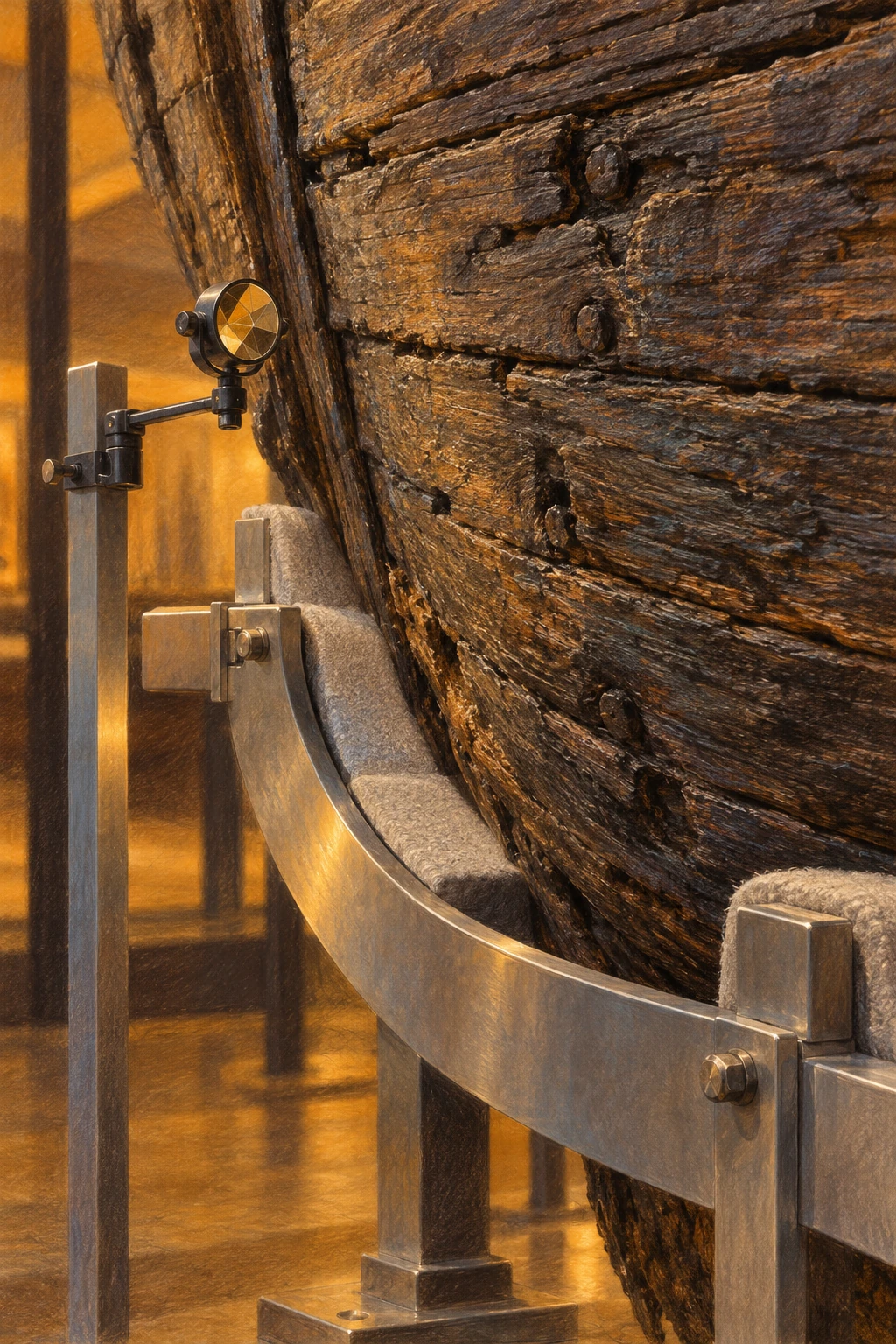
Historic timber rests against a padded modern steel support in a close material view.
Interpretive support study, not Vasa’s actual engineering arrangement.

The new design includes a compression spring that helps determine how tightly the connection is held. That detail is more informative than a general statement that “stronger steel saved the ship.” The problem involves applying force appropriately to vulnerable timber, as well as resisting corrosion. An engineering improvement is a relationship among materials, geometry, and the load being carried.

The museum’s 2012 documentation report adds a related caution about shape. Its three-dimensional survey recorded more than eighty thousand points and revealed significant asymmetry in the hull. Some irregularity belongs to construction; some later movement belongs to the ship’s long material history. A present-day outline cannot automatically tell us when every deviation arose.

Try a deliberately fictional monitoring exercise. A point on a paper sketch is recorded 2 millimetres farther left in a later survey. Before calling that “the ship moving,” ask whether the reference system, instrument setup, measurement uncertainty, and definition of the point stayed comparable. These are general questions about repeat measurement, not a description of an error in the museum’s survey.

Now separate three aims in your notes: holding two timbers together, carrying a span’s weight, and measuring change. A bolt, a cradle, and a survey target may all be visible near one another while performing different jobs. Their proximity does not make them interchangeable parts of one simple support.

For a viewing challenge, choose a wide institutional photograph and find one visible modern intervention. Describe its intended relationship to the old wood without guessing its precise capacity. Then check the museum’s account. “Carries,” “connects,” and “measures” are better starting verbs than the vague word “protects.”

Conservation becomes more interesting when we give its components separate names and dates. The timber can retain evidence of the shipbuilders while a carefully designed modern connection helps that evidence remain available. A replacement part does not erase the material history when the replacement itself is documented.

A paper support thought experiment

Place a thin strip of scrap paper between two small stacks of books, with a modest gap. Do not load it with anything. Notice its sag. Move the stacks closer together, then add a third support beneath the middle. The paper’s own weight has not changed, but the places where it is carried have.

The model is deliberately simple. A ship hull is a three-dimensional assembly with joints, different materials, and an uneven history of weakening. The paper cannot predict its behavior. It can help you ask a better gallery question: which spans and loads is each visible support intended to relieve?

When you next encounter a conserved ship, look at the cradle as well as the carving. Ask what is original material, what is conservation treatment, what is structural support, and what is being monitored. These are different parts of one continuing achievement.

Vasa’s preservation is a story of changing questions. The first was how to bring it up. Another was how to dry it without losing its shape. Today’s work includes how to reduce further change and carry a weakened structure safely. The ship survives because rescue became a long commitment to learning.

Sources and a closer look

Vasa Museum: conservation history; Vasa Museum: ongoing preservation; Vasa Museum: preservation timeline; Vasa Museum: support project milestone, 22 January 2026; Vasa Museum: deformation monitoring.

Find more art, ideas, and unexpected connections at Incoprea.
Wednesday, October 14, 2026

Greek Fire: The Lost Recipe Was Only Part of the Story

A flame reaching from the prow of a ship is an image that almost explains itself. The enemy vessel is close, the fire crosses the gap, and the outcome seems inevitable. Medieval pictures of Greek fire are memorable partly because they compress a complicated naval system into that one bright moment.

Expand the frame and the historical questions multiply. A combustible material needed ships, equipment, trained people and conditions in which it could be used. The lost recipe is an intriguing problem. The organisation around it is equally important to understanding why the weapon mattered.

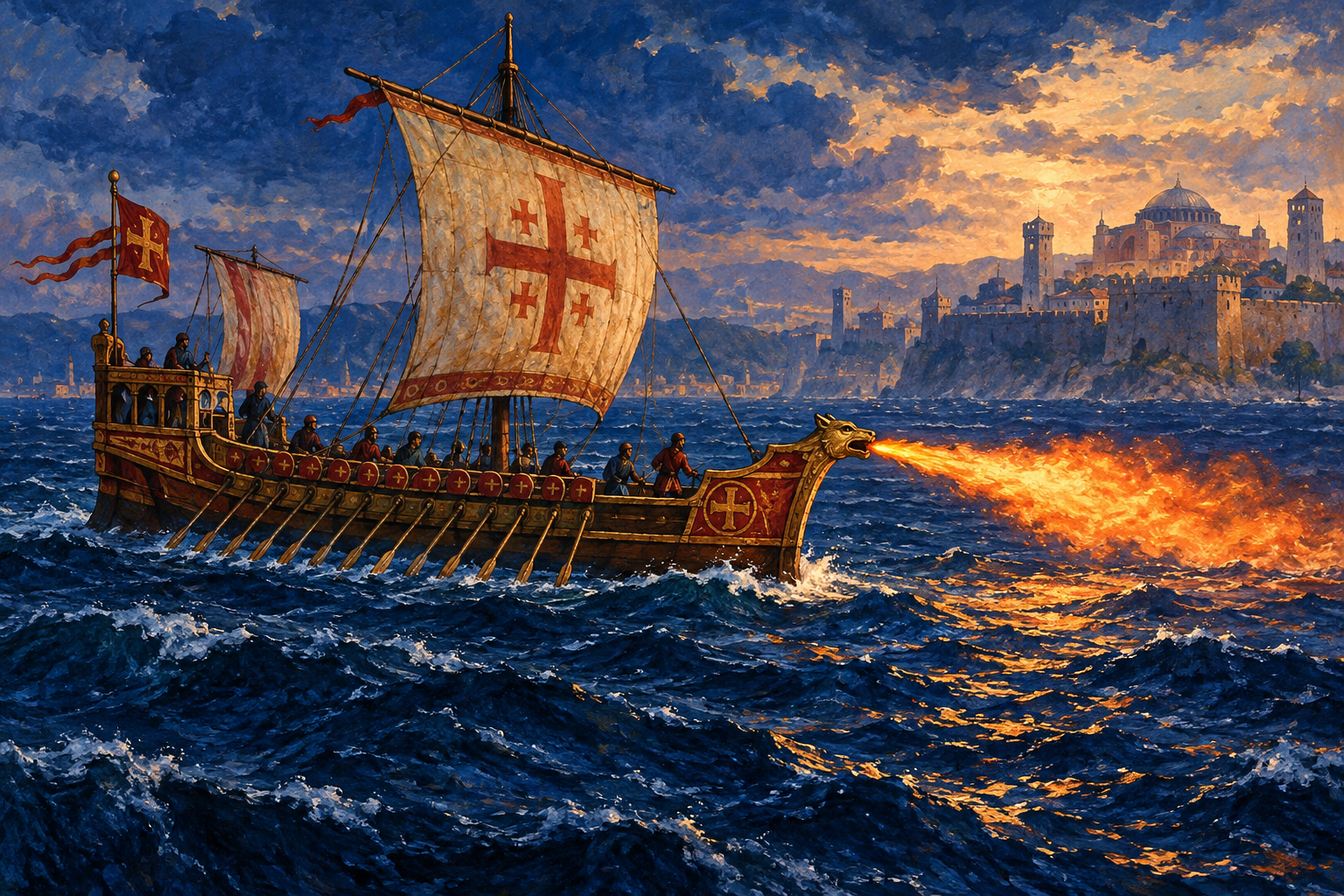
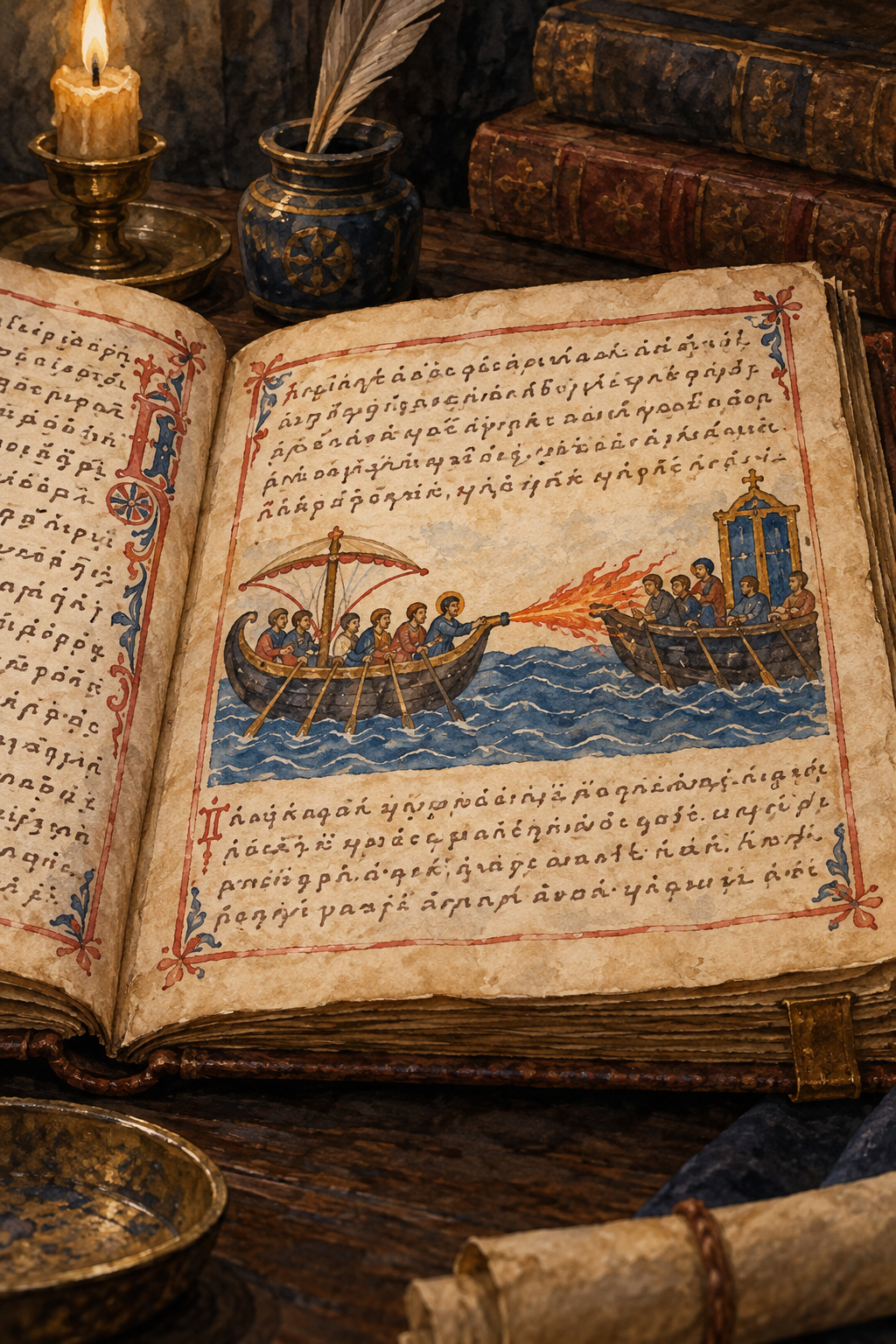
Historical illustration of a Byzantine oared ship projecting a flame from its prow on the sea.
An interpretation of the Byzantine naval tradition, not a reconstruction of its machinery.

Put the ship back into the story

The Byzantine dromon was an oared warship used within a developing naval tradition. Historian John Pryor studies its equipment together with the fleets and military setting in which it operated. A ship was a platform for specialised work, not merely a container transporting a remarkable substance.

Consider what a successful naval action implies at the broadest level. Equipment has to be supplied and maintained. Operators have to recognise the conditions and coordinate with the crew. The vessel must reach an effective position while remaining able to manoeuvre. None of these requirements is contained in an ingredient list.

The distinction is familiar in less violent technologies. Possessing ink does not establish a printing workshop. Knowing the composition of a pigment does not preserve a painter's training. A useful material becomes an effective practice through tools, procedures and people who know how to use them.

Follow one picture into its manuscript

The Madrid Skylitzes contains a famous scene in which Byzantine ships set fire to the vessels of Thomas the Rebel. The National Library of Spain identifies the image as folio 34v in its study of the manuscript. The scene is often detached from its page and circulated as if it were a technical drawing.

The manuscript itself was produced in twelfth-century Sicily and illustrates an account of earlier Byzantine history. The difference between the pictured event and the making of the picture matters. It is evidence of how that event was represented within a later illustrated chronicle.

Illustration of an imagined medieval chronicle containing a naval miniature.
An invented chronicle page shows how pictures can become historical evidence; it is not a manuscript facsimile.

The interpretive page illustration here evokes that kind of source; it is not a facsimile. For the genuine manuscript, follow the National Library's catalogue and exhibition resources. The page around a miniature can tell you how the image belongs to a narrative.

Try a close-looking exercise with an actual reproduction. First describe only visible relationships: ships, people, the direction of the flame and the space between vessels. Then list the mechanisms you cannot verify from the image alone. A powerful narrative picture can communicate an attack clearly while leaving machinery unspecified.

Secrecy is evidence of power

Constantine VII's imperial advice presents knowledge of the fire as a secret that should not be shared with outsiders. His account connects its protection with divine authority. Southern Cross University's historical discussion draws attention to that rhetoric and its role in defending imperial advantage.

Such a passage tells us something important even without supplying a formula. It shows knowledge being represented as restricted, politically valuable and morally protected. The story of secrecy helped define who should control the technology.

But a text written to discourage disclosure is not the same kind of source as a workshop record explaining production. Its purpose influences what it says. Treating every dramatic claim as a literal specification would lose the political work the account is doing.

What would count as a recovered secret?

A modern experiment can show that a proposed material or apparatus produces an effect described in a historical account. That establishes a possibility. To identify it as the original, a stronger connection is needed between the proposed system and the surviving evidence.

Several different materials might share a conspicuous behaviour. Several apparatus designs might make a flame appear at a distance. Matching a famous description therefore does not uniquely determine the historical mechanism. A reconstruction earns confidence through the range of evidence it explains, not only through its dramatic result.

The name itself needs context. Incendiary technologies changed across periods, and later uses of a familiar label need not refer to one unchanged composition. Ask which author, event and century are involved before combining descriptions into a single device.

A historical evidence challenge

Suppose an experiment reproduces one feature in an illustration. What remains to be shown? Consider whether it fits the written descriptions, available materials, shipboard setting and chronology. This is a comparison of historical arguments, not an invitation to make an incendiary.

Read in three passes

Begin with the historian's overview at Southern Cross University. On the first pass, identify the dates of the events it describes. On the second, identify the dates and purposes of the sources telling those stories. On the third, note which operational details remain interpretations.

Then compare the National Library's discussion of the Skylitzes image with Pryor's account of the dromon. The sources illuminate different parts of the subject: representation and manuscript history on one side, ships and naval organisation on the other.

This wider view leaves Greek fire impressive without requiring an impossibly advanced lost substance. Skilled people developed an effective practice within a particular military world. When that working tradition disappeared, scattered texts and pictures preserved its reputation more completely than its operation. The surrounding system is what turns the bright flame back into history.

Sources and further reading

Explore more art, stories and discoveries at Incoprea.

publications

New this week Two novels in six stories each, from The Night Shift . New — a novel in six documents Small Print A Novel in Six Do...