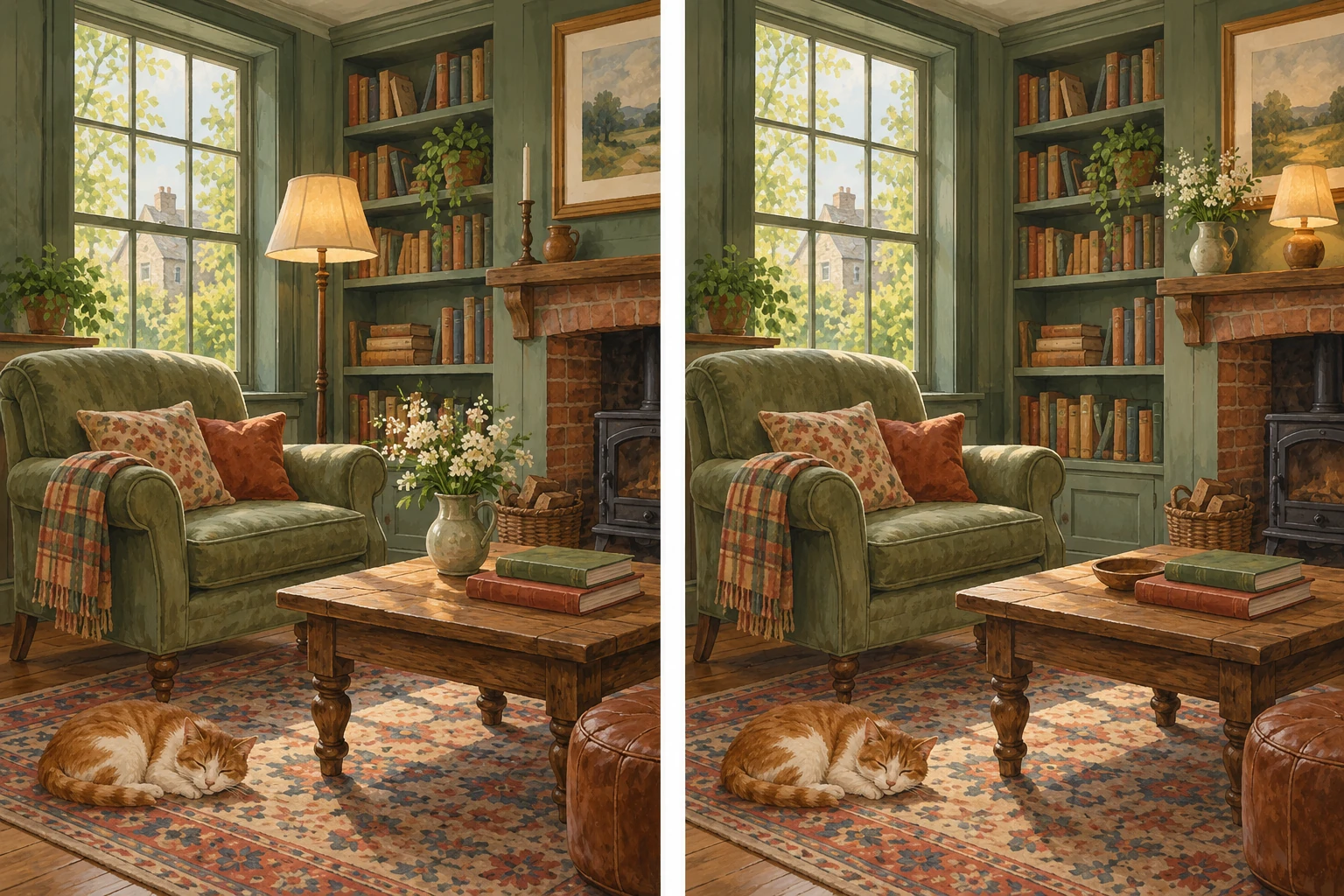
A room changes while your view is interrupted. When the room returns, it feels like the same scene. The missing object or altered color may be large, yet the change can remain surprisingly hard to identify. Change blindness is not simply failing to see a tiny mark. It is failing to notice a difference between successive views.
The distinction matters because it challenges a familiar inner picture: that vision stores a detailed photograph, compares the next photograph with it, and automatically flags every mismatch. People can retain useful scene information without producing a conscious report of a particular change.
A small comparison you can control
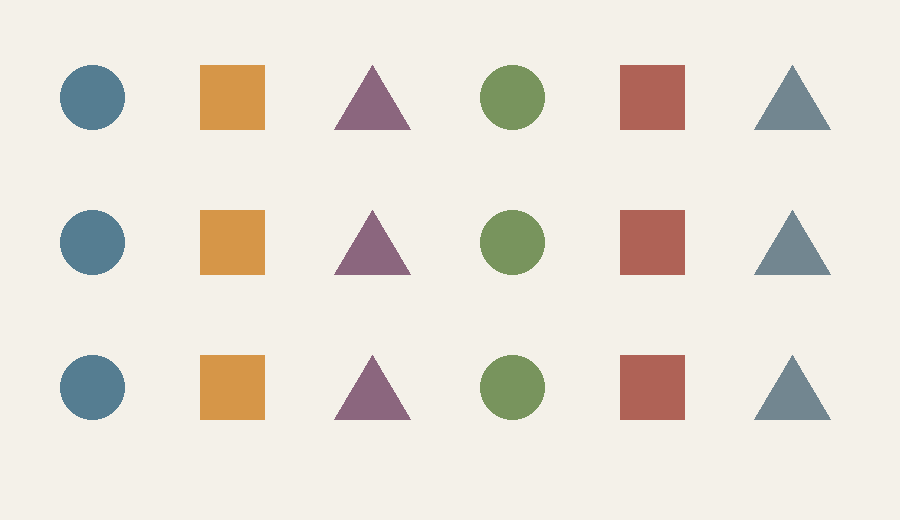
The following two diagrams are original and differ in one specified feature. They are deliberately simple rather than a replica of a published experiment. Look at View A for about ten seconds. Then look away, open View B and try to name the change before returning to the first view. There is no automatic flashing or timer.
Open View B after looking away
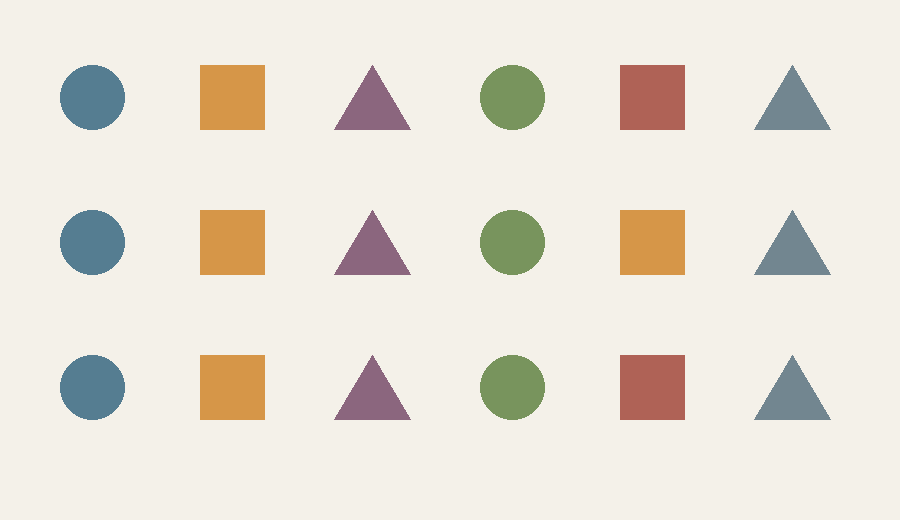
Reveal the exact change
The square in row 2, column 5 changes from muted red to ochre. Shape, size, position and the other seventeen objects remain unchanged. This informal exercise has no normative score and cannot establish a person's attention ability.
Whether you found it immediately or needed a second look, notice how the task changes when both views are available for deliberate comparison. Now you can search one cell at a time. The first attempt relied more heavily on what you encoded and retained across the interruption.
The interruption can hide the useful change signal
Daniel Simons's Visual Cognition Lab describes how disruptions such as a blank interval, eye movement or movie cut can conceal the visual signal that would otherwise draw attention to a change. Under an uninterrupted transition, an appearing or disappearing object may announce its own location. An interruption can make that local signal harder to separate from the overall visual change.
Ronald Rensink's research summary of alternating-scene experiments describes large, repeated changes that remain difficult to find when views are separated by blanks. Knowing that a change exists does not automatically tell attention where to go. That difference between expectation and effective search is central to the experience.
The grid above avoids claiming to reproduce those experimental timings. It asks a simpler question about your remembered comparison. The generated room painting at the top is looser still: it is an illustration with multiple artistic differences, not a controlled stimulus. Keeping those roles separate prevents a beautiful image from masquerading as an experiment.
The effect can survive outside a screen
In Simons and Levin's 1998 real-world study, a brief interruption during a conversation allowed the person asking for directions to be replaced. Some participants failed to report the substitution. The result showed that a natural interaction with an attended person could still support change-detection failures under the tested circumstances.
The important conclusion has limits. It does not say people never recognize faces or that all social interactions are visually empty. It shows that maintaining the meaning of an ongoing task—giving directions—can coexist with missing a substantial visual change. Context and attention shape what is encoded and compared.
Anecdotes often enlarge such findings into “we see almost nothing.” That is too broad to be useful. The interesting question is which information remains available, how the change is masked, and what task the observer is performing. Failure to report one alteration does not demonstrate the absence of every representation of the scene.
Change blindness has a neighboring phenomenon
The lab distinguishes change blindness from inattentional blindness. In the latter, a person focused on one task can miss an unexpected event already in view. In change blindness, the task involves a difference across views. Both concern attention and awareness, but exchanging the names blurs what the experiment manipulated.
The lab's own video page offers separate demonstrations and study illustrations. Follow its instructions before reading explanations if you want to preserve the first-view experience. The videos remain with their creators; this article links to them rather than duplicating their recordings.
The room that seemed unchanged asks an unexpectedly practical question: what did your task make worth retaining? Vision is extraordinarily useful without being a continuously refreshed photograph of every detail. A deliberate comparison can help precisely because noticing a change is an achievement, not an automatic consequence of having looked.
Sources and a closer look: Visual Cognition Lab: attention and change research; Rensink: alternating-scene findings; Simons and Levin 1998: changes during real-world interaction; Visual Cognition Lab: creator-hosted demonstrations.
Explore art, experiments and other unexpected connections at Incoprea.