Showing posts with label Japan. Show all posts

Thursday, October 22, 2026

A Glass Bowl in Nara: Following Connections Without Inventing a Journey

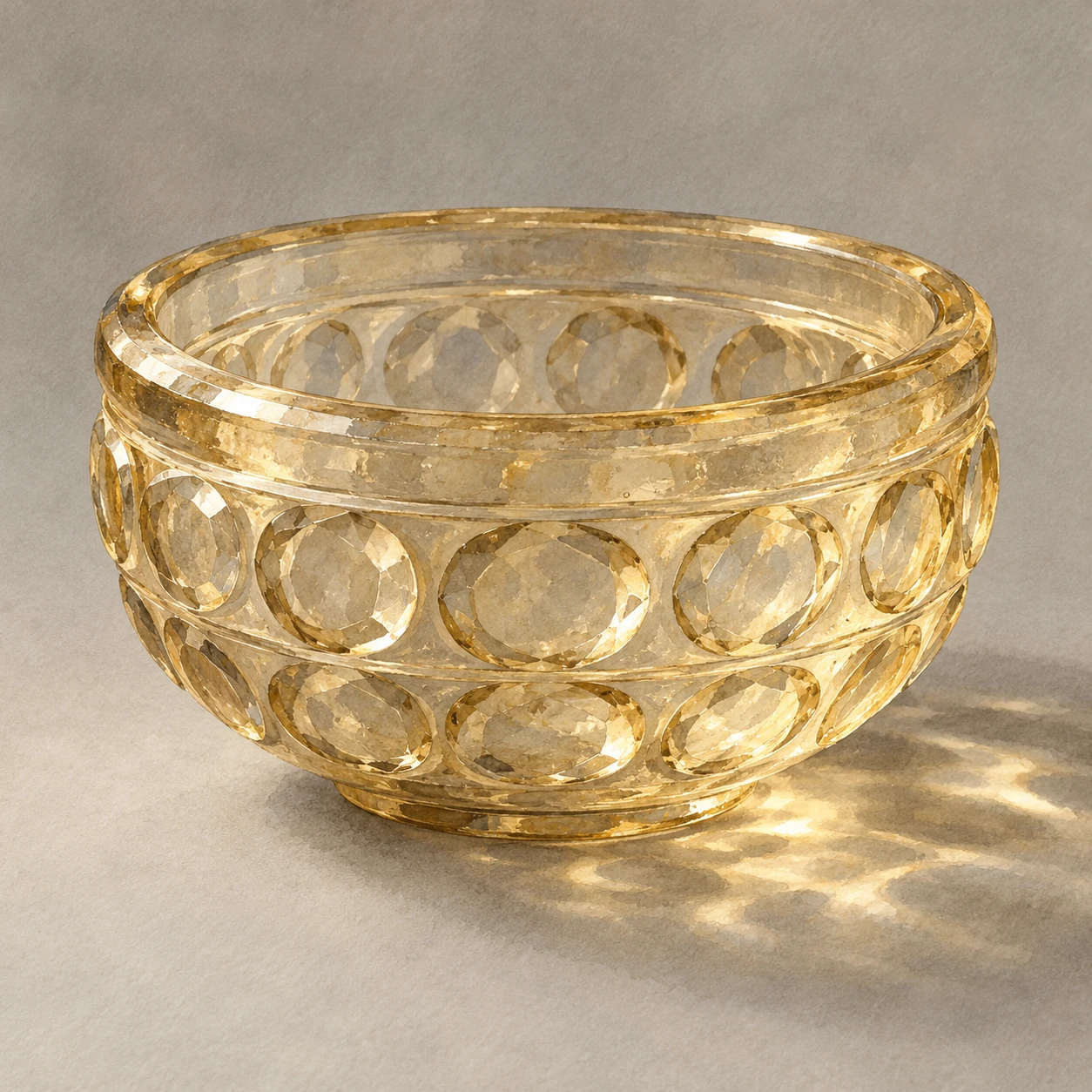
A pale amber glass bowl with repeating shallow circular facets casts a soft shadow on a neutral surface.
Conceptual cut-glass study, not a facsimile or photograph of the Shōsōin White Glass Bowl.

A small glass bowl can make a continent feel connected. Its shallow circular facets catch the light, repeating around a surface that has survived for centuries in Japan. It is easy to imagine a single adventurous traveler carrying it all the way from a western workshop to Nara. The bowl does not tell us that story so neatly.

The White Glass Bowl in the Shōsōin collection is more rewarding when we resist inventing its itinerary. Its material, shape, decorative technique, and custodial history provide different kinds of evidence. Together they reveal wide connections. They do not necessarily reveal every hand through which the vessel passed.

Start with the object that is actually cataloged

The Imperial Household Agency’s object entry describes a nearly colorless alkali-lime glass bowl with a faint brown tint, its exterior covered in circular cut facets. It gives a mouth diameter of 12 centimetres and height of 8.5 centimetres. The entry attributes its manufacture to Sasanian Persia as a received scholarly identification, rather than supplying the name of a particular maker.

Those modest dimensions matter. This is an intimate object, not a monumental vessel. To picture the scale, mark a 12-centimetre circle on ordinary paper. Then compare that small opening with the geographic breadth of the connections people discuss around it. The contrast is part of the bowl’s power.

A circular facet is a change in the glass surface. It can alter reflected and transmitted light without requiring a painted design. Look at a good museum photograph for the relationship between repeated cuts, the uninterrupted rim, and the thickness of the wall. The decoration depends on material being removed, while enough glass remains to preserve the vessel.

Why this treasury is an unusual archive

The Agency’s history of the Shōsōin explains that much of the collection derives from Emperor Shōmu’s belongings donated by Empress Kōmyō to Tōdaiji in 756. Dedicatory records, inscriptions, and controlled access help scholars understand objects passed down in custody rather than recovered from the ground. The treasures are now housed in modern repositories; the famous timber storehouse is not simply an unchanged room full of exposed artifacts.

This is a different preservation history from a burial find. A treasury may retain surfaces and materials that soil would have altered. It can also favor objects that powerful institutions chose to keep. “Well preserved” and “representative of everybody’s life” are separate judgments.

The collection includes goods and designs connected with multiple regions. That does not make it a bag of foreign curiosities. An imported thing acquires new uses and meanings where it is received, displayed, donated, or preserved. Its life in Japan is part of its history, rather than an epilogue to the place of manufacture.

Similar is useful; identical needs proof

The Nara National Museum catalogs another cut-glass bowl, dated to the fifth–sixth century, as comparable to the Shōsōin example. Its label links the cutting technique with Sasanian Persia and describes its weathered yellowish-white surface following burial. This is a separate object, with a different preservation history. Comparing them is useful precisely because comparison does not require pretending they are the same bowl.

A further comparison comes from the Metropolitan Museum’s Sasanian glass bowl, cataloged broadly to the third–seventh century and associated with Ctesiphon in Mesopotamia. A museum’s period and geographic labels help place an object within a scholarly framework. They are not a passport listing all of its movements.

What chemistry can add—and what it cannot

A SPring-8 research report discusses scientific analysis of fragments believed to come from different glassware excavated at Niizawa Senzuka Tumulus 126 in Nara Prefecture. The analyzed facet-cut bowl fragment had a composition matching a Sasanian glass group. That research concerns the tumulus material, not a direct analysis of the White Glass Bowl discussed here.

The distinction is essential. An analytical result from a comparable artifact can strengthen a wider picture of connections. It should not be silently transferred to another object. Even when a glass composition points toward a production region, it does not automatically name the person who carried the finished vessel, the route taken, or the occasion of its arrival.

Consider two possible journeys for the same vessel: one long passage with a single owner, or several shorter exchanges among people who never met its maker. Both can connect the same endpoints on a map. The surviving object needs additional evidence to distinguish them. Distance alone cannot choose the more dramatic story.

Build an evidence map with three kinds of line

Try making a simple sketch rather than a confident trade-route graphic. Put the bowl at one end and the proposed production region at the other. Use a solid line only for a documented relationship, a dashed line for a reasoned attribution, and a question mark for a missing part of the journey.

  • Documented custody: what does the treasury’s history establish about preservation and records?
  • Material and stylistic comparison: what features connect the bowl with other vessels?
  • Unrecorded movement: which carriers, ports, exchanges, or gifts have not been demonstrated for this particular object?

You may end with fewer arrows than an exhibition’s sweeping map. That is a useful outcome. The exercise reveals which claims come directly from the object and which are interpretations of a network around it.

For a second pass, write two captions: one saying only what a photograph shows, and another adding the catalog’s historical attribution. Notice how much invisible knowledge the second caption introduces. Good interpretation makes that knowledge available while allowing the reader to see where it comes from.

The bowl remains extraordinary with its gaps intact. Someone formed the glass, someone cut the facets, and a succession of people kept the vessel from disappearing. We do not need to supply their missing conversations to recognize how much human work a little surviving surface contains.

Sources and a closer look

Shōsōin: White Glass Bowl object record; Imperial Household Agency: Shōsōin repository history; Nara National Museum: comparable cut-glass bowl; The Met: Sasanian bowl 32.150.244; SPring-8: Ancient glassware that traveled the Silk Road.

Find more art, ideas, and unexpected connections at Incoprea.

Boro: Reading Repair Without Romanticizing Poverty

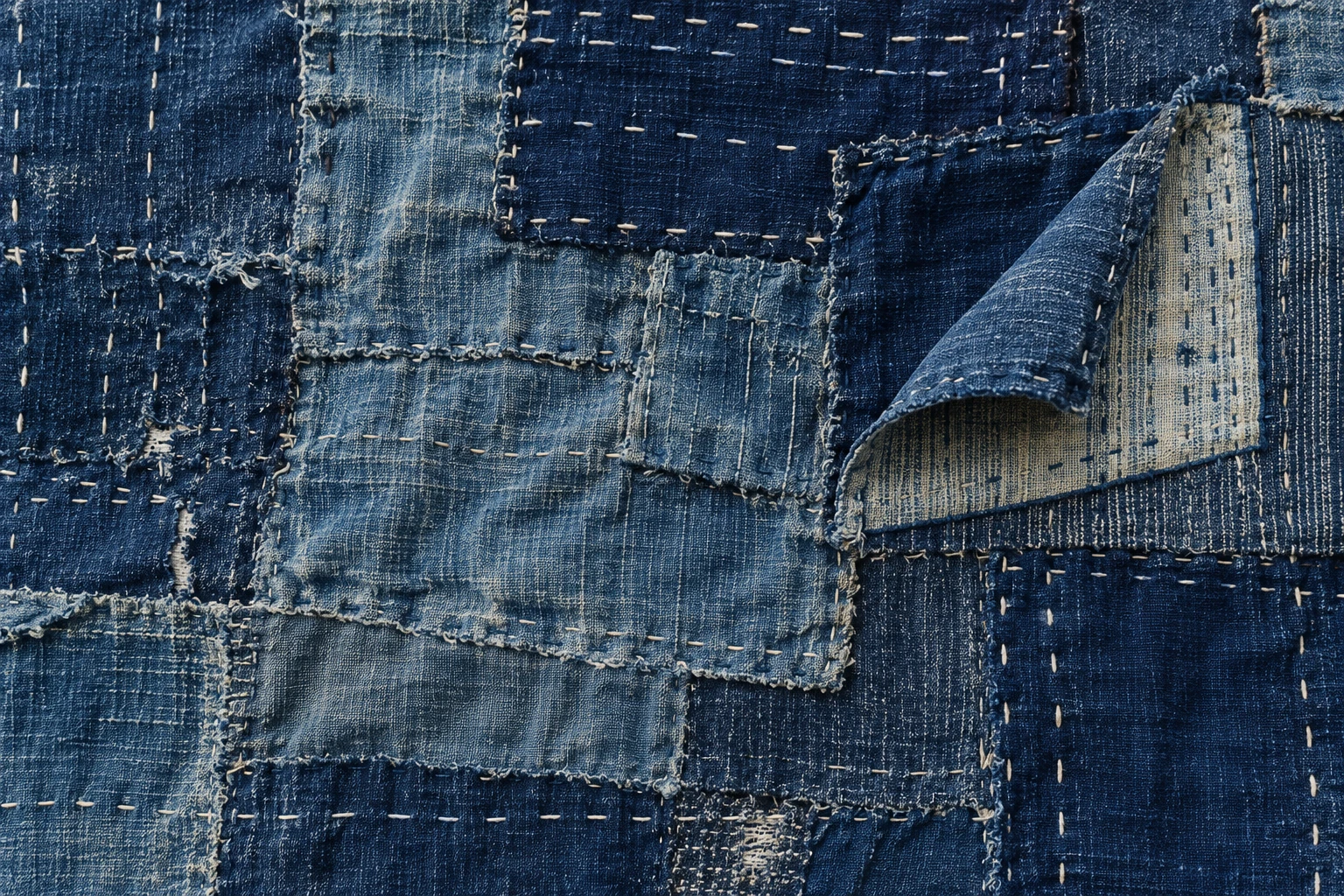
A patched cloth can be read in layers. A pale blue piece covers a darker one; a row of stitches crosses an earlier seam; a thin patch has worn through to expose something beneath. The surface is the result of repeated decisions, not necessarily a composition planned all at once.

Japanese boro textiles invite admiration for their color and texture. They also ask an uncomfortable question: what happens when work born of material necessity is celebrated mainly as a beautiful style?

Overlapping indigo cloth patches with irregular pale running stitches, worn fibers, and one turned-back edge.
Original mending study, not a historic boro textile or a documented family artifact.

A practice of continued use

The Victoria and Albert Museum’s explanation links boro with the reworking and repair of clothing and bedding through piecing, patching, and stitching. It describes garments passed through rural families, and distinguishes this practical history from today’s interest in a repaired or distressed appearance.

The International Quilt Museum’s exhibition, curated by Yoshiko Wada, similarly emphasizes cycles of use and reuse before the Second World War. Scraps covered worn areas and were held with running stitches; successive repairs produced layered, uneven surfaces. The museum places necessity alongside the later admiration of that rough beauty.

These accounts give us a better starting point than treating every blue patch as a timeless expression of a single national philosophy. An individual cloth had particular materials, uses, repairs, and people around it. Some of those details survive; others do not.

A seam is a relationship between materials

Look first at where one patch overlaps another. Which edge lies on top? Does a line of stitching secure two layers or pass through several? Is a thin area reinforced from the visible side, the reverse, or both? These questions concern construction before symbolism.

A photograph can suggest a sequence, but it may not establish it. A later stitch can cross an earlier patch, yet a repair may also have been unpicked, moved, or reinforced. Without close physical examination and documentation, a confident family story attached to every seam becomes invented intimacy.

What can still be appreciated is the practical intelligence of the result. A usable textile has to hold together under movement and wear. Its maker is solving problems of strength, coverage, available pieces, and the time required to do the work. Admiring that intelligence does not require pretending hardship was pleasant.

The modern gaze changes the object

A Cooper Hewitt discussion of boro observes that functional patching can acquire an artistic appearance through arrangements not originally intended as decoration. The museum’s account is useful because it makes the modern act of appreciation visible. We are not simply recovering exactly what every earlier user felt when looking at a worn futon cover.

Japan Society’s exhibition materials place historical textiles in conversation with contemporary art and fashion. That conversation can be productive if the categories remain clear: an old repaired garment, a contemporary artwork, and a luxury fashion piece may share visual features while belonging to very different economies.

A new distressed garment can imitate the appearance of repair without containing a long history of use. A contemporary maker can also repair a real worn object for practical reasons. Neither fact should be hidden by a label that reduces every case to one desirable look.

Four questions for looking at a repaired textile

QuestionWhat to look for
What job did this object do?A documented garment, bedding cover, wrapping, or other use
What is actually repaired?Holes, thin areas, seams, or structural stress points
Which history is documented?Maker, community, date, collection history, or acknowledged gaps
What does the display emphasize?Color, technique, labor, poverty, reuse, fashion, or some combination

Do not expect every museum label to answer all four. The point is to identify which aspect you are seeing, and which questions remain available. A cloth hung flat as art may reveal patterns beautifully while concealing how it moved on a body or folded around bedding.

There is also a difference between a repair that remains visible and one meant to disappear. A museum display can make conspicuous stitching seem like the essential virtue of mending, although a person fixing an ordinary object may value an unobtrusive result. Neither preference should be assigned retrospectively to every earlier user.

Consider your own low-stakes example: a patch on a cleaning cloth and a patch on a formal garment answer different demands. The same strength, color, or thickness might be welcome in one and unsuitable in the other. Thinking through those demands restores choice to a surface that could otherwise be admired simply as accidental abstraction. It also reminds us that the time spent maintaining an object is work, even when the resulting marks become beautiful to a later observer.

A small act of care, with honest naming

If this history makes you want to mend something, begin with your own ordinary cloth. Choose a low-stakes item such as a worn household rag or a practice scrap. Notice the thin area and consider how a patch might extend its use. A needle requires normal care and appropriate supervision for children; a paper collage can model the overlapping decisions without stitching.

Before doing anything decorative, write one sentence about the function you want to restore. Then choose the smallest intervention that serves it. Afterward, record what you used and why. You are creating a documented contemporary repair, not manufacturing an antique history or claiming membership in a traditional practice through appearance alone.

Compare the repaired area after use. Did stress move to the edge of the patch? Was the cloth too heavy or too stiff? The outcome gives you a practical respect for the skill hidden in repairs that seem casual from a distance.

Boro can be beautiful without turning necessity into romance. The strongest appreciation makes room for the people who kept things usable, the resources they had, and the labor they gave. A patch is an addition, but it is also a decision that an object’s working life can continue.

Sources and a closer look

V&A: boro, patching and reuse; International Quilt Museum: The Hidden and the Visible; Cooper Hewitt: Boro and Other Japanese Recycled Wonders; Japan Society: Boro Textiles exhibition materials.

Find more art, ideas, and unexpected connections at Incoprea.
The Elevator With Three Working Buttons

Case 50 · shortest-path challenge · Hard · About 10-15 minutes The archive elevator has a peculiar test mode. Its floor display works, but o...