A voice can leave a path in a surface. A cylinder turns, a stylus moves, and the variations of a brief sound become a physical groove that another mechanism can follow. When a preserved recording speaks again, the intimate effect depends on a surprisingly long chain: vibrating air, a recording diaphragm, a shaped material, playback equipment and the people who preserve it.
That chain is worth listening for. The familiar crackle of an old transfer can make age seem like one audible quality. In reality, a historical recording reaches us through several different processes, each leaving evidence and each raising its own questions.
The horn was part of the recording decision
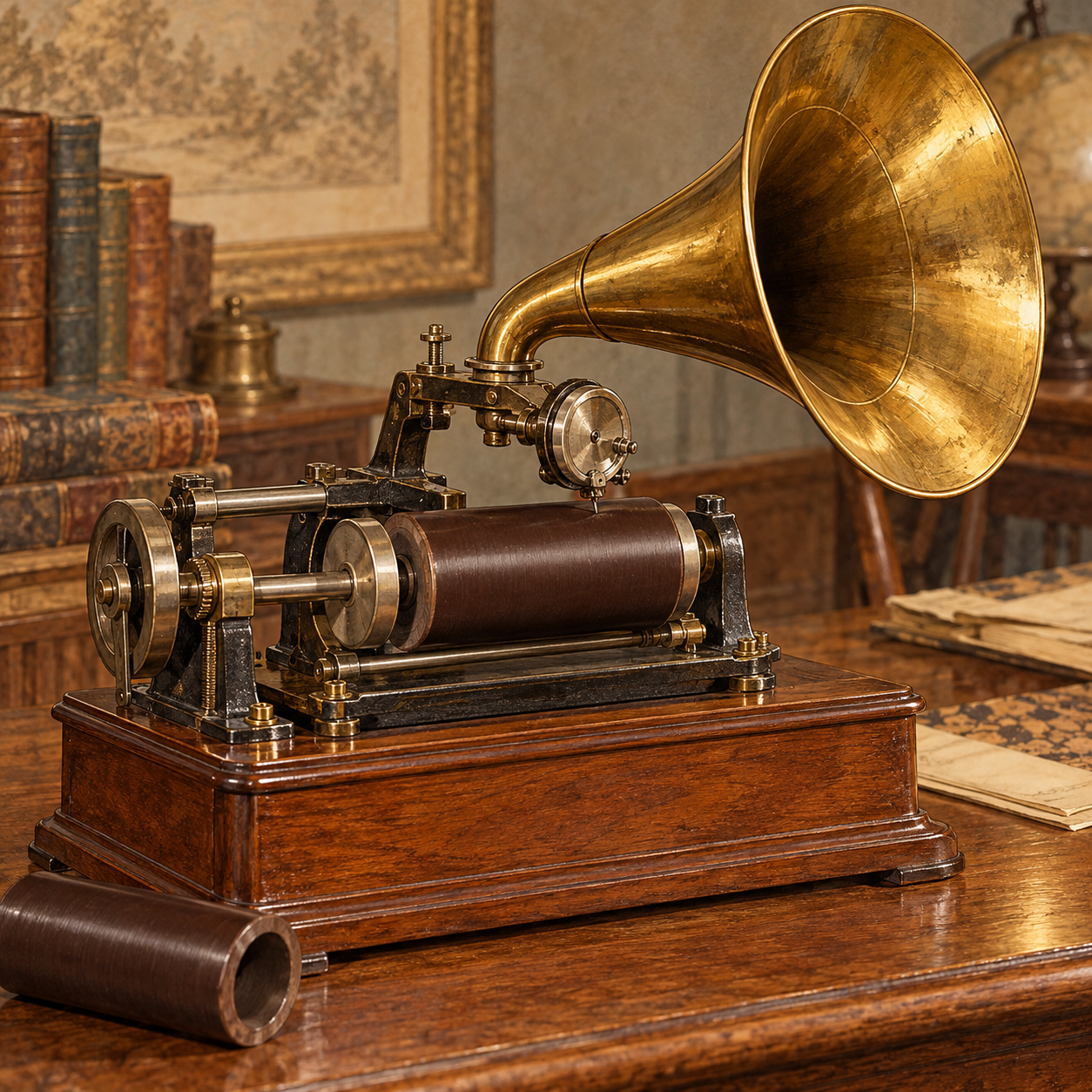
Before microphones and electrical amplification, performers directed sound into a flared horn. A diaphragm at its narrow end vibrated and drove a stylus against the recording surface. The Library of Congress account of acoustical recording explains how sound energy supplied the movement that made the record.
The setup also shaped performance. A singer could move back during a strong passage and come closer for a soft one. Different horns or diaphragms altered the result. The equipment’s limited frequency response favored some voices and instruments over others. The recording session had constraints long before an electronic mixing console could be imagined.
Picture a group performing for a single point of collection. Where should the quieter sound stand? What happens when a powerful instrument points directly into the horn? These are questions about balance, but also about what an audience will later believe the original group sounded like. The record preserves a performance arranged in relation to a machine.
The groove turns time into distance
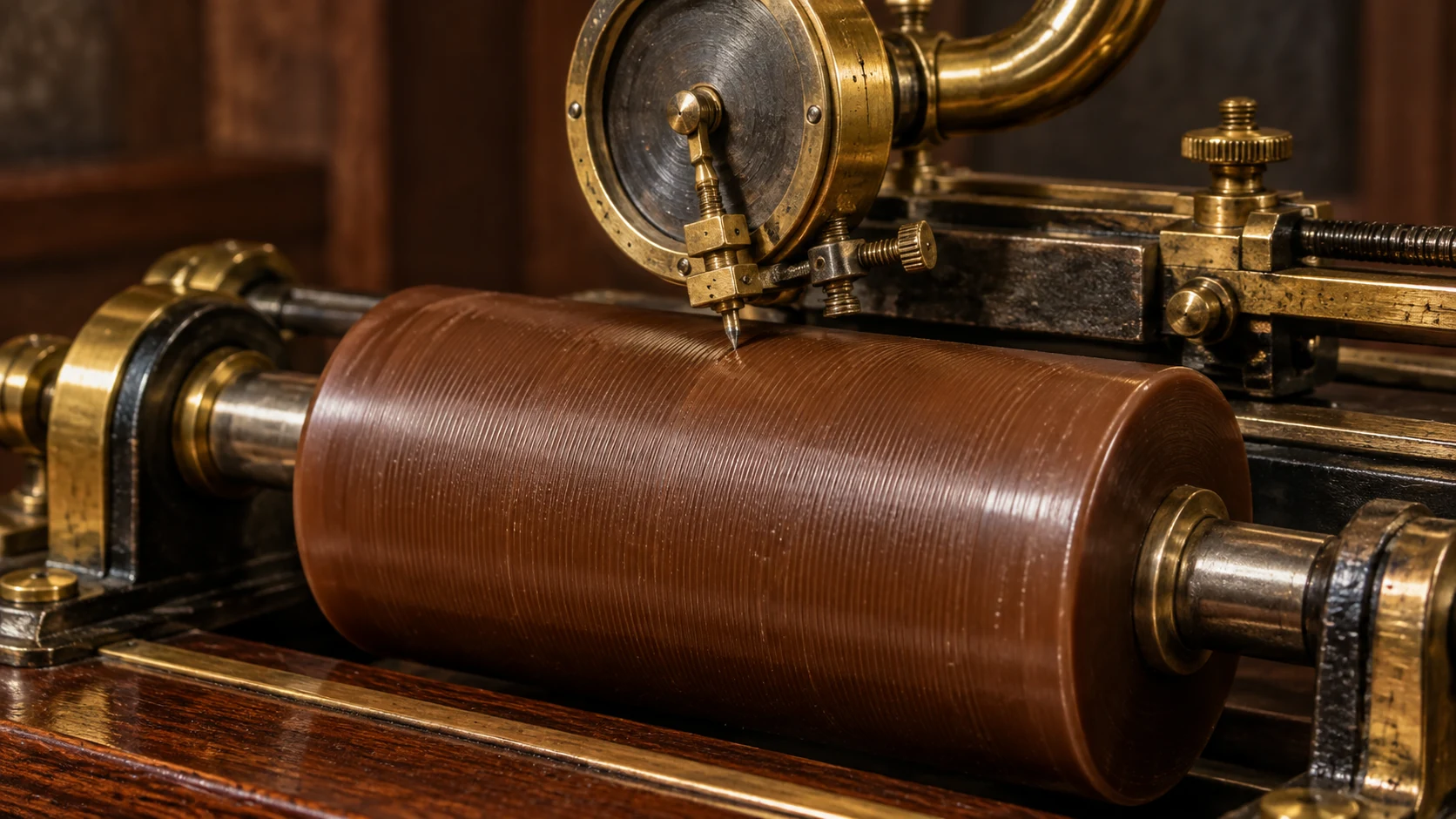
A rotating cylinder provides a moving surface while the recording assembly progresses along its length. In the early cylinder method described by the Library’s cylinder history, variations were recorded vertically in a groove, often called hill-and-dale recording. The groove therefore carries small mechanical variations that playback can turn back into vibration.
Follow an imaginary one-second sound. During that second, a length of groove passes the recording point. On replay, the corresponding length must pass the playback point on the intended timescale. If it passes more quickly, the vibrations recur more quickly and the passage becomes shorter. Speed is part of the interpretation of a record, not merely a way of getting to the end sooner.
A useful comparison needs no historic object. Tap a short rhythm with your fingers, then repeat the same sequence faster. The order survives while the duration changes. A sound recording adds pitch consequences because its vibration patterns are replayed on the changed timescale. This thought experiment explains why a plausible-sounding voice alone does not settle every playback-speed question.
Cylinder history includes changes of material and purpose
Edison’s 1877 phonograph used tinfoil wrapped around a cylinder. Later work by Chichester Bell and Charles Sumner Tainter developed wax-cylinder recording, while Edison’s renewed work produced further improvements. The familiar image of a phonograph therefore compresses several developments in machines and media into one recognizable object.
Office dictation was an important proposed use. Prerecorded entertainment became another major direction, and coin-operated machines helped introduce listening as an activity in its own right. A sound-storage method could support a business tool, a performance medium or a personal encounter with a recorded voice. Those uses did not all require the same commercial arrangements.
Calling every cylinder wax also overlooks later formats. In its audio-preservation discussion, the Library of Congress distinguishes fragile early brown-wax recordings from later cylinder materials, including celluloid. Identifying the format is part of deciding how the object can be handled and transferred.
Listen once for the voice, and once for the record
The National Park Service offers Around the World on the Phonograph, spoken by Thomas Edison and dated approximately late October 1888. Its collection record identifies an Edison yellow paraffine cylinder and catalog number EDIS 566. The park calls it the earliest believed surviving recording of Edison’s voice, a deliberately narrower claim than the first recording of sound.
On your first listen, follow the person speaking. Note one place where the rhythm or emphasis feels clear even if a word is difficult to make out. On the second, listen to the background and changes in intelligibility. Keep an uncertain word marked as uncertain instead of letting a likely sentence supply evidence the recording has not given you.
Then read the collection description. It supplies facts that listening alone cannot establish reliably: the attributed speaker, the approximate date, the format and the catalog identity. The voice and the documentation support one another while answering different questions.
Preservation keeps the method as well as the object
A cylinder on a shelf retains its shaped surface, but hearing it again requires suitable equipment and expertise. Library of Congress preservation specialist Brad McCoy describes using the Archeophone, a modern machine designed for historical cylinders. In some scratched or cracked examples, a stylus may track in reverse when it cannot track forward;software can then restore the transferred sound’s direction.
That is a particularly revealing example of a transfer decision. The physical route through the groove and the final direction of the audio need not be identical during every step. It also explains why a historic cylinder should not be treated as an interchangeable object for any convenient needle and machine.
Preservation therefore involves a surface and a body of knowledge: format recognition, equipment, maintenance and decisions about the best available transfer. A surviving voice is not simply waiting unchanged inside a box. Its recovery depends on people who understand how to make the surface speak without confusing recovery with certainty about every detail.
Return to the first imagined second of sound. Air moved a diaphragm, a stylus marked a route, and a later reader of that route made air move again. The material path can outlive its maker. The extraordinary connection comes from preserving both the path and the knowledge needed to follow it.
Sources and further exploration: Library of Congress: Making Records in the Acoustical Era; History of the Cylinder Phonograph; National Park Service: Very Early Recorded Sound; Library of Congress: Preserving Audio Cylinders.