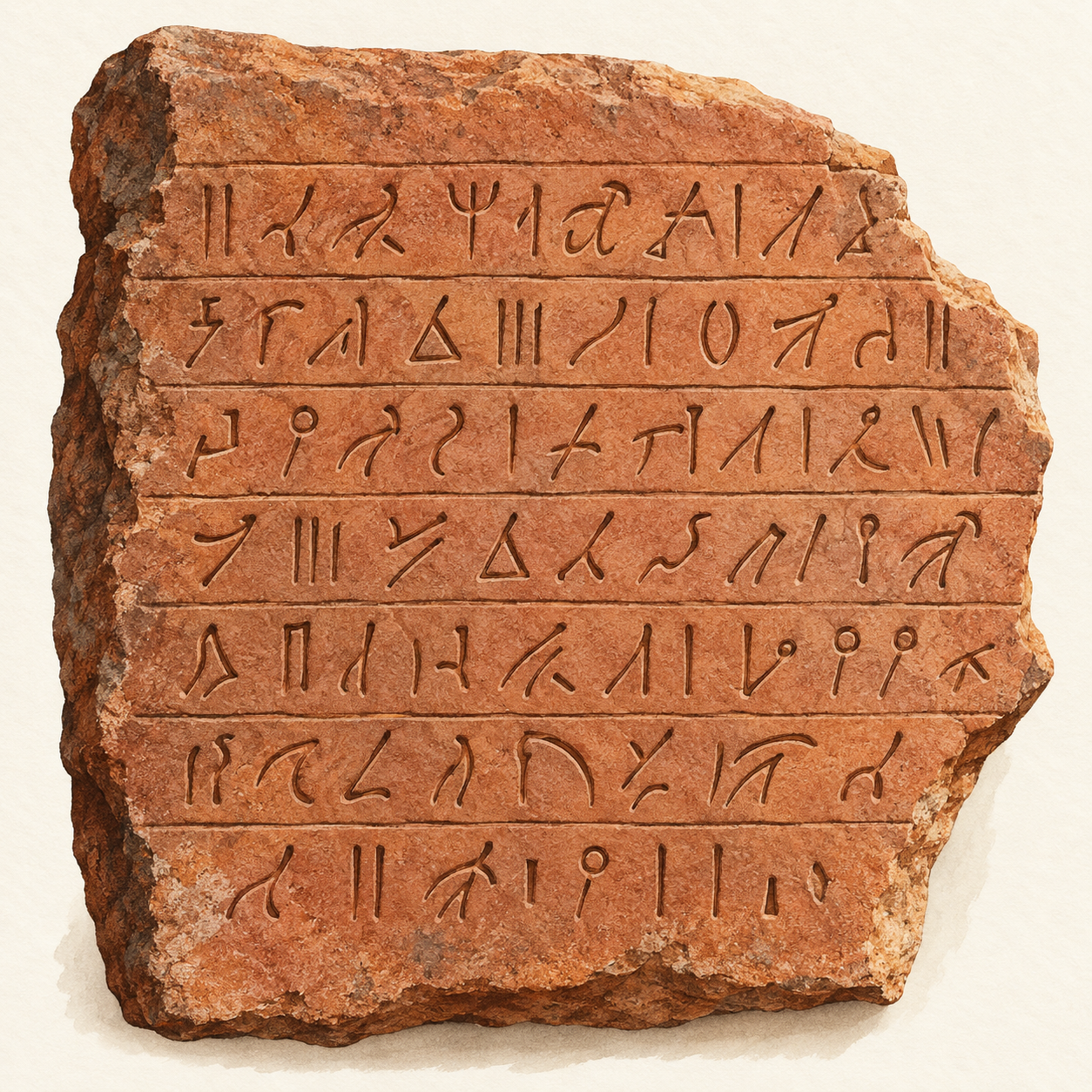
Imagine being able to sound out a sentence without understanding most of its words. You have solved one problem and immediately encountered another. Meroitic, the ancient language associated with the kingdom of Kush in what is now Sudan, gives scholars a version of that experience.
Its writing system is not simply an unreadable collection of shapes. The basic sound values of its signs were worked out in the early twentieth century. Understanding the language has proved much harder, and remains a continuing field of research.
Two systems of signs
Meroitic was written in two related forms conventionally called hieroglyphic and cursive. Their relationship to Egyptian writing helped Francis Llewellyn Griffith decipher the scripts. The University of Chicago's account places this achievement in 1911.
The word cursive can be misleading here: the British Museum notes that letters in the cursive inscription on the Hamadab stela are not actually joined. Names for script styles are useful labels, but they do not always mean exactly what a modern handwriting lesson would suggest.
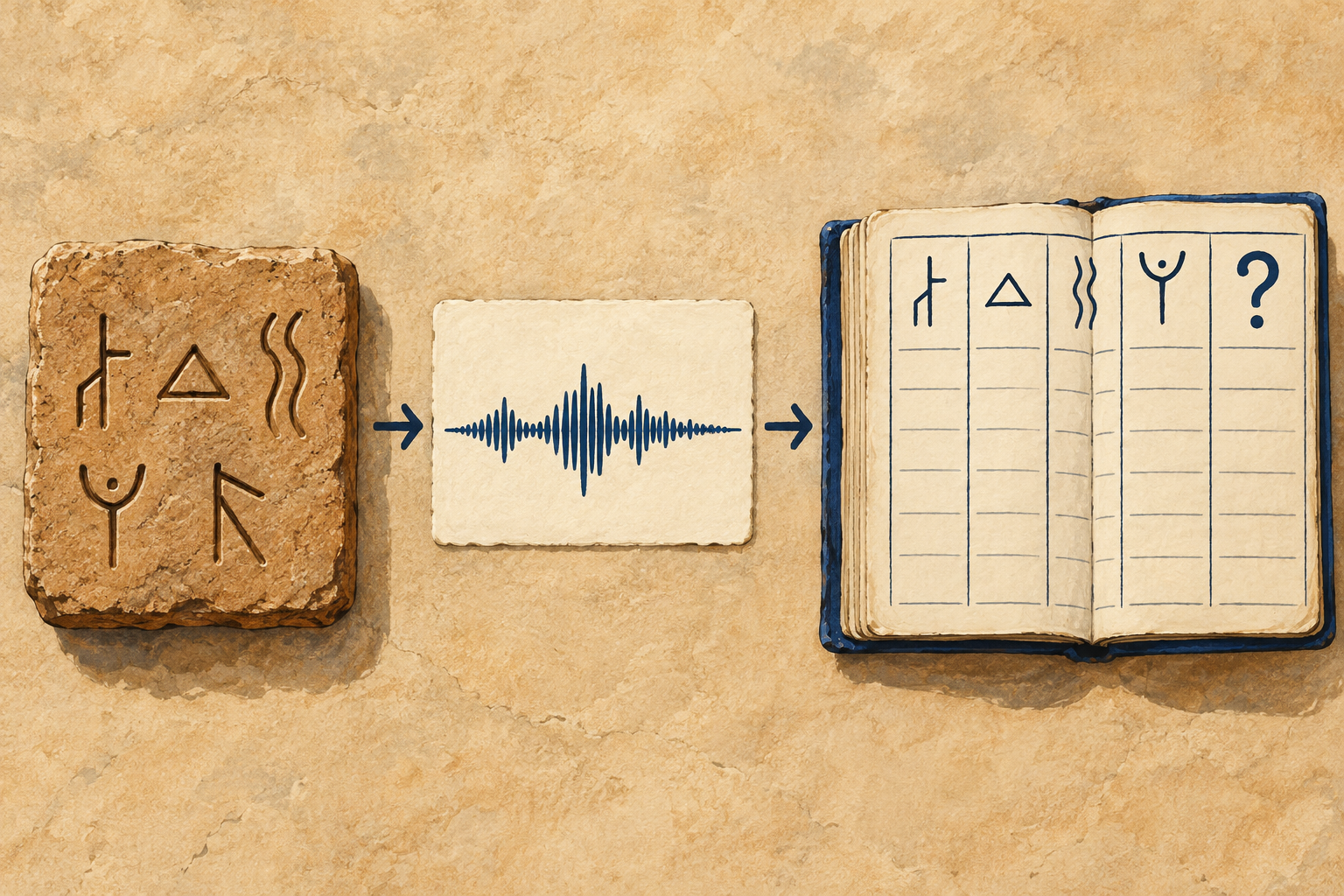
Knowing a sign's sound allows a transliteration: representing it with another set of characters. Transliteration is an important tool for comparing names, recurring endings and patterns. It is not automatically a translation.
An inscription with a missing voice
The Hamadab stela preserves a long Meroitic inscription beneath a relief involving Queen Amanirenas and Prince Akinidad. The museum can identify the written signs, yet explains that the text's meaning is far from clear. Its historical setting makes that gap especially frustrating.
For a reader, the object combines several kinds of evidence. Images can identify participants or religious contexts; archaeology locates the object; repeated names may connect it with other records. These clues narrow possibilities, but cannot substitute for a fully understood vocabulary and grammar.
| Task | What it accomplishes |
|---|---|
| Identify signs | Recognize the written units |
| Transliterate | Represent known sound values |
| Translate | Explain the words and their relationships |
Progress without a single magic key
Researchers have made advances through recurring inscriptions, linguistic comparison and the study of names and formulaic language. Scholar Claude Rilly's work on phonology, syntax and the language's family illustrates how these questions can be approached systematically. The subject should not be described as a complete blank simply because many passages remain difficult.
Equally, knowing some words does not justify a fluent invented rendering of every text. A persuasive translation must explain the grammar and fit other inscriptions, rather than depend on a story that sounds plausible beside one monument.
Meroitic's appeal is that it exposes the layers hidden inside the everyday word reading. Recognizing a letter, recovering a sound and grasping an idea are different accomplishments. Between them lies patient scholarship, and the possibility of hearing more of an ancient African kingdom in its own words.
Sources: British Museum: the Hamadab stela · University of Chicago: Meroitic phonology, syntax and linguistic family · Unicode Standard: Meroitic scripts
Explore more creative curiosities at Incoprea.




