Showing posts with label Imaging Science. Show all posts

Wednesday, October 14, 2026

Egyptian Blue: The Ancient Pigment with an Invisible Signal

A face in a Roman Egyptian portrait can contain blue even where it looks like warm flesh. A marble sculpture can retain pigment too faint to notice in ordinary light. Egyptian blue makes these discoveries possible because its material identity has a second, invisible signature.

When illuminated appropriately, the pigment emits near-infrared light that suitable imaging equipment can record. The resulting image is more than a spectacular effect. It helps researchers move from “this surface once had colour” to questions about where paint was placed and how an artist used it.
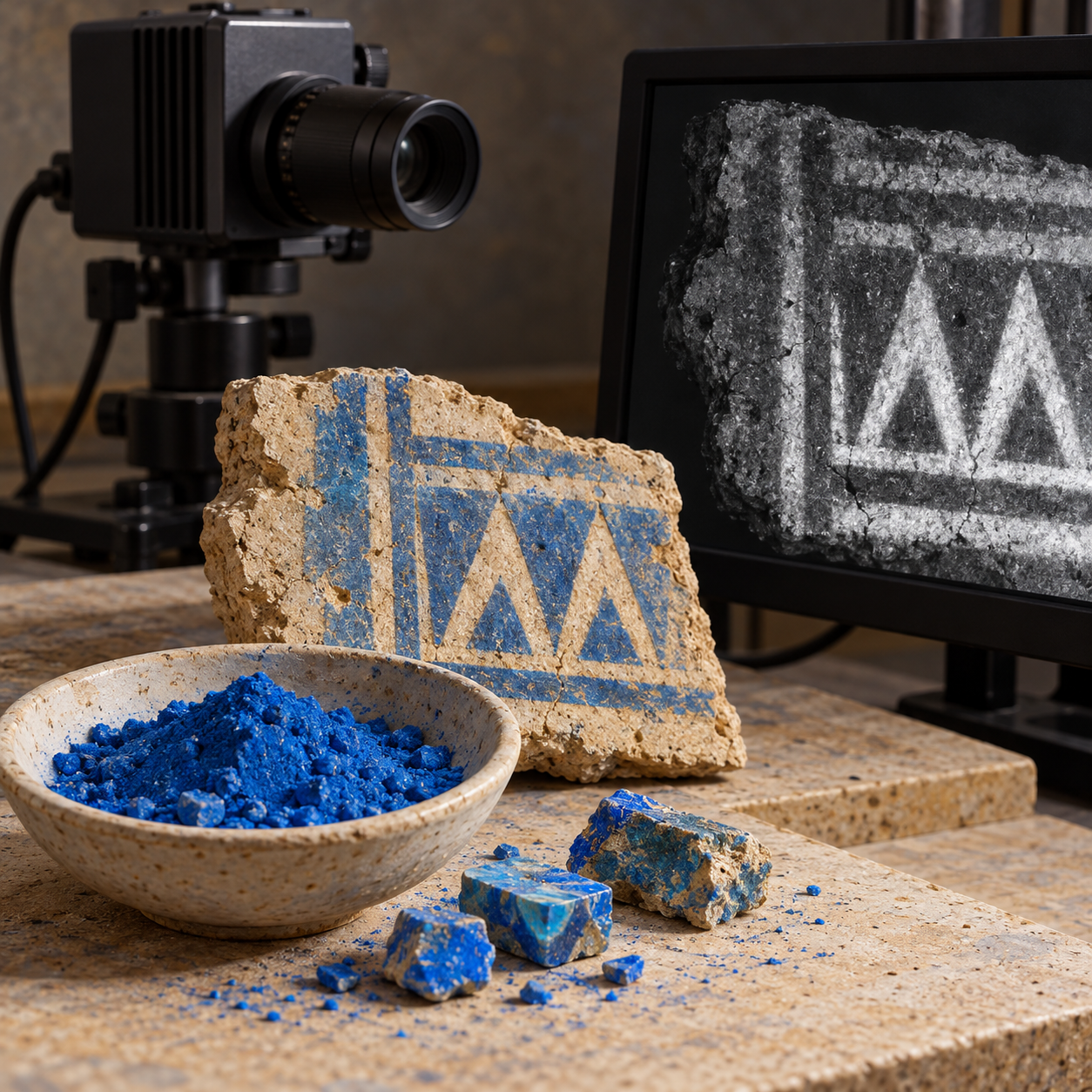
Laboratory-inspired illustration of blue pigment, a painted fragment and imaging equipment.
A conceptual materials study; the screen is illustrative, not measured data.

Blue is an appearance; pigment is a material

Egyptian blue is a manufactured calcium copper silicate pigment, associated with the crystalline compound cuprorivaite. Its preparation required heat and controlled material processing. It is widely described as the earliest known synthetic pigment.

The name does not limit its use to Egypt. It circulated within a wider ancient world, and a modern catalogue can identify it in works from different locations and periods. Nor does finding the material guarantee that the surface looked bright blue. Small particles can be mixed into other colours.

This distinction changes the question a reader asks of an artwork. “Where is the blue?” searches for a visible hue. “Where is Egyptian blue?” asks where a particular material occurs, including places whose overall colour is something else. Scientific imaging can make the second question practical.

How the invisible signal becomes a picture

Visible-induced infrared luminescence imaging, commonly abbreviated VIL, uses illumination to provoke an emission outside ordinary human vision. A camera sensitive to the relevant near-infrared wavelengths records it while filters distinguish that emission from other light.

The resulting bright areas are a way of displaying recorded information. The ancient paint is not glowing blue to the naked eye, and the displayed brightness should not be mistaken for the original appearance of the artwork. It is an analytical view with a particular purpose.

Getty's discussion of the APPEAR portrait project also notes that images made by different teams are not necessarily directly comparable in brightness. Equipment, conditions and processing matter. The useful interpretation begins with the image's method and legend, rather than assuming every pale pixel means the same quantity of pigment.

A blue contribution to a woman's face

Stephanie Spence and John Twilley's study of a portrait at the Nelson-Atkins Museum of Art provides an especially engaging example. Their investigation combined luminescence imaging, elemental mapping and microscopy. The portrait depicts a woman with carefully modelled highlights and shadows.

Egyptian blue was identified in an underdrawing role and in mixtures used to modulate flesh tones. The face does not present obvious blue patches in those areas. Microscopic particles and corresponding analytical responses reveal the material's subtle contribution.
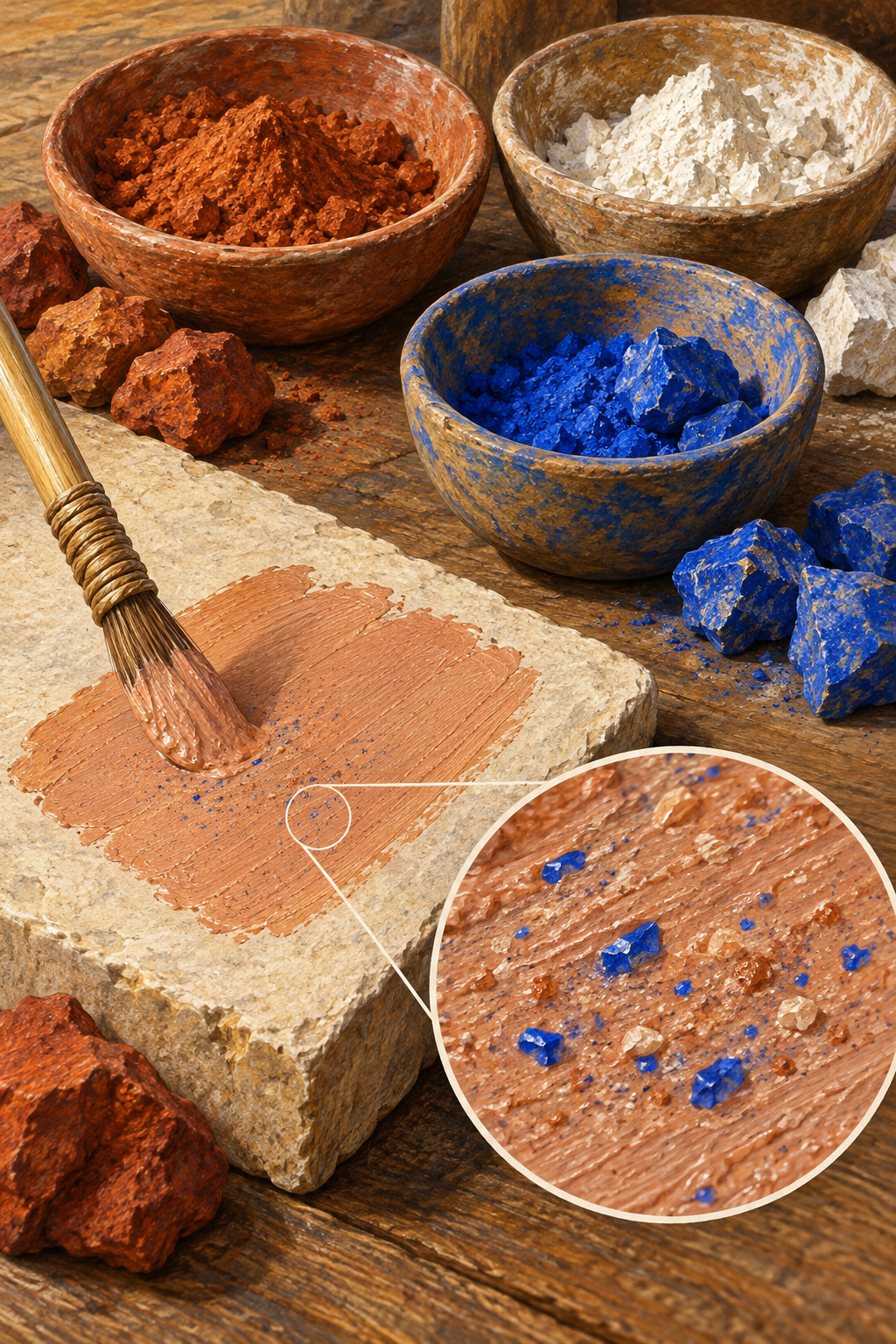
Illustration of blue pigment grains mixed into ochre paint, with an enlarged conceptual inset.
Small pigment additions can alter a paint mixture. The inset is conceptual, not a micrograph.

The conceptual particle illustration encourages a change of scale. In the Getty study, compare the ordinary portrait, the VIL image and the photomicrograph in figure 14.5. The real evidence lies in the relationship among those views, rather than in the explanatory inset here.

For an artist, a pigment can help a mixture achieve an effect without advertising itself as a separate colour. The research therefore recovers a decision about painting, not just an entry in a chemical inventory. A small amount can matter because of where and how it is used.

The surviving trace on marble

Research on the Parthenon sculptures provides a different scale of evidence. A 2023 primary study by Giovanni Verri and colleagues combines close examination of carving with analysis of colour traces, including Egyptian blue. It investigates the relationship between sculpted textiles and painted designs.

That is more specific than simply repainting every marble surface in the imagination. A detected trace can establish the presence of a material at a location. Reconstructing a whole garment's original design requires additional evidence about the distribution, surviving forms and comparison with other works.

Surface texture matters too. The study describes carving that differentiated materials such as skin and fabric. Painting and sculpting were parts of the finished effect. Modern white marble is therefore not a neutral window onto every aspect of the ancient object's appearance.

A three-view investigation

Open the Nelson-Atkins portrait study. Choose one small area, such as the region beneath an eye or part of the neck, and follow it across the published views.

  1. In visible light, describe the colour and modelling without using the material name.
  2. In the VIL image, identify the corresponding location and inspect the response shown there.
  3. Read the microscopy and elemental-map discussion. Which additional observations support the pigment identification?

The sequence keeps observation ahead of conclusion. It also explains why several techniques can be more informative together. An elemental map indicates the distribution of an element; a luminescence response concerns a material's optical behaviour; a microscope can reveal particles and their context.

Now reverse the journey. Return to the visible portrait and look at the same area again. Its appearance may not change, but your account of the artist's choices has. You know that a seemingly straightforward skin tone can contain a carefully judged mixture.

More than hidden colour

Egyptian blue connects making and examining. Ancient craftspeople controlled materials to produce a useful pigment; modern researchers use its properties to find evidence that ordinary viewing misses. Neither achievement requires turning the material into a magical secret.

The most rewarding discovery is often a relationship: blue within flesh, a pigment trace on carved cloth, a particle linked to a brush decision. The signal beyond sight matters because it returns us to the visible work with better questions about the person who made it.

Sources and further reading

Explore more art, stories and discoveries at Incoprea.

Palimpsests: The Books Hidden Inside Other Books

Turn a manuscript page and the lines seem to run in two directions. One hand has written across the page you are holding. A fainter hand belongs to a book whose original shape has disappeared. The same piece of parchment has served different readers, and neither history can be understood by looking only at its darkest words.

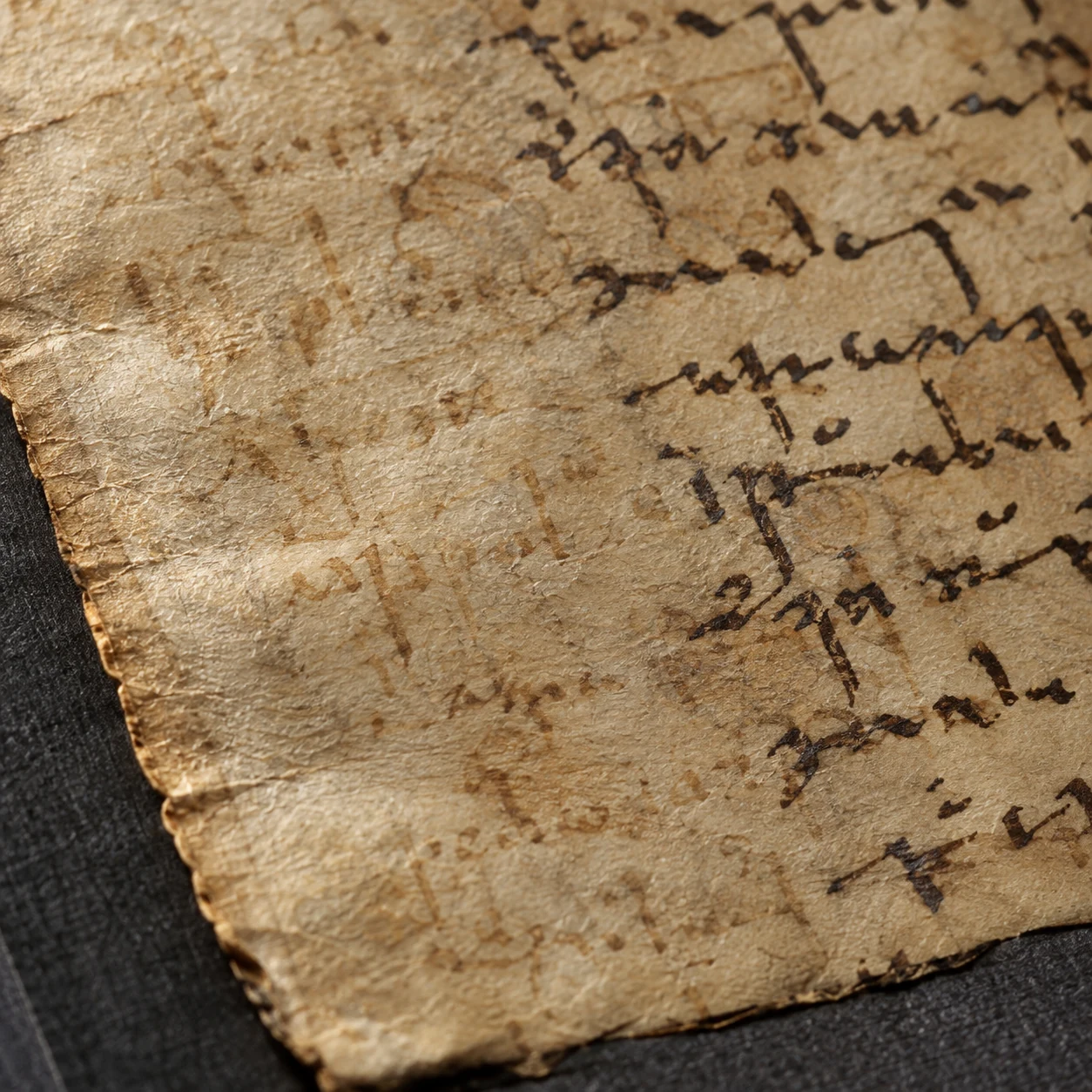
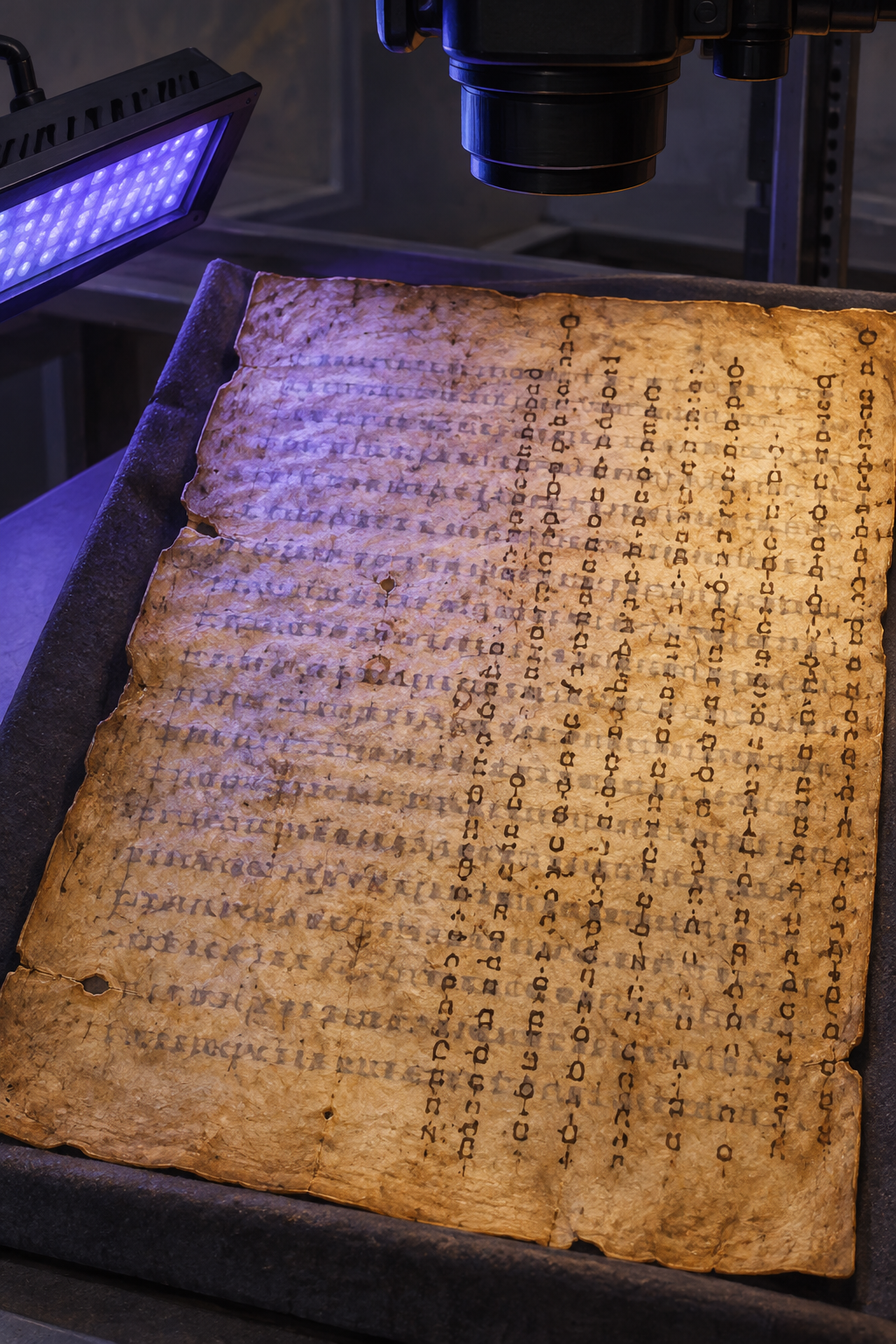
Overlapping manuscript layers on a parchment leaf beneath an imaging camera.
A conceptual conservation scene; the manuscript marks do not transcribe a real text.

A manuscript made from erased and reused writing material is called a palimpsest. The word can suggest a secret waiting for one magical camera. The actual investigation is more absorbing: a page has to be conserved, its material responses recorded, its old arrangement reconstructed, and its marks read by people who know what to look for.

The prayer book is real, too

The Archimedes Palimpsest Project’s account begins with a useful correction to the manuscript’s famous name. The object is a Greek prayer book completed in 1229. Its makers reused parchment from several earlier manuscripts, including a tenth-century copy containing works by Archimedes. These are medieval copies of ancient mathematical writing, not pages penned by Archimedes himself.

The reused material also carries works associated with the orator Hyperides and a commentary on Aristotle’s Categories. A single later binding gathered fragments of several earlier reading worlds. “The book underneath” is therefore not always one complete lost volume waiting to be restored.

The Walters Art Museum’s account describes leaves being cut, rotated, and refolded. Reusing parchment changed the orientation and order of writing as well as its visibility. A researcher needs to distinguish the later page sequence from the arrangement of the older leaves. That physical problem matters to the reading: adjoining marks on a photograph may have belonged to different pages in an earlier book.

It is tempting to cast the prayer-book makers as people who failed to recognize a treasure. A more useful question is what their material and devotional needs made possible at that moment. The prayers deserve study in their own right. Their survival and the survival of the undertext are now intertwined.

First preserve the page that carries the question

A conservation paper by the project team describes mold-damaged parchment, adhesive residues, and the work needed to prepare leaves for imaging. Some pages had also acquired modern painted images over the manuscript writing. The investigators were dealing with several kinds of interference, not one uniform layer of erasable ink.

This gives conservation a central role. A dramatic enhancement is of little use if the surviving source is damaged in obtaining it. The page holds information that a future technique or a different scholar may read more successfully. Caring for its material condition keeps those possibilities open.

Close study of a parchment surface with darker abstract marks crossing faint traces in another direction.
A close-looking study of crossing traces on parchment. These marks do not transcribe a historical page.

Before trying to identify letters in a real image, notice ordinary physical clues: an edge, a hole, a stain, or a direction of writing. Such features can help you recognize the same place across different photographs. A convincing discovery begins with knowing exactly what surface you are comparing.

Twelve photographs still need an interpretation

In the project’s account of the August 2007 imaging session, each leaf was photographed at twelve wavelengths from ultraviolet through infrared. The capture system recorded whole leaves at a resolution the scholars judged sufficient for detailed reading. Yet the account stresses that the separate photographs did not immediately yield easily legible text.

Different materials respond differently to illumination. Comparing and combining those responses can make a weak trace stand out. A displayed color may therefore represent a useful contrast between recorded signals rather than the color a medieval reader would have seen.

The project’s discussion of early imaging experiments identifies another difficulty: photographs have to align accurately. Slight changes between images can confuse the tiny details of a character. Processing also produced unwanted features that hindered reading. Improving contrast and establishing what a mark means are connected tasks, but they are not the same task.

Think of a familiar example from a faded photograph. Increasing contrast may help you notice an outline; it does not establish who the person is. Reading a palimpsest similarly requires evidence about script, language, layout, and context after a mark becomes easier to see.

When light meets a layer it cannot read through

Some obscured pages required a different approach. SLAC’s account of the 2006 investigations describes X-ray fluorescence used to detect iron associated with ink. The researchers also examined signals from elements present in later paint. Mapping material signals helped distinguish text-related traces from interference.

The distinction matters because “use a stronger camera” does not describe every imaging problem. Visible-light photography, photographs made under selected illumination, and elemental mapping collect different kinds of information. Choosing among them depends on what is obscuring the writing and what physical evidence survives.

Compare a page without pretending to read Greek

The photographs accompanying Sorbonne University’s report on a rediscovered leaf offer a useful starting point. They show the two sides of a real object, including a later painted image. Open the photographs and choose one small area to examine before reading the full account. Understanding Greek is not required for this first exercise.

Four questions for a layered manuscript page
Look forRecord
The physical surfaceFind an edge, stain, or hole. Where does it interrupt the area available for writing?
DirectionCan you distinguish groups of traces running along different lines?
A later additionWhat does the painted side allow you to see, and what does it conceal?
A remaining uncertaintyWhat still cannot be identified from appearance alone?

Keep “I can see a curved trace” separate from “this is a particular letter.” The first is an observation you can point to. The second needs an argument that may draw on neighboring marks and specialist knowledge. Writing both statements separately makes the image more interesting, because it shows where seeing ends and interpretation begins.

A missing page can turn up in plain sight

The investigation is still changing. In a report published in March 2026, Sorbonne University described Victor Gysembergh’s identification of a missing leaf in the Blois Museum of Fine Arts. Recognizable writing and a later added image prompted investigation. Comparison with Johan Ludvig Heiberg’s photographs from 1906 confirmed the connection.

The rediscovered leaf contains material from On the Sphere and the Cylinder. Its identification illustrates a kind of research that a spectacular laboratory image can overshadow: examining catalogued objects, recognizing details, and testing a match against an older record. The university’s report also explains that further imaging would be needed to read writing hidden beneath the added painting.

A palimpsest’s wonder is not that technology supplies words where none survive. It is that surviving material can answer a better question when conservation, imaging, old photographs, and scholarly reading are brought together. Every visible trace has a location and a history. Recovering that history can be as satisfying as recovering the sentence.

Read another material clue

Compare a different way of reading concealed writing in Herculaneum Scrolls: Reading a Library Without Opening Its Pages. Then consider what a manuscript’s materials can establish in The Bakhshali Manuscript: A Tiny Dot and a Big Dating Lesson.

Explore more art, ideas, and independent projects at Incoprea.

publications

New this week Two novels in six stories each, from The Night Shift . New — a novel in six documents Small Print A Novel in Six Do...