A small ceramic bird can contain a second surprise after its shape. In some Andean vessels, moving water shifts air through a concealed whistle and produces a warbling sound. The sculpture is also a container, and the container is part of a musical mechanism.
These objects reward a change in the usual order of attention. First look at the outside, then listen, then ask how the interior makes the sound possible. A potter had to plan all three experiences in clay that would eventually be fired into a durable but difficult-to-alter form.
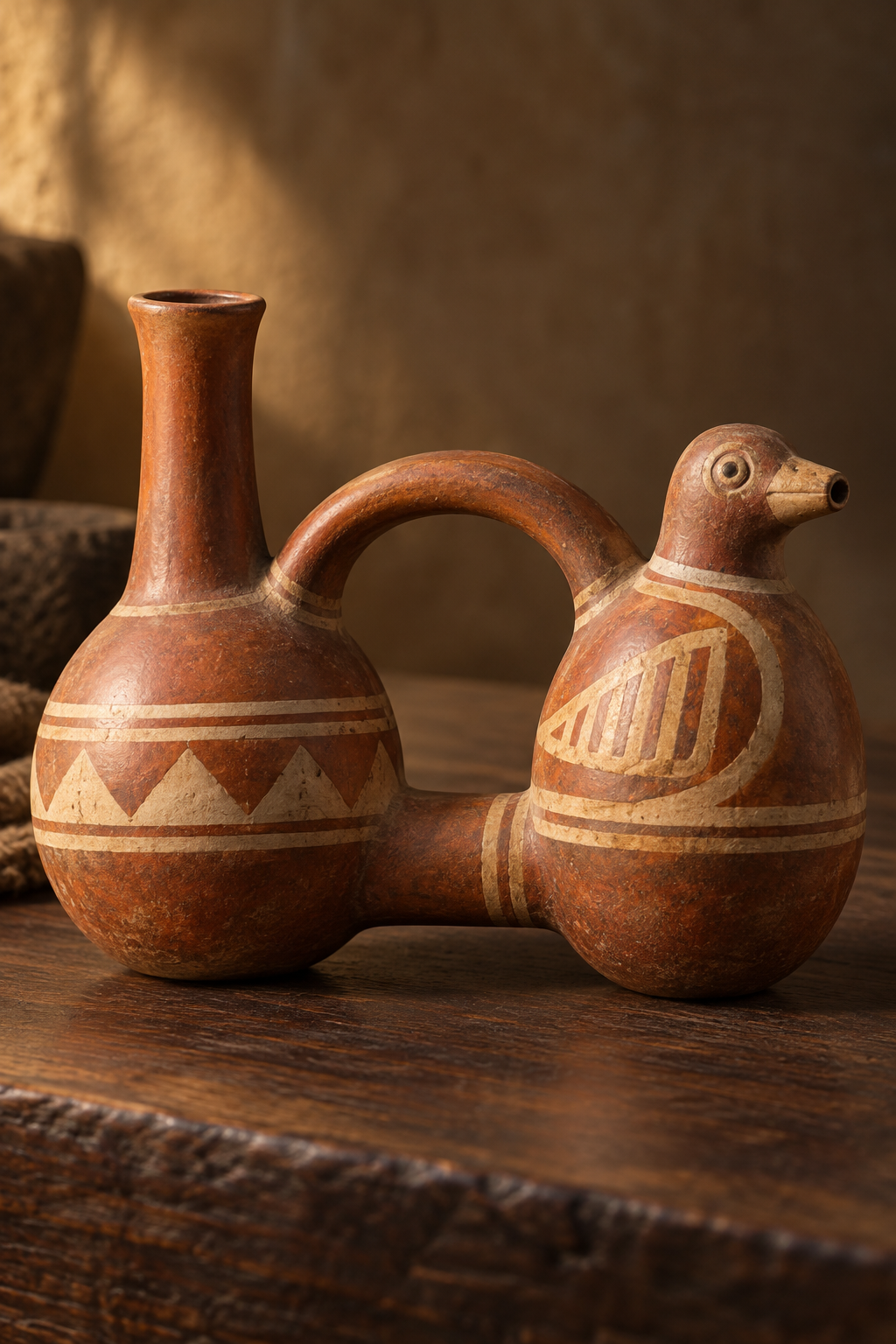
Listen to one particular jar
The Metropolitan Museum of Art's Chimú Whistling Jar, object 89.4.689, comes from Peru's north coast and is dated in the museum record to 1000–1476. Its collection page includes an audio feature with a transcript describing the sounding object.
The transcript explains that the jar is partly filled with water and rocked so liquid moves between two chambers. Displaced air reaches a whistle in the bird's beak. The recording's warbling effect gives the viewer another route into a form that might otherwise be treated as a silent decorative animal.
The distinction between water and air is essential. Water helps drive the air's movement; the whistle is an aerophone, an instrument in which air participates in producing sound. The vessel's chambers and passages make liquid motion useful to that process.
Follow the hidden route
Imagine water moving into a space that already contains air. The air has to move somewhere. In a vessel designed with an appropriate path and whistle, the changing flow can produce sound. The shape of the inside is therefore as consequential as the profile a museum visitor sees.
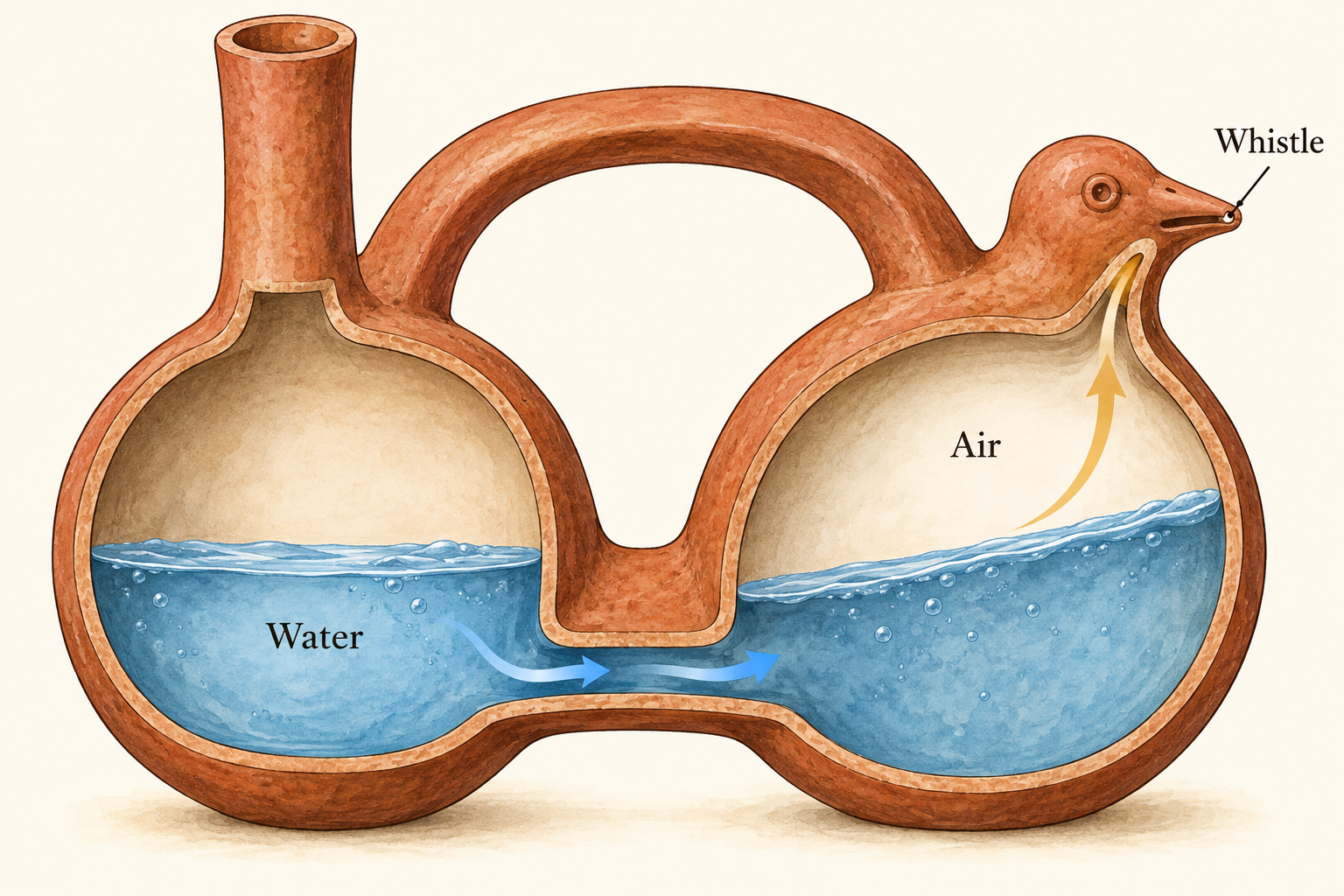
The cutaway separates those ideas conceptually. It is not a measured section through the Met jar. Actual chamber connections, apertures and whistles vary across examples. Use the museum's account to connect a mechanism with a named object rather than assigning one universal interior to every whistling vessel.
Tilting is also an input. A person does not simply reveal a sound already stored inside the clay; handling sets the water and air in motion. The object's behaviour emerges through the relationship between form, contents and movement.
A feline offers another design
The Met also holds a Wari feline-shaped whistling jar, dated around 500–900. Its description identifies a spout on the animal's back and a bridge joining the spout area to the hollow head. Tilting the partly filled vessel forces air out and produces sound.
The surface is richly worked too: coloured slips, a spotted coat, a striped tail and a burnished finish. The catalogue notes that the tail may suggest a pampas cat, despite the object's conventional title “Jaguar Whistling Jar.” Even the animal identification invites close looking rather than automatic acceptance of the title.
Set the Wari and Chimú records beside one another. They belong to different periods and cultural settings. Their shared capacity for sound is a reason to compare them, not a reason to collapse them into one timeless Andean instrument.
Architecture can conceal a voice
Architectural vessels add a further variation. The Met publication “Design for Eternity” discusses objects in which a sound mechanism is concealed within a modelled structure or one of its features. A miniature building can organise airflow as well as represent space.
That creates an interesting relationship between seen and unseen form. An external feature may have a visual role and a functional connection to the interior. The hidden passage is not necessarily something a viewer could reconstruct correctly by looking at the outside alone.
The wider lesson is about craft. A ceramic artist working on an acoustic vessel has to anticipate changes during making and firing, the relationship of connected parts, and the behaviour of the finished object. The charming animal or building is only the visible part of that planning.
A two-pass listening visit
Open the Met's Chimú jar page and use its “Whistling Jar” audio feature. On the first pass, listen without looking closely at the image. Describe the sound in terms of continuity, pulses, pitch movement and pauses. Avoid deciding immediately what it must imitate.
On the second pass, read the transcript and follow its account of rocking, moving water and displaced air. Can you hear changes that you would want to relate to the handling? The recording supplies a particular demonstration; it does not let you measure every movement or infer every possible sound the vessel could make.
Then open the Wari record and examine its different views. Locate the spout, bridge and hollow head identified in the description. Which features are visible immediately, and which become meaningful only after reading the account of sound production?
What the recording cannot tell us by itself
A modern demonstration can show what the particular object does under the demonstrated conditions. It cannot establish a complete ancient ceremony, its participants or its meaning. Those historical questions require archaeological and cultural evidence alongside the sound.
Hear the object without inventing its occasion
The original uses of many pre-conquest sound-producing objects remain uncertain. Museum interpretations can suggest ceremonial or other roles, but a compelling sound should not be turned into a detailed ritual narrative without support.
There is already enough to hold our attention. Liquid becomes a moving component, air follows a planned route and clay gives the mechanism an animal or architectural form. The vessel joins visual imagination with practical understanding. Listening makes that achievement perceptible in a way a photograph alone cannot.




