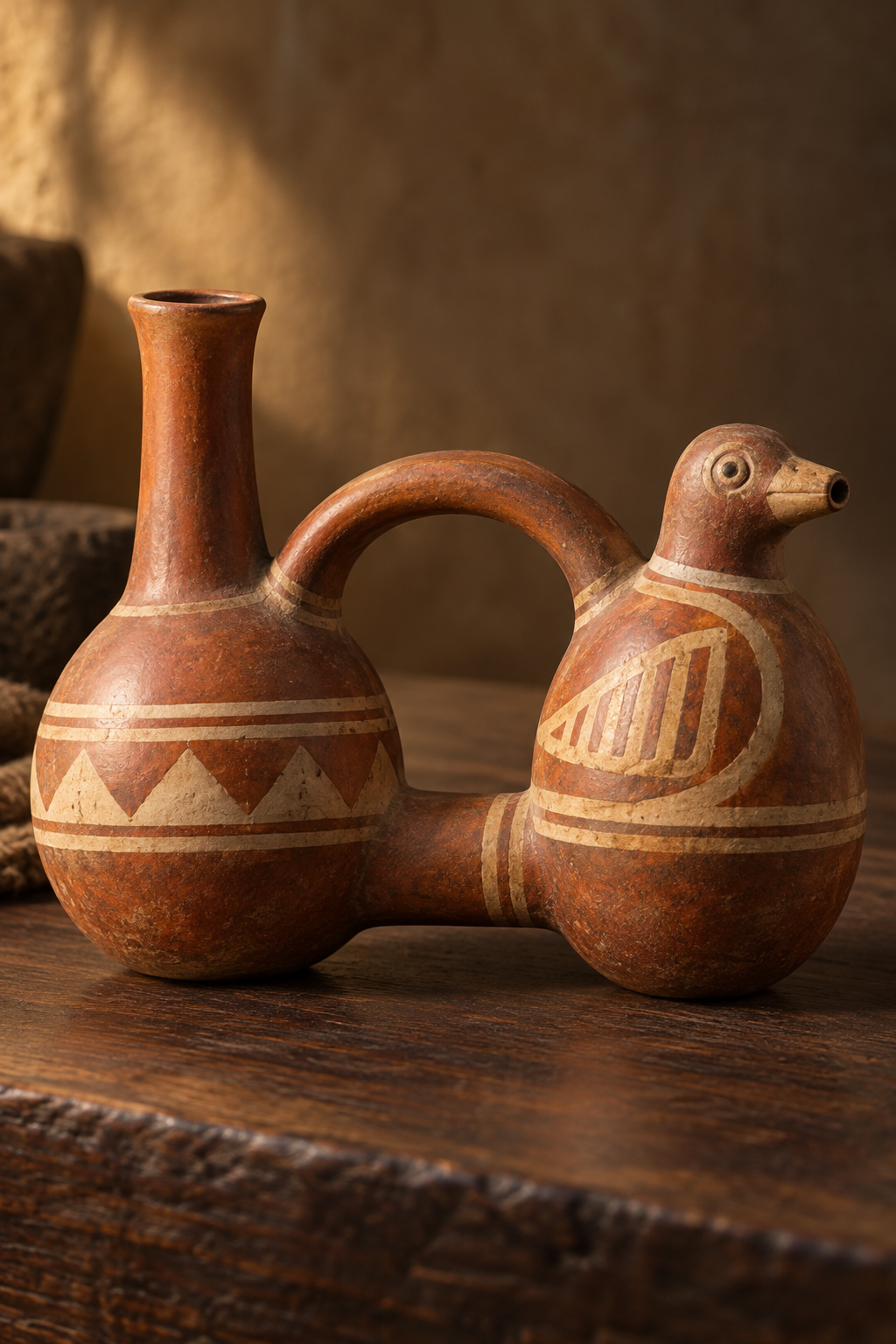
A ceramic bird sits quietly on a shelf. Tilt the vessel beneath it and, in certain designs, a warbling whistle emerges. Ancient Andean potters made objects that are both sculptures and sound-producing devices. Moving water helps move air, and a small feature hidden in the pottery turns that air into a voice.
The water is a moving part
A whistling vessel may have one chamber or two connected chambers. Depending on the design, it can be sounded by blowing into a spout or by allowing liquid to move inside. The mechanism is not the same in every example.
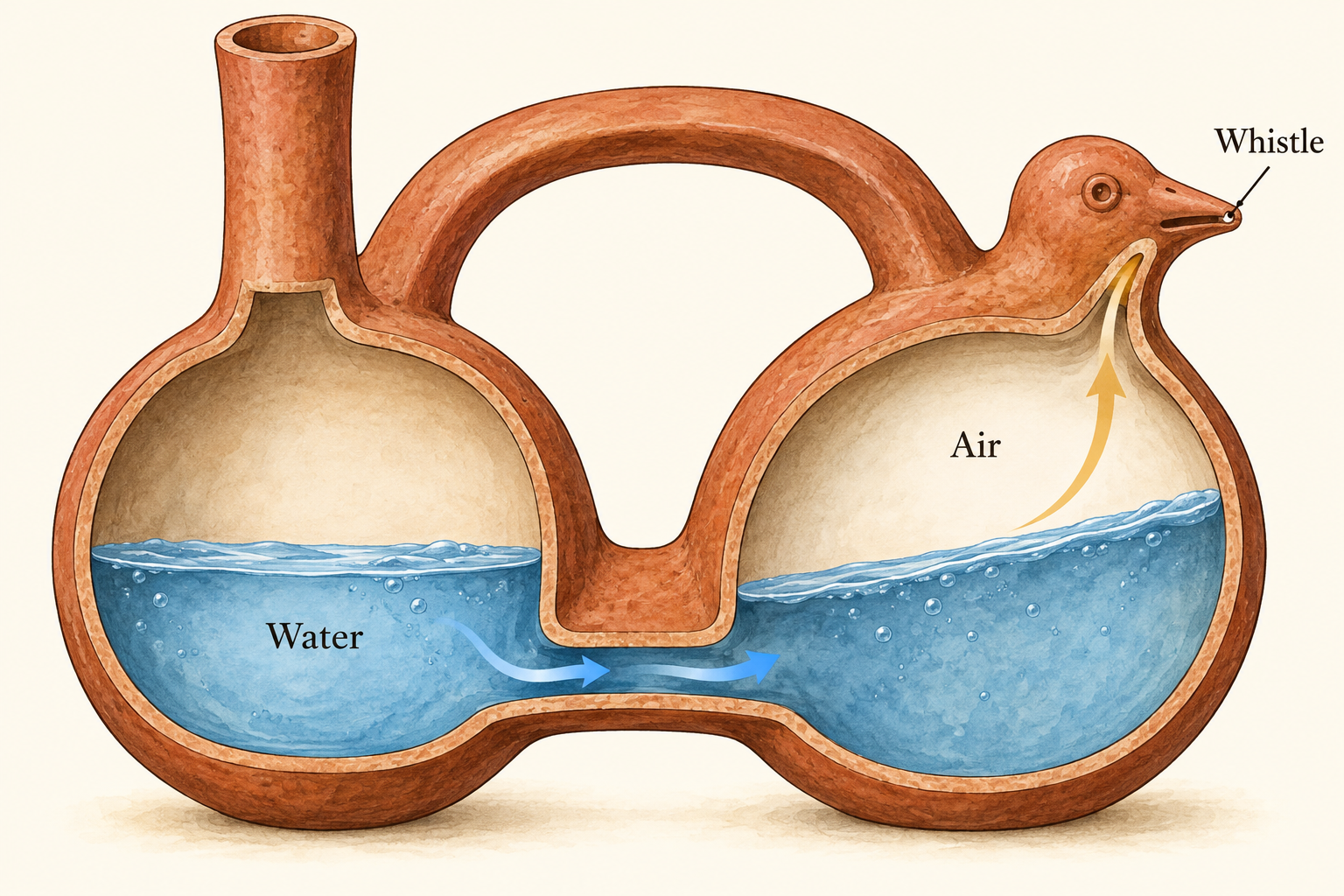
The Metropolitan Museum of Art describes a Chimú double-chamber jar from Peru's north coast. When partially filled and rocked, water passes between the chambers. Displaced air travels through the whistle in the modeled bird's beak, producing a twittering sound.
The water therefore contributes to an air-driven instrument. It does not need to vibrate like a string or strike a surface like a drum. Shape, passages and openings govern how air reaches the whistle. A potter had to consider the interior as well as the attractive exterior.
A family of designs, not one mysterious object
Such vessels belong to a wider history of Andean sound-making ceramics. The Met's collection also includes a Wari feline-shaped jar dated approximately 500–900. Its description explains that tilting the partly filled bottle forces air out to make sound.
The feline's painted coat, burnished surface, spout and bridge handle show how carefully visual and acoustic features could be combined. A figure that looks decorative can also house part of the functional design.
Moche artists made whistling vessels too, including architectural forms discussed in the Met's publication Design for Eternity. In one example, the sound mechanism is concealed as a figure within a miniature structure. The vessel makes us look for an unexpected relationship between modeled space and airflow.
We can hear the mechanism more clearly than its meaning
It is possible to explain how an object makes sound while remaining uncertain about exactly when and why people used it. The Met notes the limits of knowledge about the original roles of many pre-conquest instruments. Ceremonial interpretations may be plausible, but a pleasing modern demonstration cannot establish a complete ancient ritual.
Even the sound invites caution. An old object, a restoration and a modern replica can differ. A demonstration tells us something about the particular instrument being played and the way it is being handled.
What survives securely is a remarkable union of craft and observation. These makers shaped clay so that movement, air and an animal form worked together. They understood how an apparently ordinary container could do something surprising.
The next time a vessel whistles in a museum recording, imagine the planning hidden behind its surface. A little ceramic bird can contain a sophisticated idea about motion, pressure and sound.
Sources and further listening: The Met's Chimú whistling jar and audio; Wari feline whistling jar; Design for Eternity: architectural sound vessels.
Explore music, art and creative curiosity at Incoprea.