A tray of rice can become more than an ingredient. With a selected culture growing through it, the grain becomes a working source of enzymes. In later processes, those enzymes can help turn larger molecules into smaller ones that other organisms—or a cook's next step—can use.
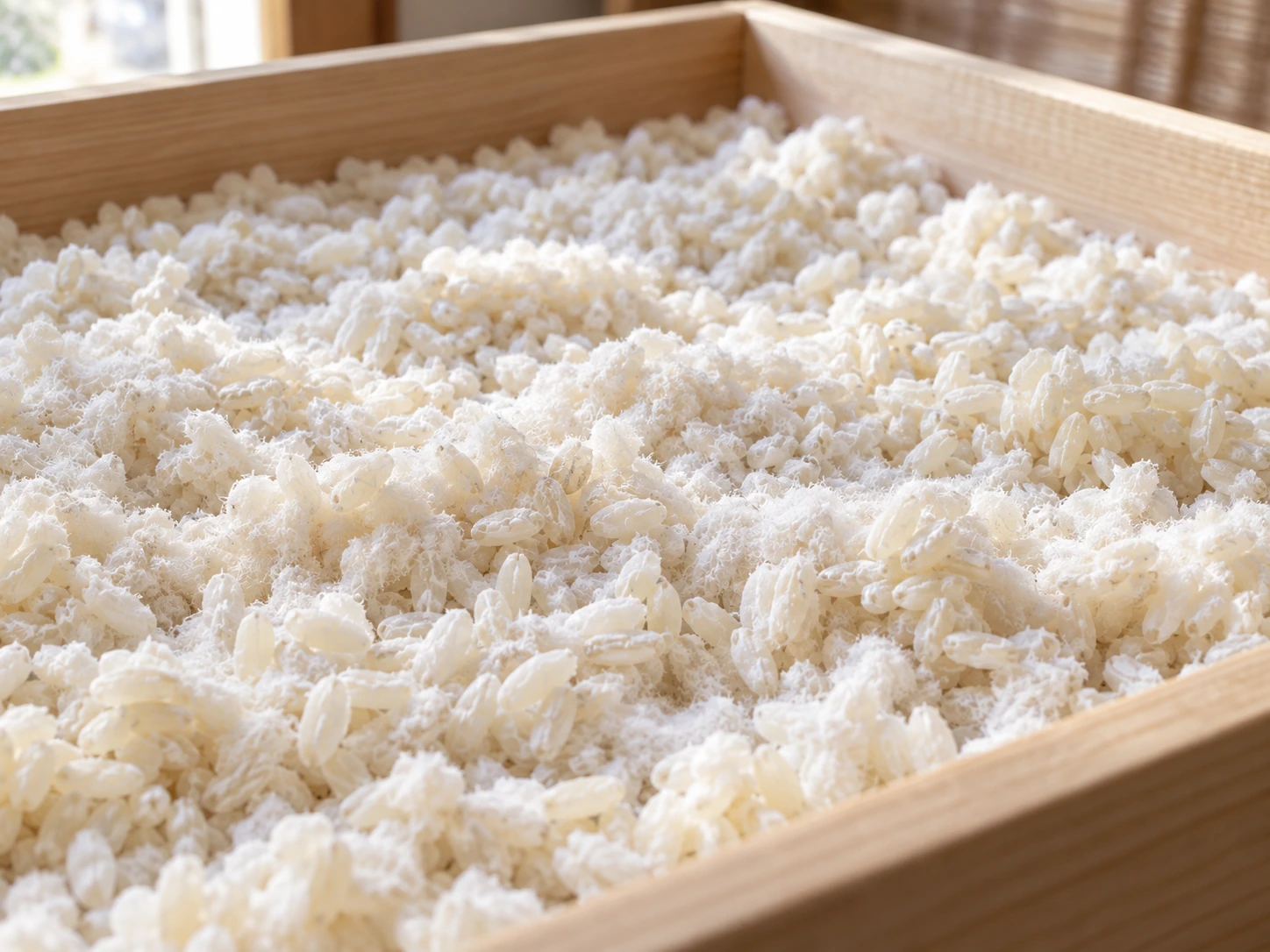
Koji is interesting because it sits between cultivation and transformation. The visible grain remains recognizable, while its capabilities change. To understand that change, put the finished food aside for a moment and follow three separate things: the growing fungus, the enzymes it produces, and the material those enzymes act on.
A culture and a tool are different actors
A comparison of industrial Aspergillus oryzae strains examined growth, genomes, gene expression, and proteolytic activity in soy-sauce-related contexts. The strains did not act as interchangeable copies. Their enzyme production and behavior were among the features the researchers compared.
The organism is alive; an enzyme is a molecule that catalyzes a particular reaction. Those categories interact but should not be collapsed into “the mold does everything.” An enzyme can act outside the fungal cell on suitable surrounding material. The resulting smaller compounds become part of a changing shared environment.
Use three boxes on paper: producer, tool, substrate. Put fungus in the first, enzyme in the second, and grain starch or protein in the third. Draw an arrow from producer to tool, then from tool toward substrate. You now have a useful question for any fermentation story: which arrows have actually been demonstrated?
The grain supplies more than a stage
In research following rice degradation by A. oryzae, investigators measured enzyme activities including alpha-amylase and glucoamylase while tracing changes in glucose. Starch breakdown is therefore not just a metaphor about softening grain. It can be followed through named reactions and analytical measurements.
Starch is built from many linked sugar units. Enzymes that cut particular bonds can change how those units become available. Protein presents a different kind of chain and requires different catalytic tools. The word fermentation can hide these distinct jobs if it is used as a single explanation for every change.
For a reading exercise, take a familiar product such as miso, soy sauce, or sake and find a producer's process description. Mark every place it mentions grain, koji, salt, yeast, or later maturation. Do not assume those actors enter in the same order or perform the same task across products. Your goal is a map, not instructions for growing a culture.
A different material asks different questions
A study of koji cultured on nori explored A. oryzae on a seaweed substrate. That research makes an important conceptual point: changing the material can change the useful transformations worth investigating. It does not establish that any household substrate or unidentified mold will be suitable.
Imagine replacing rice with a material containing a different balance of carbohydrates and proteins. Keep your three-box map, but add a fourth box for conditions. Which enzyme activities would you want to measure? Which end products would matter? A productive question names both the material and the desired observation.
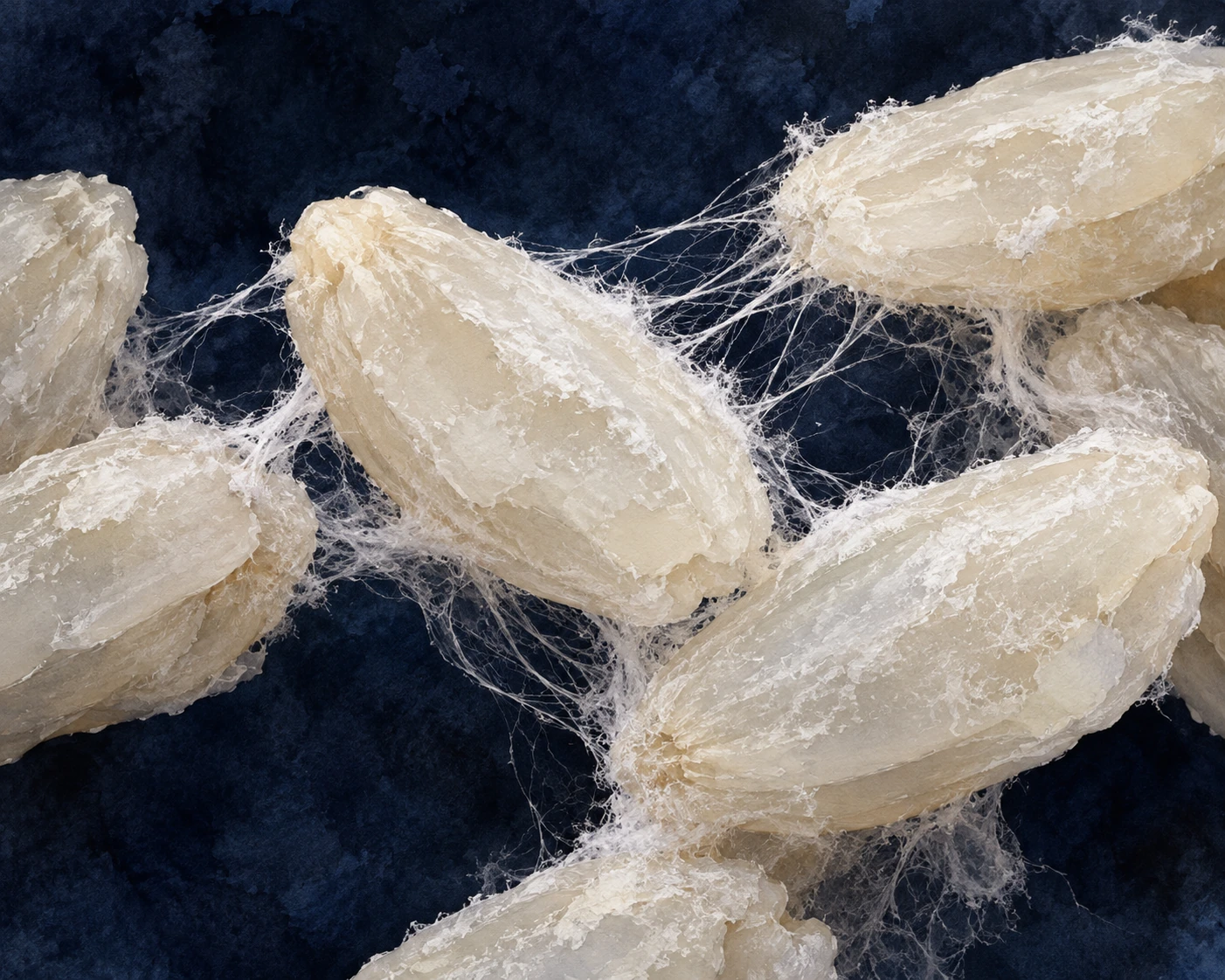
Appearance is a beginning, not an identification
The fine white growth in the illustrations helps you imagine grain becoming a cultivated surface. It cannot establish species, strain, purity, or suitability for food. A photograph does not reveal the complete chemistry of a living culture. The source studies use identified organisms and controlled methods, not a visual guess.
This article is an exploration of mechanism rather than a cultivation recipe. If you are interested in practical food making, use a reliable specialist process with an appropriate identified starter. The insight here does not depend on growing anything: it comes from distinguishing the jobs already happening in documented production.
Decode a fermentation description
Underline a statement about growth, circle a statement about an enzyme, and box a statement about the final product. If a sentence says only “koji creates flavor,” ask which specific transformation it refers to. Leave an arrow blank if the source does not explain it. The gap becomes a research question rather than an invented fact.
Your process map can also separate a measured result from a desired product quality. An enzyme assay shows activity under its stated conditions. A final food's aroma or texture requires its own observations. Drawing those as separate boxes prevents a plausible biochemical step from becoming an unsupported claim about what every finished food must taste like.
Return to the tray. The grains are still present, yet they now carry a changing set of biochemical possibilities. That is the engaging shift: an ingredient can be prepared to do work on other ingredients. Koji invites us to look at food as a sequence of capabilities, each depending on the organism, material, and process around it.
Sources and further exploration: Industrial A. oryzae strain comparison; Rice degradation and glucose tracing; Koji cultured on nori: original study.
Explore all 50 new articles · Browse the complete illustrated collection
Explore more art, ideas, and independent projects at Incoprea.


