The pale sand outside a gopher tortoise burrow is a clue to work you did not see. An animal has carried soil out of the ground, leaving a sloping passage behind it. The entrance may look modest beneath open pine woodland, but it leads to shelter whose importance reaches beyond its builder.
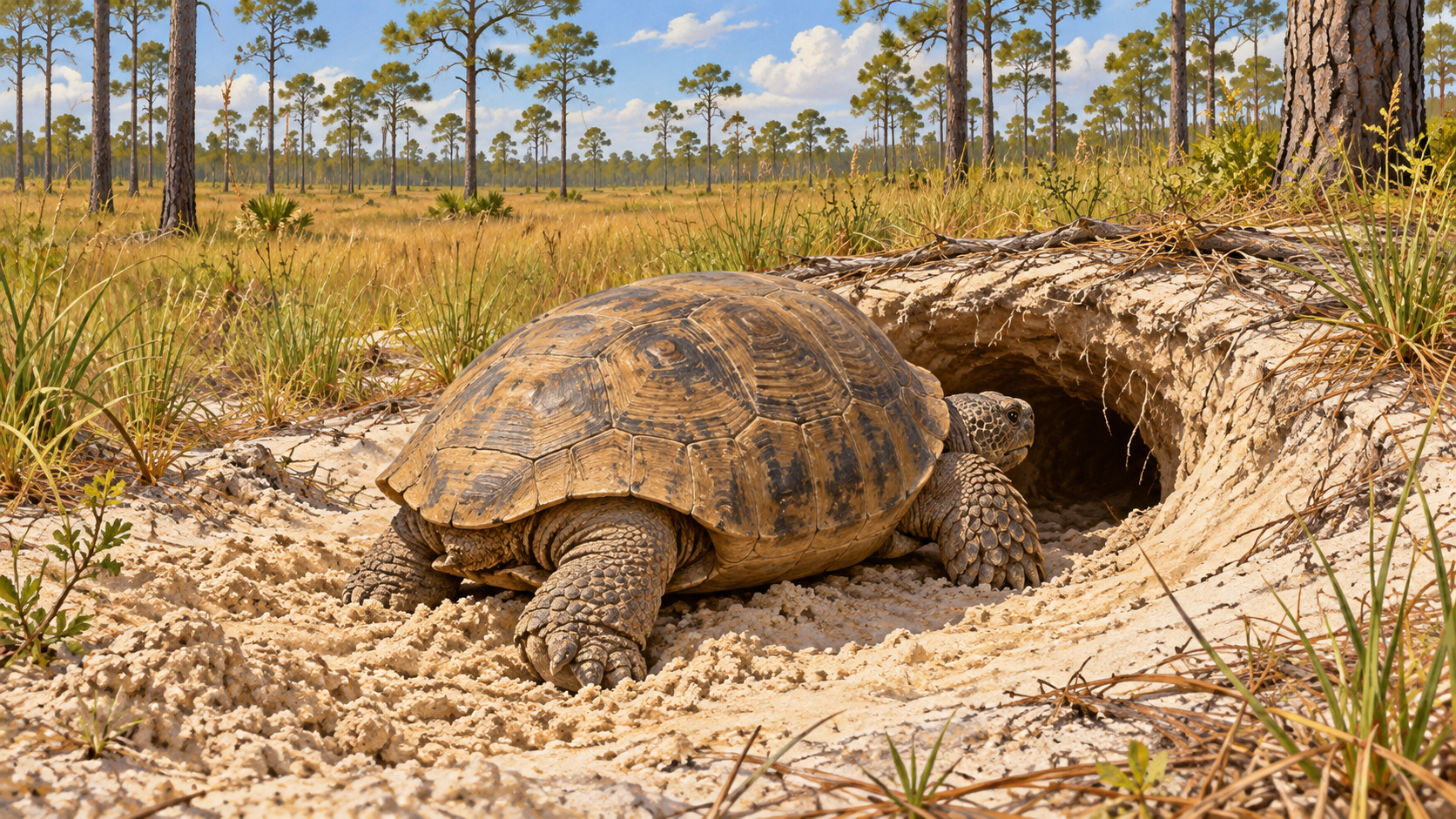
The gopher tortoise, Gopherus polyphemus, lives in the southeastern United States. Its digging forelimbs help excavate a refuge where above-ground conditions become less extreme. Other animals use these spaces too. Florida's wildlife agency records more than 350 species benefiting from the burrows across the system, a tally of ecological diversity rather than a head count inside one tunnel.
A different climate within reach
For a tortoise, temperature is part of the daily schedule. As an ectotherm, it relies on environmental conditions to regulate its body temperature. Basking, feeding and retreating change the conditions it experiences. A burrow expands that range of choices: an exposed surface and an underground refuge need not be equally hot, cold or dry at the same moment.
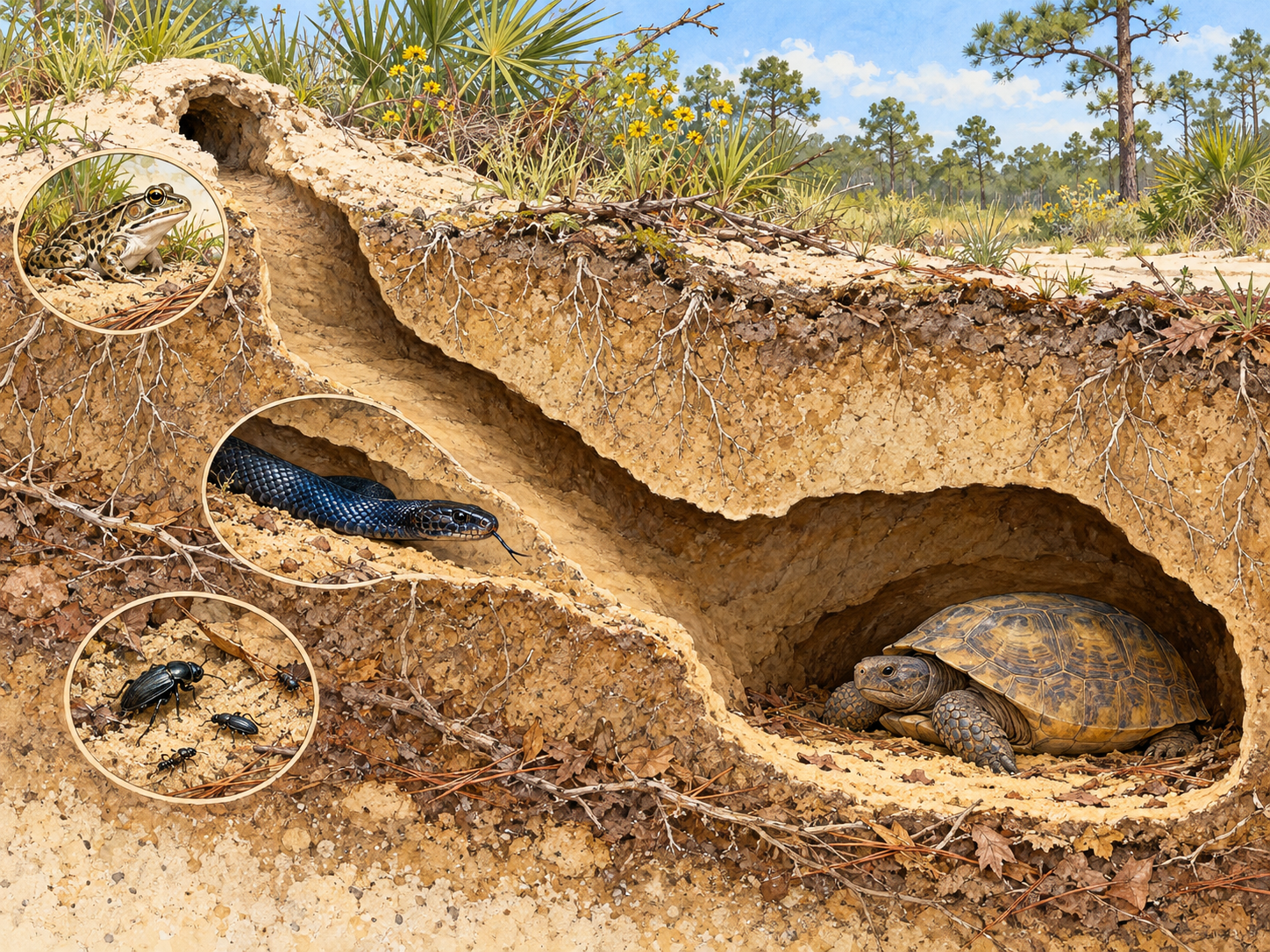
The US Forest Service review describes protection from temperature extremes, predators and fire among the burrow's functions. Its dimensions vary with the tortoise, soil and water table. The familiar cutaway of a descending tunnel with space at the end is a useful orientation, but individual burrows do not follow an identical architectural blueprint.
Imagine following a tortoise through a warm day using only the air temperature from a weather report. You would miss differences between open sun, shade, the entrance and the tunnel below. The animal's environment is a set of available places, not one regional number. By excavating a passage, it changes which of those places it can use.
The sand outside is part of the engineering
The apron at the entrance consists of excavated soil brought to the surface. It makes a physical record of digging and changes the local patch of ground. The burrow therefore creates both an underground space and a surface disturbance. Ecological engineering does not always require a dam or a towering nest; shifting soil can be enough.
The term ecosystem engineer describes this alteration of surroundings in ways that affect other organisms. The tortoise need not intend to help its neighbors. A space built for its own survival can become a resource for animals with different needs. This makes an ordinary behavior consequential at the level of a community.
Many users, many kinds of use
Gopher frogs, eastern indigo snakes and numerous invertebrates are among animals associated with tortoise burrows. Some visitors use shelter temporarily; others have closer associations with the underground conditions. Food, refuge and other opportunities can draw different species at different times. A list of users is therefore the beginning of an ecological description, rather than a picture of one crowded household.
The supporting cutaway gathers examples to make that diversity visible. It does not show a measured tunnel or simultaneous occupants. Real animals may avoid one another, arrive in different seasons or occupy different parts of a burrow. A predator and potential prey appearing in the same species list need not be resting side by side.
Try a simple interpretation puzzle. Suppose a camera records a frog entering on Monday and a snake passing the entrance on Thursday. You have evidence of two events. You do not yet know how long the frog remained, whether the snake entered, or whether they met. Keeping those unknowns in the record makes the observation more useful, not less interesting.
The architect needs a landscape
A burrow is valuable only within a habitat where the tortoise can also feed, bask and reproduce. Open vegetation allows sunlight to reach low-growing forage. Suitable ground permits excavation. A protected hole surrounded by deteriorating feeding habitat does not supply everything its builder needs, even if its entrance remains visible for a while.
USDA describes landowners' work restoring and managing longleaf-pine habitat, including carefully planned prescribed fire. Such management helps maintain open conditions in fire-adapted landscapes. This is not a claim that any fire is harmless: effects depend on conditions, timing and the animals' exposure. Habitat restoration involves decisions about the entire site rather than simply burning around a burrow.
What returning seventeen years later revealed
A study in Alabama's Conecuh National Forest compared observations from 1999 and 2016 after stand thinning and repeated prescribed fire. Researchers examined vegetation around burrows that remained active and those later classified as abandoned. Persistent activity was associated with more open canopy conditions and differences in nearby trees.
Burrows increased in abundance, and their size distribution suggested increased juvenile recruitment. Yet not every vegetation goal was achieved: opening the canopy did not produce all the hoped-for changes in shrubs and ground plants. That mixed outcome is valuable. It shows that a restoration can alter habitat and tortoise patterns while still leaving important work unresolved.
The comparison also suggests a better question for an entrance photograph. Instead of asking only whether a burrow exists, ask whether the surrounding habitat remains suitable and whether young tortoises are appearing. Counting structures, following their use and tracking recruitment reveal different aspects of the population. The same patch of sand can mean more when placed within a longer record.
If you encounter a tortoise or burrow, observe from a distance without touching, probing or blocking the entrance. A quiet observation can focus on the apron, surrounding plants and visible animal behavior. The hidden occupants do not need to be exposed for the burrow's importance to become clear. Protecting this small piece of infrastructure begins with leaving its working parts intact.




