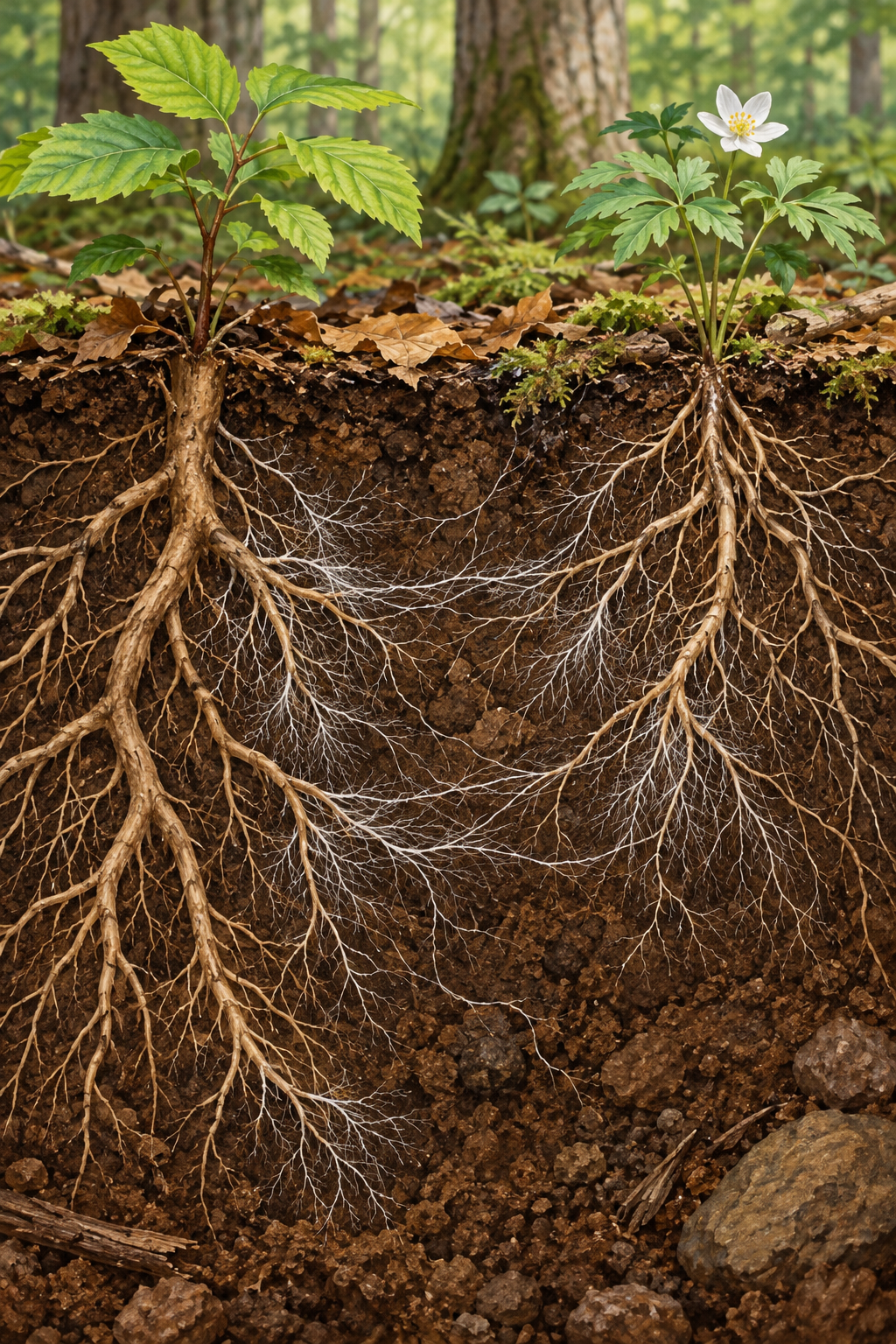
Below a forest floor, roots meet filaments far finer than most roots themselves. These fungal threads can help plants obtain resources from soil, while the plants provide carbon compounds made through photosynthesis. The partnership is remarkable before anyone calls it an internet.
Mycorrhizas are associations between plant roots and particular fungi. Kew studies their diversity, distribution and ecological roles. Their importance is well established, but several distinct questions are often squeezed into one appealing phrase: the wood-wide web.
A partnership is not a social network
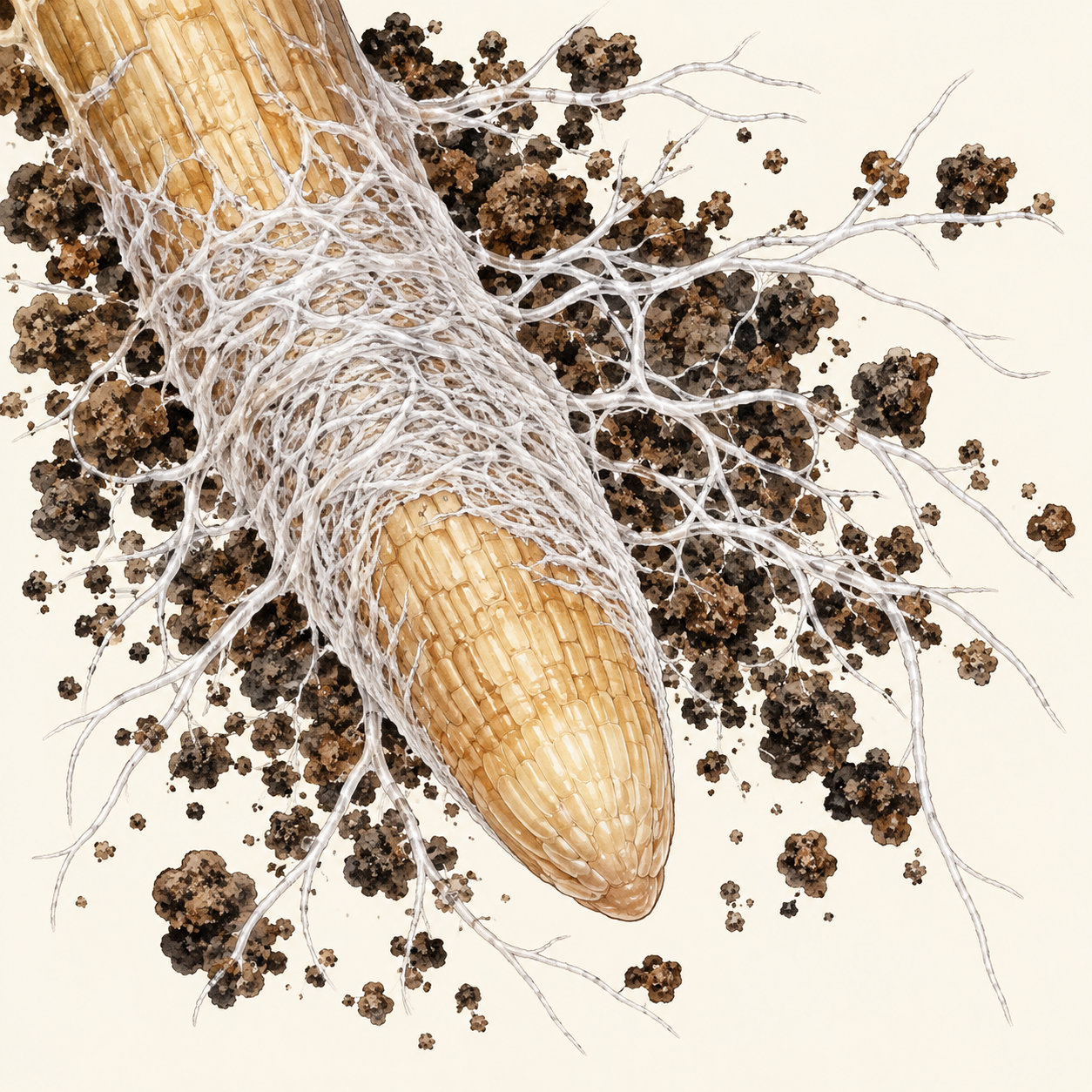
Fungal hyphae explore soil and can extend the effective reach of a plant's roots. Mycorrhizal exchanges include resources such as nitrogen, phosphorus and water on the fungal side, and carbon-rich compounds on the plant side. Outcomes depend on the organisms and conditions involved.
A common mycorrhizal network is a more specific situation in which a fungal connection links multiple plants. Such connections can exist. Their existence, however, does not demonstrate that every forest is densely connected, that resources move beneficially between all its trees or that trees deliberately assist relatives.
The fungus also has its own metabolism and ecological interests. Treating it as a passive cable loses one of the most interesting participants in the relationship.
What would show sharing?
In 2023, researchers Justine Karst, Melanie Jones and Jason Hoeksema reviewed prominent claims about common networks in forests. They found that evidence was frequently overstated, and that positive findings received disproportionate emphasis in later citations.
Tracing a substance below ground is not enough on its own to prove that a fungal connection carried it. Alternative routes through soil must be considered. Researchers must also ask whether receiving a trace amount improves growth or survival, and whether results from controlled seedlings apply to mature trees in a forest.
| Finding | Further question |
|---|---|
| A fungal connection exists | How extensive and persistent is it? |
| A resource moves | Which route carried it? |
| A plant receives a resource | Does it gain a meaningful benefit? |
The real underground remains surprising
The review challenges claims of preferential feeding and warning messages; it does not erase the basic importance of root–fungus associations. Mapping organisms, measuring exchanges and testing environmental effects remain productive research questions. Forest soils contain more variety than a single metaphor suggests.
Watch: Kew's scientist-led introduction to mycorrhizal fungi explores the organisms and the research behind them.
Good uncertainty makes the subject more interesting. It invites us to ask which fungus, which plant, under what conditions and with what evidence. The hidden world beneath our feet deserves that precision. Its partnerships, competition and changing relationships can hold our attention without being turned into human conversations.
Sources: Kew: mycorrhizal ecology · Karst, Jones and Hoeksema: evidence and citation bias · University of Alberta: assessing common network claims
Explore more creative curiosities at Incoprea.




