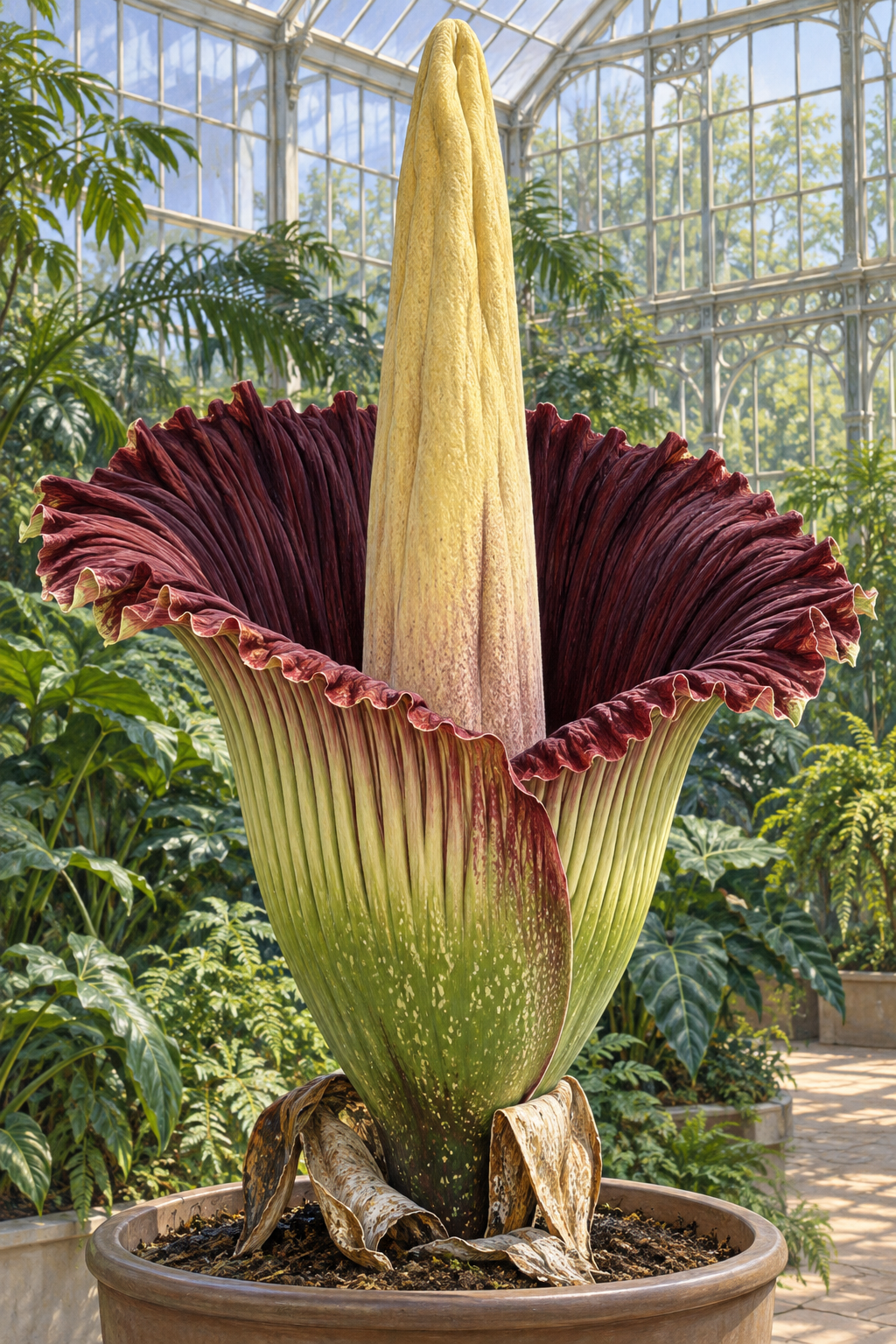
At a botanical garden, a queue can form for a plant whose chief attraction is an appalling smell. The titan arum, Amorphophallus titanum, earns its corpse-flower nickname through odors associated with decay. The spectacle also includes a less obvious trick: it produces heat.
Native to Sumatra, this plant has an enormous flowering structure. What looks like one gigantic flower is an inflorescence, a collection of many smaller flowers working together. Understanding that distinction reveals a carefully arranged system beneath the drama.
A tower above tiny flowers
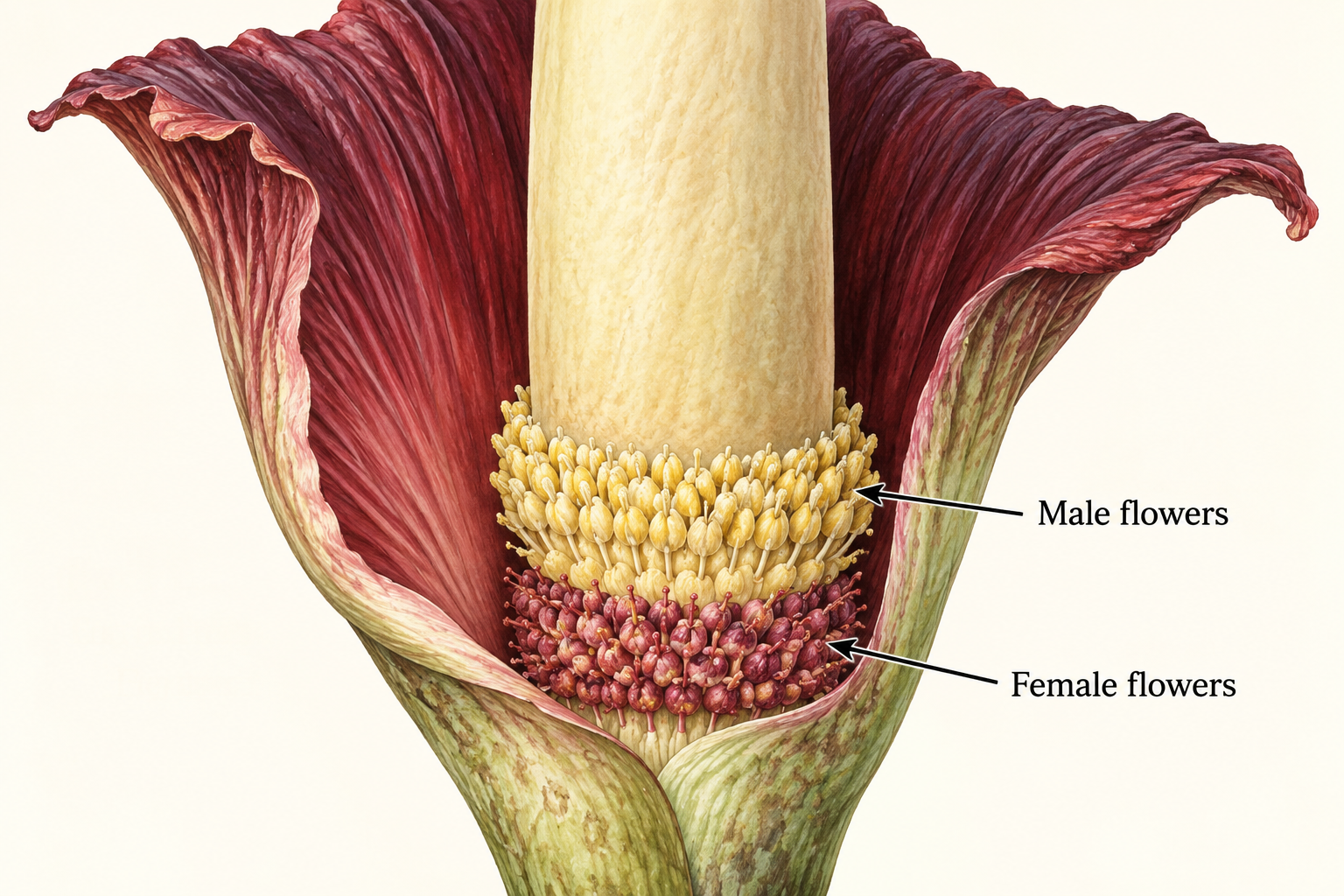
The central spike is the spadix. Around it stands a large modified leaf, the spathe, with a deep burgundy inner surface and paler green exterior. The individual male and female flowers occupy separate zones low on the flowering axis, rather than the visible tip.
The display attracts insects associated with decaying organic material. Odor, appearance and timing all matter. The female and male phases occur at different times, so a single flowering event is a changing biological process rather than a static ornament.
This also explains why a photograph can be deceptive. Two images of the same plant may show different stages, and the impressive upper structure hides much of the actual reproductive machinery.
Heating the display
Researchers at the University of Bonn used thermal imaging to study titan arum flowering. They documented heating in the spadix during the female phase, and a later thermogenic phase involving the male flowers. The heat occurs in relation to the plant's flowering sequence.
Thermogenesis is metabolic heat production. It can help disperse volatile compounds and may have other roles in interactions with visiting insects. The observations establish where and when warming occurs; explanations of every benefit require further testing.
A thermal image is especially useful here because temperature is invisible in an ordinary photograph. Its colors represent measured heat according to a chosen scale. A bright red area is not a visibly glowing part of the plant.
The quiet years behind the event
The bloom depends on resources stored in an underground corm. During vegetative growth, a large, branching leaf captures light and supports the accumulation of reserves. The United States Botanic Garden describes a cycle of growth, storage, dormancy and eventual flowering.
Years can pass between impressive displays. A large bloom is costly, and conditions influence its development. Predicting a flowering date is therefore different from scheduling an annual garden show.
Watch: Kew's titan arum video introduces the plant and its cultivation behind the scenes.
The odor may bring people through the door, but the deeper interest is coordination: stored energy, reproductive timing and heat meet in one brief event. The ordinary-looking intervals are part of the same story, quietly preparing the next spectacular performance.
Sources: Kew: titan arum form and biology · University of Bonn researchers: titan arum thermogenesis · United States Botanic Garden: titan arum life cycle
Explore more creative curiosities at Incoprea.




