Imagine an account of your own home assembled from only the things least likely to decay. Metal fittings and ceramics survive; clothing, cushions, paper, wooden furniture and leather disappear. The resulting picture would be recognisable, but strangely incomplete.
The frozen burials associated with the Pazyryk culture in the Altai Mountains change that balance for an ancient society. Ice preserved organic materials that usually vanish. Textiles, worked wood, leather and tattooed skin make it possible to examine craft at a much more intimate scale than gold ornaments alone permit.
How a burial became a frozen archive
At some large burial mounds, water entered chambers and froze. Cold conditions kept the contents from thawing during summer. The British Museum's account describes the resulting preservation of personal objects, vessels, low tables, bags and other materials from Pazyryk.
The five large tombs at the Pazyryk site belong to the fourth and early third centuries BCE in the museum's account. Pazyryk also names a broader archaeological culture, so not every object carrying that label comes from one chamber or one excavation.
The term Scythian introduces another scale. It is commonly used for a wider early Iron Age steppe world containing varied peoples and traditions. It should not turn every site from a vast region into the same society. A particular object needs its own place, period and context.
What soft materials let us ask
A metal fitting can suggest the presence of a garment or bag. A surviving textile or leather object lets researchers investigate how it was constructed. Seams, surfaces, attachments and the relationship between decoration and use become available for study.
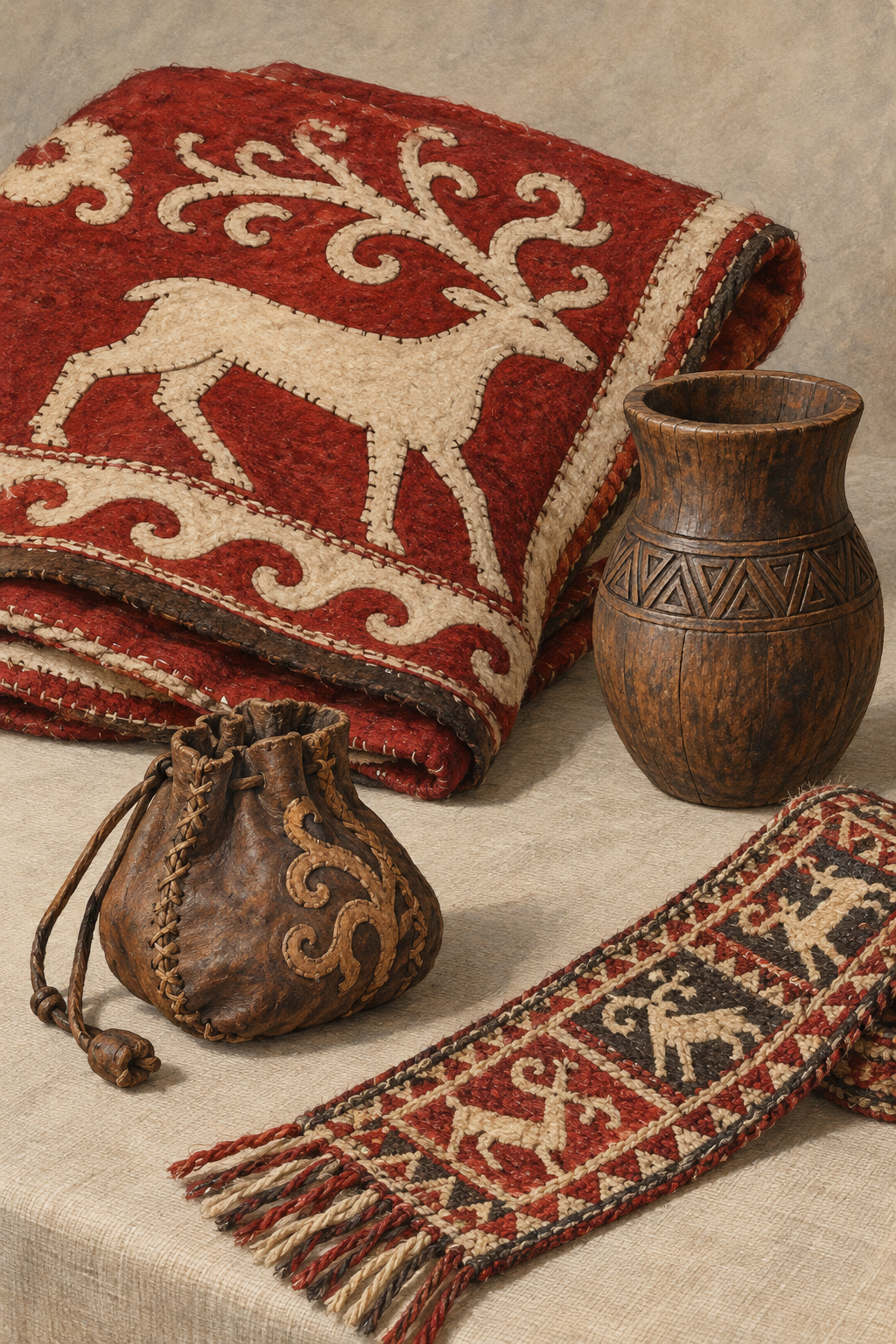
The craft grouping here is interpretive. In the museum records, choose one actual object and trace the relationship between its material and its form. A flexible surface can fold, wrap or cover; a rigid fitting can fasten or reinforce. Their combination may have mattered more to the user than either element studied alone.
Decoration also moves across materials. Animal forms can appear on different surfaces, but each medium makes different things possible. A curve cut in wood, worked in textile or placed on a body involves different tools and decisions. Similar motifs do not mean identical acts of making.
Look past the outline of an animal
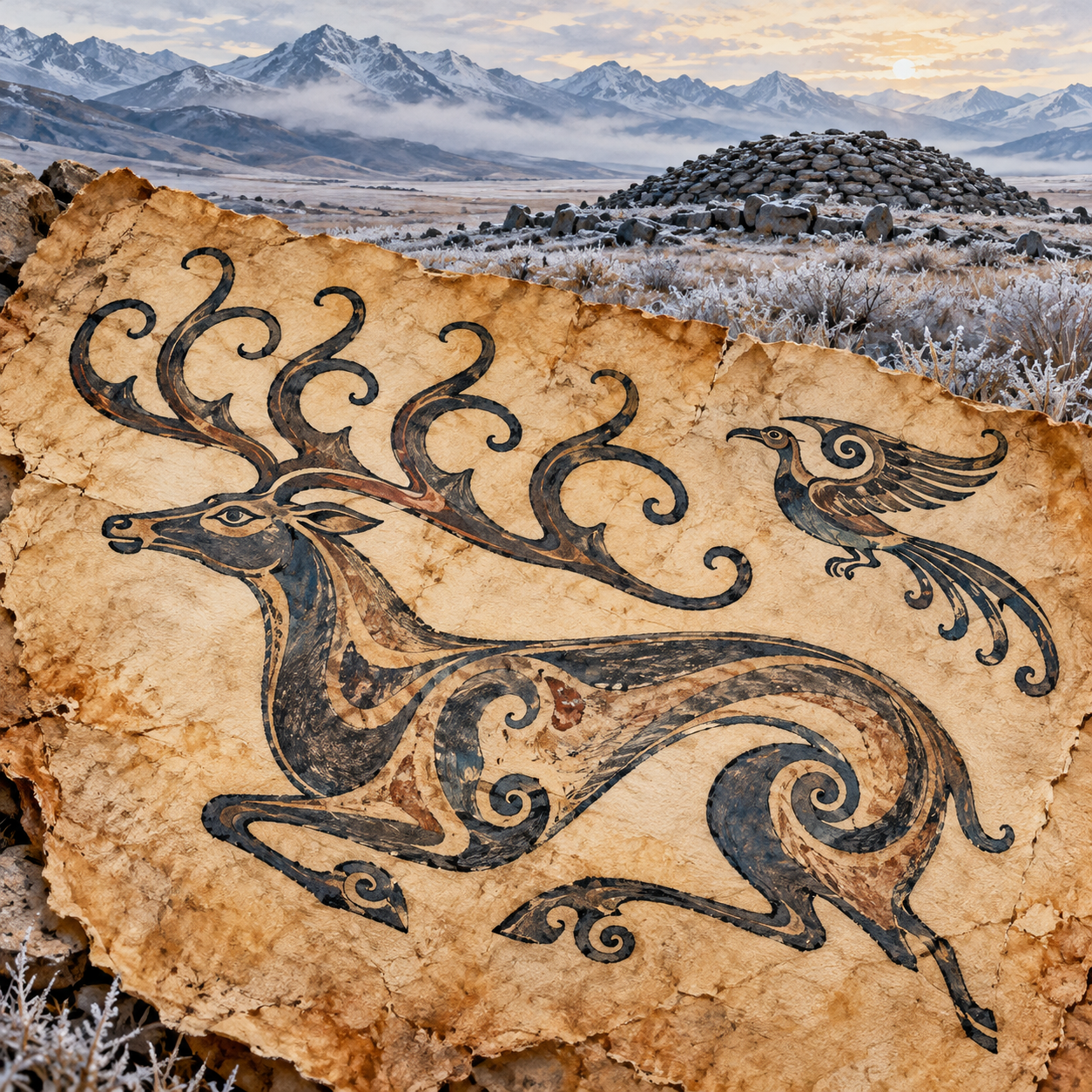
Pazyryk tattoo imagery includes animals and composite creatures whose bodies flow into elaborate curves. The designs can be appreciated as compositions: a head turned, limbs folded, antlers branching, one contour helping another form emerge.
It is tempting to assign each creature a single symbolic meaning. The evidence is rarely that obliging. A repeated motif may relate to shared artistic conventions without telling us exactly what it meant to every wearer. Interpretation has to account for the individual body, object and setting.
A useful first description therefore begins with arrangement. How is the form fitted to its available space? Which direction does it lead the eye? Where are dense and open areas placed? These questions reveal artistry without requiring an invented symbolic dictionary.
A 2025 study asks how the marks were made
Research published in Antiquity in 2025 used high-resolution near-infrared documentation and experimental comparison to investigate tattooing methods. The study focused on the female individual from Pazyryk tomb 5, examining details that broad black-and-white outline drawings could obscure.
The authors investigated line endings, pigment distribution and differences in execution. Their argument moves from a general cultural style towards the possibility of distinguishing artistic hands and tool use. A familiar animal image becomes evidence of someone making decisions stroke by stroke.
The study also distinguishes marks made during life from later changes associated with burial preparation. Its wider interpretation of the tattoos' social role is an argument drawn from those relationships, not a statement supplied directly by the images. Technique and meaning remain connected questions with different kinds of support.
A close-looking route with a choice of materials
For an object-focused visit, begin with the museum's burial and material account. Choose a photographed object made from wood, leather or textile. Describe one structural feature and one decorative feature, then explain how they meet.
For the research route, open the 2025 tattooing study. Its figures include preserved human remains and close views of skin. You can follow the methods and conclusions in the text if you prefer not to view those photographs.
Compare a drawn outline with the authors' discussion of high-resolution detail. Ask what disappears when a complex surface becomes a clean line. A drawing may clarify a composition while removing evidence about how it was executed. The two representations serve different purposes.
Preservation is selective, even in ice
Exceptional survival does not make a burial a complete record of everyday life. Burial selection, disturbance, local conditions and excavation all affect what is available. A richly furnished tomb cannot automatically represent every household or every member of a community.
Frozen archaeology is vulnerable too. Conservation specialists have drawn attention to warming and thawing at such sites. The conditions that created an extraordinary archive are part of what must be understood to protect it.
The preserved individuals also remain people. Their bodies should not be reduced to unusual display surfaces or separated from their funerary histories. Close attention can be respectful: it can recognise skill and individuality while keeping the limits of interpretation visible.
Pazyryk broadens the idea of an ancient treasure. A sewn edge, a carved contour or a carefully placed line can preserve work that would usually have vanished. The ice matters because it lets us see a fuller range of human making.




