Gold and stone often survive long enough to dominate our picture of ancient life. Cloth, leather, wood and skin usually fare less well. The frozen burials associated with the Pazyryk culture in the Altai Mountains offer an unusual exception. Ice preserved materials that allow researchers to see a world of clothing, craftsmanship and elaborate tattoo art.
A remarkable accident of preservation
At some burial mounds, water entered underground chambers and froze. The ground remained cold enough that the contents did not thaw during summer. The result was an exceptional archive of organic materials more than two thousand years old.
Pazyryk belongs to the wider early Iron Age world commonly called Scythian. That term covers varied pastoralist peoples across a vast region, rather than one uniform society with identical customs everywhere.
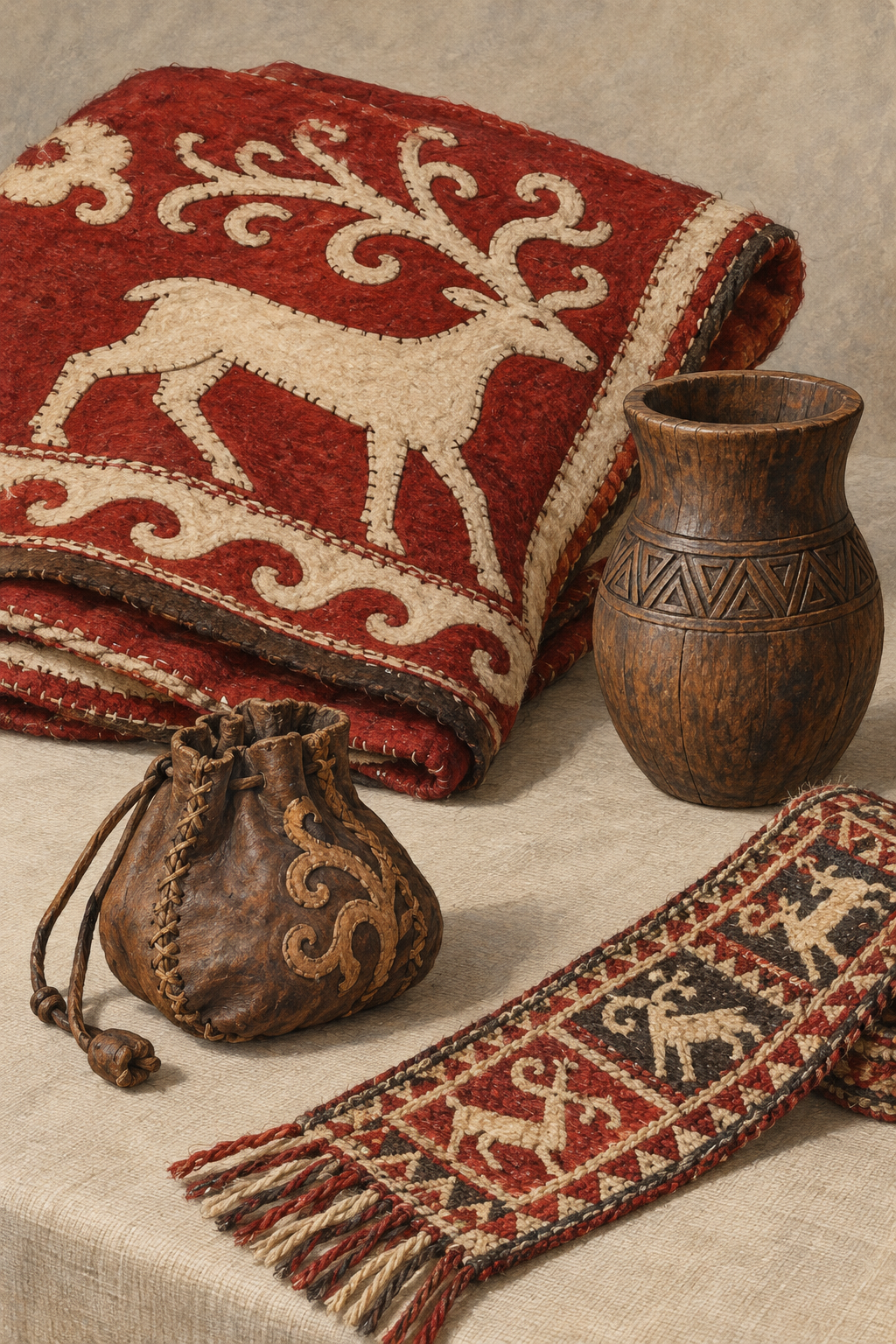
The burials contained personal ornaments, wooden and pottery vessels, leather items, textiles and other objects. Their survival changes what can be investigated. A metal ornament can suggest how someone dressed, but an actual garment or leather object can reveal construction and material choices directly.
Images carried on the body
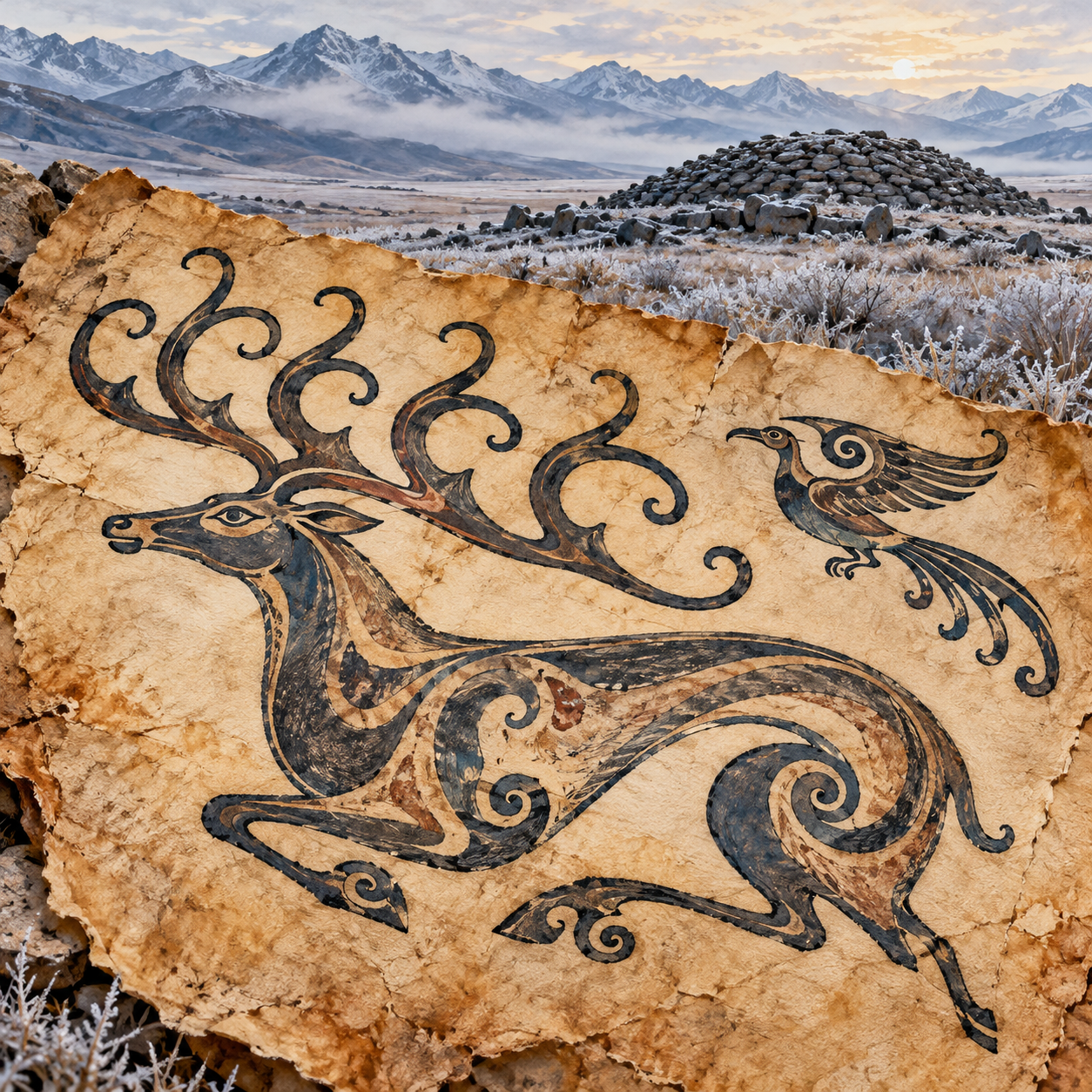
Preserved tattoos include animals and fantastical composite creatures. Their flowing forms connect with the animal-style art visible on other objects from the region. The images are intricate enough to invite appreciation as art before we try to assign them a single meaning.
Their original significance is harder to recover. A tattoo may have expressed affiliation, belief, personal history or more than one idea. Similar-looking imagery does not guarantee that every wearer understood it in the same way. Modern interpretations should remain tied to evidence.
A 2025 study in Antiquity used high-resolution near-infrared imaging and experimental comparison to investigate how Pazyryk tattoos were made. It moved beyond broad descriptions of style toward the details of tools, marks and technique. The authors argue that the improved data can help distinguish individual artistic hands.
Preserving the person behind the pattern
That shift is compelling. A familiar design is not just a cultural symbol reproduced automatically. Someone created it, with particular skills and decisions. Looking at the marks can bring the maker back into a story that otherwise speaks only about a whole people.
Frozen burials also require care in how they are discussed. The preserved individuals were people, and the images attached to them are part of human lives and funerary histories. Curiosity about the art need not turn the remains into spectacle.
The physical conditions that preserved this evidence are themselves important. Researchers note threats to frozen archaeological sites from warming and thawing. An unusually rich archive can also be unusually vulnerable.
Pazyryk rewards a broader idea of an ancient treasure. It may be a textile, a worked piece of wood or a line in a tattoo whose maker has been gone for centuries. The ice kept details that let us see more than the durable objects normally left behind.
Sources and further reading: British Museum: frozen burials and their contents; Introduction to the Scythian world; 2025 research on Pazyryk tattooing methods.
Explore art and unusual history at Incoprea.