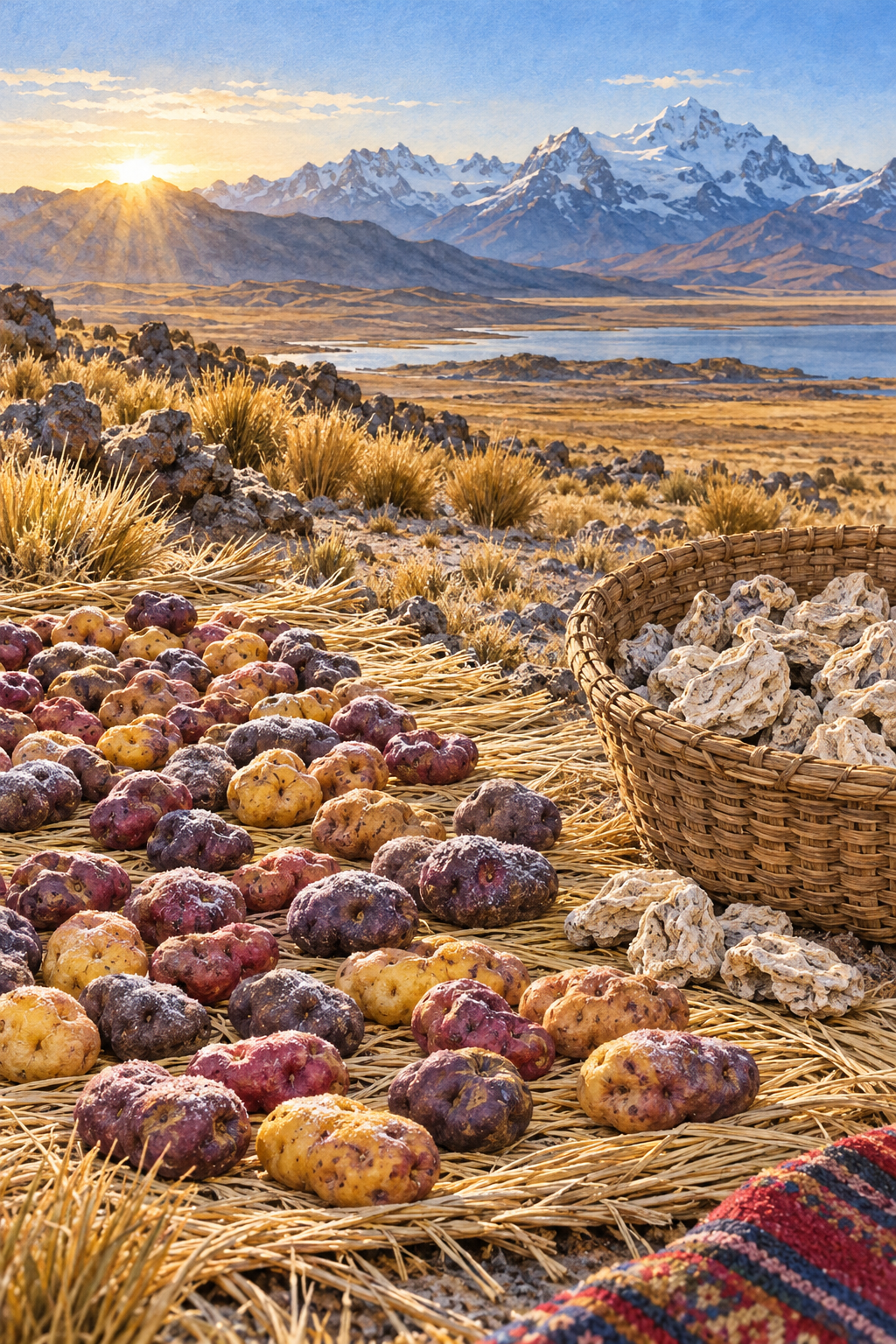
A cold night that threatens a crop can also help preserve it. In the high Andes, generations of farmers have used freezing temperatures, dry air and sunlight to transform potatoes into chuño. It is a food with a long history and an inventive method: make the local climate part of the processing system.
Preservation beyond a fresh harvest
Fresh potatoes contain considerable water. Turning them into a dry, storable product changes how long a harvest can remain useful. Chuño is often described as a traditional freeze-dried potato, although the process includes human labor and several operations rather than one automatic natural event.
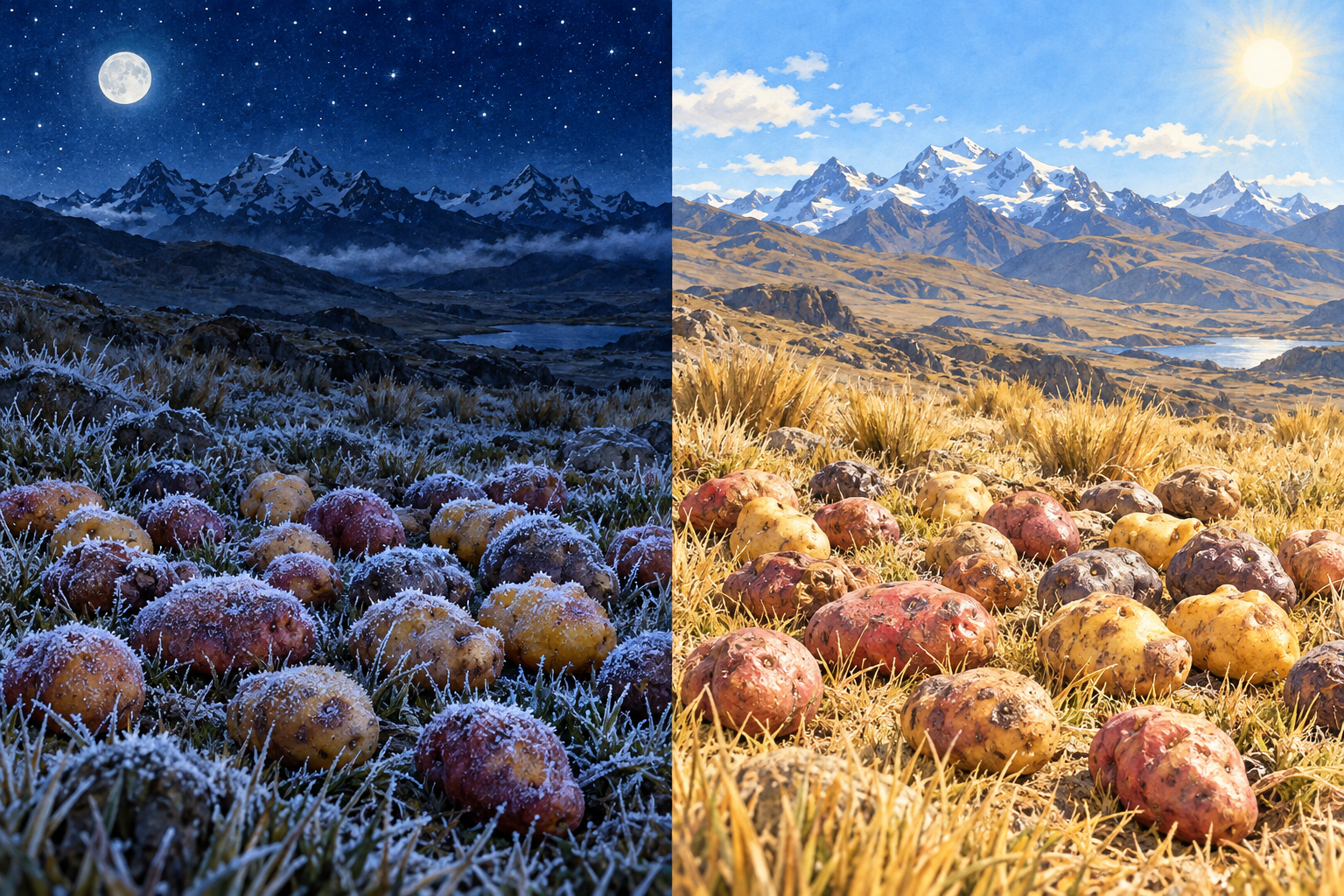
The Food and Agriculture Organization describes freezing at night and exposure to solar radiation during the day as central elements. People also tend and handle the tubers, and some methods include treading and peeling. The landscape supplies conditions; experienced producers organize the work.
That combination is the technology. Knowing which potatoes to use, when conditions are suitable and how to manage the material is as important as the frost itself. An open field does not become a food-processing system without knowledge.
There is more than one kind of chuño
Black and white chuño differ in their processing. A study by Stef de Haan and colleagues describes regional variants in Peru. Black chuño involves tending, treading, freezing and drying, while white chuño typically includes exposure to water in a more elaborate sequence.
The white product is also known by names including tunta and moraya in different settings. The FAO's profile of a Peruvian producer describes a long sequence using freezing, water and drying. It should be read as one documented tradition, rather than a universal timetable for every region.
The study found that processing choices reflect tradition, environmental conditions and market demand. Available water matters. So do the cultivar and the qualities people want in the finished food. The method is local and adaptable, not a single recipe copied unchanged everywhere.
An old practice with a living future
Chuño is not merely an archaeological curiosity. Contemporary producers continue to make and sell it, preserving expertise through practical work. The FAO notes its mention by early Spanish chroniclers, but the tradition belongs just as much to people carrying it forward today.
It is tempting to describe such a technique as simple because it does not require industrial machinery. A better description is carefully matched to its environment. Timing, repetition and judgment can make a process sophisticated even when its tools are familiar.
The same dependence creates a vulnerability: a method organized around reliable cold nights needs those nights to occur. Understanding traditional processing therefore also means understanding the climate and local resources that support it.
Chuño makes an everyday food tell a larger story about ingenuity. The achievement is not just saving a potato. It is turning detailed knowledge of a place into a practical way of keeping a harvest useful.
Sources and further reading: FAO: chuño blanco and living production traditions; De Haan and colleagues: regional processing variants; FAO: potato processing and local conditions.
Discover more creative connections at Incoprea.