A numerical trace shows a change. A sound recording contains a warning and a conversation. Put them side by side and a sequence begins to emerge—but only if you know what each record actually measures and how their clocks relate.
Flight recorders are often introduced through the nickname “black box.” The more useful distinction is between two kinds of preserved evidence: sounds in the cockpit and recorded flight parameters. They can illuminate the same event without being interchangeable witnesses.
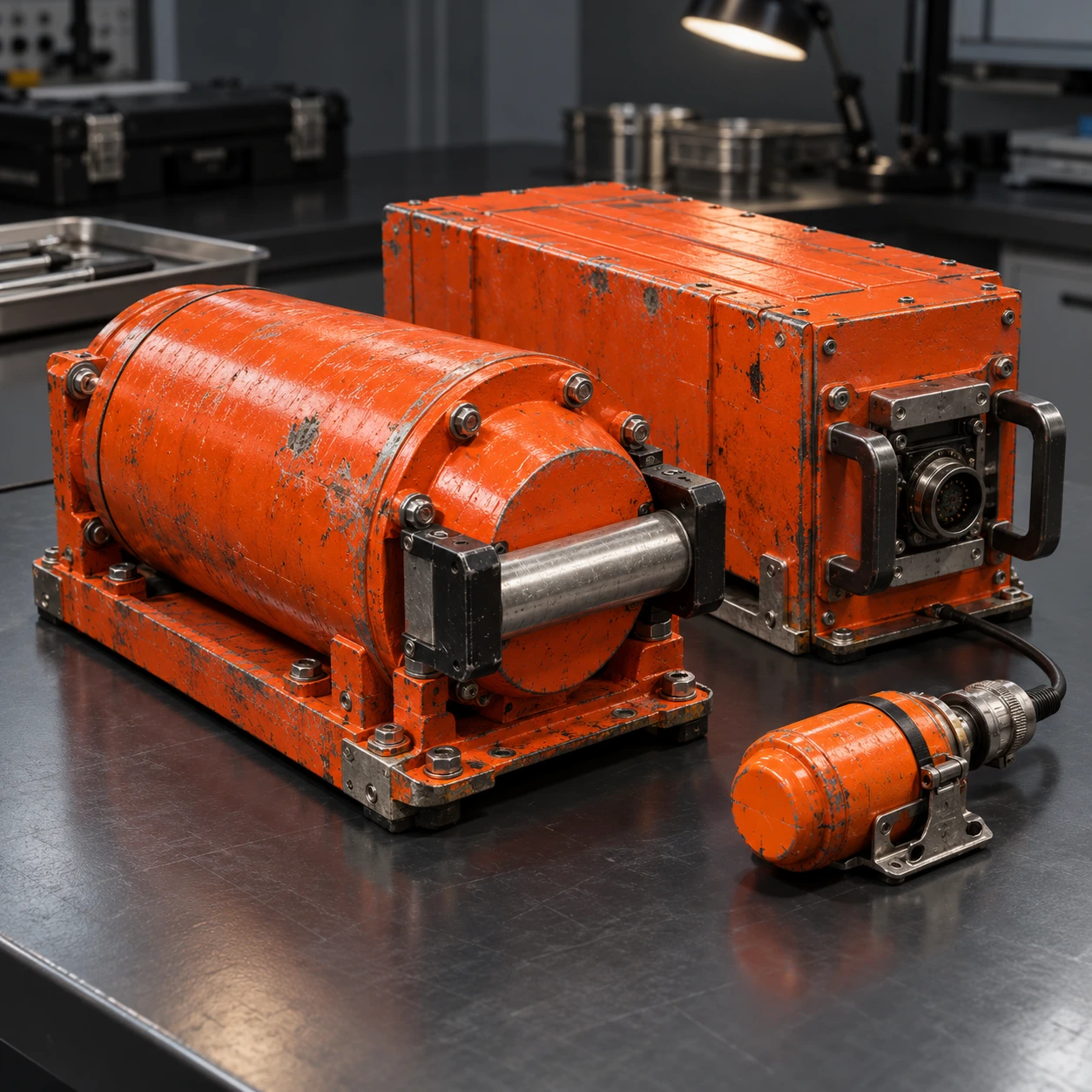
Different channels answer different questions
The NTSB’s recorder explanation distinguishes cockpit voice recorders, which preserve cockpit audio and radio communications, from flight data recorders, which capture parameters such as airspeed, altitude and heading. Investigators use these alongside other evidence to reconstruct events.
A parameter is a recorded variable, not a complete movie of everything aboard. An audio channel is also selective. A sound may be clear, masked, absent or hard to identify. The label on a channel does not remove the work of interpreting its contents.
This gives a good habit for reading an investigation: separate an observation from its explanation. “This value changed” and “this change happened because of that action” are different claims. Establishing a sequence can support a causal analysis, but sequence alone does not finish one.
A clock problem you can solve on paper
Try a fictional workshop exercise, unrelated to a real flight. A sound recording timestamps a shared test chime at 12:00:05. A separate equipment log records that same known chime event at 12:00:02. Assume both clocks run steadily over this short exercise. The sound recorder is three seconds ahead.
The equipment log then records a switch changing at 12:00:04. On the sound recorder’s clock, that corresponds to 12:00:07. A spoken instruction at 12:00:06 therefore precedes the logged switch change by one second. Comparing the printed timestamps without correcting the offset would reverse the apparent order.
What assumptions made that answer possible?
We stipulated that the two chimes were the same event, that the clocks had a constant offset and that the recorded entries accurately represented the stated events. Remove any assumption and the conclusion needs reconsideration. A similar-looking sound at a different time would not automatically be a valid synchronization marker.
Write the offset as an explicit rule: equipment-log time plus three seconds equals sound-recording time. Apply the same rule to every compared entry. This little exercise demonstrates evidence alignment; it is not a description of the timing methods used in every aircraft investigation.
Protecting the memory is its own engineering task
The Australian Transport Safety Bureau’s recorder fact sheet describes crash-protected recording systems and their development. The protected memory and the equipment that records into it have to be considered together. Ordinary operation and the conditions following an accident are very different environments.
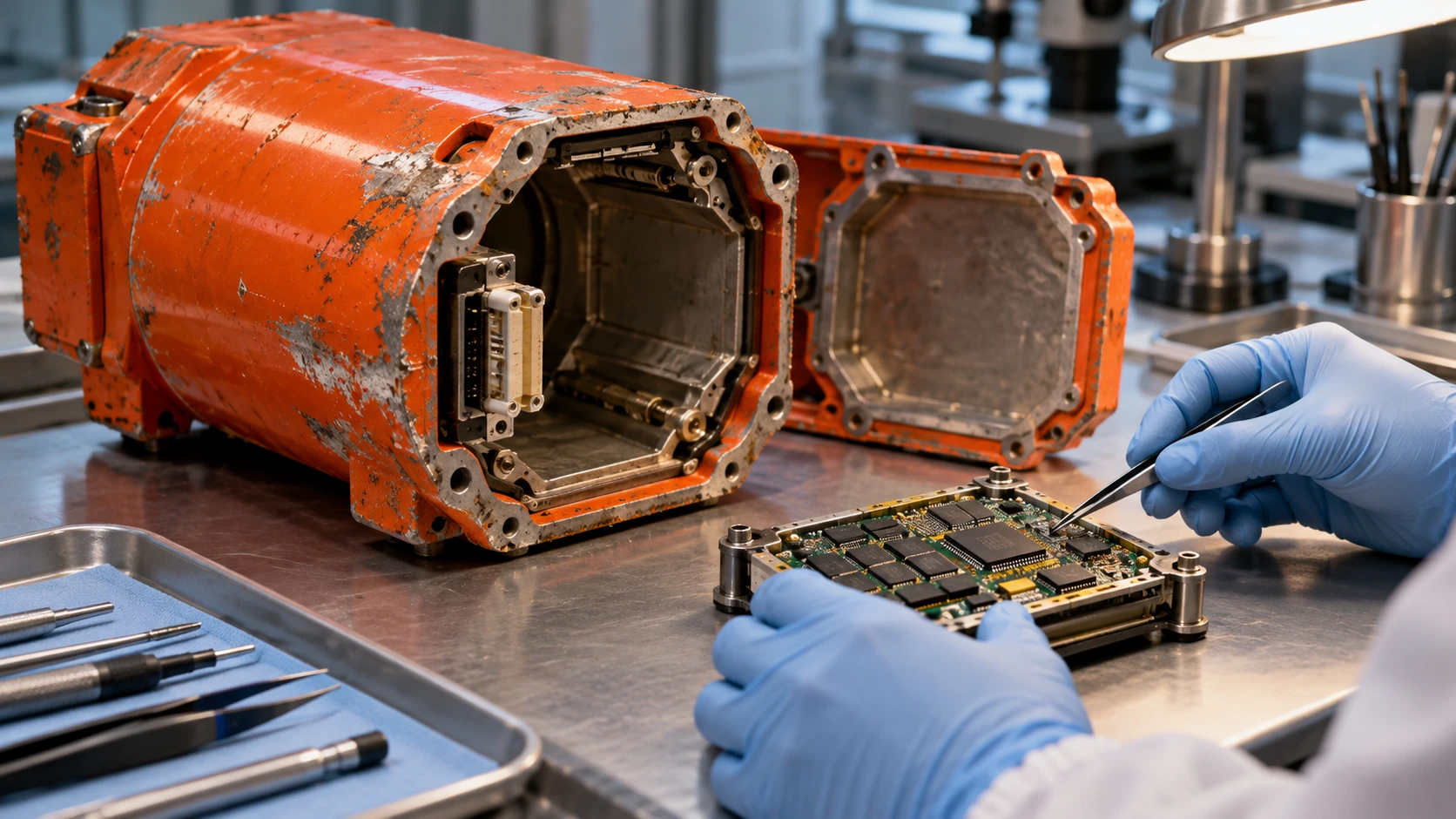
The orange housings in these interpretations evoke the visibility of actual recorders, but the illustrations are not certified device schematics. A rugged shell suggests only one part of the problem. Connectors, memory, data formats, recording continuity and recovery procedures all affect whether usable evidence can be extracted.
ATSB also discusses units combining recording functions. “Two kinds of record” does not require every installation to contain two separate boxes of identical shape. Keeping the evidence distinction separate from packaging avoids learning the photograph instead of the function.
Recovery is not the last step
An NTSB laboratory update from 2019 shows a recorder engineer inspecting memory boards for damage and water intrusion. It is a small but revealing view of the work between finding equipment and obtaining an interpretable record.
Data recovery, decoding, synchronization and analysis are separate accomplishments. A successful readout does not mean every channel is complete or that the investigation’s conclusion is already known. Equally, visible damage to a housing does not by itself tell an observer whether the protected information can be recovered.
For a final reader exercise, make a two-column notebook while reading an official report. On the left, list recorded observations with their stated timing or uncertainty. On the right, list the investigators’ interpretations and the additional evidence connecting them. Mark any place where your own assumption has filled a gap.
The point of a recorder is not to provide an all-seeing narrator. It is to preserve particular observations well enough that careful people can bring them into relation with other observations. Two partial records, aligned and interpreted honestly, can make a much stronger account than either could alone.
Sources and further exploration: NTSB: cockpit voice and flight data recorders; ATSB: black box flight recorders; NTSB: recorder laboratory update,2019.
Explore all 50 new articles · Browse the complete illustrated collection
Explore more art, ideas, and independent projects at Incoprea.


