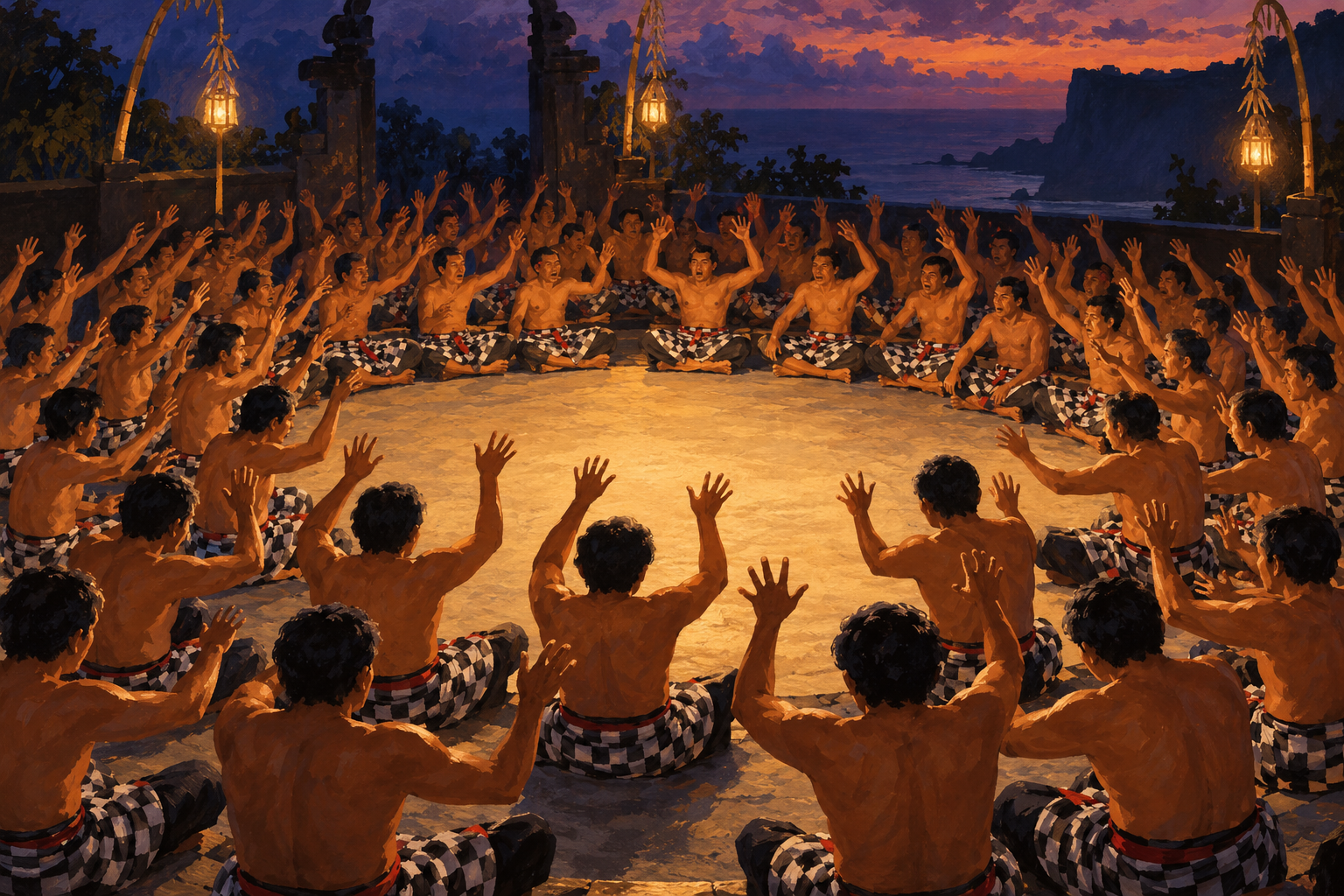
Beyond Familiar Names · Subject 16 of 20 · 30 artists
Images and objects can give authority a face, turn an event into a scene, or preserve a name for later audiences. These thirty artists introduce works connected with power, conflict, and remembrance. Examine the size of figures, the placement of emblems, and the distinction between those who act and those who witness. A title or inscription may identify the occasion, but composition shapes the emphasis. Consider what the work makes easy to recognize and what remains outside its view, without treating its account as a complete historical record.
A 4½-minute gallery film featuring all 30 artists in this chapter. Music and artwork credits appear in the film and below.
Film soundtrack: Artists by Medium 16 - Rooms Made of Listening — an existing original instrumental from the Incoprea library, created with Suno under the owner’s Premier subscription.
Looking closely
Examine which symbols of authority, conflict, or remembrance the work asks its audience to recognize.
Explore the 20 subjects
- 01. Faces and Identities
- 02. Bodies and Gesture
- 03. Childhood and Family
- 04. Rooms and Daily Life
- 05. Work and Trade
- 06. Streets and City Life
- 07. Architecture and Built Space
- 08. Land and Sky
- 09. Water and Voyages
- 10. Plants and Gardens
- 11. Animals and Other Creatures
- 12. Dress and Self-Presentation
- 13. Music, Theatre and Dance
- 14. Sacred Stories and Devotion
- 15. Myth, Allegory and Fantasy
- 16. Power, Conflict and Public Memory
- 17. Books, Words and Knowledge
- 18. Pattern and Ornament
- 19. Vessels and Useful Beauty
- 20. Small Treasures and Keepsakes
The 30 artists in this chapter
- Emma Civey Stahl
- P. L. Krider
- Adrien Constant de Rebecque
- Mohamed
- John Buncombe
- Giuseppe Gori
- Charles Rossi, R.A.
- Stacy
- Sri Prathi Singh of Ratlam
- Andrei Astrakhantsev
- Isshinsai Yoshikata
- Victor-François-Eloi Biennourry
- Marks Jacobs
- Ghasi
- Anthony Ficketts
- Kosetsu
- Anton Scharff
- Nicola Ingaldi
- John Bodington
- Nardunbu
- Antoine Bertrand
- Jacob Matthias Weyer
- Enjaku 猿雀
- Sarah Duncan
- Antoine Moyset
- Jerónimo Antonio Gil
- Fontaine
- Antoine Théry
- Alessandro Cesati
- Ferdinand Quaglia
Artist 01 of 30
Emma Civey Stahl
American
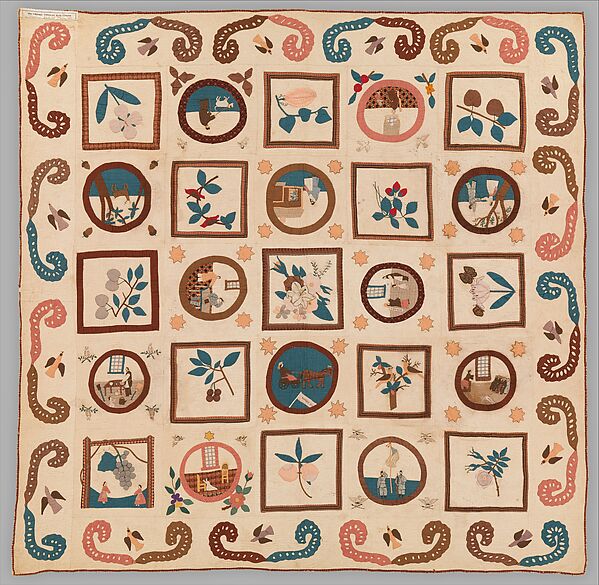
The Met credits Emma Civey Stahl as the artist of Woman’s Rights Quilt, dated ca. 1875. The museum records its format as “Quilt” and its medium as “Cotton.” Its collection record identifies the artist as “American.”
Its subjects include soldiers.
Artist 02 of 30
P. L. Krider
1821–1895
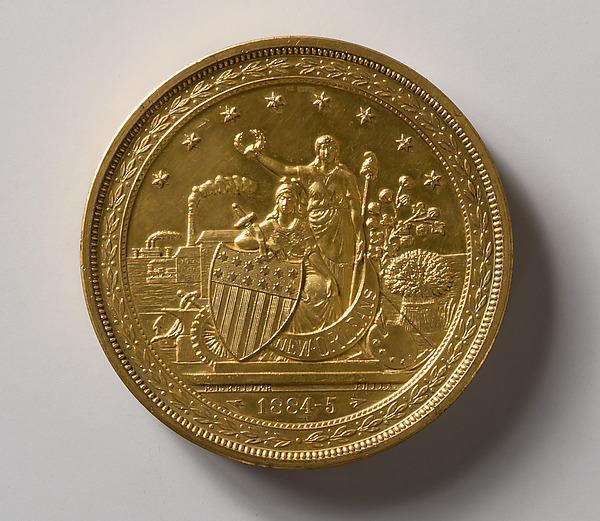
The Met credits P. L. Krider as the artist of Award Medal of the New Orleans Cotton Centennial Exposition, dated ca. 1884–85. The museum records its format as “Medal” and its medium as “Bronze.” Its collection record identifies the artist as “1821–1895.”
Its subjects include shields.
Artist 03 of 30
Adrien Constant de Rebecque
Swiss, Lausanne 1806–1876 Lausanne
![[Man in Chainmail Tunic Posing as a Dying Soldier] — Adrien Constant de Rebecque](https://images.metmuseum.org/CRDImages/ph/web-large/DP262062.jpg)
The Met credits Adrien Constant de Rebecque as the artist of [Man in Chainmail Tunic Posing as a Dying Soldier], dated ca. 1863. The museum records its format as “Photographs” and its medium as “Albumen silver print from collodion glass negative.” Its collection record identifies the artist as “Swiss, Lausanne 1806–1876 Lausanne.”
Artist 04 of 30
Mohamed
active early 18th century
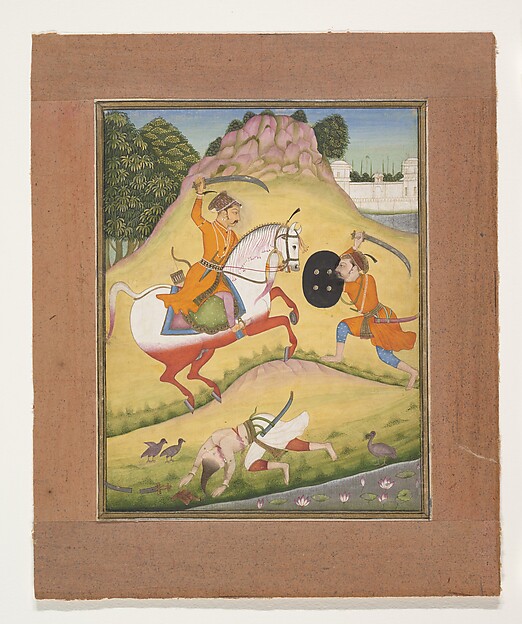
The Met credits Mohamed as the artist of Nata Ragina: Folio from a ragamala series (Garland of Musical Modes), dated 1714. The museum records its format as “Folio” and its medium as “Ink and opaque watercolor on paper.” Its collection record identifies the artist as “active early 18th century.”
Its subjects include battles, swords.
Artist 05 of 30
John Buncombe
British, born Newport, Isle of Wight, ca. 1809
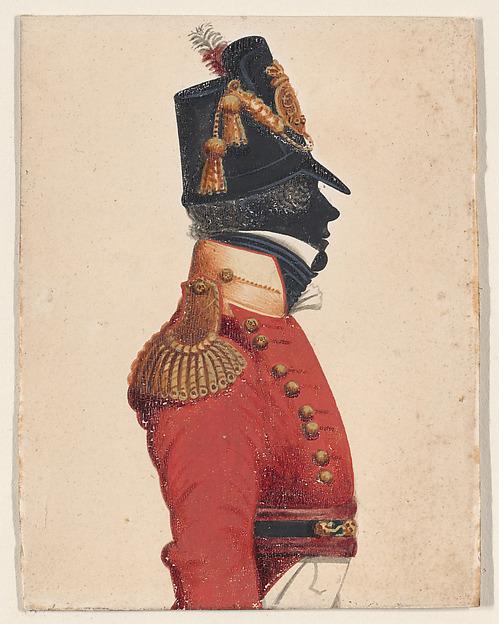
The Met credits John Buncombe as the artist of Half-length silhouette of a young officer of the 103rd regiment, dated 1825–1900. The museum records its format as “Drawing; ephemera” and its medium as “Watercolor, gouache (bodycolor), and pen and ink.” Its collection record identifies the artist as “British, born Newport, Isle of Wight, ca. 1809.”
Its subjects include soldiers.
Artist 06 of 30
Giuseppe Gori
active ca. 1770–1810
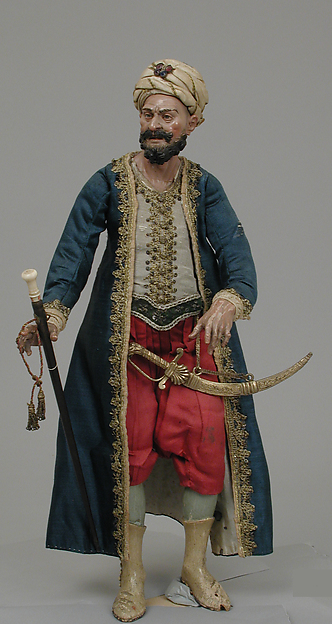
The Met credits Giuseppe Gori as the maker of King's attendant, dated second half 18th century. The museum records its format as “Crèche figure” and its medium as “Polychromed terracotta head and wooden limbs; body of wire wrapped in tow; cotton and satin garments with silver and gold metallic thread; velvet belt backed with leather; brass sword; wooden and ivory staff; glass stones on turban.” Its collection record identifies the artist as “active ca. 1770–1810.”
Its subjects include swords.
Artist 07 of 30
Charles Rossi, R.A.
British, Nottingham 1762–1839 London
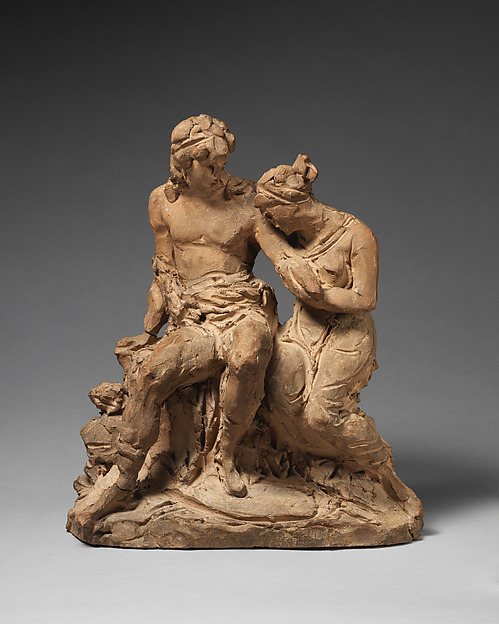
The Met credits Charles Rossi, R.A. as the artist of King Edward I (1239–1307) and Queen Eleanor (1241–1290), dated 1790. The museum records its format as “Statuette” and its medium as “Terracotta.” Its collection record identifies the artist as “British, Nottingham 1762–1839 London.”
Its subjects include kings.
Artist 08 of 30
Stacy
American, active 1860s
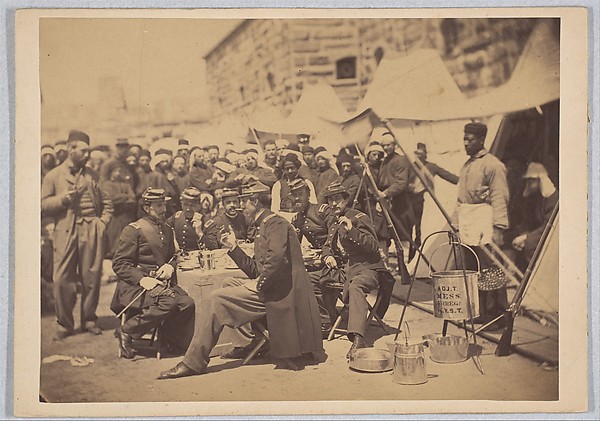
The Met credits Stacy as the artist of Duryea Zouaves, Fort Schuyler Adjuant Mess, dated May 18, 1861. The museum records its format as “Photograph” and its medium as “Albumen silver print from glass negative.” Its collection record identifies the artist as “American, active 1860s.”
Its subjects include American Civil War, soldiers.
Artist 09 of 30
Sri Prathi Singh of Ratlam
Indian
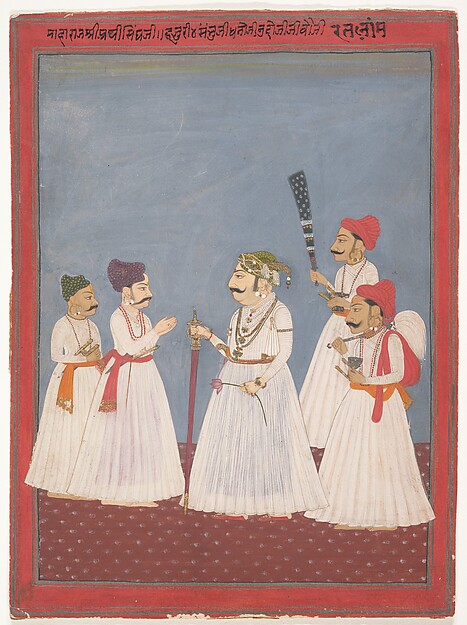
The Met credits Sri Prathi Singh of Ratlam as the artist of Prince with Four Attendants, dated late 18th–early 19th century. The museum records its format as “Painting” and its medium as “Ink and opaque watercolor on paper.” Its collection record identifies the artist as “Indian.”
Its subjects include swords.
Artist 10 of 30
Andrei Astrakhantsev
Russian, active 1821– ca. 1847
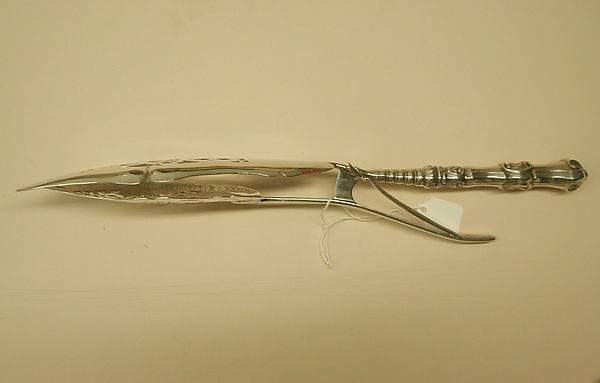
The Met credits Andrei Astrakhantsev as the maker of Double-bladed fish server, dated ca. 1847. The museum records its format as “Fish server” and its medium as “Silver, cast, pressed, embossed, chased, punched and engraved.” Its collection record identifies the artist as “Russian, active 1821– ca. 1847.”
Its subjects include coats of arms.
Artist 11 of 30
Isshinsai Yoshikata
Japanese, active ca. 1841–64
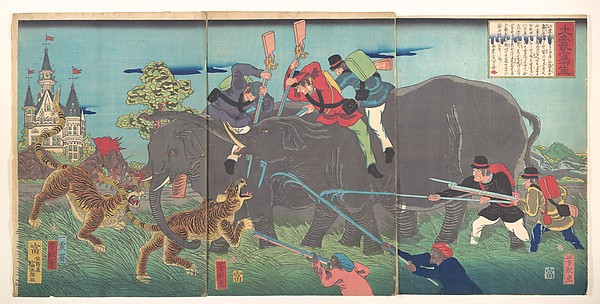
The Met credits Isshinsai Yoshikata as the artist of Big Elephants Being Attacked, dated 2nd month, 1863. The museum records its format as “Woodblock print” and its medium as “Triptych of woodblock prints; ink and color on paper.” Its collection record identifies the artist as “Japanese, active ca. 1841–64.”
Its subjects include weapons.
Artist 12 of 30
Victor-François-Eloi Biennourry
French, Bar-sur-Aube 1823–1893 Paris
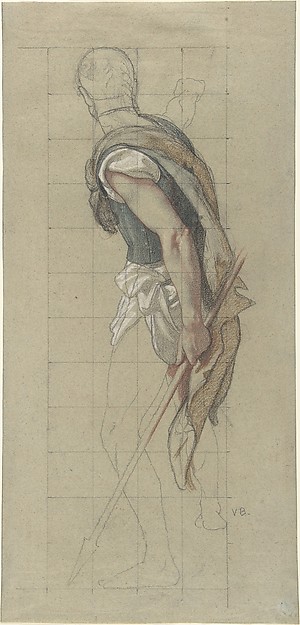
The Met credits Victor-François-Eloi Biennourry as the artist of Study of a Soldier, dated 1851–52. The museum records its format as “Drawing” and its medium as “Conté crayon, red chalk, and pastel, heightened with white, on pale buff paper; squared in conté crayon.” Its collection record identifies the artist as “French, Bar-sur-Aube 1823–1893 Paris.”
Its subjects include soldiers.
Artist 13 of 30
Marks Jacobs
American
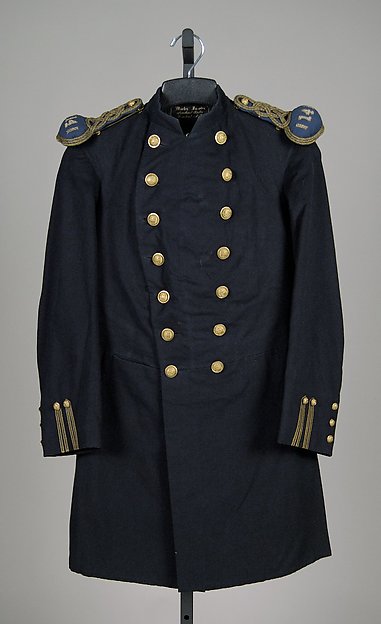
The Met credits Marks Jacobs as the designer of Military jacket, dated 1881–82. The museum records its format as “Military jacket” and its medium as “Wool, metallic.” Its collection record identifies the artist as “American.”
Artist 14 of 30
Ghasi
Indian
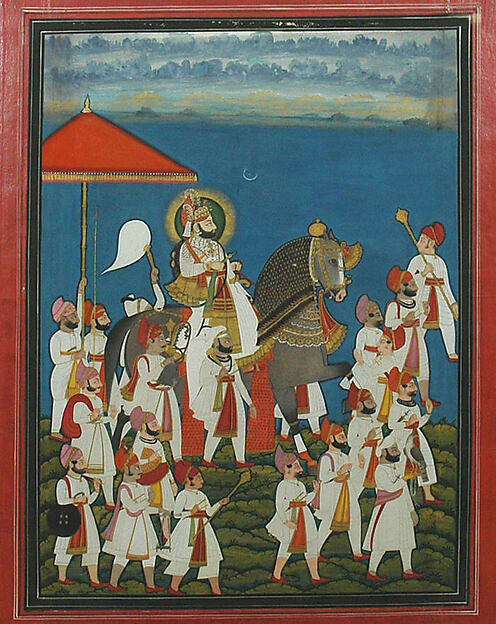
The Met credits Ghasi as the artist of Equestrian Portrait of Maharana Bhim Singh, dated ca. 1825. The museum records its format as “Painting” and its medium as “Opaque watercolor and gold on paper.” Its collection record identifies the artist as “Indian.”
Its subjects include kings.
Artist 15 of 30
Anthony Ficketts
British, active 1635–85
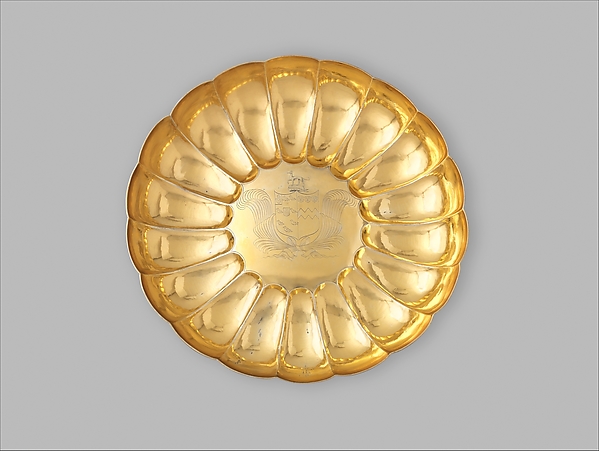
The Met credits Anthony Ficketts as the maker of Dish (one of a pair), dated 1664/65. The museum records its format as “Dish” and its medium as “Silver gilt.” Its collection record identifies the artist as “British, active 1635–85.”
Its subjects include coats of arms.
Artist 16 of 30
Kosetsu
Japanese, active early 19th century
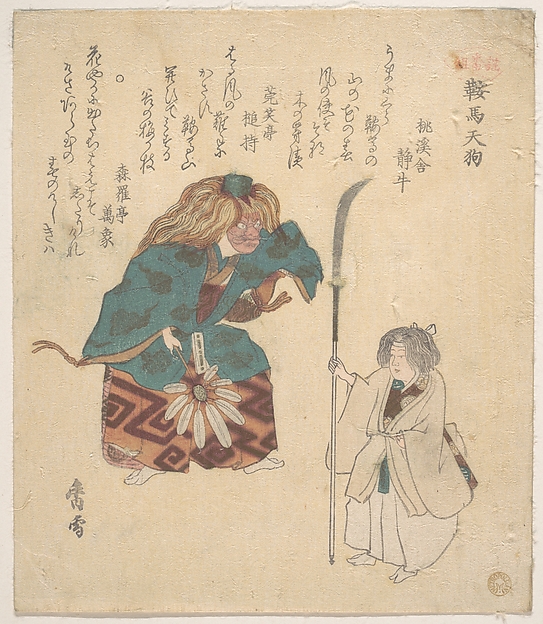
The Met credits Kosetsu as the artist of Scene from Noh Dance, dated ca. 1820. The museum records its format as “Print” and its medium as “Woodblock print (surimono); ink and color on paper.” Its collection record identifies the artist as “Japanese, active early 19th century.”
Its subjects include weapons.
Artist 17 of 30
Anton Scharff
Austrian, Vienna 1845–1903 Brunn am Gebirge
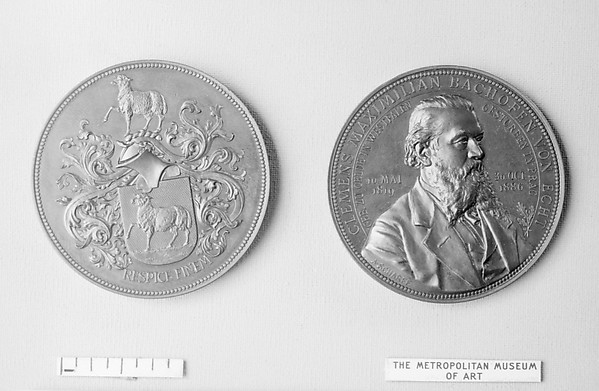
The Met credits Anton Scharff as the artist of Portrait Memorial of C.M. Bachofen von Echt, dated 1886. The museum records its format as “Medal” and its medium as “Bronze.” Its collection record identifies the artist as “Austrian, Vienna 1845–1903 Brunn am Gebirge.”
Its subjects include coats of arms.
Artist 18 of 30
Nicola Ingaldi
active late 18th–early 19th century
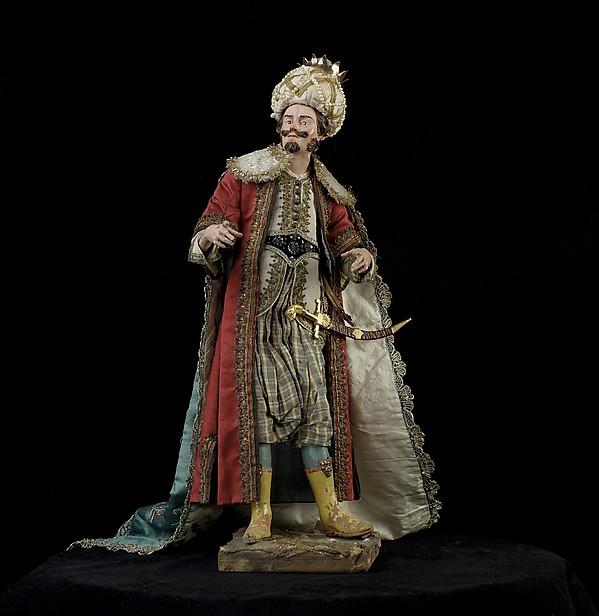
The Met credits Nicola Ingaldi as the maker of King, dated second half 18th century. The museum records its format as “Crèche figure” and its medium as “Polychromed terracotta head and wooden limbs; body of wire wrapped in tow; satin, silk and velvet garments; silver and metallic thread; silver-gilt sword and crown; leather sheath.” Its collection record identifies the artist as “active late 18th–early 19th century.”
Its subjects include kings, swords.
Artist 19 of 30
John Bodington
British, active 1688–1727
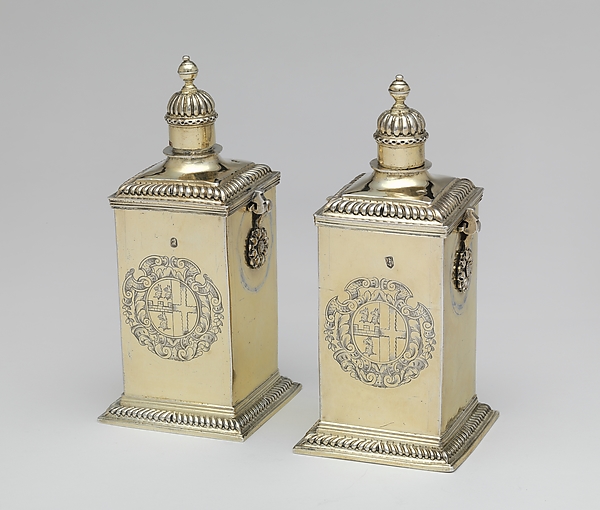
The Met credits John Bodington as the maker of Pair of perfume bottles, dated 1700/1. The museum records its format as “Perfume bottles” and its medium as “Silver gilt, glass inside.” Its collection record identifies the artist as “British, active 1688–1727.”
Its subjects include coats of arms.
Artist 20 of 30
Nardunbu
Manchu, active mid-17th century
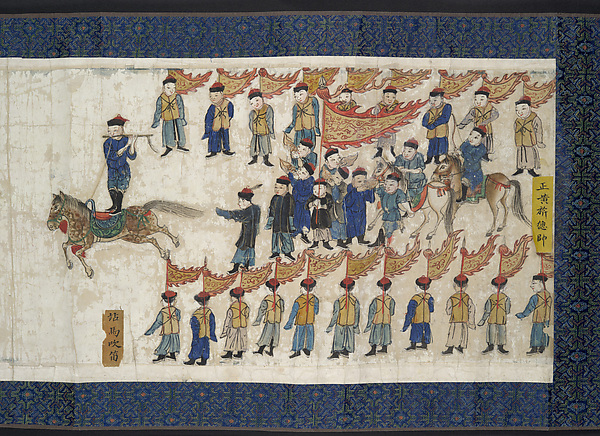
The Met credits Nardunbu as the artist of Horsemanship Competition for the Shunzhi Emperor, dated 1662. The museum records its format as “Handscroll” and its medium as “Handscroll; ink and color on paper.” Its collection record identifies the artist as “Manchu, active mid-17th century.”
Artist 21 of 30
Antoine Bertrand
master 1759
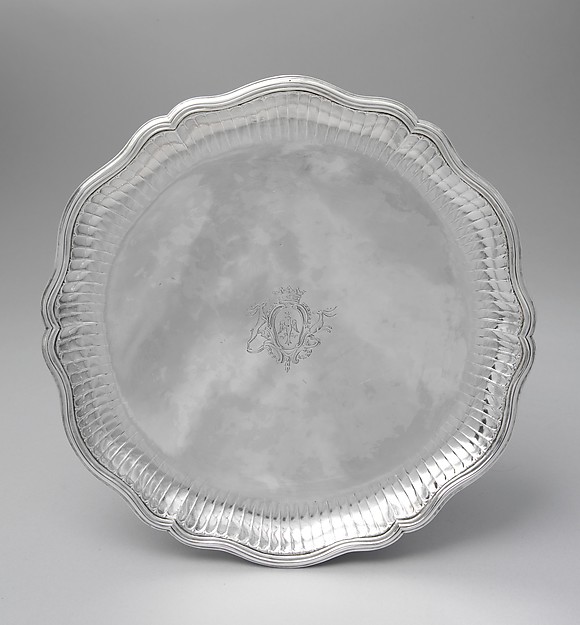
The Met credits Antoine Bertrand as the maker of Dish, dated 1759. The museum records its format as “Dish” and its medium as “Silver.” Its collection record identifies the artist as “master 1759.”
Its subjects include coats of arms.
Artist 22 of 30
Jacob Matthias Weyer
German, Hamburg 1620–1691 Hamburg

The Met credits Jacob Matthias Weyer as the artist of An Infantryman Drawing his Sword, dated 1640–91. The museum records its format as “Drawing” and its medium as “Brush and gray and light brown wash, heightened with white, on gray-green prepared paper.” Its collection record identifies the artist as “German, Hamburg 1620–1691 Hamburg.”
Its subjects include soldiers, swords.
Artist 23 of 30
Enjaku 猿雀
Japanese, active ca. 1850–70
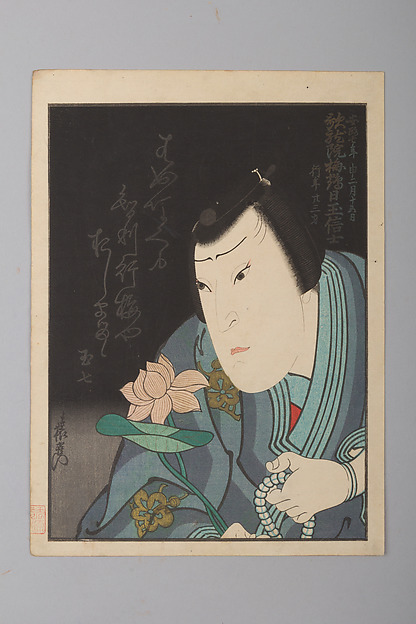
The Met credits Enjaku 猿雀 as the artist of Memorial Portrait of the Actor Nakamura Tamashichi, dated 1860. The museum records its format as “Woodblock print” and its medium as “Woodblock print (nishiki-e); ink and color on paper; vertical chūban.” Its collection record identifies the artist as “Japanese, active ca. 1850–70.”
Artist 24 of 30
Sarah Duncan
1775–1835
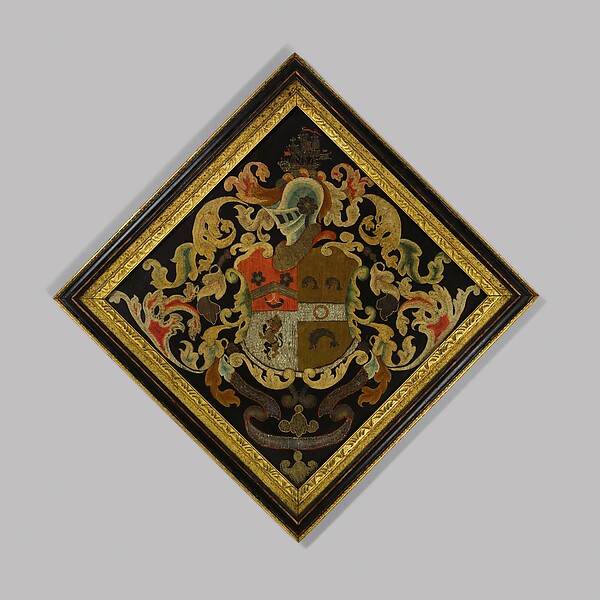
The Met credits Sarah Duncan as the artist of Coat of Arms, dated ca. 1790. The museum records its format as “Coat of Arms” and its medium as “Silk and metallic thread embroidery on silk.” Its collection record identifies the artist as “1775–1835.”
Its subjects include coats of arms.
Artist 25 of 30
Antoine Moyset
French, active Toulouse, master 1729, died 1764

The Met credits Antoine Moyset as the maker of Mustard pot, dated 1756. The museum records its format as “Mustard pot” and its medium as “Silver.” Its collection record identifies the artist as “French, active Toulouse, master 1729, died 1764.”
Its subjects include coats of arms.
Artist 26 of 30
Jerónimo Antonio Gil
Spanish, Zamora 1731–1798 Mexico
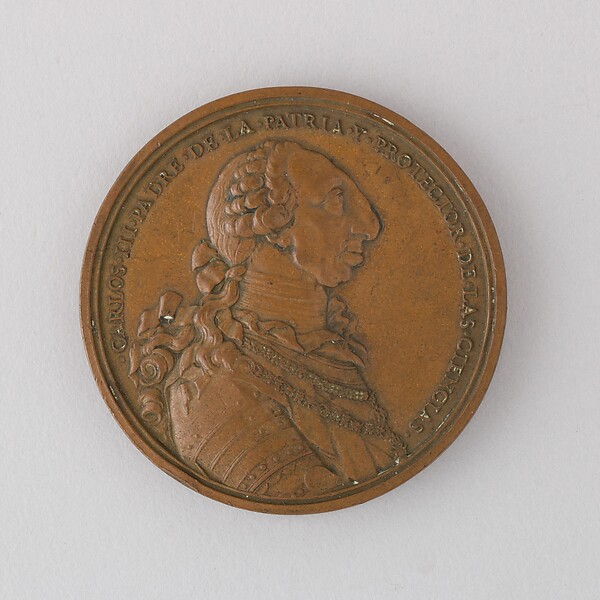
The Met credits Jerónimo Antonio Gil as the artist of Medal Showing Charles III of Spain, 1778, dated 1778. The museum records its format as “Medal” and its medium as “Bronze.” Its collection record identifies the artist as “Spanish, Zamora 1731–1798 Mexico.”
Its subjects include kings.
Artist 27 of 30
Fontaine
French, active 1772
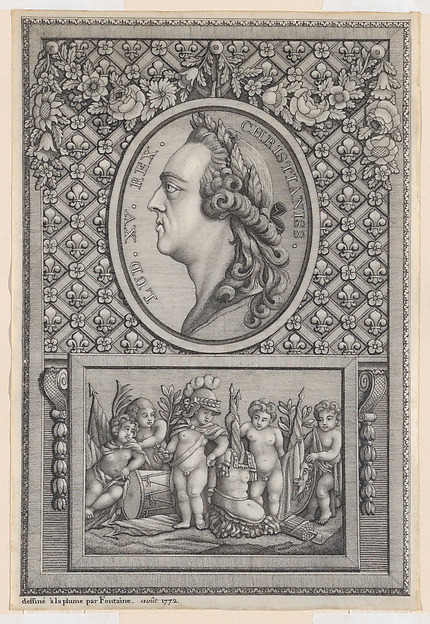
The Met credits Fontaine as the artist of Portrait Medallion of King Louis XV set in a Decorative Frame with a Relief, dated 1772. The museum records its format as “Drawing Ornament & Architecture” and its medium as “Pen and black ink, partially over black chalk underdrawing, on vellum.” Its collection record identifies the artist as “French, active 1772.”
Artist 28 of 30
Antoine Théry
master 1782, active 1806
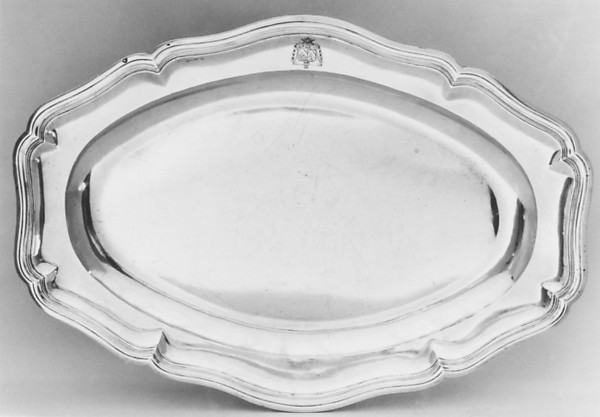
The Met credits Antoine Théry as the maker of Oval dish, dated 1782–83. The museum records its format as “Dish” and its medium as “Silver.” Its collection record identifies the artist as “master 1782, active 1806.”
Its subjects include coats of arms.
Artist 29 of 30
Alessandro Cesati
Italian, before 1538-after 1564
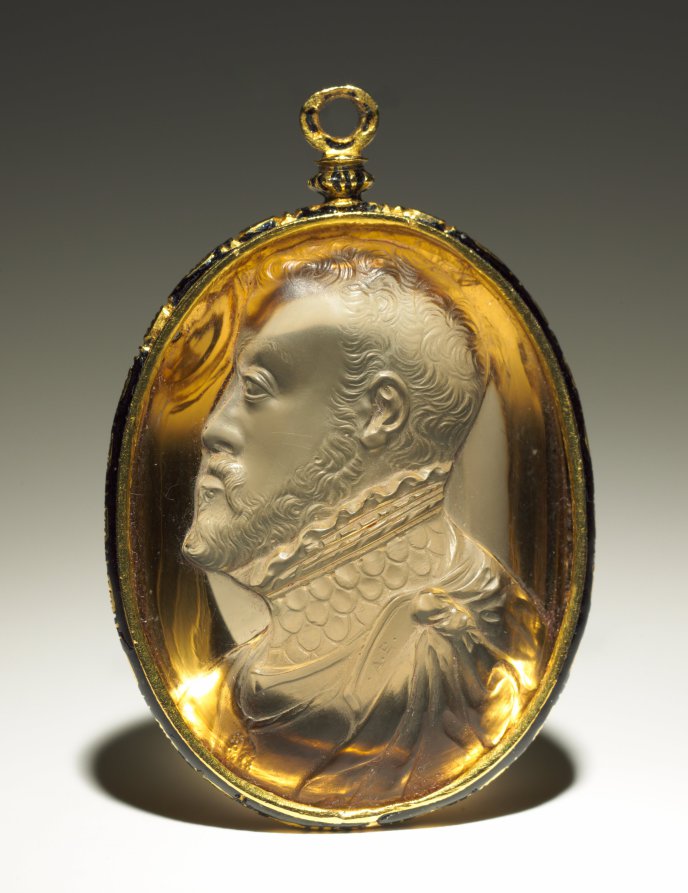
The Cleveland Museum of Art credits Alessandro Cesati as artist of Portrait of Philip II, King of Spain, dated mid-1550s. The museum records its format as “Sculpture” and its medium as “citrine, mounted in a gold and enamel pendant.” The creator record gives this identity context: “Italian, before 1538-after 1564.”
Artist 30 of 30
Ferdinand Quaglia
Italian, 1780–1853
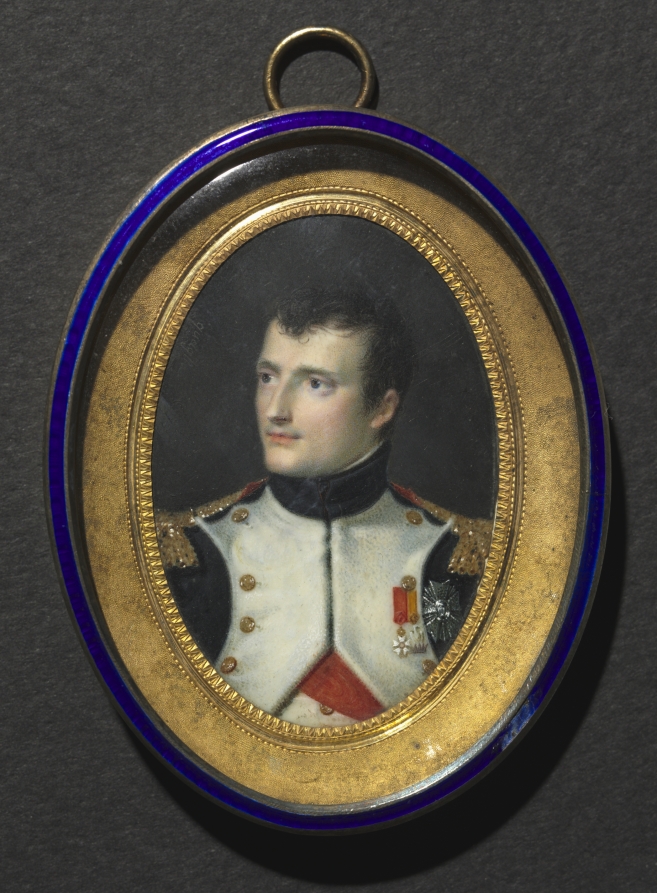
The Cleveland Museum of Art credits Ferdinand Quaglia as artist of Portrait of Napoleon I, Emperor of the French, dated 1805. The museum records its format as “Portrait Miniature” and its medium as “watercolor on ivory in a gilt metal and enamel frame.” The creator record gives this identity context: “Italian, 1780–1853.”
The portrait presents Napoleon I as Emperor of the French.