Beyond Familiar Names · Subject 04 of 20 · 30 artists
A room can hold a story without showing its beginning or end. Furniture establishes places to sit, a doorway suggests another space, and an object left on a table can hold the eye. In this selection, thirty artists open routes into domestic surroundings and ordinary activities. Examine the arrangement of things before deciding what mood they create. Light, empty space, and the height of our imagined viewpoint can make familiar interiors feel intimate, formal, unsettled, or simply attentive to the textures of daily life.
A 4½-minute gallery film featuring all 30 artists in this chapter. Music and artwork credits appear in the film and below.
Film soundtrack: Artists by Medium 04 - Graphite Horizon — an existing original instrumental from the Incoprea library, created with Suno under the owner’s Premier subscription.
Looking closely
Look at the relationship between everyday objects, private space, and the people who use them.
Explore the 20 subjects
- 01. Faces and Identities
- 02. Bodies and Gesture
- 03. Childhood and Family
- 04. Rooms and Daily Life
- 05. Work and Trade
- 06. Streets and City Life
- 07. Architecture and Built Space
- 08. Land and Sky
- 09. Water and Voyages
- 10. Plants and Gardens
- 11. Animals and Other Creatures
- 12. Dress and Self-Presentation
- 13. Music, Theatre and Dance
- 14. Sacred Stories and Devotion
- 15. Myth, Allegory and Fantasy
- 16. Power, Conflict and Public Memory
- 17. Books, Words and Knowledge
- 18. Pattern and Ornament
- 19. Vessels and Useful Beauty
- 20. Small Treasures and Keepsakes
The 30 artists in this chapter
- James Knight
- John Hazelhurst Boneval Latrobe
- Fuhiken Tokikaze
- Giacomo Sangermano
- Abbate Paolo de Angelis
- Auguste Belloc
- Pierre-Benoît Lorillon
- C. G. Hawkhurst
- Suzuki Hiroshige II
- Stephen Thompson
- Pietro Bosio
- Sha Fu
- Toyohara Kuniteru III
- William England
- Reid Turner
- James Kidder
- Yukeisha
- Charles Paxson
- V. S. Léon
- Jin Chushi
- Joseph H. Davis
- Utagawa Sadakage
- John Constantine Stanley
- Frederick Sang
- Paul Crespin
- Ippitsusai Bunchō
- Morris Neuwirth
- Abraham Hondius
- Thomas Waterman Wood
- Johann Georg Platzer
Artist 01 of 30
James Knight
British
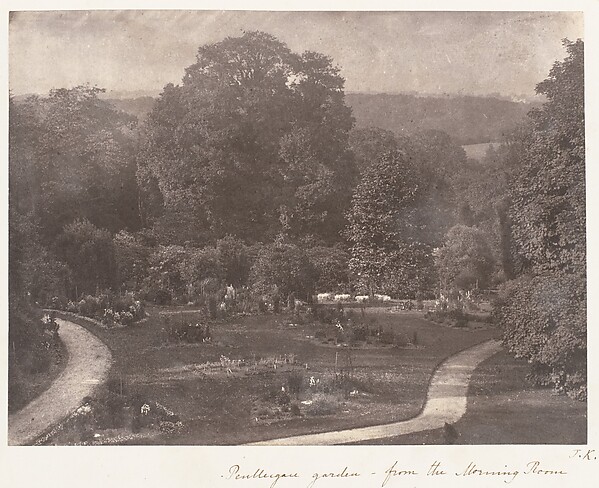
The Met credits James Knight as the artist of Penllergare Garden From the Morning Room, dated 1853–56. The museum records its format as “Photograph” and its medium as “Albumen silver print.” Its collection record identifies the artist as “British.”
Artist 02 of 30
John Hazelhurst Boneval Latrobe
1803–1891
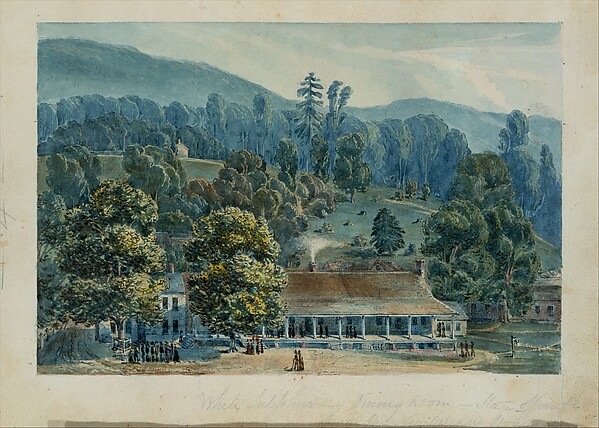
The Met credits John Hazelhurst Boneval Latrobe as the artist of Dining Room and Stage Offices at White Sulphur Springs, dated 1832. The museum records its format as “Watercolor” and its medium as “Watercolor on off-white wove paper.” Its collection record identifies the artist as “1803–1891.”
Artist 03 of 30
Fuhiken Tokikaze
active first half of the 18th century
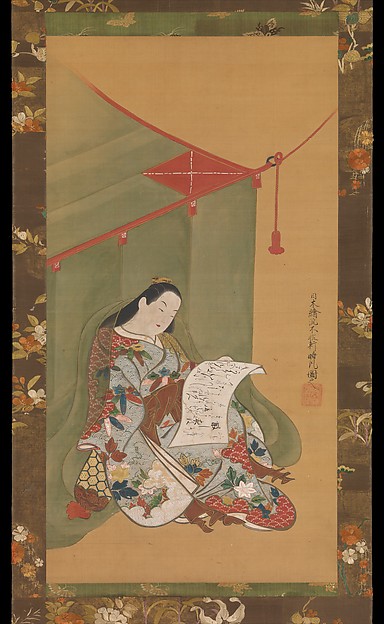
The Met credits Fuhiken Tokikaze as the artist of Woman Reading under a Mosquito Net, dated ca. 1720. The museum records its format as “Hanging scroll” and its medium as “Hanging scroll; ink and color on silk.” Its collection record identifies the artist as “active first half of the 18th century.”
Its subjects include reading.
Artist 04 of 30
Giacomo Sangermano
Italian, active 1743–1773
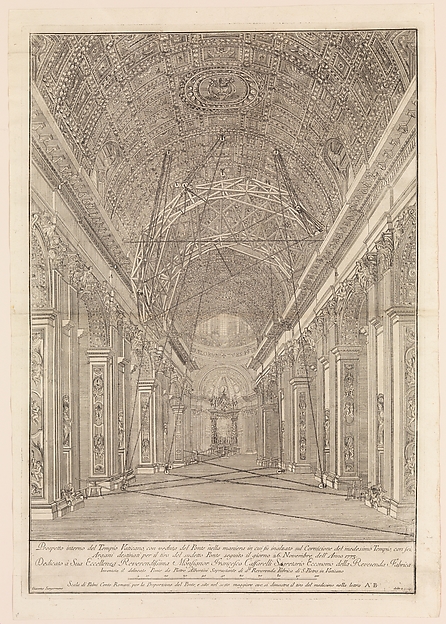
The Met credits Giacomo Sangermano as the artist of Scaffolding Erected for the Restoration of the Vault in St. Peter's Basilica: Overview of the Nave, dated ca. 1773. The museum records its format as “Collection Ornament & Architecture” and its medium as “Etching.” Its collection record identifies the artist as “Italian, active 1743–1773.”
Its subjects include interiors.
Artist 05 of 30
Abbate Paolo de Angelis
Italian, 1580–1647

The Met credits Abbate Paolo de Angelis as the artist of Study of the Interior of Santa Maria Maggiore in Rome, dated 1621–46. The museum records its format as “Drawing” and its medium as “Pen and brown ink, brush with gray and blue wash, over traces of graphite, highlighted with white gouache.” Its collection record identifies the artist as “Italian, 1580–1647.”
Its subjects include interiors.
Artist 06 of 30
Auguste Belloc
French
![[Nude Standing by Bed] — Auguste Belloc](https://images.metmuseum.org/CRDImages/ph/web-large/DP-18415-012.jpg)
The Met credits Auguste Belloc as the artist of [Nude Standing by Bed], dated ca. 1854. The museum records its format as “Photograph” and its medium as “Albumen silver print from glass negative.” Its collection record identifies the artist as “French.”
Its subjects include beds.
Artist 07 of 30
Pierre-Benoît Lorillon
active 1788–ca. 1836
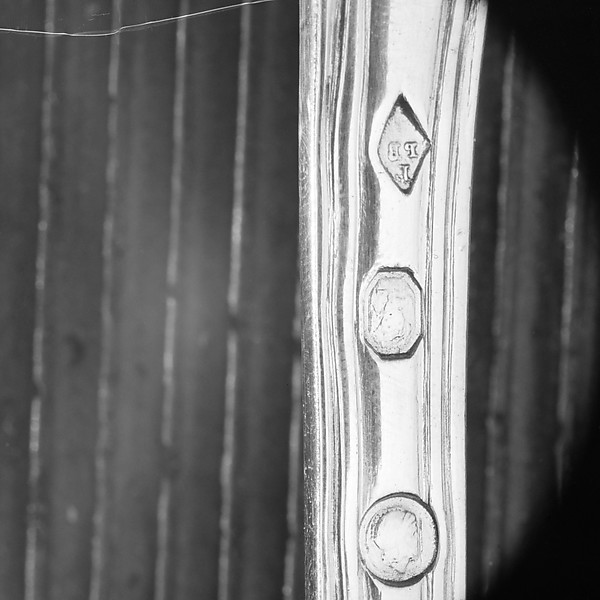
The Met credits Pierre-Benoît Lorillon as the maker of Spoon (part of a dining service), dated ca. 1805. The museum records its format as “Spoon” and its medium as “Silver gilt.” Its collection record identifies the artist as “active 1788–ca. 1836.”
Artist 08 of 30
C. G. Hawkhurst
British, active 1830s
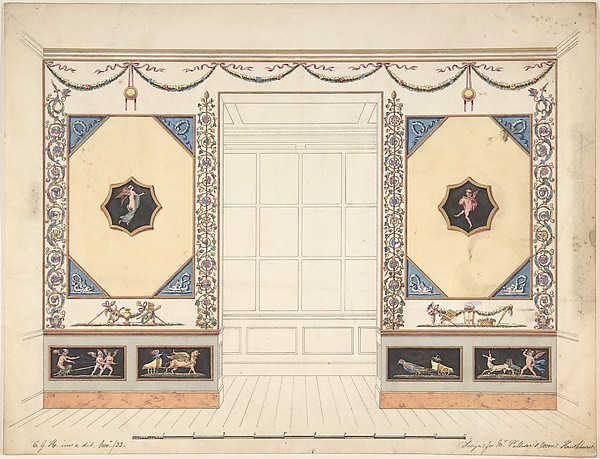
The Met credits C. G. Hawkhurst as the artist of Design for a Room in the Etruscan or Pompeian style (Elevation), dated 1833. The museum records its format as “Drawing ; Ornament and architecture” and its medium as “Pen and black ink, watercolor with touches of gold ink.” Its collection record identifies the artist as “British, active 1830s.”
Artist 09 of 30
Suzuki Hiroshige II
Japanese, 1826–1869
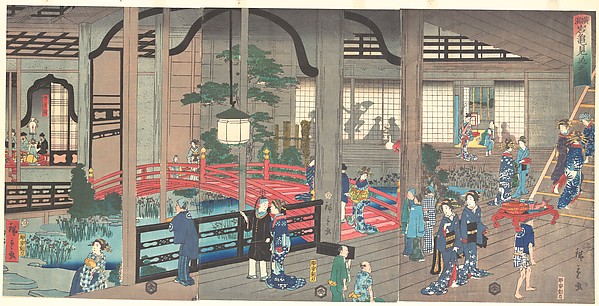
The Met credits Suzuki Hiroshige II as the artist of The Interior of the Gankiro Tea House in Yokohama, dated 1861 (April). The museum records its format as “Print” and its medium as “Triptych of woodblock prints; ink and color on paper.” Its collection record identifies the artist as “Japanese, 1826–1869.”
Its subjects include interiors.
Artist 10 of 30
Stephen Thompson
British, active 1870s
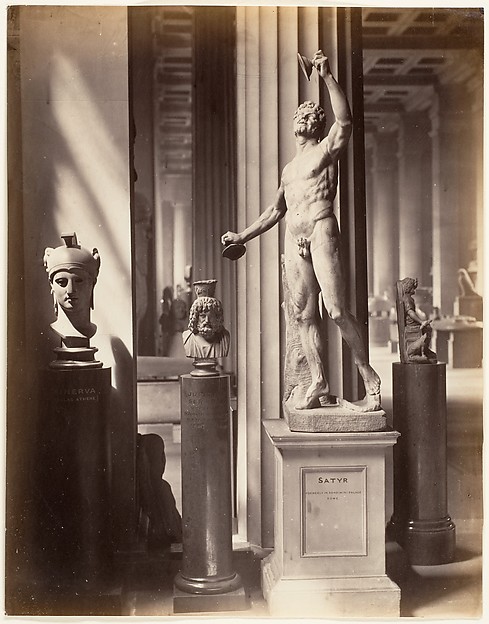
The Met credits Stephen Thompson as the artist of Satyr, British Museum, dated 1869–72. The museum records its format as “Photograph” and its medium as “Albumen silver print from glass negative.” Its collection record identifies the artist as “British, active 1870s.”
Its subjects include interiors.
Artist 11 of 30
Pietro Bosio
Italian, Cremona, second half 18th century–1789 Rome
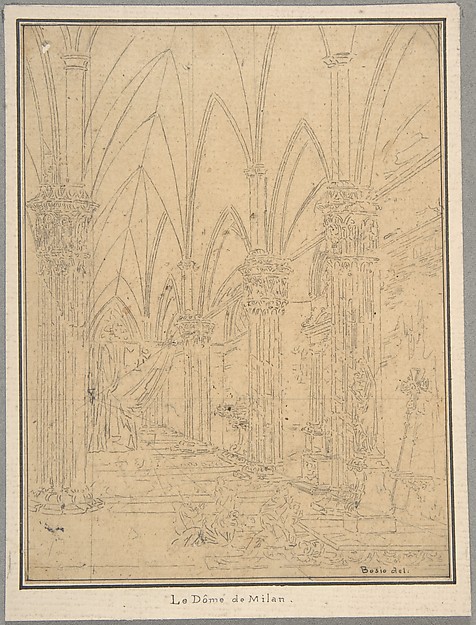
The Met credits Pietro Bosio as the artist of Perspective of a Church's Interior, dated 18th century. The museum records its format as “Drawing” and its medium as “Graphite.” Its collection record identifies the artist as “Italian, Cremona, second half 18th century–1789 Rome.”
Its subjects include interiors.
Artist 12 of 30
Sha Fu
Chinese, 1831–1906
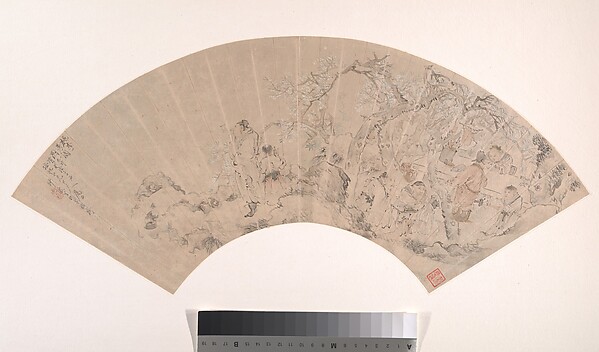
The Met credits Sha Fu as the artist of The Peach and Plum Garden, dated 1879. The museum records its format as “Folding fan mounted as an album leaf” and its medium as “Folding fan mounted as an album leaf; ink and color on alum paper.” Its collection record identifies the artist as “Chinese, 1831–1906.”
Its subjects include tables.
Artist 13 of 30
Toyohara Kuniteru III
Japanese, active ca. 1880–1900
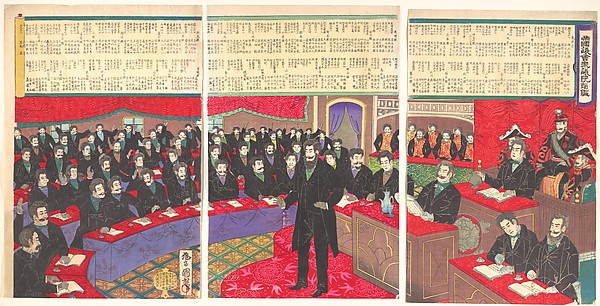
The Met credits Toyohara Kuniteru III as the artist of Illustration of the Imperial Diet House of Commons with a Listing of all Members, dated 10/1890. The museum records its format as “Print” and its medium as “Triptych of woodblock prints; ink and color on paper.” Its collection record identifies the artist as “Japanese, active ca. 1880–1900.”
Its subjects include interiors.
Artist 14 of 30
William England
British
![[86 Stereographic Views of The International Exhibition of 1862] — William England](https://images.metmuseum.org/CRDImages/ph/web-large/DP329901.jpg)
The Met credits William England as the artist of [86 Stereographic Views of The International Exhibition of 1862], dated 1862. The museum records its format as “Photograph” and its medium as “Albumen silver prints from glass negatives with applied color.” Its collection record identifies the artist as “British.”
Its subjects include interiors.
Artist 15 of 30
Reid Turner
British, 1838–1896
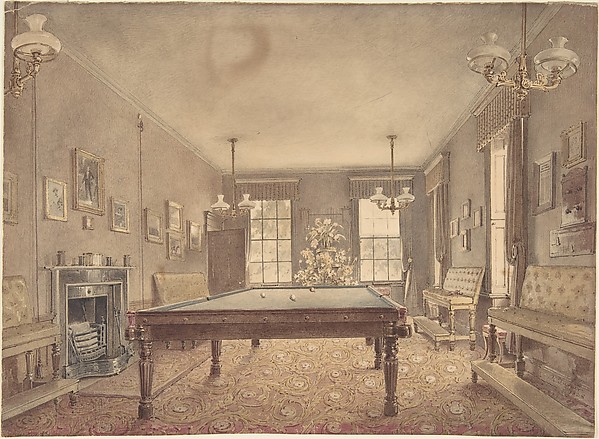
The Met credits Reid Turner as the artist of Interior of the billiard room at Lupton House, Devonshire, designed by George Wrightwick for Sir J.B.Y. Buller, dated 1838. The museum records its format as “Drawing ; Ornament and architecture” and its medium as “Watercolor.” Its collection record identifies the artist as “British, 1838–1896.”
Its subjects include interiors.
Artist 16 of 30
James Kidder
1793–1837
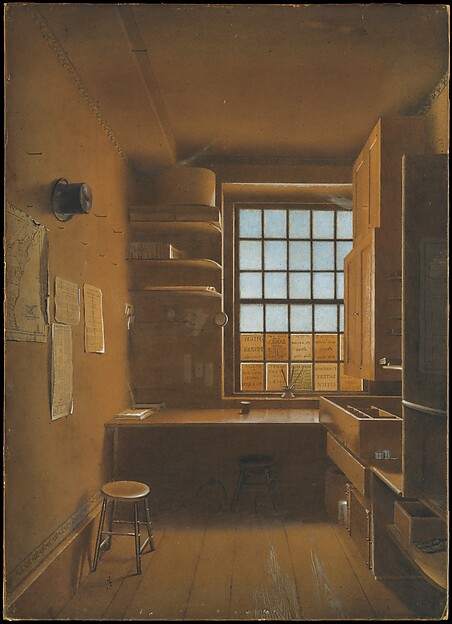
The Met credits James Kidder as the artist of Interior of a Lottery, dated 1821. The museum records its format as “Watercolor” and its medium as “Gouache, watercolor, and graphite on toned wove paper.” Its collection record identifies the artist as “1793–1837.”
Its subjects include interiors.
Artist 17 of 30
Yukeisha
Japanese, 18th–19th century
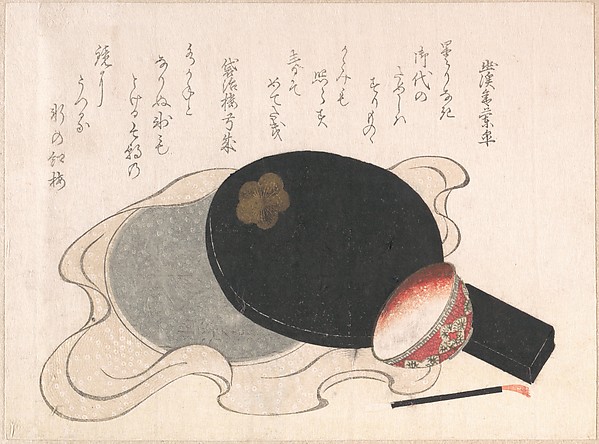
The Met credits Yukeisha as the artist of Mirror with Cover, Bowl and Brush for Rouge. The museum records its format as “Woodblock print” and its medium as “Woodblock print (surimono); ink and color on paper.” Its collection record identifies the artist as “Japanese, 18th–19th century.”
Its subjects include mirrors.
Artist 18 of 30
Charles Paxson
American, active New York, 1860s
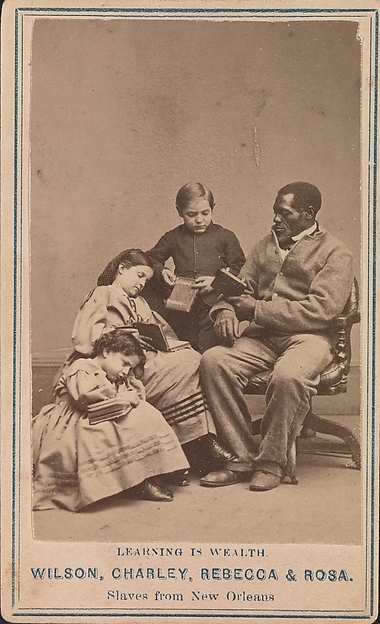
The Met credits Charles Paxson as the artist of Learning is Wealth—Wilson, Charley, Rebecca, and Rosa, Slaves from New Orleans, dated 1863–64. The museum records its format as “Carte-de-visite” and its medium as “Albumen silver print from glass negative.” Its collection record identifies the artist as “American, active New York, 1860s.”
Its subjects include reading.
Artist 19 of 30
V. S. Léon
active France, ca. 1860–80
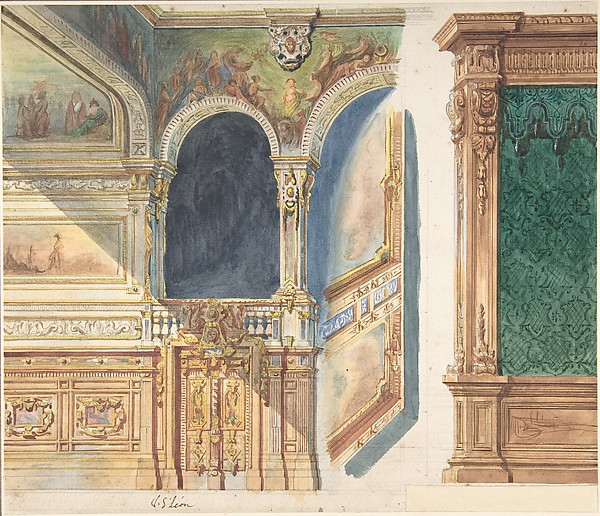
The Met credits V. S. Léon as the artist of Design for an Interior, possibly a Theater, dated ca. 1860–80. The museum records its format as “Drawing Ornament & Architecture” and its medium as “Graphite, watercolor, gouache.” Its collection record identifies the artist as “active France, ca. 1860–80.”
Artist 20 of 30
Jin Chushi
Chinese, active late 12th century
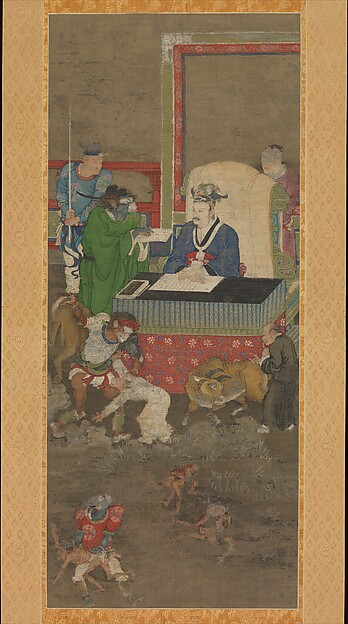
The Met credits Jin Chushi as the artist of Ten Kings of Hell, dated before 1195. The museum records its format as “Hanging scroll” and its medium as “One of five of a set of ten hanging scrolls; ink and color on silk.” Its collection record identifies the artist as “Chinese, active late 12th century.”
Its subjects include tables.
Artist 21 of 30
Joseph H. Davis
1811–1865
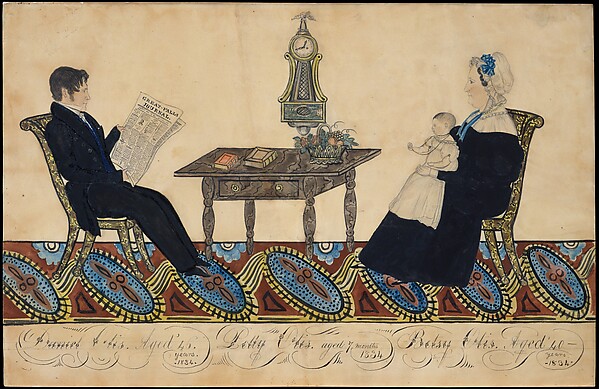
The Met credits Joseph H. Davis as the artist of Mr. and Mrs. Daniel Otis and Child, dated 1834. The museum records its format as “Watercolor” and its medium as “Watercolor, gum arabic, and graphite on off-white wove paper.” Its collection record identifies the artist as “1811–1865.”
Its subjects include reading.
Artist 22 of 30
Utagawa Sadakage
Japanese, active mid-19th century
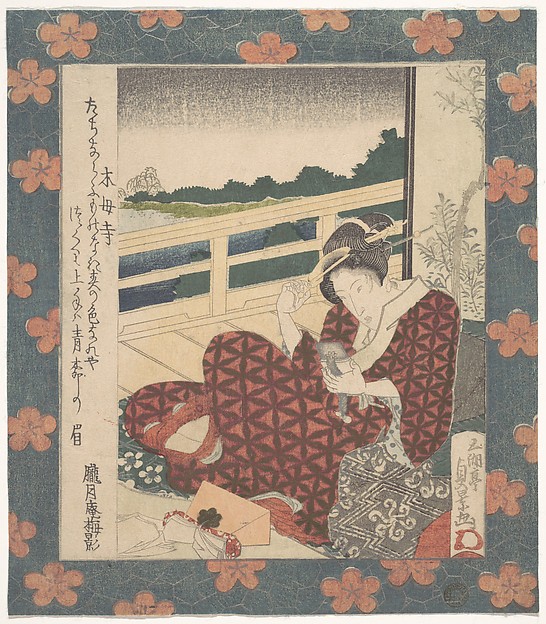
The Met credits Utagawa Sadakage as the artist of Beauty Looking at Her Image in a Mirror, dated ca. 1840. The museum records its format as “Woodblock print” and its medium as “Woodblock print (surimono); ink and color on paper.” Its collection record identifies the artist as “Japanese, active mid-19th century.”
Its subjects include mirrors.
Artist 23 of 30
John Constantine Stanley
British, 1837–1878
![[Kitchen and Stables of Government House, Calcutta] — John Constantine Stanley](https://images.metmuseum.org/CRDImages/ph/web-large/DP146090.jpg)
The Met credits John Constantine Stanley as the artist of [Kitchen and Stables of Government House, Calcutta], dated 1858–61. The museum records its format as “Photograph” and its medium as “Albumen silver print.” Its collection record identifies the artist as “British, 1837–1878.”
Artist 24 of 30
Frederick Sang
British, active 1868–70
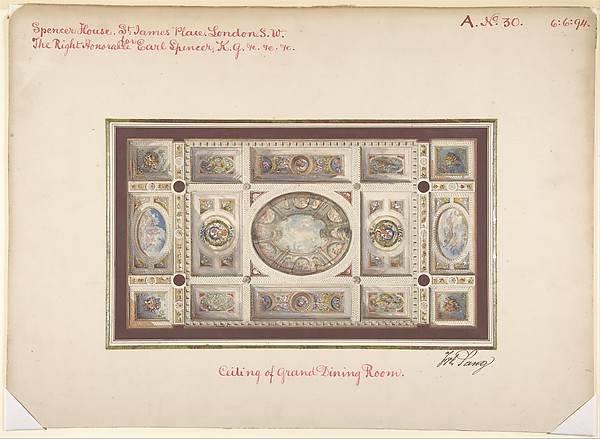
The Met credits Frederick Sang as the artist of Ceiling of Dining Room, Spencer House, St. James Palace, London, dated ca. 1870. The museum records its format as “Drawing; Ornament and architecture” and its medium as “Watercolor over graphite.” Its collection record identifies the artist as “British, active 1868–70.”
Artist 25 of 30
Paul Crespin
entered 1739
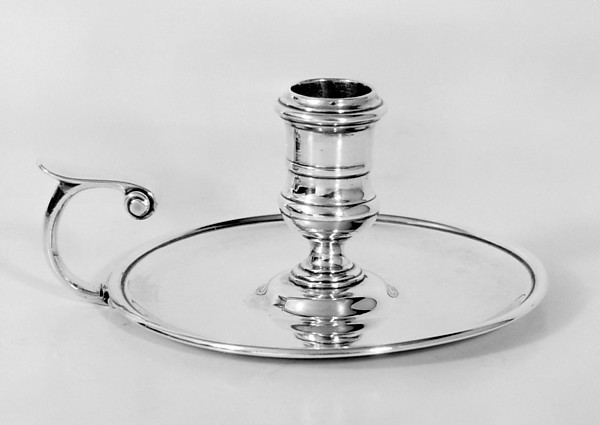
The Met credits Paul Crespin as the maker of Bedroom candlestick, dated 1741–42. The museum records its format as “Candlestick” and its medium as “Silver.” Its collection record identifies the artist as “entered 1739.”
Artist 26 of 30
Ippitsusai Bunchō
Japanese, active ca. 1765–1792
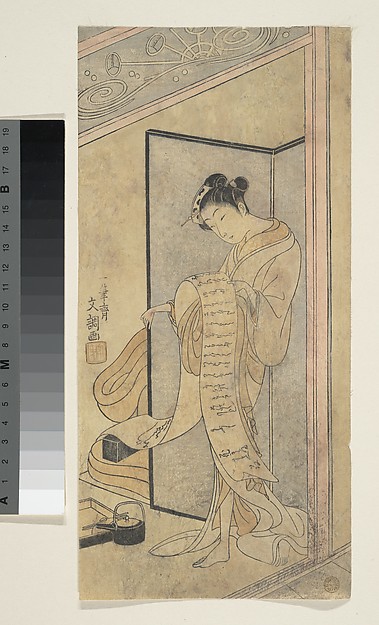
The Met credits Ippitsusai Bunchō as the artist of The Oiran Hanagiku Reading a Love Letter While Standing, dated ca. 1769. The museum records its format as “Print” and its medium as “Woodblock print; ink and color on paper.” Its collection record identifies the artist as “Japanese, active ca. 1765–1792.”
Its subjects include reading.
Artist 27 of 30
Morris Neuwirth
American, New York 1912–1985 New Rochelle, New York
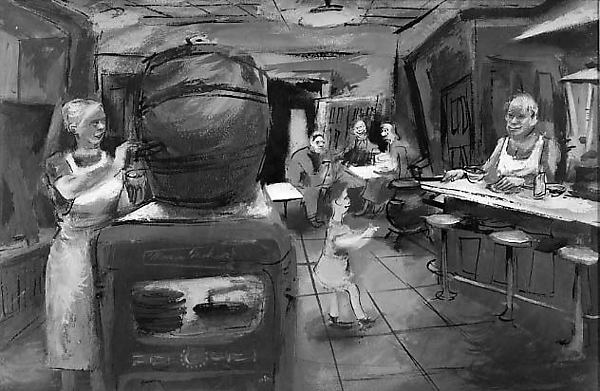
The Met credits Morris Neuwirth as the artist of Saturday Night, dated 1939. The museum records its format as “Drawing” and its medium as “Matte opaque paint over graphite on paper board.” Its collection record identifies the artist as “American, New York 1912–1985 New Rochelle, New York.”
Its subjects include interiors.
Artist 28 of 30
Abraham Hondius
Dutch, Rotterdam ca. 1631–1691 London
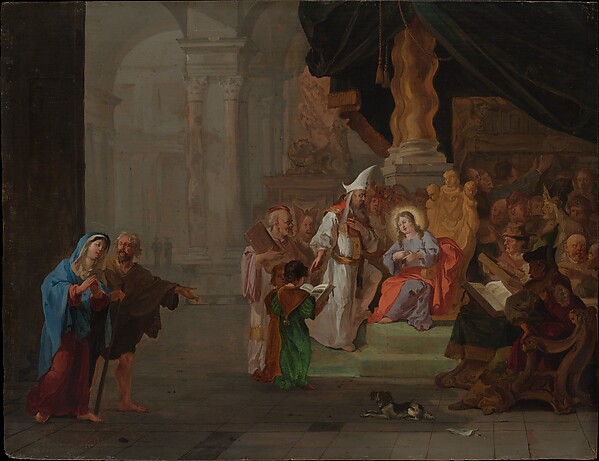
The Met credits Abraham Hondius as the artist of Christ among the Doctors, dated 1668. The museum records its format as “Painting” and its medium as “Oil on wood.” Its collection record identifies the artist as “Dutch, Rotterdam ca. 1631–1691 London.”
Its subjects include reading.
Artist 29 of 30
Thomas Waterman Wood
American, Montpelier, Vermont 1823–1903 New York
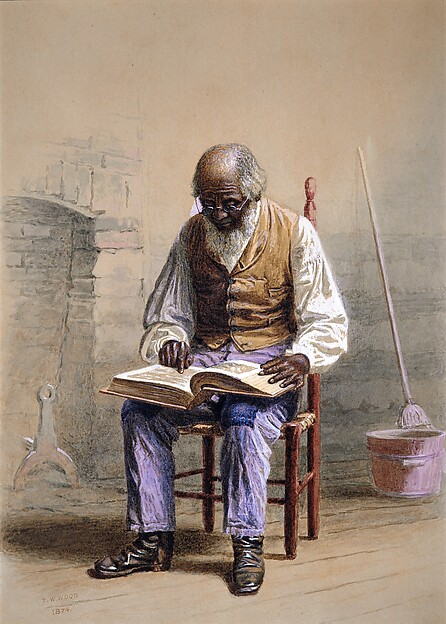
The Met credits Thomas Waterman Wood as the artist of Reading the Scriptures, dated 1874. The museum records its format as “Watercolor” and its medium as “Watercolor, gouache, and graphite on light tan wove paper.” Its collection record identifies the artist as “American, Montpelier, Vermont 1823–1903 New York.”
Its subjects include reading.
Artist 30 of 30
Johann Georg Platzer
Austrian, 1704–1761
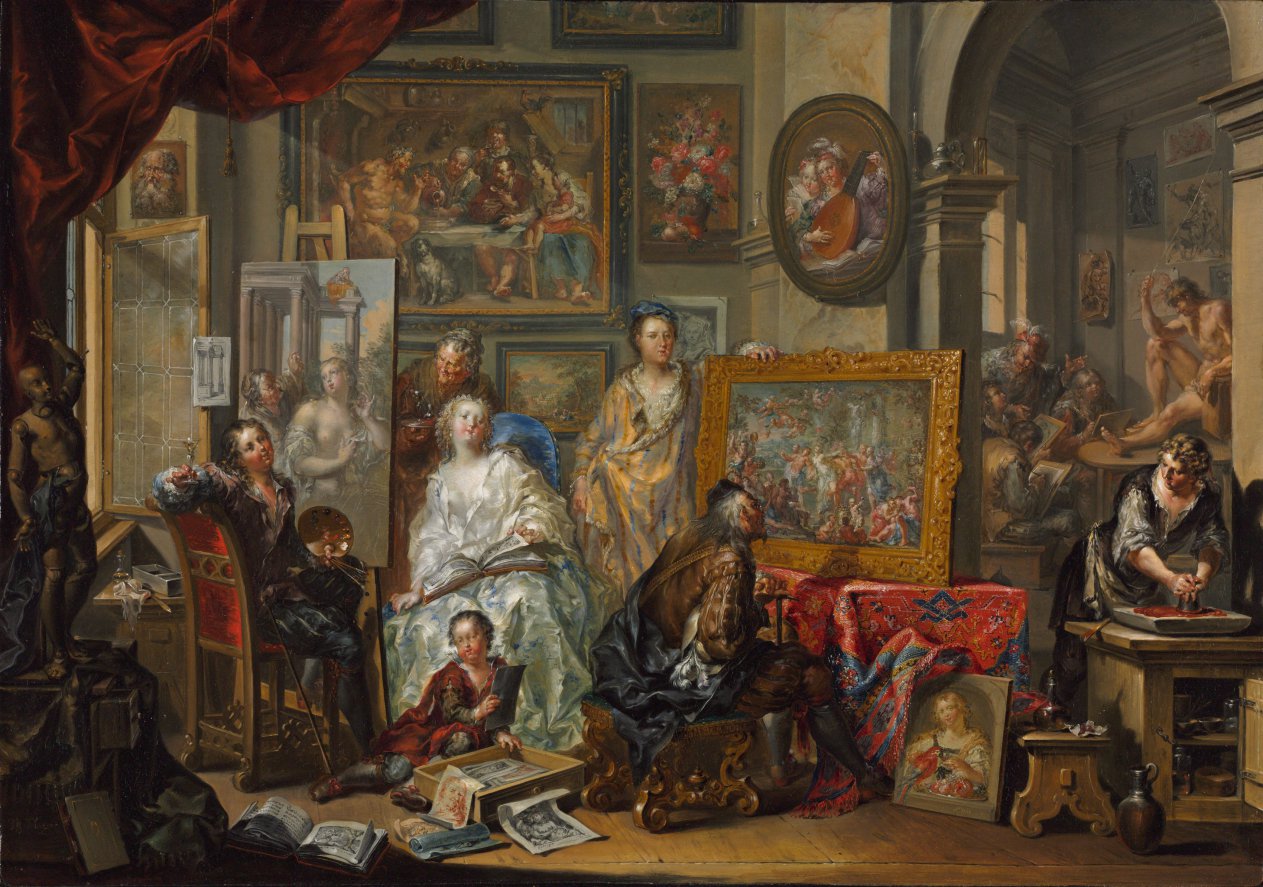
The Cleveland Museum of Art credits Johann Georg Platzer as artist of The Artist's Studio, dated 1740s–50s. The museum records its format as “Painting” and its medium as “oil on copper.” The creator record gives this identity context: “Austrian, 1704–1761.”
Models, pupils, assistants, and works of art fill the painter’s studio.