The pattern looks as though it belongs to the glaze, yet its contrasting material can sit underneath it, fitted into the body of the vessel. This is the quiet surprise of sanggam, the inlay technique closely associated with Goryeo celadon.
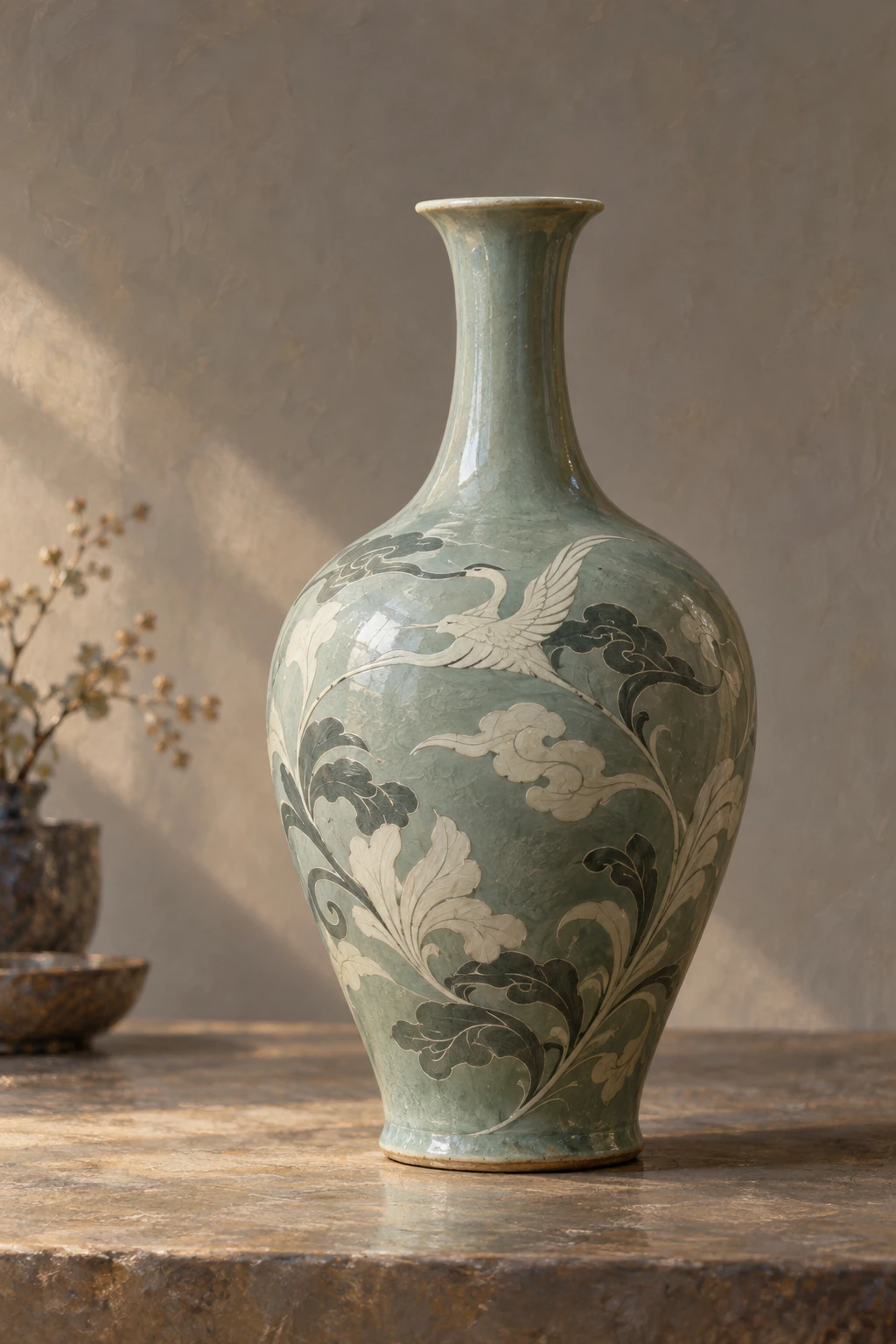
A decorative line might be scratched, painted, impressed, carved, or filled. Those verbs can produce related-looking marks in a small photograph, but they describe different decisions. Learning to distinguish them makes a ceramic object much more interesting than simply calling it green.
Find the pattern's physical address
The Met's Korean art teaching resource explains inlay as a sequence. A design is cut into clay that has firmed enough to work. Contrasting clay fills the recesses. Excess is removed so that the pattern remains within the surface. Glazing and firing then complete the ceramic relationship.
The difference from painting is fundamental. In a simplified comparison, a painted line places material on a surface; an inlaid line occupies a prepared space within it. That distinction changes the work needed before glazing. The maker must think about the shape of a recess, the behavior of filling material, and how the cleaned pattern will read through the final surface.
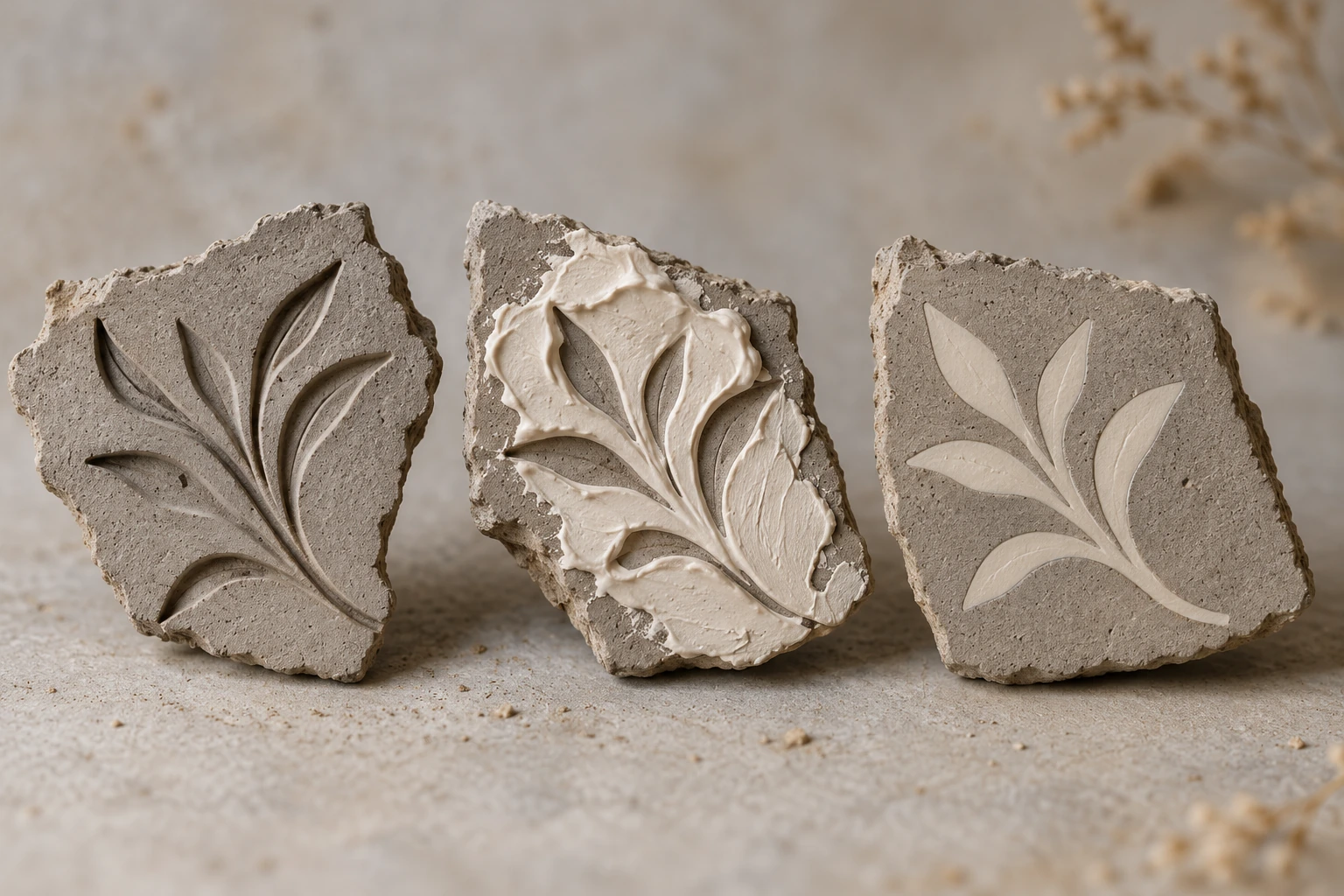
The three illustrative fragments above separate incision, filling, and removal of surplus. They are enlarged explanations, not excavated stages from one production site. Their value lies in making the order understandable. Historical workshop practice still has to be studied through objects and archaeological evidence.
Follow a pattern below the glaze
A qualitative four-stage layer model separates incision, filling, wiping, and glaze.
In the layer model, move from incision to filling, then remove the surplus. The pattern becomes clearer through subtraction. Turning on the final glaze stage adds another material relationship. The controls deliberately omit recipes, drying times, and firing schedules; an explanatory model is not a potter's reconstruction experiment.
Green is a range of outcomes
The Met's survey places Goryeo celadon within the dynasty of 918–1392 and describes a family of gray-green effects shaped by raw materials and firing conditions. It also includes plain, carved, incised, impressed, and inlaid examples. “Celadon” therefore does not name one decoration method or a single standardized color.
That range is important when an online image seems strongly blue, olive, pale gray, or warm green. Lighting, camera settings, display, glaze thickness, and the object itself all affect what you see. An image is useful for comparison, but its apparent hue should not be treated as a measured chemical diagnosis.
The National Museum of Korea's 2012 exhibition account emphasizes both the prized glaze and sanggam craftsmanship. This is a record of that exhibition, not a promise that those objects are currently on display. The distinction between a historical museum page and a current visiting guide matters when following old links.
A small cup can contain several techniques
Consider the Met's thirteenth-century cup with handle, 2025.598. At only 9.5 centimeters wide, it combines sculpted fish, incised details, inlaid external motifs, and a handle added before glazing. The record describes an object whose waterside imagery becomes especially engaging when the cup contains liquid.
Here the vessel's use changes the viewing experience. A photograph from above, a side view, and an imagined filled cup do not reveal the same relationships. You do not need to invent an original owner's thoughts to notice how the rim, fish, and reflective liquid could work together.
Try a technique-first comparison
Open the cup record and one inlaid bottle from the Met's survey. Choose a single feature on each: a line, a raised shape, a handle, or a patch of contrast. Write the verb you think describes its making. Then check the medium and curatorial explanation. If you cannot distinguish inlay from paint in the photograph, record that uncertainty rather than forcing an answer.
The reward is a slower, more active way of looking. A vessel can hold a pattern in its clay, a color in its glaze, and a changing image in the light it reflects. Those layers make the object vivid without requiring us to reduce it to either technical ingenuity or decorative beauty alone.
Sources and further exploration
- The Met: Goryeo Celadon
- The Arts of Korea: a resource for educators
- The Met: Cup with handle 2025.598
- National Museum of Korea: The Best Under Heaven, 2012
Explore all 80 new articles · Browse the complete illustrated collection
Continue exploring art, ideas, and unexpected connections at Incoprea.