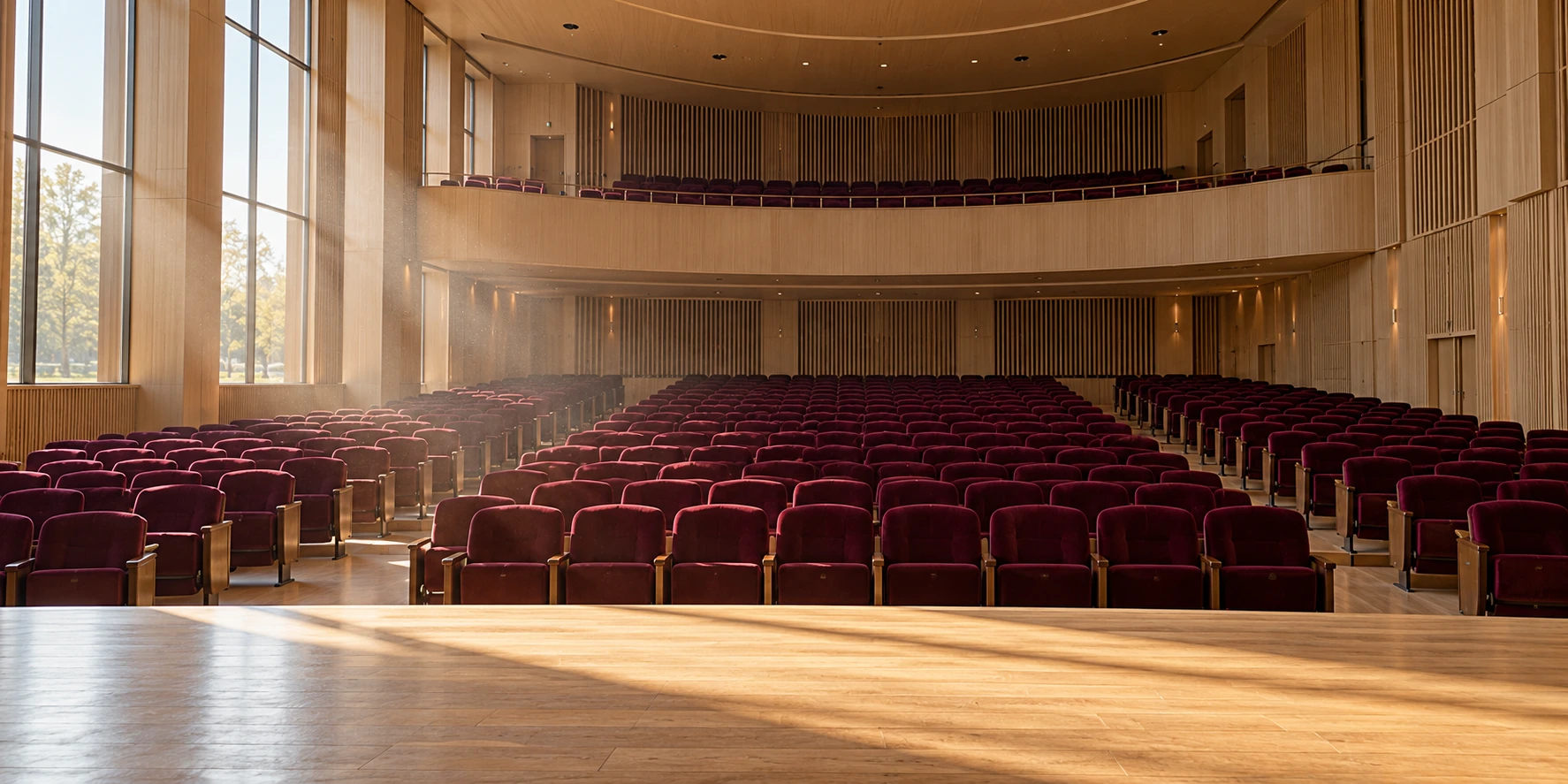
Arctic twilight can make a landscape look stripped down: snow, dark plants and a narrow band of color near the horizon. A reindeer standing in that light has a visual problem that changes with the season. The solution includes a reflecting layer inside the eye whose color changes too.
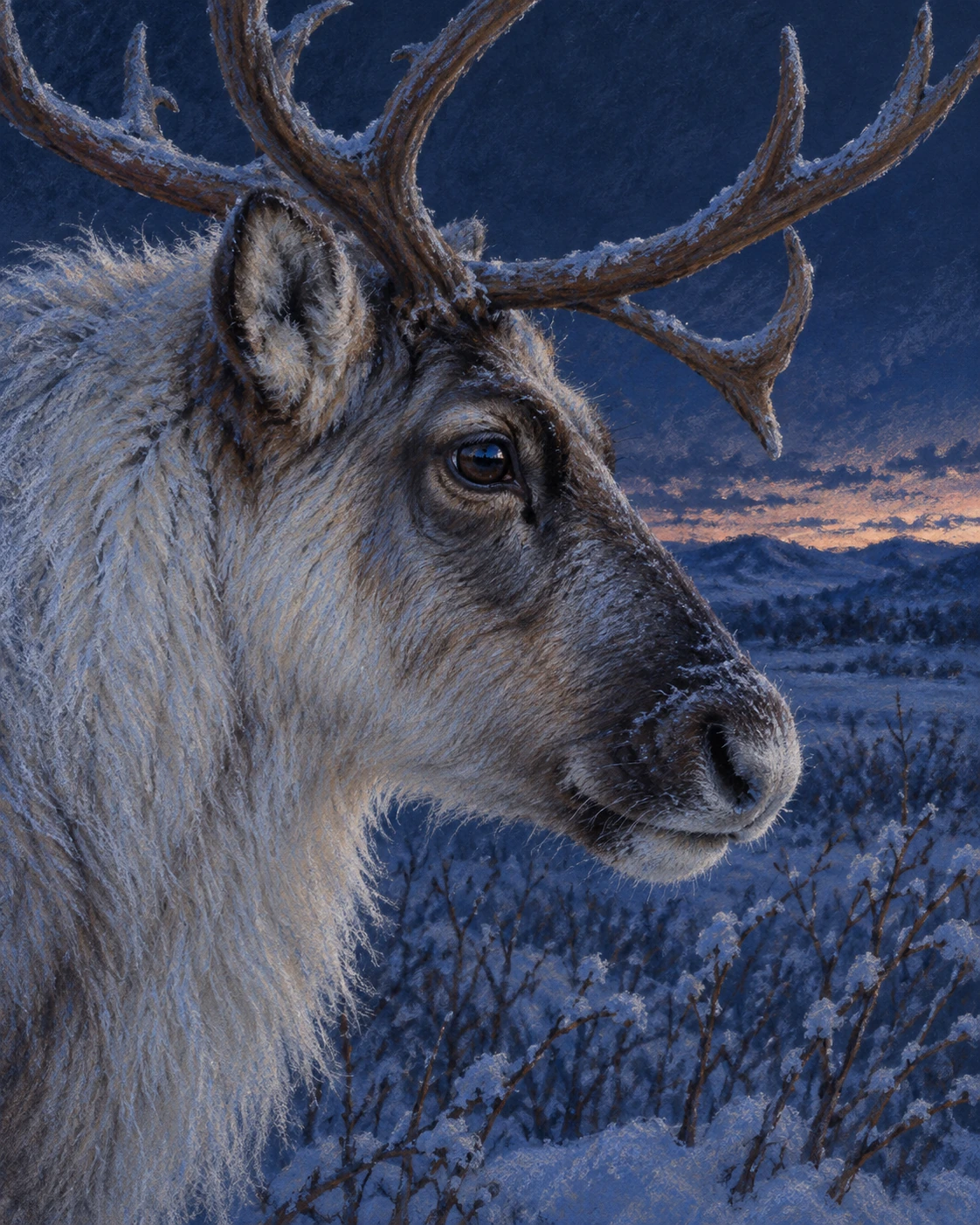
The change is behind the retina, in the tapetum lucidum. It is not an iris turning blue in an ordinary portrait. That distinction is important because a picture of an animal's face can show sky reflections, shadow or camera effects without revealing the seasonal structure that researchers actually studied.
The tapetum redirects light through the retina, giving incoming photons another opportunity to be detected. In the studied reindeer, its reflection is broadly golden in summer and deep blue in winter. The eye is adjusting an optical material, rather than simply changing a decorative color.
A mirror made from organized tissue
The 2013 investigation compared summer and winter eyes. Alongside differences in reflection, it found changes in collagen-fibril spacing, higher winter intraocular pressure and stronger winter retinal responses. Applying pressure to isolated summer tissue shifted its reflection toward blue.
Those observations suggested a connected mechanism involving pupil dilation, pressure and tissue structure. The authors explicitly said that they had not conclusively proved every functional link. Retaining that caution makes the result more interesting: the seasonal pattern is clear, while the complete physiological chain is a harder question.
Think of the difference between measuring several gears moving together and showing exactly how the force passes from one to the next. The first discovery identifies a system worth explaining. The second requires additional interventions, including some that may be impractical in a large living mammal.
Why spacing can matter more than pigment
A 2022 optical study treated the reflecting tissue as a photonic structure: ordered collagen fibrils separated by fluid. In such a structure, the spacing and order of repeated elements affect which wavelengths reinforce one another. A change in water distribution can therefore change the reflected spectrum without requiring the tissue to manufacture a blue pigment.
The researchers followed reflectance while tissue samples slowly dried and compared the changes with a geometric model. The results supported changing fluid space between fibrils as an explanation for the seasonal optical shift. They still left open how the living animal triggers and regulates the reversible transformation.
That is an elegant material problem. The ingredients remain tissue and fluid, but their arrangement changes the light returned to the retina. The visible color is a clue to the arrangement. It is not the whole biological outcome.
The scene supplies only certain light
To appreciate the system, separate the illumination from the object. A white card under a red lamp does not return all the colors it would under daylight, because the source has changed. Likewise, a reflector inside an eye operates on the light available in its habitat.
The 2022 paper connects the winter tapetum's spectrum with the unusually blue illumination of extended Arctic twilight. This does not mean that every moment of winter has identical light. Weather, direction and time still shape the scene. It means the seasonal environment provides a specific optical context for the tissue's change.
Try a harmless observation indoors. Look at the same colored object beside a window and beneath a warm household lamp. Keep its position and background as similar as possible. Notice how difficult it is to distinguish a change in illumination from a change in the material itself. This exercise uses ordinary visible light; it does not recreate a reindeer's vision.
Ultraviolet adds another layer
Reindeer ocular tissues transmit ultraviolet wavelengths to which the retina can respond. A 2014 study photographed vegetation against snow through different spectral bands under natural winter conditions. Plants could have stronger contrast in UV-only images than when UV was excluded. That supported a plausible visual advantage for finding vegetation.
A camera image remains a measurement tool. It does not show us the animal's subjective experience, and its contrast is not automatically a measured improvement in foraging success. Between a spectrum and a meal lie detection, recognition, behavior and the accessibility of the food.
The 2023 lichen study sharpened the food question. Different lichens reflected UV differently, so it was not enough to assume that all pale lichens behave alike. Measurements of lichens eaten by reindeer supported the possibility that some are conspicuous against snow in relevant spectral bands. The study was limited and did not establish a complete behavioral account of food selection.
Look at the published images in three passes
The primary papers provide more useful visual evidence than a dramatic eye portrait. In the 2013 figures, first locate the isolated tapetum rather than the iris. In the 2014 comparison, find the spectral bands used for each photograph. In the 2023 study, compare the different lichen spectra before assuming one species represents them all.
- Material: what is reflecting or absorbing the light?
- Illumination: which wavelengths reach that material?
- Receiver: which wavelengths can the animal detect, and what behavior was actually tested?
Those three questions prevent the whole story from collapsing into “reindeer see better.” Better at what, under which light, and through which mechanism are the useful questions. The answers can differ between detecting a dim shape, distinguishing food from snow and resolving a fine edge.
The twilight scene is richer when those layers remain separate. Snow is a spectral background. A lichen is a particular optical surface. Inside the reindeer's eye, an organized tissue changes with the season. The resulting encounter between light, food and living material is more remarkable than a simple change in eye color.
Sources and further reading: Shifting mirrors: seasonal retinal reflections in Arctic reindeer (2013); Reindeer eyes seasonally adapt to ozone-blue Arctic twilight (2022); Ultraviolet vision may enhance plant discrimination in snow (2014); Reindeer and the quest for Scottish enlichenment (2023).
Explore all 80 new articles · Browse the complete illustrated collection
Explore more art, ideas, and independent projects at Incoprea.