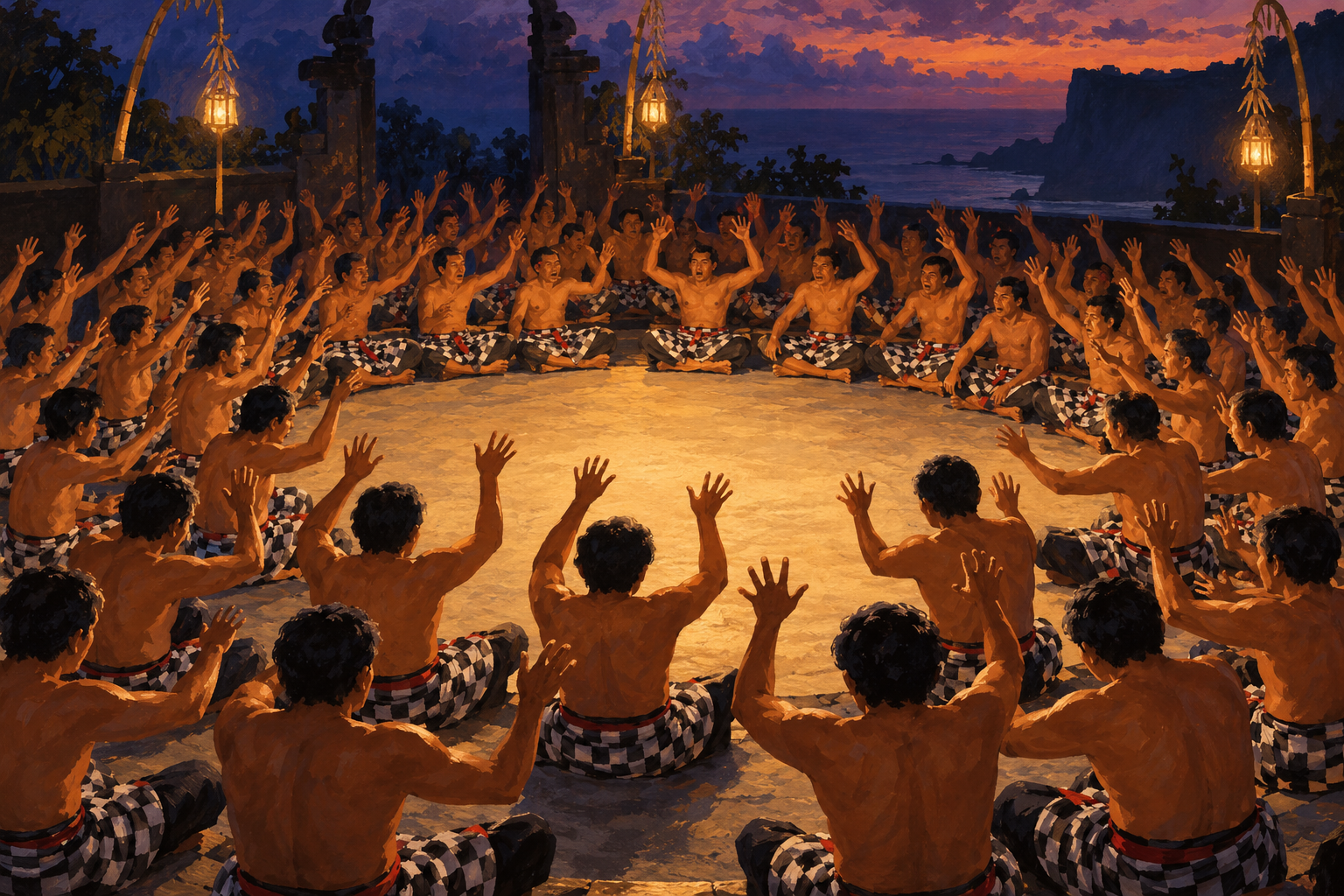
Volume ten follows artists through courts, academies, workshops, publishing houses, film sets, and public spaces across five centuries. Some built careers by joining new movements; others adapted inherited traditions to changing audiences or shifted media when circumstances demanded it. Family networks, migration, war, collaboration, collecting, and the rise of mass reproduction all shaped these lives in different ways. The selected works range from intimate portraits and printed landscapes to monumental sculpture and experimental cinema. Where a record supplies only a title, the discussion remains deliberately restrained. Together, the profiles show how artistic identity can form through technique, professional community, and the practical routes by which images reach viewers.
Watch the Volume 10 gallery film
A 7:52 moving gallery featuring all 30 artists and 60 selected works in this volume.
Original instrumental score Artists of the Past V10 - Rooms in Motion, created with Suno. Every image’s linked creator, source, and license appears in the captions below.
Raja Ravi Varma 1848-04-29–1906-10-02
painter · Kingdom of Thiruvithamkoor

Raja Ravi Varma was born at Kilimanoor on 29 April 1848 and died at Attingal on 2 October 1906. An Indian painter connected to the royal family of Parappanad, he also had close ties with Travancore's ruling house in present-day Kerala. Those links continued across generations: two of his granddaughters were later adopted into the Travancore royal family. Varma developed a public role that extended beyond the making of individual paintings. By issuing affordable lithographic versions of his pictures, he enabled a much broader audience to encounter images derived from fine art. The strategy increased his reach and helped shape popular taste. His career therefore joined courtly relationships, studio production, and mechanical reproduction, allowing his art to circulate among people who might never have had access to an original canvas.
Varma's paintings brought European academic conventions into conversation with Indian subjects and iconography. Religious images of Hindu deities, along with scenes drawn from epic poetry and the Puranas, became an acclaimed part of his output. Lithographs translated such compositions into a comparatively inexpensive, widely distributed form and broadened public engagement with his art. Laxman Shakti is one of the two selected examples, but its image record gives only that title, so no further account of its appearance is supported. The Coquette belongs to a series that also includes Lady With Fruit. Its catalog note tentatively identifies it as the earlier version and reports more careful handling in its brushwork, jewellery, and sari than in the companion painting. Together, the records reflect both Varma's narrative range and his attention to portrait-like figure painting.
Selected works


Research sources: Wikipedia biography (revision 1372820470) · Wikidata item Q333453 · Getty ULAN · VIAF · ISNI. Wikipedia text license: CC BY-SA 4.0; Wikidata license: CC0.
Dennis Oppenheim 1967-09-18–2011-01-21
photographer, sculptor, draftsperson, visual artist · Chile · Associated movements: conceptual art, Viennese Actionism

Dennis Oppenheim worked across conceptual art, performance, earth art, sculpture, drawing, video, installation, and photography. His early practice examined how art could be known and defined, taking Minimalist strategies as a point of response rather than a fixed destination. That inquiry first concentrated on the physical conditions of galleries, then widened toward questions of place and surrounding context. It subsequently reached the social and political settings in which work is made and encountered. This progression gave Oppenheim a career organized less by loyalty to one material than by sustained investigation. The biographical source records his death in 2011 but provides little information about training, family, or particular journeys. What it does establish is a restless movement across media and situations, with each phase extending the conceptual concerns of the one before it.
Oppenheim's broad practice could move from site-based inquiry to engineered public sculpture. Device to Root out Evil is a 1997 work installed in Vancouver. It uses galvanized structural steel, perforated anodized aluminum, transparent red Venetian glass, and concrete foundations, giving unusually concrete evidence about its construction without requiring interpretive claims about its meaning. Monumento al Cine (Valladolid) 2 documents another sculpture in Valladolid, Spain, and notes that the project was originally called Escenario para una película. Its materials, dimensions, and imagery are not described, so those details remain open. These two examples demonstrate the public and architectural scale within Oppenheim's sculptural activity. They also sit coherently beside a career that repeatedly shifted attention from the bounded gallery object toward physical sites and the wider contexts around them.
Selected works

_2.jpg)
Research sources: Wikipedia biography (revision 1362128268) · Wikidata item Q439856 · Getty ULAN · VIAF · ISNI. Wikipedia text license: CC BY-SA 4.0; Wikidata license: CC0.
Quinten Metsys 1466–1530-09-14
painter, visual artist · Duchy of Brabant, Habsburg Netherlands · Associated movements: Early Netherlandish painting
_-_Portrait_of_Quinten_Massijs_(I)_,_1572_(cropped).jpg)
Quinten Metsys, whose surname also appears as Matsys or Massys, was born in Leuven around 1466 and died at Antwerp in 1530. Tradition holds that he first trained as an ironsmith before turning to painting, although the available documentation presents that account as inherited tradition rather than documented certainty. He spent more than twenty years working in Antwerp and became associated with the Early Netherlandish tradition. His professional importance is tied especially to the emergence of the Antwerp school, which became a leading force in sixteenth-century Flemish painting. Metsys introduced fresh motifs, methods, and moralizing themes while retaining significant connections to earlier practice. That balance between innovation and continuity helps explain his position at a moment when Antwerp was developing its own artistic identity and attracting sustained production in both religious and secular subjects.
Metsys produced numerous paintings grounded in religion while also pursuing satire and moral commentary. His approach could introduce new subjects and techniques without making a complete break from the Early Netherlandish inheritance. The two selected examples shift attention to portraiture. Portrait of a man carries a general catalog title that does not identify the sitter, medium, setting, or handling. Portrait of a humanist mg 0132 likewise suggests a humanist sitter through its assigned name, but its catalog entry gives no visual description from which to develop that identification further. Restraint is therefore essential: the pair can establish that portraits form part of the selection, but not what expressive or symbolic choices they contain. Seen alongside his religious and satirical work, they indicate the breadth of a practice central to Antwerp's growing school of painting.
Selected works
_-_M%C3%A4nnliches_Bildnis_-_2458_-_Staatliche_Kunsthalle_Karlsruhe.jpg)

Research sources: Wikipedia biography (revision 1351846137) · Wikidata item Q314275 · Getty ULAN · VIAF · VIAF · ISNI. Wikipedia text license: CC BY-SA 4.0; Wikidata license: CC0.
Katerina Halepa-Katsatou 1925–2004
sculptor · Greece
Katerina Halepa-Katsatou was born in Athens on 9 April 1925 and died there on 10 June 2004. Sculpture connected several generations of her family: she was the daughter of Vassiliou Chalepas and Irene Iakovou Kouvaras, a great-niece of Yiannoulis Chalepas, and a great-granddaughter of Ioannous Chalepas. Her own preparation included drawing in Loukas Geralis's private workshop, sculpture at the Academy of Fine Arts under Michalis Tobros, and marble work with Georgios Mataragas. Exile caused by the Spanish Civil War also took her to Italy. She later formed an independent artistic identity while maintaining a special commitment to Yiannoulis Chalepas, whose archive she helped preserve and organize. That archival work placed family stewardship alongside her personal practice in sculpture, medals, and painting.
Halepa-Katsatou favored figurative realism and often worked on a large scale. Her account emphasizes a rapid, energetic process in which figures could emerge without preparatory drafts. Works entered public spaces, Greek state institutions, and collections both within and beyond the country. Nikolaos Dailakis Kastoria Bust is documented as a bust of Nikolaos Dailakis in Kastoria, Greece, and therefore provides a firm example of her public portrait sculpture. The second selected record, WP 20151213 14 25 11 Pro(1), carries an opaque filename and no usable descriptive note. It can be acknowledged as a catalogued example, but the evidence does not support identifying its subject, material, dimensions, or setting. The contrast between the well-described bust and the minimally documented object also shows why her broader record—public commissions, medals, painting, and family archival work—matters for understanding her range.
Selected works

.jpg)
Research sources: Wikipedia biography (revision 1211448066) · Wikidata item Q111705452. Wikipedia text license: CC BY-SA 4.0; Wikidata license: CC0.
Tarsila do Amaral 1886-09-01–1973-01-17
painter, sculptor, draftsperson · Brazil

Tarsila do Amaral was born in Capivari on 1 September 1886 and died in São Paulo on 17 January 1973. She worked as a painter and draftswoman as well as a translator, becoming a major presence in Brazilian modernism. Her closest professional setting included the Grupo dos Cinco. Mário de Andrade and Anita Malfatti were among its members, as were Menotti Del Picchia and Oswald de Andrade. Within that circle, art and writing helped define new approaches to modern Brazilian expression. Tarsila also played a formative part in Antropofagia during 1928 and 1929. Her painting Abaporu prompted Oswald de Andrade's Manifesto Antropófago, linking one particular image to a larger aesthetic program. The available documentation thus presents her not simply as an individual modernist, but as an artist whose work operated within a tightly connected cultural network.
Tarsila pursued a modern style capable of expressing Brazilian subjects and national aspirations, working chiefly in painting and drawing while also practicing sculpture. Her best-known historical connection to Antropofagia rests on Abaporu, although that painting is not among the present selections. Visão geral Tarsila 1 is instead a documentary view associated with the exhibition Tarsila do Amaral – Pintar o Brasil Moderno at the Musée du Luxembourg in Paris. The photograph does not isolate a single object or show its display closely, so it mainly documents her later exhibition history. Retrato de Marechal Arouche is identified as a work held in the Museu Paulista of the University of São Paulo, within the Fundo Museu Paulista collection. Its catalog entry gives no medium or detailed visual description. Together, the selections connect her modernist legacy to both international presentation and a Brazilian museum collection.
Selected works

.jpg)
Research sources: Wikipedia biography (revision 1371688971) · Wikidata item Q466627 · Getty ULAN · VIAF · ISNI. Wikipedia text license: CC BY-SA 4.0; Wikidata license: CC0.
Guercino 1591-02-08–1666-12-22
painter, draftsperson, visual artist · Papal States · Associated movements: Baroque

Giovanni Francesco Barbieri, widely known as Guercino, was born in Cento on 8 February 1591 and died in Bologna on 22 December 1666. He worked as a painter, draftsman, and designer within the Italian Baroque, with activity documented in Cento's Emilia region as well as Rome and Bologna. The surviving biographical outline is concise, but it identifies a meaningful shift across his career. His early manner emphasized vigorous naturalism, whereas later production moved toward greater classical balance. Drawing remained important throughout, and his numerous sheets became noted for lively execution and effects of light. Rather than treating Baroque style as uniform, Guercino's record reveals a practitioner whose approach changed over time while he continued to move between painting and works on paper in several Italian centers.
Guercino's reputation rests on both paintings and a substantial body of drawings. Historical accounts contrast the energetic naturalism of his early manner with the calmer equilibrium of later work, while describing his drawings as especially lively and luminous. Saint Alexius in a brown wrap, holding a staff is the first selected example. Its full label identifies the named figure, clothing, and staff, but the catalog gives no separate description of medium, composition, color, or date. The Samian Sibyl with a Putto is similarly identified only by its title. It cannot safely bear a detailed visual reading without more information about the object. Even so, the two selections place figure-centered subjects beside the documented evolution of Guercino's style. They invite attention to his shifting balance between naturalistic force, classical order, and the responsive draftsmanship for which his sheets were recognized.
Selected works
.jpg)

Research sources: Wikipedia biography (revision 1368453686) · Wikidata item Q334262 · Getty ULAN · VIAF · ISNI. Wikipedia text license: CC BY-SA 4.0; Wikidata license: CC0.
Jan Brueghel the Elder 1568–1625-01-13
painter, visual artist · Habsburg Netherlands · Associated movements: Flemish Baroque painting
_-_Portrait_of_Jan_Brueghel_the_Elder.jpg)
Jan Brueghel the Elder was born in Brussels in 1568 and died in Antwerp on 13 January 1625. He was the younger son of Pieter Bruegel the Elder and brother of Pieter Brueghel the Younger, placing him inside a prominent painting family while leaving room for a distinct career. Friendship and frequent collaboration linked him closely with Peter Paul Rubens. Brueghel also served as court painter to Archduke Albert VII and Archduchess Isabella, sovereigns of the Spanish Netherlands. His learning, religious interests, and attention to contemporary scientific habits of observation contributed to his image as an erudite painter. Nicknames such as Velvet, Flower, and Paradise Brueghel referred to particular strengths or inventions, but his range extended far beyond any single specialty during the opening decades of the Flemish Baroque.
Brueghel worked across history painting, flower pieces, allegory, mythology, landscape, seascape, hunting imagery, villages, battles, and visions of hell. He helped establish flower-garland paintings, paradise landscapes, and gallery pictures as recognizable types. Large figures were generally left to collaborators, while he often supplied landscapes and sometimes clothing within jointly made compositions. He also revisited peasant genres and landscape ideas associated with his father. A Summer Landscape with Harvesters and A Hermit before a Grotto are the two selected works. Their records contain titles but no independent descriptions, so details of palette, scale, figures, or handling cannot be stated. The titles nevertheless align with the documented breadth of his landscape practice, moving from seasonal rural labor to a secluded religious subject without reducing his career to the flower paintings suggested by one familiar nickname.
Selected works
_%26_Joos_de_Momper_(II)_-_Summer_landscape_with_harvesters_(Toledo_Museum_of_Art).jpg)

Research sources: Wikipedia biography (revision 1362966304) · Wikidata item Q209050 · Getty ULAN · VIAF · ISNI. Wikipedia text license: CC BY-SA 4.0; Wikidata license: CC0.
John Robert Cozens 1752–1797-12-14
painter, draftsperson, watercolorist, printmaker · Kingdom of Great Britain, United Kingdom
John Robert Cozens was born in London in 1752 and died there on 14 December 1797. His working career was short and his known output comparatively small, yet later British watercolorists treated his landscapes as consequential models. Two extended journeys through the Alps and Italy supplied much of his subject matter. During those travels he made many spare studies in line and gray wash, then developed them into new watercolors after returning to London. A single sketch could generate several versions with altered effects. Young Thomas Girtin and J. M. W. Turner copied many of his works under commissions from Dr. Thomas Monro, helping transmit his approach. At forty-two, Cozens experienced a complete mental collapse and did not recover during the final three years of his life.
Cozens treated watercolor as an expressive medium rather than only a tool for topographical description. His usual palette was restricted largely to blues, grays, and greens, and he organized scenes with notable simplicity. That economy supported an expansive sense of land and sky and helped shape the British watercolor developments of the 1790s. Ruins of Paestum near Salerno: The Three Temples connects directly to the Continental journeys that dominated his subject matter; its alternate description repeats the same title in German but adds no visual detail. Spruce Fir has only a brief catalog name, leaving its scale, setting, and treatment unspecified. The selected pair therefore marks both architectural landscape and a botanical or landscape subject without allowing close formal claims. Cozens's influence on Girtin and Turner, who studied by copying his work, extended the reach of a modest surviving production.
Selected works


Research sources: Wikipedia biography (revision 1364708048) · Wikidata item Q613852 · Getty ULAN · VIAF · ISNI. Wikipedia text license: CC BY-SA 4.0; Wikidata license: CC0.
Théo van Rysselberghe 1862-11-23–1926-12-14
painter, draftsperson, sculptor, visual artist, illustrator, engraver, watercolorist · Belgium · Associated movements: Neo-impressionism

Théo van Rysselberghe was born in Ghent on 23 November 1862 and died at Le Lavandou in December 1926. He trained first at Ghent's academy and then at the Royal Academy of Fine Arts in Brussels. Travel in Spain and Morocco during the 1880s sharpened his interest in color and light. A 1886 encounter with Georges Seurat's Grande Jatte painting led him toward Neo-Impressionism. As a founder of Les XX and later a participant in La Libre Esthétique, he connected artistic circles in Brussels and Paris with wider European networks. Among his associates were André Gide, Émile Verhaeren, Paul Signac, Henry van de Velde, and James Ensor. Around 1900 he loosened his strict Pointillist method, and his later years in southern France brought further changes in subject and touch.
Van Rysselberghe adapted Neo-Impressionist principles to an individual use of color and illumination, especially in portraits and landscapes. Regular Pointillist dots gradually gave way to broader, more fluid strokes after about 1900, although the underlying concern with chromatic and luminous effects persisted. His later repertoire included landscapes, seascapes, monumental nudes, and decorative compositions. Visage de femme en plein air is one selected record, but the title is its only descriptive evidence; the sitter, setting, medium, and handling are not documented here. Théo van rysselberghe, ritratto di octave maus, 1885 names Octave Maus and supplies a year, again without a fuller object note. Because the second work predates his documented encounter with Seurat, the pair can frame change across his career, but it cannot support a detailed comparison of what the images actually look like.
Selected works


Research sources: Wikipedia biography (revision 1370658995) · Wikidata item Q671883 · Getty ULAN · VIAF · ISNI. Wikipedia text license: CC BY-SA 4.0; Wikidata license: CC0.
Anders Zorn 1860-02-18–1920-08-22
painter, sculptor, watercolorist, engraver, photographer, printmaker · Sweden · Associated movements: Impressionism

Anders Zorn was born in Mora Parish on 18 February 1860 and died in the same parish on 22 August 1920. His practice crossed painting, sculpture, watercolor, engraving, photography, and printmaking, and the record associates him with Impressionism. International success came through both pictures and etched work. Portrait commissions brought him prominent sitters, including Sweden's King Oscar II and the American presidents Grover Cleveland, William Howard Taft, and Theodore Roosevelt. Those names indicate the reach of his clientele without exhausting the subjects or media he pursued. Zorn's public activity also extended beyond the visual arts. Near the end of his life, in 1920, he established the Swedish Bellman Prize for literature. The career outlined here joins local roots in Mora with a reputation built among patrons well beyond Sweden.
Zorn gained recognition as a painter, sculptor, watercolorist, and etcher, with portraiture forming a conspicuous part of his international career. Queen Sophia and Mrs. Grover Cleveland are the two examples selected for this volume. Each image record provides only its title, so neither supports claims about dress, pose, background, palette, dimensions, or exact medium. Their identities are nevertheless meaningful within the documented list of Zorn's distinguished sitters. Queen Sophia connects the sample to royal Swedish patronage, while Mrs. Grover Cleveland relates to the American political circles in which Zorn also portrayed three presidents. The pair should not be taken as a complete account of an artist active in sculpture, photography, and printmaking as well as painting. Instead, they offer a focused view of the commissioned portrait work that helped sustain his success across national settings.
Selected works


Research sources: Wikipedia biography (revision 1366818498) · Wikidata item Q206820 · Getty ULAN · VIAF · ISNI. Wikipedia text license: CC BY-SA 4.0; Wikidata license: CC0.
Maria Llimona i Benet 1894-02-03–1985-10-26
sculptor · Spain
Maria Llimona i Benet was born in Barcelona on 3 February 1894 and died there on 26 October 1985. She grew up in an artistic family: her father, Josep Llimona, was a sculptor, and her brother Rafael became a painter. Maria began sculpting comparatively late. Exile during the Spanish Civil War took her to Italy, where she studied with Rodolfo Castagnino. She married another sculptor, Domènec Carles i Rosich, and the couple often exhibited together. Her professional community also included a circle of women artists and writers around Olga Sacharoff, among them Soledad Martínez, Marie Laurencin, Lluïsa Granero, Clementina Arderiu, and Elisabeth Mulder. Participation in Madrid's 1950 National Exhibition of Fine Arts, where she showed a bronze portrait and a garden fountain, marked one documented point in her exhibition career.
Llimona's sculpture centered on female nudes, portraiture, and religious subjects. Her style stood near Catalan Noucentisme and differed from that of her father, despite their shared medium. Works entered the Museu Nacional d'Art de Catalunya, the museum of Santa Maria de Montserrat Abbey, and other collections in Catalonia and abroad. Musa-de-Maria-Llimona-600x398 is identified simply as La Musa by Maria Llimona; the record supplies no further material, date, or visual description. Al Doctor Andreu - 20210704 200827 documents her Monument al Doctor Andreu on Tibidabo, near the picnic grounds. That public monument is also named in the biographical source, giving the second record firmer context. Along with her mermaid sculptures in the gardens of Santa Clotilde at Lloret de Mar, it demonstrates how her work entered shared civic and garden settings.
Selected works


Research sources: Wikipedia biography (revision 1177339998) · Wikidata item Q62085693 · Getty ULAN · VIAF · ISNI. Wikipedia text license: CC BY-SA 4.0; Wikidata license: CC0.
Gino Severini 1883-04-07–1966-02-26
painter, sculptor, illustrator · Italy, Kingdom of Italy, France · Associated movements: Futurism, De Stijl

Gino Severini was born in Cortona on 7 April 1883 and died in Paris on 26 February 1966. An Italian painter who also became a French citizen, he divided much of his life between Paris and Rome. Severini emerged as a leading participant in Futurism, yet his career did not remain fixed within that movement. In the decade following the First World War, he became associated with neoclassicism and the broader return to order. His work crossed painting, sculpture, illustration, stage design, mosaic, glass, and fresco, allowing public and architectural formats to stand beside easel pictures. He exhibited at major events, including the Rome Quadrennial, and received prizes from established institutions. The available documentation therefore traces a long career shaped by two cities, stylistic realignment, and sustained movement among several artistic media.
Severini’s career moved from Futurism toward the neoclassical return to order after the First World War, while his choice of media expanded beyond painting to mosaic and fresco. Dancer = Propeller = Sea is the exact title of the first selected work. The available description repeats that title but gives no date, material, dimensions, location, or account of its appearance, so the three linked terms should not be turned into an invented visual narrative. Gino severini (dis), via crucis di cortona, 1947, 00 margherita da cortona in adorazione del crocifisso sullo sfondo… identifies the other example as part of Severini’s Via Crucis in Cortona and includes 1947 in its catalog wording. It provides firmer historical placement while remaining sparse about composition. Together, the two works connect his early interest in dynamic modern subjects with the religious, wall-based projects of his later practice.
Selected works
.png)
,_via_crucis_di_cortona,_1947,_00_margherita_da_cortona_in_adorazione_del_crocifisso_sullo_sfondo_di_cortona_1.jpg)
Research sources: Wikipedia biography (revision 1365097569) · Wikidata item Q169984 · Getty ULAN · VIAF · ISNI. Wikipedia text license: CC BY-SA 4.0; Wikidata license: CC0.
Luca Signorelli 1450–1523-10-16
painter, draftsperson · Republic of Florence · Associated movements: Sienese school

Luca Signorelli came from Cortona in Tuscany and died there on 16 October 1523. His exact birth year is uncertain in the biographical source, which places it around 1441 to 1445. Giorgio Vasari, Signorelli's cousin, wrote that he probably trained with Piero della Francesca in Florence; the available documentation retains that attribution as probable rather than certain. Signorelli worked in Florence, Siena, and Rome between 1478 and 1484, including a section of the Sistine Chapel that is now lost. By his early forties he had returned to Cortona. He remained based there after establishing his reputation, although commissions continued to take him through cities of the surrounding region. His career combined a stable home base with repeated travel for work, and Cortona commemorated the five-hundredth anniversary of his death with a major exhibition in 2023.
Signorelli was particularly admired for draftsmanship and foreshortening. His largest celebrated project is the Last Judgment fresco cycle, painted from 1499 to 1503 in Orvieto Cathedral. Luca signorelli, cappella di san brizio 00 documents frescoes in the cathedral's Chapel of San Brizio, directly connecting the chosen image to that monumental undertaking. The record does not isolate a particular scene, so no closer account of figures or arrangement is warranted. Virgin and Child with the Archangel Gabriel and an Unidentified Saint is the second selection. Its catalog title names the sacred figures but supplies no medium, date, setting, or independent visual description. Together, the examples establish the religious range of Signorelli's work from a vast chapel commission to a separately catalogued devotional subject, while his reputation for drawing provides the documented technical context for both.
Selected works


Research sources: Wikipedia biography (revision 1370413274) · Wikidata item Q7031 · Getty ULAN · VIAF · ISNI. Wikipedia text license: CC BY-SA 4.0; Wikidata license: CC0.
Jacob van Ruisdael 1628–1682-03-10
painter, printmaker, draftsperson · Dutch Republic · Associated movements: Baroque painting

Jacob van Ruisdael was born in Haarlem around 1628 or 1629 and died there on 10 March 1682. A painter, draftsman, and etcher, he built a prolific career around landscape during the Dutch Golden Age. His earliest dated phase began in 1646 with countryside subjects made while he was still young. A journey to Germany in 1650 preceded a more heroic turn in his scenery. Ruisdael later lived and worked in Amsterdam, where city panoramas and seascapes joined his established repertoire. Meindert Hobbema was his only registered pupil, and other specialists sometimes supplied figures for his landscapes; Hobbema's pictures have occasionally been confused with his teacher's. Demand for Ruisdael's work existed during his lifetime, and his paintings are now dispersed through major public and private collections internationally.
Ruisdael treated landscape as a varied field encompassing Dutch countryside, waterfalls, Scandinavian views, city panoramas, and seascapes. Skies could occupy a large share of his later canvases, while the post-1650 works often assumed a more elevated character. An extensive landscape with grain fields, Heemstede beyond is one selected example. Its record offers a location and subject through the title but no separate visual or technical description. Bosachtig landschap met een huis in aanbouw bij een ophaalbrug The Construction of a House similarly names woodland, building activity, and a drawbridge without supplying medium, date, or close object notes. The pair falls within his documented landscape range but cannot sustain more specific claims. Ruisdael's influence later reached English Romantic painters, the French Barbizon school, the American Hudson River School, and successive generations of Dutch landscape artists.
Selected works


Research sources: Wikipedia biography (revision 1366096886) · Wikidata item Q213612 · Getty ULAN · VIAF · ISNI. Wikipedia text license: CC BY-SA 4.0; Wikidata license: CC0.
Parmigianino 1503-01-11–1540-08-24
painter, draftsperson, printmaker, visual artist, engraver · Associated movements: High Renaissance, Mannerism

Girolamo Francesco Maria Mazzola, known as Parmigianino, was born in Parma on 11 January 1503 and died at Casalmaggiore on 24 August 1540. His nickname referred to his native city. Active in Parma, Rome, Florence, and Bologna, he became the best-known painter of the first generation whose careers unfolded entirely within Mannerism. War sharply disrupted his progress. The Sack of Rome struck in 1527, only three years after his arrival there, and his life ended when he was thirty-seven. Even within that short span, his distinctive talent won continuing recognition. Portable works found eager collectors and later entered major museums, while his two extensive fresco projects remained in a Parma church and a palace in a smaller nearby town. Their locations and unusual formats left those murals less familiar than many of his drawings, prints, paintings, and portraits.
Parmigianino's work is associated with elegant sensuality and elongated forms. He produced highly regarded drawings, experimented directly with printmaking at an early stage in Italian art, and helped expand the use of three-quarter and full-length formats beyond royal portraiture. Madonna Doria is identified in its description as a Madonna and Child, but the available documentation gives no date, medium, or further appearance. Parmigianino - Seated Draped Woman Holding a Globe in her Right Hand, a Staff in her Left, NMH 2421863 has an unusually detailed catalog title that names the pose and objects; there is no separate note from which to infer more. The two selections place a devotional painting beside a figure study or drawing record. They suit an artist whose practice moved between finished paintings, paper studies, printed experiments, murals, and portraits without permitting unsupported comparison of their color or technique.
Selected works


Research sources: Wikipedia biography (revision 1370412812) · Wikidata item Q9348 · Getty ULAN · VIAF · ISNI. Wikipedia text license: CC BY-SA 4.0; Wikidata license: CC0.
Naum Gabo 1890-08-05–1977-08-23
sculptor, painter, printmaker, photographer, draftsperson · Russian Empire, Russian Soviet Federative Socialist Republic, United States · Associated movements: abstract art, Constructivism

Naum Gabo was born Naum Neemia Pevsner in Bryansk on 5 August 1890 and died at Waterbury on 23 August 1977. A Russian and American sculptor and theorist, he became central to Constructivism and the wider Russian avant-garde. His life involved repeated moves through Berlin, Paris, Oslo, Moscow, London, and finally the United States, bringing him into contact with Cubism, Futurism, the Bauhaus, De Stijl, and Abstraction-Création. In 1920 he issued the Realistic Manifesto with his brother, sculptor Antoine Pevsner, alongside an outdoor Moscow exhibition. Gabo spent the war years from 1936 to 1946 working on a smaller scale in England, then accepted public sculpture commissions after relocating to America. A major Tate retrospective in 1966 recognized the breadth of this mobile, theoretically engaged career.
Gabo organized geometric abstraction through constructions, reliefs, public monuments, and pioneering kinetic work. Nylon, wire, Lucite, glass, metal, and other translucent materials allowed him to treat interior voids as active form rather than empty background. Time formed a second sustained concern, embodied in his 1920 standing-wave construction. Square relief is documented as Plexiglas on aluminum with an anodized aluminum base; its description stresses the experimental character of the object and its relation to Constructivism and nonobjective art. Kuspit3-27-2 identifies Gabo's Kinetic Construction (Standing Wave) of 1919–1920, though the image record adds no further physical detail. Together, the examples represent his paired interests in transparent spatial organization and actual movement. They also connect the small constructions through which he tested ideas to a career that later expanded into monumental public sculpture.
Selected works


Research sources: Wikipedia biography (revision 1370148657) · Wikidata item Q309482 · Getty ULAN · VIAF · ISNI · ISNI. Wikipedia text license: CC BY-SA 4.0; Wikidata license: CC0.
Matthias Grünewald 1480–1528-08-31
painter, draftsperson, sculptor · Germany · Associated movements: German Renaissance
Matthias Grünewald, also known as Mathis Gothart Nithart, was a German Renaissance painter who died on 31 August 1528. His surviving works reveal a career devoted to religious art. Only about ten paintings, several of them multipart altarpieces, and thirty-five drawings remain. Additional works were lost at sea while being transported to Sweden as spoils of war. For centuries, uncertainty also surrounded the authorship of what did survive. Grünewald remained obscure until the late nineteenth century, and many paintings now assigned to him were previously attributed to Albrecht Dürer. Later scholarship came to treat the two as stylistic opposites. The record supplies little about Grünewald's training or professional relationships, but the unusual history of loss and reattribution decisively shaped his posthumous reputation.
Grünewald sustained a late-medieval Central European mode of religious painting into the sixteenth century rather than adopting Renaissance classicism. His best-known achievement is the Isenheim Altarpiece, created around 1512–1516. The present examples come instead from the Tauberbischofsheim altarpiece. Tauberbischofsheimer Altar, Szene: Fall Christi unter dem Kreuz is described as Christ carrying the cross. Tauberbischofsheimer Altar, Szene: Christus am Kreuz zwischen Maria und Johannes Tauberbischofsheim altarpiece is identified as the Crucifixion, with Mary and John named in the title. Beyond those subjects, the image records do not support assertions about palette, expression, dimensions, or technique. Both works nevertheless belong firmly to the religious corpus on which Grünewald's reputation rests. Their survival matters especially because so few paintings and drawings remain and because his authorship was obscured by earlier attribution to Dürer.
Selected works


Research sources: Wikipedia biography (revision 1371818948) · Wikidata item Q154338 · Getty ULAN · VIAF · ISNI. Wikipedia text license: CC BY-SA 4.0; Wikidata license: CC0.
Charles Rennie Mackintosh 1868-06-07–1928-12-10
painter, sculptor, watercolorist · United Kingdom · Associated movements: Arts and Crafts movement

Charles Rennie Mackintosh was born in Glasgow on 7 June 1868 and died in London on 10 December 1928. He worked as an architect, designer, watercolorist, painter, sculptor, interior designer, and furniture designer. His approach shared features with European Symbolism and became closely associated with the Modern Style. Margaret Macdonald, his wife and artistic partner, formed an important part of this career. Their work influenced European developments including Art Nouveau and Secessionism, and won praise from modernist designer Josef Hoffmann. The available documentation offers only a compact account, but it establishes that Mackintosh moved fluently between buildings, interiors, furnishings, graphics, and works on paper. That integration of disciplines carried ideas developed in Glasgow into a European conversation about modern design, while his death in London marked the end of a career rooted in Scotland but recognized beyond it.
Mackintosh's range joined architectural planning and interior design with furniture, graphic art, sculpture, and watercolor. The source relates his work to Symbolism, Art Nouveau, Secessionism, and the Arts and Crafts movement without reducing him to a single category. The Western Towers, Elgin Cathedral by Charles Rennie Mackintosh is catalogued as an artwork in the Aberdeen Archives, Gallery and Museums collection; no medium, date, or closer appearance is provided. Berberis, Walberswick by Charles Rennie Mackintosh carries the same collection note and similarly lacks a descriptive record. The titles indicate two separate subjects, yet responsible discussion must stop short of reconstructing their visual treatment. Together, the selected works keep Mackintosh's activity as an artist on paper visible beside the architecture and design for which his broader influence is documented, demonstrating the multidisciplinary scope of his practice without unsupported formal claims.
Selected works


Research sources: Wikipedia biography (revision 1365001994) · Wikidata item Q220703 · Getty ULAN · VIAF · ISNI. Wikipedia text license: CC BY-SA 4.0; Wikidata license: CC0.
Mary Nimmo Moran 1842-05-16–1899-09-25
printmaker · United Kingdom

Mary Nimmo Moran was born at Strathaven on 16 May 1842 and died at East Hampton on 25 September 1899. When she was five, her widowed father took Mary and her brother from Scotland to the United States, and Philadelphia became their home. She later married Thomas Moran, an American illustrator and artist, and raised a family with him. Marriage and domestic responsibilities did not prevent a substantial professional practice. Moran completed roughly seventy landscape etchings and became known specifically as a landscape etcher by 1880. The next year, London's Royal Society of Painter-Etchers elected her as one of eight American fellows and its first woman fellow. Her career developed across transatlantic institutions while remaining closely connected to family life and to landscapes encountered in Britain and the United States.
Moran specialized in landscape prints and was among the early American artists to explore etching as a sustained medium. Her subjects ranged across England and Scotland as well as Long Island, New Jersey, Florida, and Pennsylvania. Tween the Gloamin' and the Mirk, When the Kye Come Hame is one of the selected etchings. The available documentation offers no description beyond its title, so its exact place, figures, and handling cannot be specified. Newark, N.J., from the Passaic identifies a New Jersey viewpoint but likewise supplies no separate object notes. Another Newark landscape by Moran, View of Newark from the Meadows, belongs to the Newark Museum of Art, confirming her continuing engagement with that setting. The two selections fit a broader practice in which regional landscape and the reproducible etched line enabled a woman artist to gain formal recognition in London and an international professional identity.
Selected works


Research sources: Wikipedia biography (revision 1360003257) · Wikidata item Q6780418 · Getty ULAN · VIAF · ISNI. Wikipedia text license: CC BY-SA 4.0; Wikidata license: CC0.
John Everett Millais 1829-06-08–1896-08-13
painter, illustrator, photographer, draftsperson · United Kingdom of Great Britain and Ireland, United Kingdom · Associated movements: Pre-Raphaelite Brotherhood, Symbolism

John Everett Millais was born in Southampton on 8 June 1829 and died in London on 13 August 1896. At eleven he became the youngest student admitted to the Royal Academy Schools. He later helped found the Pre-Raphaelite Brotherhood at his family's London home on Gower Street and became a prominent representative of its historical and naturalist aims. Christ in the House of His Parents provoked controversy in 1849–1850, while Ophelia of 1851–1852 became closely identified with the group. By the middle of the 1850s, Millais was leaving the early Pre-Raphaelite manner for another form of realism. His wife Effie, formerly married to critic John Ruskin, actively promoted his work and helped secure commissions. Later financial success brought criticism from some former admirers, but recent assessment has treated that phase more seriously.
Millais worked as painter, illustrator, photographer, and draftsman. His early pictures emphasized historical subjects and close attention to nature, whereas later production pursued a different realism and reached a much larger market. The Unjust Judge and The Unmerciful Servant are the two selected records. Each is preserved here only with a title; neither includes a date, medium, dimensions, narrative description, or notes on appearance. They can therefore be named as examples but should not be treated as evidence for specific color, gesture, setting, or technique. That limited documentation is especially important for an artist whose style changed substantially and whose reputation became divided between admired Pre-Raphaelite work and commercially successful later pictures. Viewed within that longer arc, the pair reminds us that Millais's production cannot be represented adequately by Ophelia alone, even when the available records require caution.
Selected works
_MET_DP835791.jpg)
_MET_DP835790.jpg)
Research sources: Wikipedia biography (revision 1368389445) · Wikidata item Q159606 · Getty ULAN · VIAF · ISNI. Wikipedia text license: CC BY-SA 4.0; Wikidata license: CC0.
Abraham Raimbach 1776-02-16–1843-01-17
graphic designer · United Kingdom of Great Britain and Ireland

Abraham Raimbach was born in London's Cecil Court on 16 February 1776 and died on 17 January 1843. An English engraver of Swiss descent, he attended Archbishop Tenison's Library School and then served an apprenticeship with engraver J. Hall from 1789 until 1796. For nine years he divided his working life among drawing studies at the Royal Academy, occasional book-trade engravings, and miniature portrait painting undertaken in his free hours. Friendship with painter Sir David Wilkie redirected his career: beginning in 1812, Raimbach engraved several of Wilkie's major pictures. Recognition followed beyond Britain. A print after Wilkie's Village Politicians earned a gold medal at the Paris Exhibition of 1814, and the Académie des Beaux-Arts elected Raimbach a corresponding member in 1835. He was buried at St Mary's churchyard in Hendon.
Raimbach's art centered on engraving, though his training also included academic drawing and miniature portrait painting. His close relationship with David Wilkie gave him access to compositions that he translated into prints for new audiences. The Village Politicians is the first selected example and corresponds to the Wilkie image for which Raimbach received a Paris gold medal in 1814. Its documentation supplies no separate visual or technical description, so the method and scene cannot be analyzed further here. Key to the figures in is the second catalog label, but it is incomplete and carries no identifying note. It must therefore remain an acknowledged record rather than the basis of a speculative account. Even with uneven documentation, the pair reflects the interpretive and reproductive role of an engraver whose professional standing rested on converting another artist's paintings into widely accessible printed form.
Selected works


Research sources: Wikipedia biography (revision 1355059745) · Wikidata item Q4669144 · Getty ULAN · VIAF · ISNI. Wikipedia text license: CC BY-SA 4.0; Wikidata license: CC0.
Willem de Kooning 1904-04-24–1997-03-19
painter, sculptor, draftsperson, printmaker · United States, Kingdom of the Netherlands · Associated movements: abstract expressionism, action painting

Willem de Kooning was born in Rotterdam on 24 April 1904 and died at East Hampton on 19 March 1997. He left the Netherlands for the United States in 1926 and became an American citizen in 1962. In 1943 he married painter Elaine Fried, later known as Elaine de Kooning. After the Second World War, he emerged within the New York School and the approach called Abstract Expressionism or action painting. His circle included Jackson Pollock, Lee Krasner, Franz Kline, Arshile Gorky, Mark Rothko, Robert Motherwell, Norman Lewis, and other painters pursuing related but distinct paths. De Kooning worked in painting, sculpture, drawing, and printmaking and also taught. A major Museum of Modern Art retrospective in 2011–2012 reinforced his standing as one of the most widely recognized artists of the twentieth century.
De Kooning is closely tied to Abstract Expressionism and action painting, yet his practice also extended materially into sculpture. Rotterdam RecliningFigure04 documents his sculpture Reclining Figure in Rotterdam, the city of his birth. Seated woman by Willem de Kooning in Rotterdam records another sculpture on the Weena in the same city. The descriptions establish titles and locations but do not provide materials, dates, measurements, surface treatment, or installation history. No closer formal comparison is therefore supported. Their shared placement gives the pair a biographical resonance: public works by a Dutch-born artist who left in 1926 later stood in Rotterdam itself. They also help prevent his legacy from being confined to postwar American painting, making sculpture visible within a career more often summarized through canvases, New York School relationships, and the gestural language associated with action painting.
Selected works


Research sources: Wikipedia biography (revision 1371223285) · Wikidata item Q132305 · Getty ULAN · VIAF · ISNI. Wikipedia text license: CC BY-SA 4.0; Wikidata license: CC0.
Maya Deren 1917-04-29–1961-10-13
photographer · United States, Russian Empire, Russian Republic, Ukrainian People's Republic

Maya Deren was born Eleonora Solomonovna Derenkovskaya in Kyiv in 1917 and died in New York City on 13 October 1961. A Russian-born American artist, she became a major participant in the avant-garde of the 1940s and 1950s. Her work joined experimental filmmaking with choreography, dance, theory, poetry, lectures, writing, and photography. Deren studied gestalt psychology with Kurt Koffka and drew on knowledge of dance, ethnography, Symbolist poetry, and Haitian Vodou. She understood film as a means of creating experience rather than simply recording events. Collaboration also mattered: Meshes of the Afternoon was made with her then husband Alexander Hammid, while camerawoman Hella Heyman helped with later productions. Deren often wrote, produced, directed, edited, and photographed her films, keeping creative control concentrated within very small working teams.
Deren's black-and-white shorts reorganized ordinary space and time through editing, jump cuts, superimposition, multiple exposure, and slow motion. Choreographic knowledge informed her planned camera work and gave movement a conceptual role within each film. Meshes of the Afternoon 1 is a still from her experimental 1943 collaboration Meshes of the Afternoon. Its caption identifies the film and year but offers no further scene information, so interpreting its action or symbolism would go beyond what can be established. Still from A Study in Choreography for Camera comes from another short; one surviving caption dates it to 1943, although the biography dates the film to 1945, leaving the discrepancy unresolved. The two images represent film frames rather than autonomous photographs. They demonstrate how Deren's visual art emerged through sequencing, performance, and camera technique, even when a static reproduction can preserve only one moment.
Selected works


Research sources: Wikipedia biography (revision 1372307578) · Wikidata item Q450382 · Getty ULAN · VIAF · ISNI. Wikipedia text license: CC BY-SA 4.0; Wikidata license: CC0.
Eastman Johnson 1824-07-29–1906-04-05
painter, photographer · United States

Jonathan Eastman Johnson was born in Lovell on 29 July 1824 and died in New York City on 5 April 1906. He became an American painter and photographer and helped establish New York's Metropolitan Museum of Art; his name remains inscribed at its entrance. Johnson studied seventeenth-century Dutch painting in The Hague during the 1850s. The influence of those works became especially noticeable in his later production and prompted the contemporary nickname “the American Rembrandt.” Portraiture brought him subjects ranging from everyday sitters to public figures including Abraham Lincoln, Nathaniel Hawthorne, Ralph Waldo Emerson, and Henry Wadsworth Longfellow. Alongside those commissions, genre scenes of ordinary life became the field for which he was best known. His career thus connected European study, American institution building, and close attention to people across social ranks.
Johnson's paintings moved between portraiture and genre, the latter term describing scenes drawn from everyday experience. Study of Dutch masters provided an important historical model, particularly in his later years, while his American subjects grounded that learning in local settings. At the Camp—Spinning Yarns and Whittling and Cranberry Pickers, Nantucket are the two works selected here. Neither image record includes an account beyond its title, so no details of figures, setting, light, palette, or medium should be inferred. The titles can establish broad activities and a Nantucket location, but not how Johnson organized them visually. As a pair, the records align with his documented interest in daily life and help balance the more famous names among his portrait sitters. They also represent the kind of subject through which Johnson earned recognition apart from his institutional role at the Metropolitan Museum of Art.
Selected works

.jpg)
Research sources: Wikipedia biography (revision 1364545297) · Wikidata item Q1278282 · Getty ULAN · VIAF · ISNI. Wikipedia text license: CC BY-SA 4.0; Wikidata license: CC0.
Laura Coombs Hills 1859-09-07–1952-02-20
painter, illustrator · United States
.jpg)
Laura Coombs Hills was born in Newburyport on 7 September 1859 and died on 20 February 1952. An American painter, illustrator, and designer, she established a career across fine art and commercial publishing. The Society of American Artists admitted her as its first member specializing in miniature painting, and she helped found the American Society of Miniature Painters. These institutional roles placed a specialized form of portraiture within a broader professional art world. She also illustrated children's books, including works by Kate Douglas Wiggin and Anna M. Pratt, so her images reached readers as well as collectors. Hills sustained distinct lines of work in miniature painting, floral still life, design, and book illustration over a long career. That range joined the intimacy of small-format portraiture to images made for a much broader reading public.
Hills specialized in watercolor and pastel still lifes, particularly flowers, and in miniature portraits painted on ivory. That combination demanded work at different scales and supported both exhibition and commissioned practice. Ellen Hayden Lincoln (1838-1897) is the first selected portrait record. Its label identifies the sitter and her lifespan, but no description establishes medium, dimensions, pose, or date. Persis Blair, Laura Coombs Hills (American, 1859–1952) 1903 names another sitter and provides 1903, while the accompanying German note only repeats the same identifying information. Close visual claims would therefore be speculative. Together, the works foreground the portrait miniature field in which Hills achieved institutional distinction. They also complement a broader output of flower pictures, design, and children's-book illustration, revealing how one artist worked between intimate collectible objects and images intended for wider circulation.
Selected works
_-_1957.20_-_Fogg_Museum.jpg)
_1903.jpg)
Research sources: Wikipedia biography (revision 1362296575) · Wikidata item Q19792224 · Getty ULAN · VIAF · ISNI. Wikipedia text license: CC BY-SA 4.0; Wikidata license: CC0.
Auguste Rodin 1840-11-12–1917-11-17
sculptor, draftsperson, photographer, painter, printmaker · France · Associated movements: modern art, Symbolism

Auguste Rodin was born in Paris on 12 November 1840 and died at Meudon on 17 November 1917. Although traditionally trained, he approached sculpture with the practical habits of a craftsman. A journey to Italy in 1875 contributed to the naturalism of his first major figure. Subsequent works often met sharp criticism because they departed from prevailing decorative, formulaic, and heavily thematic conventions. Rodin refused to reshape his practice to satisfy that response, and support from government, institutions, and private collectors gradually increased. By 1900 he enjoyed international fame and moved among prominent artists and intellectuals. Camille Claudel became his student, associate, lover, and creative rival; other pupils included Antoine Bourdelle, Constantin Brâncuși, and Charles Despiau. In the final year of both their lives, he married his longstanding companion Rose Beuret.
Rodin modeled clay into complex, deeply worked surfaces and treated the human body with a naturalism that emphasized individual physical character. He often moved away from conventional mythological and allegorical themes. Auguste Rodin Homme qui marche Gsell 73 documents L'Homme qui marche as reproduced on page 73 of Paul Gsell's 1911 book L'Art. The record establishes that publication context but does not describe the sculpture's material, version, or dimensions. Nero is identified only as a drawing, with no further date, subject note, or visual account. The two examples therefore show sculpture and drawing within a wider practice that also included photography, painting, and printmaking. They cannot stand for monuments such as The Thinker, The Kiss, The Burghers of Calais, Monument to Balzac, or The Gates of Hell, yet they underline the range supporting Rodin's modern reputation.
Selected works


Research sources: Wikipedia biography (revision 1372584450) · Wikidata item Q30755 · Getty ULAN · VIAF · ISNI. Wikipedia text license: CC BY-SA 4.0; Wikidata license: CC0.
Élisabeth Louise Vigée Le Brun 1755-04-16–1842-03-30
painter · France · Associated movements: Rococo, Neoclassicism

Élisabeth Louise Vigée Le Brun was born in Paris on 16 April 1755 and died there on 30 March 1842. She built her reputation as a portrait painter in the final decades of the Ancien Régime and the opening decades of the nineteenth century. Service to Marie Antoinette secured a conspicuous place at court, while actors, writers, and aristocrats across Europe also became patrons. Academies in ten cities elected her, indicating professional recognition beyond France. Vigée Le Brun later recorded her life in the three-volume Souvenirs, published between 1835 and 1837 with help from her nieces Caroline Rivière and Eugénie Tripier Le Franc. Those memoirs include written portraits and guidance for younger practitioners. Across court patronage, travel through European elite circles, institutional membership, and autobiographical writing, she fashioned an unusually visible and self-documented artistic career.
Vigée Le Brun specialized in portraiture, producing about 660 portraits alongside roughly 200 landscapes. Her style joined a Rococo approach to subject and color with elements associated with emerging Neoclassicism. Portrait of Elżbieta Mniszech (born 1792) identifies its sitter and her birth year but provides no separate note on medium, date, clothing, pose, or setting. Portret Stanisława Augusta Poniatowskiego (1732-1798) w stroju à la Henryk IV names the former Polish king and specifies dress in the manner of Henry IV through its catalog title; again, no fuller object description is available. The pair illustrates the aristocratic and royal patronage documented throughout her career while requiring restraint about appearance. Her paintings now belong to the Louvre, Hermitage, National Gallery, Metropolitan Museum, and many other public and private collections, preserving a portrait practice once recognized by academies across Europe.
Selected works
_-_MNK_XII-A-157_-_National_Museum_Krak%C3%B3w.jpg)

Research sources: Wikipedia biography (revision 1372966958) · Wikidata item Q213163 · Getty ULAN · VIAF · ISNI. Wikipedia text license: CC BY-SA 4.0; Wikidata license: CC0.
Raoul Dufy 1877-06-03–1953-03-23
painter, draftsperson, illustrator, watercolorist · France · Associated movements: Fauvism

Raoul Dufy was born at Le Havre on 3 June 1877 and died at Forcalquier on 23 March 1953. A French artist associated with Fauvism, he developed a decorative and vividly colored manner that circulated well beyond easel painting. His professional fields included drawing, lithography, watercolor, printmaking, wood engraving, illustration, textile design, ceramics, stage design, furniture, curatorial work, and the planning or decoration of public spaces. Such variety allowed his imagery to move between galleries, books, fabrics, interiors, theatrical settings, and civic environments. Outdoor social gatherings became a particularly remembered part of his subject matter. The concise source does not identify his teachers, family, patrons, or the dates of specific transitions. It nevertheless establishes a career in which applied design and public decoration were integral rather than secondary to Dufy's identity as a painter.
Dufy's Fauvist association and decorative use of strong color supported work across painting, prints, textiles, books, scenery, furniture, ceramics, and public buildings. Social life outdoors became one recurring area of recognition. Raoul dufy, corse a epsom, 1934 ca is the first selected record. Its catalog title supplies an approximate date and an Epsom race subject, but there is no separate description from which to infer figures, composition, palette, or medium. L'Apéritif, par Raoul Dufy provides only the artist and title, likewise limiting responsible commentary. The two examples can be located within his broad record of sociable subjects, but they do not document how he treated them visually. Their value here lies in keeping named works beside the wider evidence of an artist whose designs crossed boundaries between fine art, reproduction, domestic objects, theatrical production, and architectural space.
Selected works


Research sources: Wikipedia biography (revision 1364956845) · Wikidata item Q45205 · Getty ULAN · VIAF · ISNI. Wikipedia text license: CC BY-SA 4.0; Wikidata license: CC0.
Jean Ignace Isidore Gérard Grandville 1803-09-15–1847-03-17
illustrator, painter, draftsperson, watercolorist · France · Associated movements: Symbolism
.jpg)
Jean Ignace Isidore Gérard was born in Nancy in September 1803 and died at Vanves on 17 March 1847. He published under Grandville and several related pseudonyms. Raised among artists and actors, he received his earliest drawing lessons from his father before moving to Paris around 1823–1825. Les Métamorphoses du jour, a sequence of seventy lithographs issued in 1829, established his reputation. During and after the July Revolution of 1830 he joined Honoré Daumier and others in producing political cartoons critical of Louis Philippe I's monarchy. Police pressure and restrictive laws in 1835 pushed him away from political periodicals and toward book illustration. Personal loss marked his later years: his first wife Marguerite and their three sons died separately before him. He remarried Céline Lhuillier in 1843 and had another son, Armand.
Grandville's illustrations combined caricature, social commentary, dreamlike incongruity, anthropomorphic plants, and animal-human figures. After censorship curtailed political work, he illustrated La Fontaine, Defoe, Swift, and Cervantes, then made books increasingly organized around his own images. Publishers generally transferred his drawings into lithographs or wood engravings through professional printmakers, although he sometimes made prints himself. Petites Miseres de la Vie Humaine is one selected record, and Apa leker konstnär is the other. Neither carries a separate description, so their figures, action, technique, and publication context cannot responsibly be reconstructed from the available documentation. They nevertheless belong to the illustrated world through which Grandville's reputation spread. Later cartoonists and illustrators, including John Tenniel, Gustave Doré, Félicien Rops, and Walt Disney, encountered a legacy admired as well by André Breton and other Surrealists.
Selected works


Research sources: Wikipedia biography (revision 1366746266) · Wikidata item Q744442 · Getty ULAN · VIAF · ISNI. Wikipedia text license: CC BY-SA 4.0; Wikidata license: CC0.
Charles Méryon 1821-11-23–1868-02-14
painter, engraver, draftsperson, visual artist · France

Charles Méryon was born in Paris on 23 November 1821 and died at Saint-Maurice on 14 February 1868. His mother danced at the Paris Opera and had worked in London; his father was the English physician Charles Lewis Méryon. At sixteen, Charles entered a decade of naval training and service. Voyages took him through the Mediterranean and around the world, with an extended base in New Zealand. He began art lessons while still an officer. After returning to France, he fought and was wounded in a pro-government militia during the political unrest of 1848. Color blindness gradually forced him to abandon painting, and that year he committed himself to etching. His strongest period lasted roughly from 1850 to 1856. Worsening mental illness brought two later confinements, the second continuing until his death.
Méryon worked almost wholly in etching once color blindness made painting impractical. He adopted the medium while it was unfashionable for fine art, shortly before a larger revival, and became especially known for a sequence of Paris views with a distinctive Gothic character. Le Stryge (The Vampire) is one selected print, while La Morgue Paris is the other. The records give titles but no independent descriptions of viewpoint, architecture, figures, tonal structure, printing state, or date, so those features should not be invented. They can, however, be placed securely within the Parisian subject for which his etchings are best known. Méryon earned little from his art and saw his output decline as illness intensified after the mid-1850s. His concentrated body of urban prints nevertheless supports his later recognition as a major French etcher of the nineteenth century.
Selected works


Research sources: Wikipedia biography (revision 1370458881) · Wikidata item Q247505 · Getty ULAN · VIAF · ISNI. Wikipedia text license: CC BY-SA 4.0; Wikidata license: CC0.
Editorial note: These original profiles were prepared from the linked research sources, including revision-identified Wikipedia biographies and structured Wikidata records. Wikimedia Commons rights vary by file; each image caption states the file-specific rights label and links to both the license and the Commons file page so readers can inspect the current credit and reuse terms.