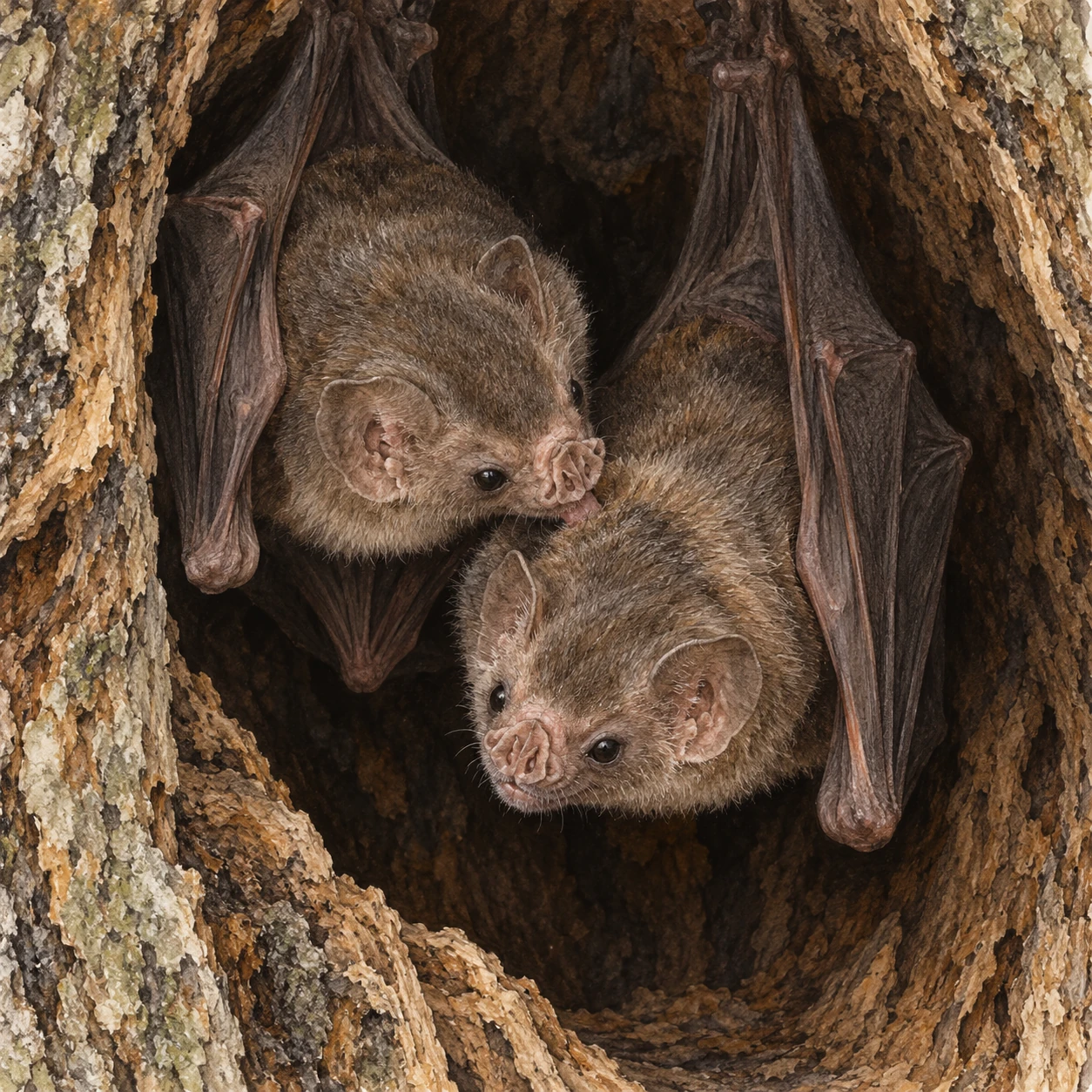
For a common vampire bat, a successful night can mean returning with a blood meal. An unsuccessful companion may receive some of that food through regurgitation. The act is small enough to happen in the dark interior of a roost, but its implications reach into one of biology's hardest questions: how can costly help persist between animals that are not simply close relatives?
The obvious human analogy is friendship. It can be useful, provided it remains an analogy rather than a claim to read a bat's private feelings. Researchers can measure who grooms whom, who shares food, how relationships develop, and whether they continue outside a laboratory. Those observations are already a rich social story. They do not require us to imagine bats keeping a written account of favors.
Reciprocity does not have to mean immediate repayment
A 2013 study by Carter and Wilkinson examined food sharing in a captive colony. Received help predicted donations more strongly than relatedness or harassment in the analysis. Sharing patterns were consistent with enduring relationships involving both food and grooming, rather than a strict sequence in which one animal pays back exactly what it received at the next opportunity.
That distinction is easy to miss. An exchange can be mutually beneficial over time without each event being matched immediately. If a bat is hungry today, its partner's ability to provide food matters now; the hungry bat may have an opportunity to help on another night. A long relationship can spread uncertainty across time.
Relatedness still matters biologically, and kinship and social history can overlap. The point is not that family relationships vanish. It is that explaining every donation as help for relatives alone leaves important patterns unexplained. Researchers compare multiple possible predictors because the same observed behavior can fit several stories.
How does a new relationship become costly?
To study the beginning rather than only the maintenance of a bond, researchers introduced unfamiliar common vampire bats and followed interactions. The 2020 study of new food-sharing relationships found selective escalation: low-cost grooming tended to build before more costly food sharing. Not every possible pair developed the same relationship.
This sequence matters because two explanations that sound alike make different predictions. If sharing simply followed indiscriminate familiarity, every familiar animal might become an equivalent partner. If animals selectively build a relationship through interaction, histories among pairs should diverge. Following the pairs through time lets researchers examine that difference.
The word “trust” is often used in accounts of this research. A cautious translation is a growing willingness to invest in a particular partner. The observations support a pattern of selective investment. Whether the animal experiences anything equivalent to a human's verbal concept of trust is a different question, and the behavior does not answer it by itself.
Nearness can be a cause as well as a consequence
Two bats found together repeatedly may be choosing one another because of an established bond. They may also be developing a bond because circumstances keep putting them together. The same association diagram can fit both directions of cause.
A 2022 experiment temporarily housed randomly assigned trios of previously unfamiliar, unrelated females in close proximity. When the bats could freely associate again, pairs that had shared that week of proximity increased their grooming more than control pairs. Repeated contact had changed a later cooperative investment.
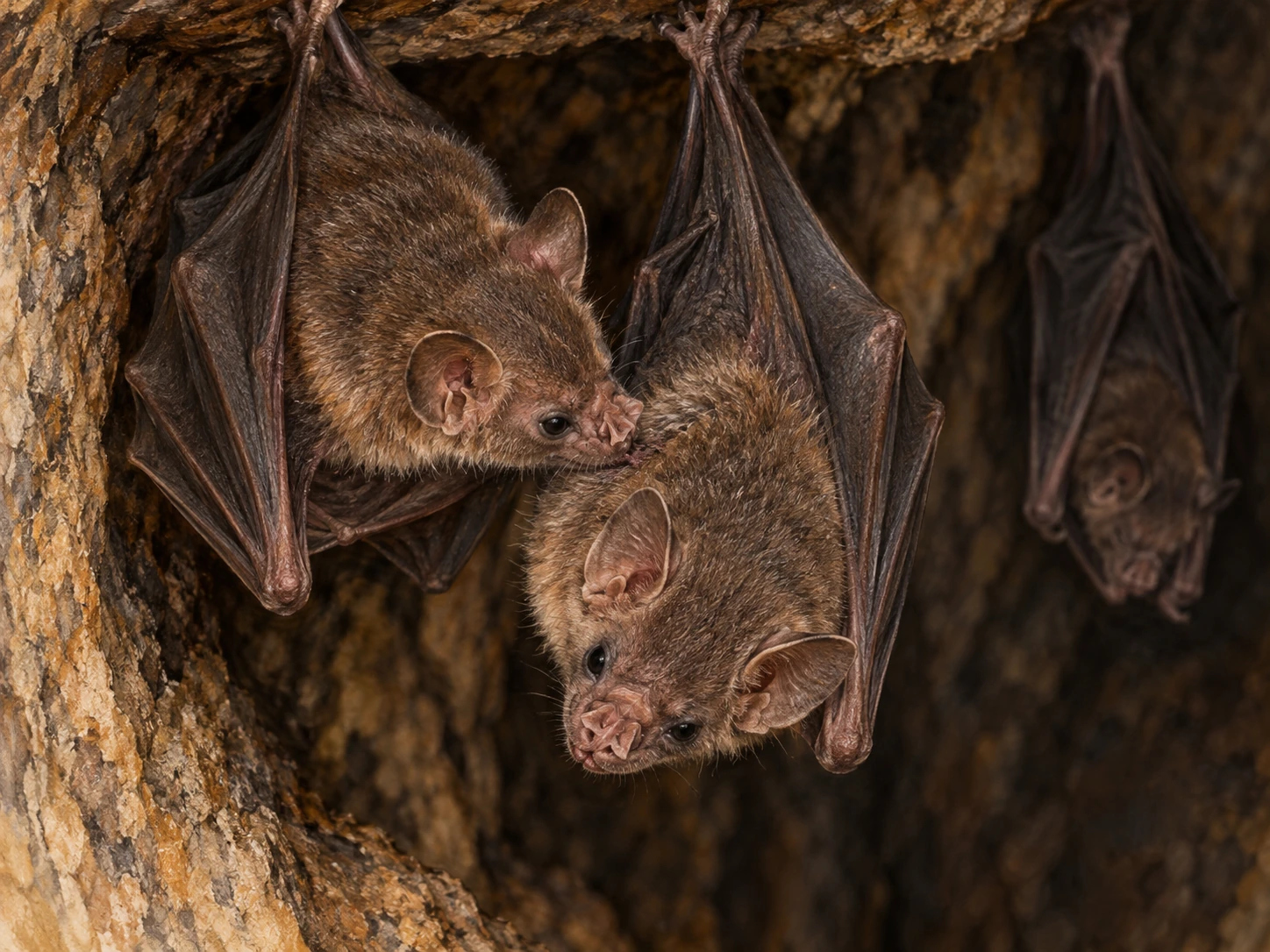
The measured result was grooming, not a demonstration that every such pair developed identical food-sharing bonds. The authors also left open the relative roles of mere association and the interactions occurring during that association. An experiment can establish one causal link while identifying a more precise next question.
A strong partner is not the only useful partner
A separate partner-removal study examined a different aspect of a relationship network. When a key donor was unavailable, females that had previously fed more unrelated females suffered a smaller drop in food received. Those wider investments did not simply yield more food under ordinary conditions; their importance became clearer when a major source of help disappeared.
This is a reason to distinguish a network's ordinary return from its resilience. A relationship can contribute little to today's total yet matter when another connection is missing. The study called this social bet hedging. That functional description does not require a bat to calculate insurance premiums.
A small network puzzle
Imagine Bat A receives eight fictional units from one donor. Bat B receives six from one donor and one each from two others. Both receive eight. Remove the largest donor: A receives zero and B receives two, provided the others remain available. These invented amounts demonstrate a dependence pattern, not the study's data or a rule that more partners are always better.
Now add a cost to maintaining each relationship. The conclusion becomes less automatic: a wider network may be costly, and partners may fail together. That is why measuring interaction histories, availability and actual donations matters more than simply counting connections.
A bat society can therefore be read through two timescales. Encounters help build a particular tie. A collection of ties shapes what happens when circumstances change. The shared meal sits inside both histories.
Does the bond survive leaving the experiment?
Captivity provides control and visibility, but it can force animals together. A 2019 study addressed that limitation by releasing bats after a prolonged captive period and tracking associations in the wild with proximity sensors. Earlier grooming and food-sharing relationships predicted later associations. The relationship was not simply erased when animals regained a choice of company.
Another study, described by Ohio State in 2021, followed 50 bats during foraging. Bats generally departed separately, but established social partners encountered one another during the night. Researchers combined sensor information with additional video and sound observations. The results suggested coordination associated with social ties, while the sensors alone could not show every detail of what a meeting meant.
Those limitations are informative. Proximity is a measurable event. Cooperation over a meal is an interpretation that needs behavior and context. A strong account combines methods rather than asking a tiny radio device to reveal an entire relationship.
An evolutionary review of food sharing considers whether behavior rooted in maternal care could have been extended into mutually beneficial adult relationships. That is a hypothesis about the historical origin of the capacity, distinct from showing that two present-day bats exchange food. Present function and evolutionary origin require different evidence.
The artwork accompanying this article focuses on grooming because the quieter interaction is part of the story. A regurgitated meal is the dramatic event, but the relationship around it can develop through many less costly contacts. The bat's social world is therefore not well described by a single heroic donation.
What emerges is a form of interdependence built through repeated encounters. A small mammal with a frightening popular reputation becomes a subject for precise questions about partnership, opportunity, and time. Watching who helps whom is only the first step. Watching how a pair becomes willing to help—and whether that history continues when circumstances change—is where the deeper social life comes into view.
Follow the evidence: Carter and Wilkinson: help predicts food donations; Carter and colleagues: development of new sharing relationships; Ripperger and colleagues: captive relationships persist in the wild; Ohio State: social partners meet during foraging; Carter: co-option and the evolution of food sharing.
More curious connections, art and independent projects at Incoprea.




