A character crosses a stone kitchen. The picture tells you the floor is hard, cold, and slightly uneven. The sound agrees. Yet the actor may have walked across a wooden set, with the convincing stone footsteps recorded later by someone following the movement on a screen.
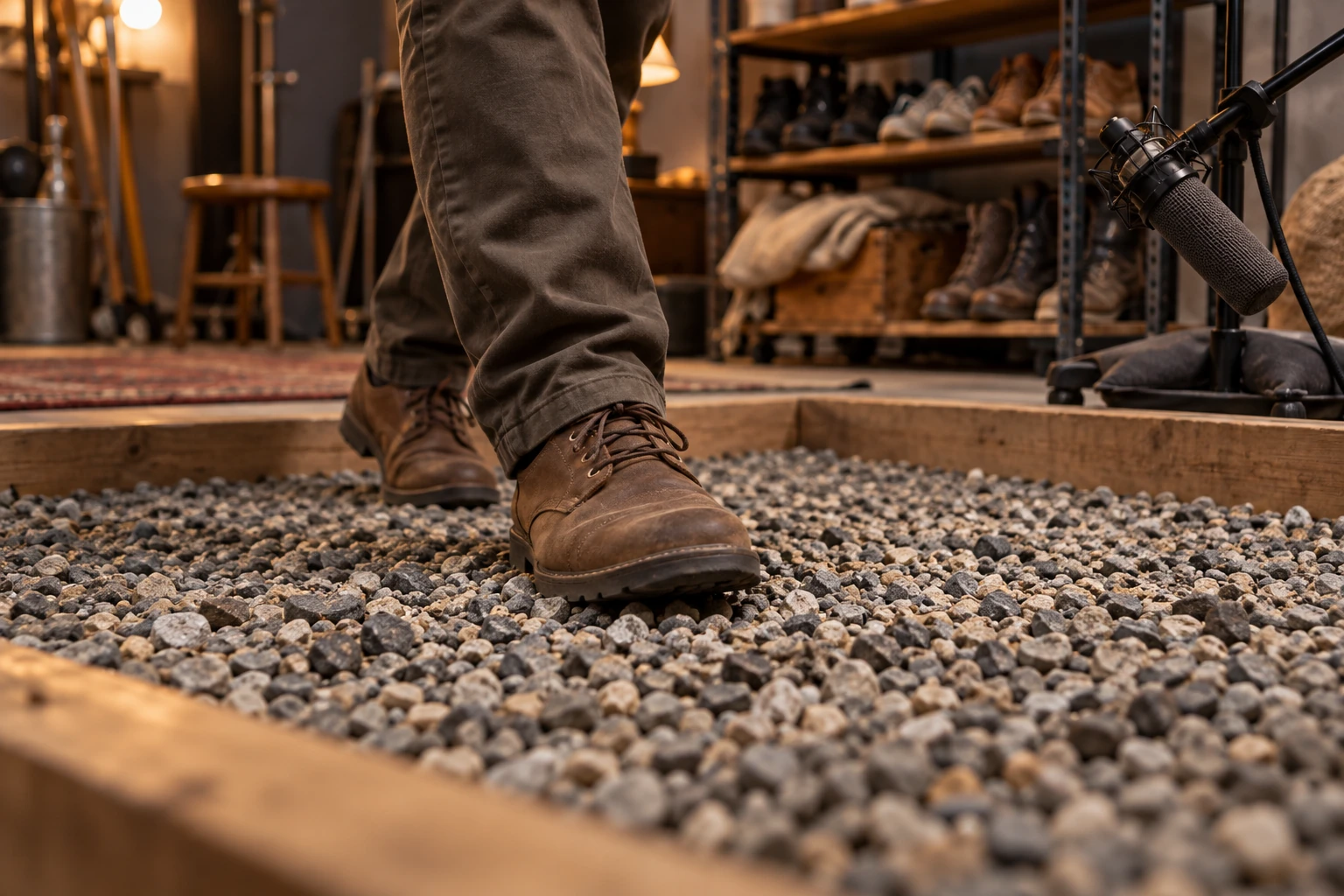
That is not a loophole in realism. It is a practical example of how a film assembles a world from separately made parts. The Foley artist's task is not simply to find an object with a funny sound. It is to perform the right event, in the right rhythm, with the right relationship to the image.
The surface in the picture can be a prop
In an English National Opera interview, Foley artist Ruth Sullivan describes adding stone-floor footsteps to Downton Abbey kitchen scenes filmed on a wooden set. She also explains learning performers' rhythms and gaits for live theatre work. Timing and characterization enter alongside material substitution.
Think about two people wearing the same shoes on the same corridor. One hesitates at a door; the other strides through. The material can be identical while the action means something different. A footstep is a small performance with pace, weight, interruption, and intention.
Listen to a scene in layers
The Academy of Motion Picture Arts and Sciences activity guide separates Foley such as footsteps, clothing, and handled props from other sound-effect work. Dialogue, music, background atmosphere, and spot events can be assembled through different workflows. Not every sound added after filming is Foley.
Choose a short, quiet scene you are allowed to watch. Make a list without pausing: voice, room tone, steps, clothing, door, music. Watch again with the sound muted. Which visible actions received a sound? Which remained quiet? The omissions can be as revealing as the effects.
Plan six small sound events
Editable, printable cue sheet with timing, visible action, sound idea and narrative purpose; nothing uploads.
The cue sheet below gives you six blank events rather than a preset answer. Describe what the viewer sees, the event's timing, a sound you might use, and the reason it belongs. It stays on your device and can be printed. No microphone permission or recording upload is involved.
Match a relation, not just a material
A useful first distinction is attack versus tail. Does the sound start sharply? Does it crumble, scrape, ring, or stop? Next consider rhythm. Is each event evenly spaced, or do gaps create hesitation? Finally consider perspective: a close detail and a distant figure need not occupy the same apparent acoustic space.
These are listening prompts, not a formula that guarantees a professional mix. Use them to explain a choice. “This scrape follows the hand's slowing movement” is more informative than “This sounds cinematic.” Specific reasoning makes it possible to improve one part without replacing everything.
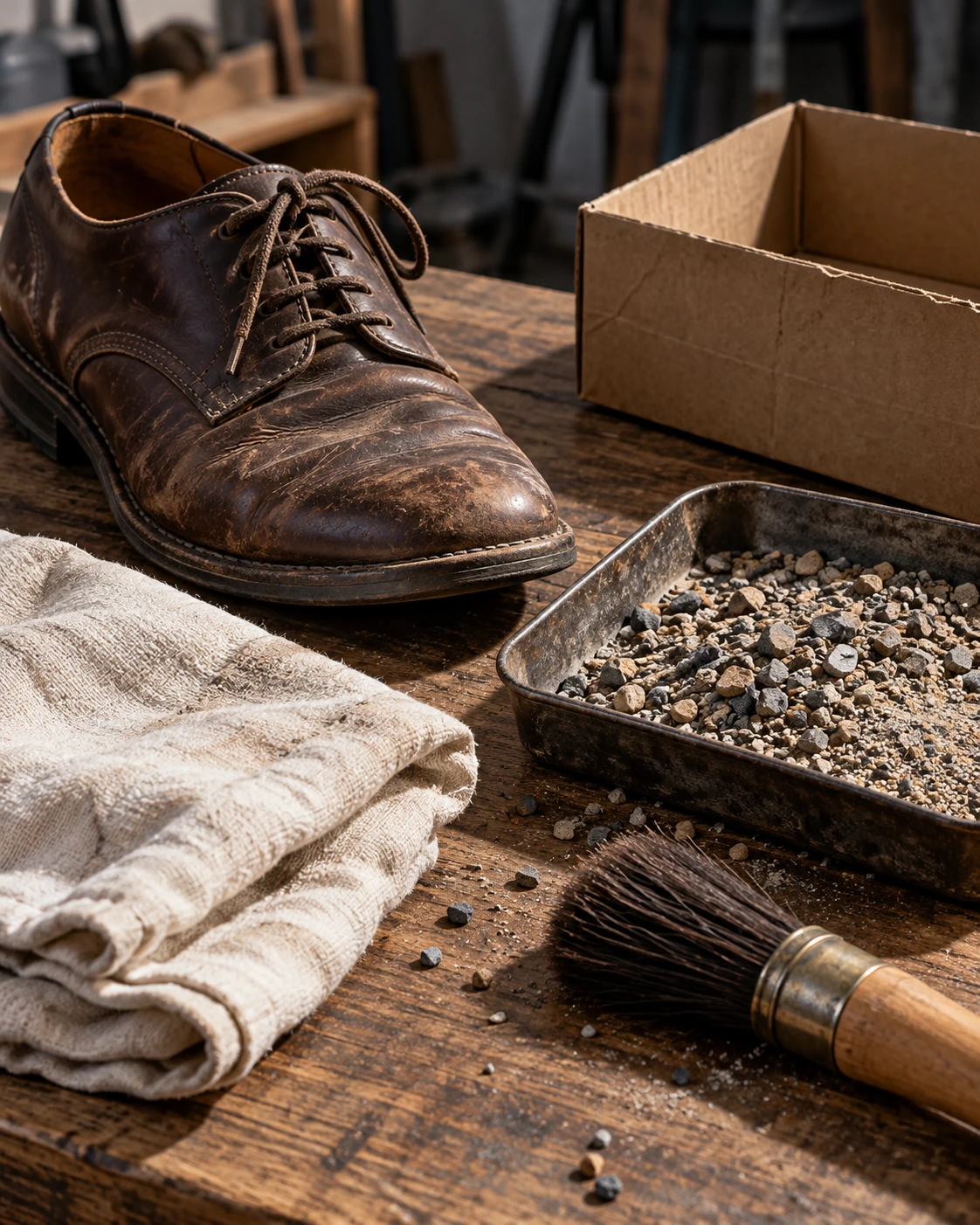
The props in the illustration are possible sound-making materials, not claims about a particular film's production. A brush, a cloth, or a shoe has no fixed fictional identity. Its role depends on performance, microphone placement, editing, and the scene around it.
Try a tiny, quiet Foley experiment
Make a silent phone clip of your hand placing an empty cardboard box on a table. Keep it simple and protect the table. Then create three quiet accompaniment ideas: a fingertip tap, a soft cloth movement, and the box's own contact. You can perform them while watching the clip without recording anything.
Which event best matches the visible speed? Which suggests a heavier object than the picture shows? Which draws too much attention? Change one timing choice before changing the material. A promising sound delivered late can feel less plausible than a modest sound aligned well.
For listening references, the BBC Sound Effects archive lets you explore categories including footsteps and daily life. Listen through the archive's own player and check its usage terms before reusing a recording. A reference sound can teach you about a surface without becoming an asset in your project.
What to write when a sound fails
Avoid “wrong.” Try “the attack happens before the object lands,” “the room tail suggests a larger space,” or “the scrape continues after the hand stops.” Those descriptions turn an impression into an editable decision. You can also decide that no added sound serves the moment.
A practical cue can be the instant a heel stops descending, rather than the instant the whole foot rests flat. Watch your short clip frame by frame if the player permits it. Mark the event you are matching in words before adding an effect. That small decision often makes a timing discussion much clearer.
The most revealing Foley often disappears into the scene. Its maker has observed the action closely enough that the audience no longer needs to think about the separate recording. When a distant studio floor becomes a believable stone kitchen, the achievement is a relationship made convincing—between movement, sound, and the world a viewer imagines.
Sources and further exploration: ENO: Ruth Sullivan on performing Foley; The Academy: sound and music activity guide; BBC Sound Effects archive.
Explore all 50 new articles · Browse the complete illustrated collection
Explore more art, ideas, and independent projects at Incoprea.


