Suppose a forger can reproduce the average appearance of a banknote perfectly, but every legitimate note has a different private pattern. Matching the average would not guarantee matching the particular note being checked. Something similar happens in the nests of birds that defend their eggs against brood parasites.
A brood-parasitic bird places an egg in another bird's nest, leaving the host to provide care. Some parasites have evolved eggs that resemble those of their hosts. Hosts, in turn, may reject eggs that do not match their own. The result is often called an evolutionary arms race, but the metaphor becomes more useful when we ask exactly what is being copied and exactly what is being recognized.
Matching a species is different from matching a mother
A 2023 study of African cuckoos and fork-tailed drongos found highly accurate mimicry of host egg colors and patterns on average. Nevertheless, drongos showed fine discrimination against foreign eggs, using pattern differences between a parasite's egg and the eggs in their own clutch. Variation among host females made a close population-level match insufficient.
The researchers combined image analysis, field experiments, and simulations. Their model predicted rejection of 93.7 percent of cuckoo eggs in the studied system. That figure is a modeled prediction built from the measurements, not a claim that researchers watched exactly that fraction of every naturally laid egg being thrown out. The distinction is part of the evidence, not a footnote to it.
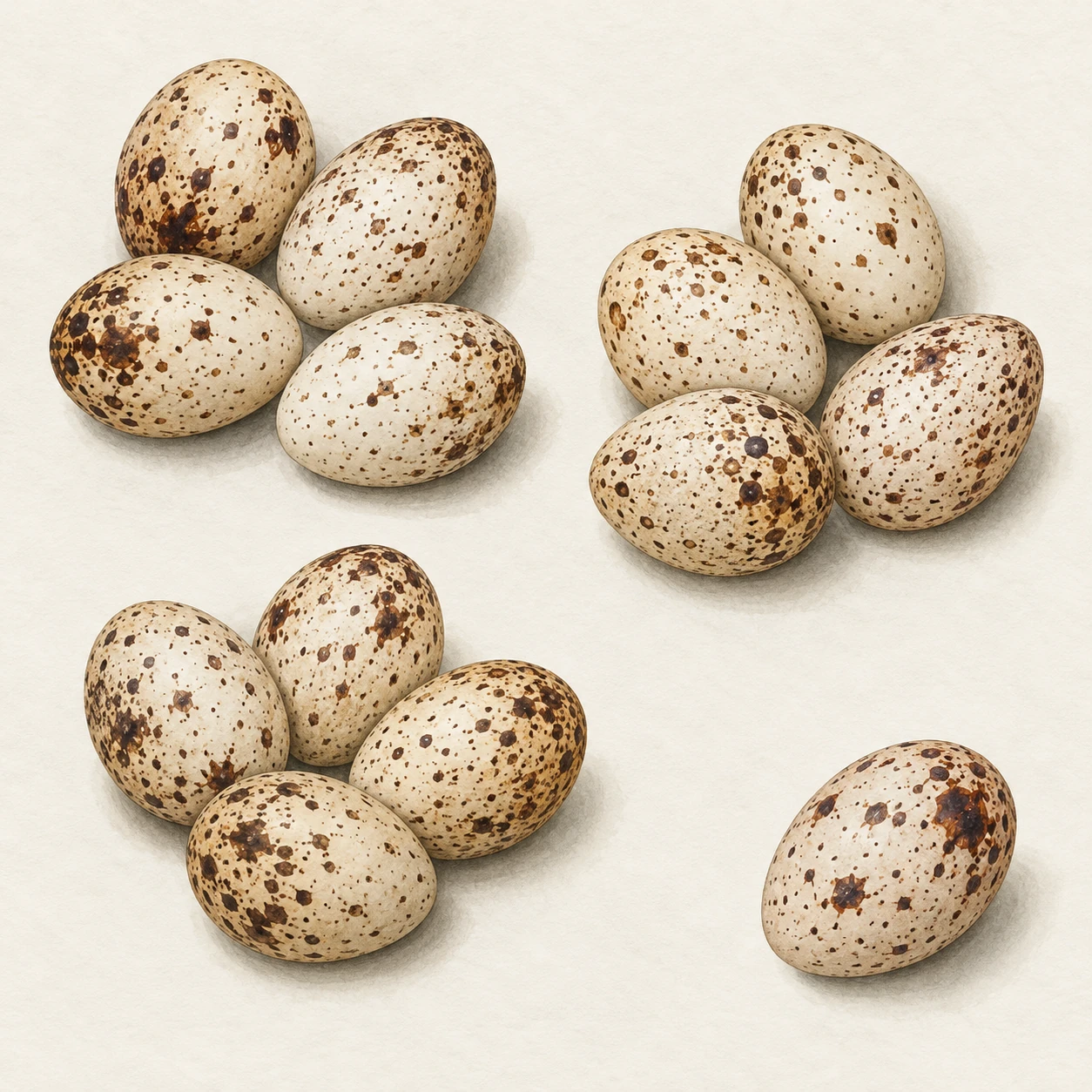
A successful defense therefore need not be one universally uncopyable pattern. It can be a population containing many patterns, with each female producing a sufficiently consistent version for her own comparison. A parasite that matches one nest especially well may match another poorly. Diversity itself changes the copying problem.
A pattern must be recognizable to the bird
To human eyes, two speckled eggs may look nearly identical—or obviously different. Neither judgment is an adequate substitute for a host's visual task. A 2010 study of common-cuckoo egg patterns quantified features in relation to avian vision and host defenses. It found better pattern mimicry in host relationships with stronger rejection. The visual match is something to measure in the relevant sensory context.
A 2014 pattern-recognition study investigated whether egg patterns could act as individual signatures. Recognizability matters alongside variation: if every egg differed randomly even within one female's clutch, distinguishing “mine” from “foreign” would become difficult. Variation between females and consistency within a female can work together.
The Cambridge explanation describes this as a defense against increasingly refined mimicry. There is no conscious agreement among host birds to diversify their eggs. The pattern arises through inheritance, variation, and differences in reproductive success over generations.
Recognition has two possible kinds of error
A rejection system can fail by accepting a parasite's egg. It can also fail by rejecting a legitimate egg. Looking only for the first error makes a more aggressive rule seem automatically better, even when the second error is expensive.
A 1999 signal-detection model of egg recognition explored how learning and decision thresholds affect these competing outcomes. A model does not identify the precise neural rule used by a drongo. It supplies a way to ask why the best response can depend on the frequency of parasitism and the costs of mistakes, as well as on visual differences.
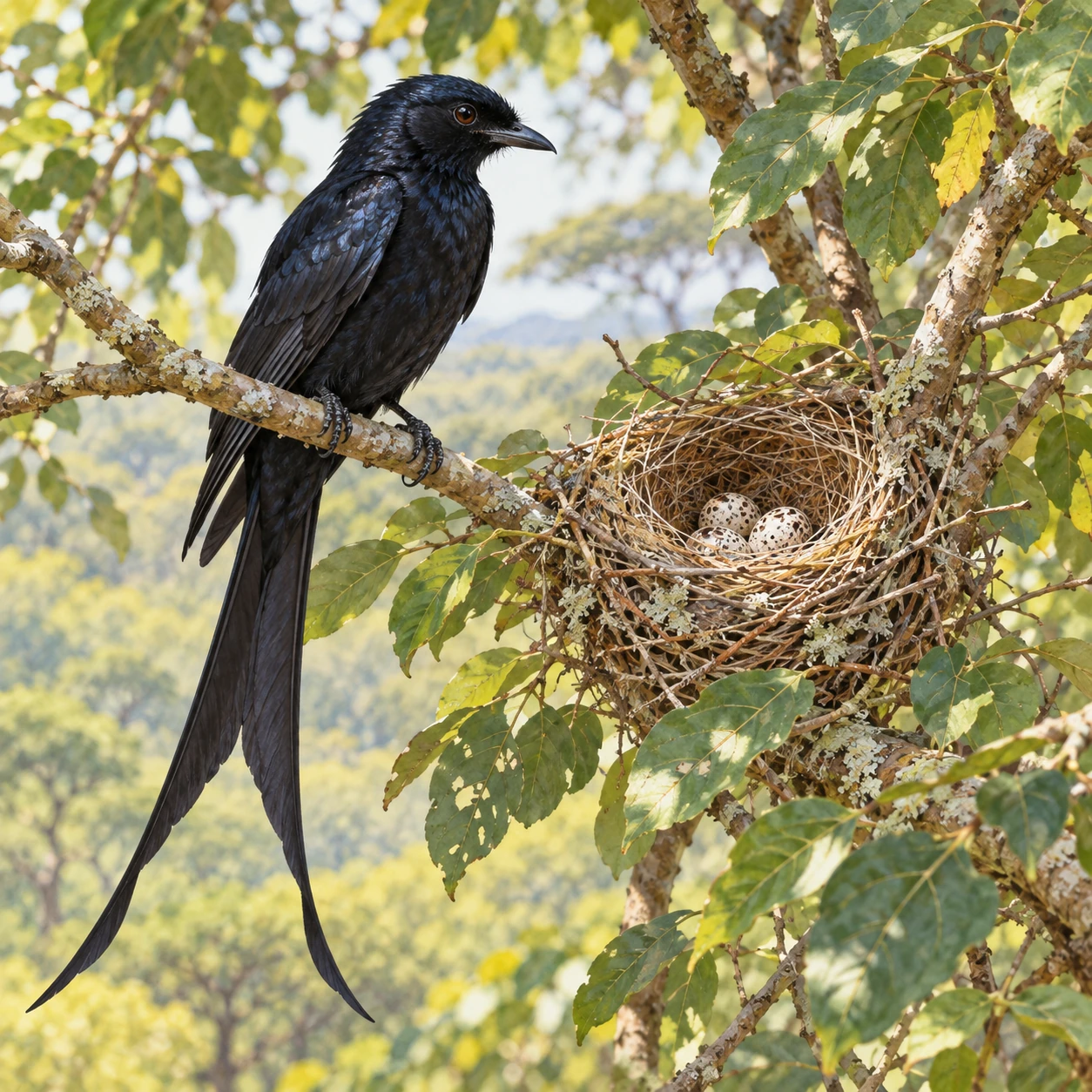
Field experiments add further complications. A yellowhammer study examined responses to introduced eggs and discussed how egg material and removal method affect rejection costs. The authors did not observe recognition errors in their own experiment. A predicted cost, an outcome observed in another system and a result measured in the present sample should remain separate.
Try a fictional decision ledger
Imagine 100 hypothetical eggs assessed over many nests:90 legitimate and 10 foreign. RuleA detects eight foreign eggs but wrongly rejects nine legitimate ones. RuleB detects six foreign eggs and wrongly rejects two legitimate ones. These are invented values for reasoning, not results for either bird species.
Which rule is better?
Detection alone favors A: eight rather than six. If each kind of error has equal cost, A makes 11 errors and B makes six. If accepting a foreign egg is much more costly than losing a legitimate egg, the ranking can change. There is no answer until the costs and encounter frequencies are specified.
Now change only the mixture to a setting with much rarer parasitism. A false-rejection rate applied to many legitimate eggs can outweigh the benefit of detecting a few additional foreign ones. This is why an imperfect-looking response need not be explained simply as poor eyesight.
The original article's individual signature concerns what information distinguishes eggs. The ledger adds what an animal does with uncertain information. A close visual match and a cautious decision rule address different parts of the problem.
When reading a new rejection experiment, keep a small four-cell table: legitimate accepted, legitimate rejected, foreign accepted, foreign rejected. Then look for how each category was actually observed. A successful defense is easier to understand when its possible costs are visible too.
There is more than one kind of egg forger
Different brood-parasitic birds should not be merged into one generic cuckoo. Research on cuckoo finches, summarized in Cambridge's 2022 account, examined maternal inheritance of egg appearance and its consequences for the parasite's evolutionary responses. That concerns a different bird lineage from the African cuckoo–drongo system. Similar-looking conflicts can be built on different genetic arrangements.
Such distinctions keep an attractive story from becoming a universal rule. Not all brood parasites mimic eggs closely, and not every host uses the same rejection strategy. A useful article or documentary should identify the parasite, the host, the location, and the trait being studied before moving to a broad claim about an arms race.
It is also possible for recognition to involve a tradeoff. Rejecting a foreign egg can protect a brood; rejecting an unusual egg of one's own can waste reproduction. Selection acts within those costs. The meaningful question is not why a host fails to reject every imperfect match, but what evidence it can use under the conditions of its own nest.
The generated egg plate here illustrates patterns within and among clutches. It is intentionally not labeled as a specimen chart: its marks cannot identify any species or reproduce the study's measured colors. The original papers provide the calibrated comparisons.
The nest contains a small but demanding recognition problem. It is not solved merely by having better eyesight, or by making a prettier egg. The defense can lie in the relationship between an individual's consistent signature and the diversity of the population around her. A near-perfect forgery can still fail because there is no single original to copy.
Follow the evidence: Lund and colleagues: drongo signatures versus African cuckoo mimicry; Stoddard and colleagues: recognizable egg-pattern signatures; Stoddard and Stevens: egg mimicry through avian vision; Cambridge: egg signatures as host defenses; Cambridge: cuckoo finch inheritance and egg forgery.
More curious connections, art and independent projects at Incoprea.