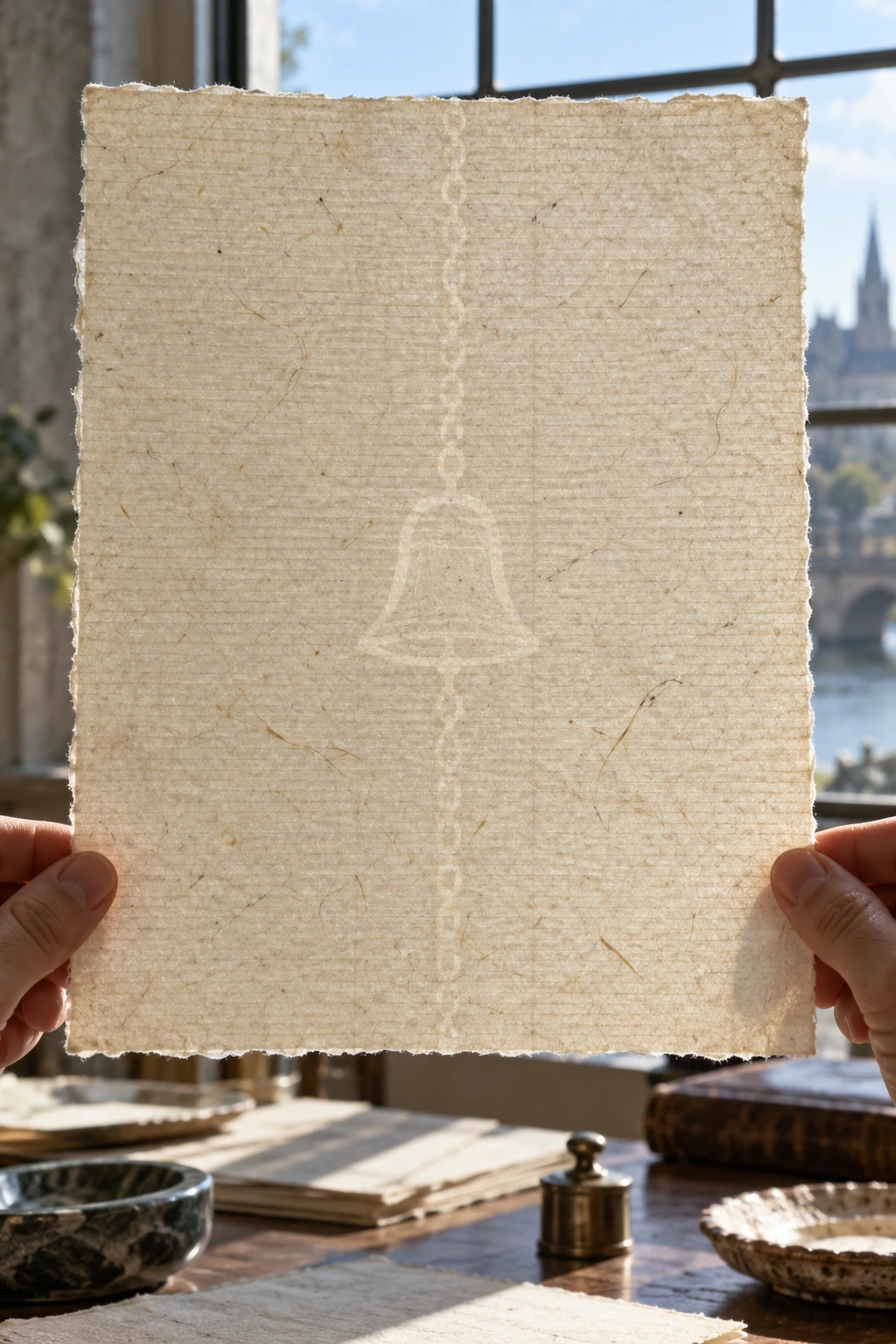
A sheet of old paper can look blank until light passes through it. Then a bell, a crown or a fragment of lettering appears among faint parallel lines. The surprise is easy to mistake for a hidden drawing. In a traditional wire watermark, however, nobody printed that picture onto the finished sheet. The picture is a change in the paper itself.
Start with the support, before the writing
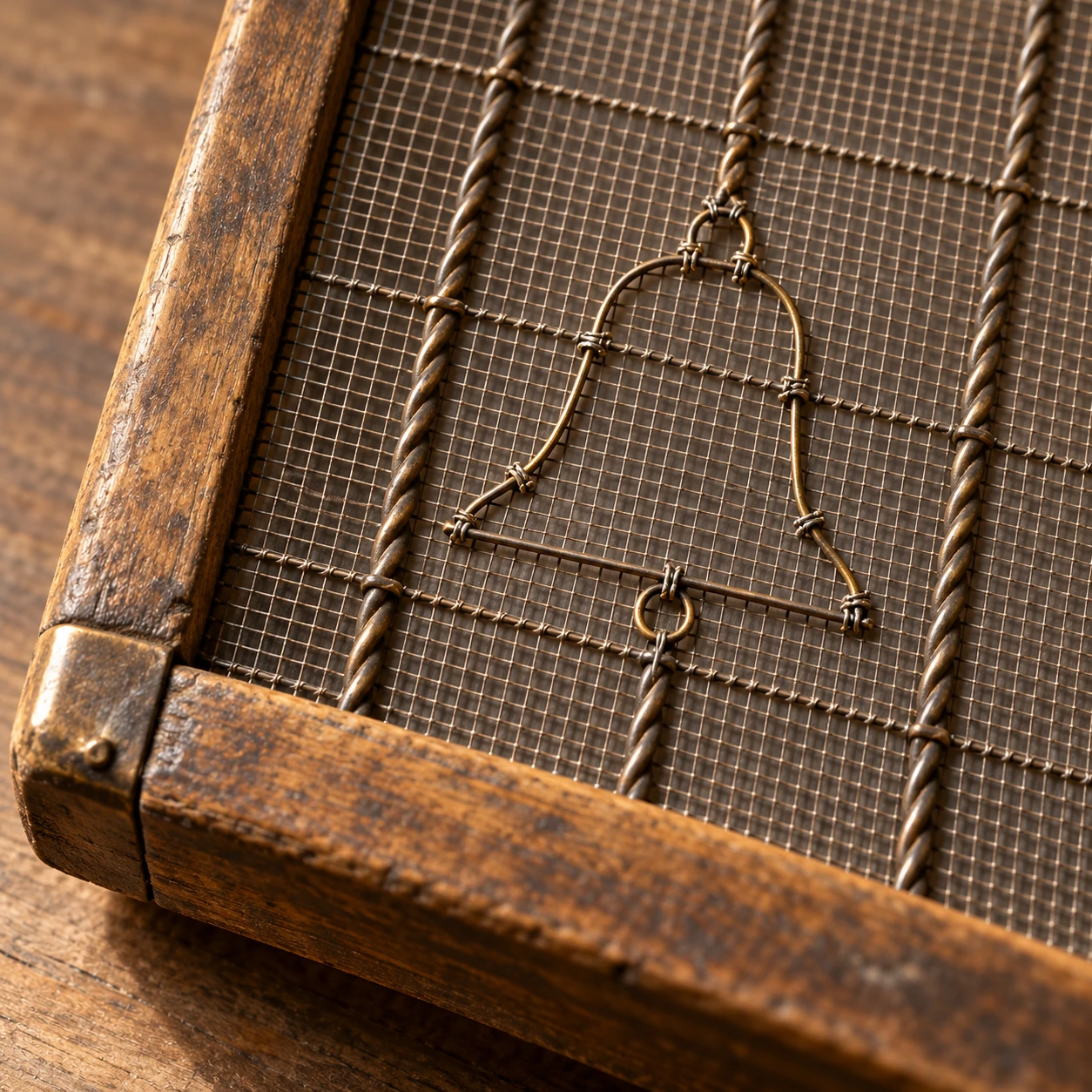
The British Library's account for the Qatar Digital Library explains the fine-wire designs attached to papermaking moulds. Fibres settle differently around those raised wires. The thinner regions transmit light differently, leaving a recognizable mark within the sheet.
That difference changes how we should look. Reflected light helps us see ink, surface texture and damage. Transmitted light helps reveal thickness and the structure left by the mould. Two photographs of the same page can therefore answer different questions without either being the more truthful photograph in every respect.
If you have ordinary watermarked stationery, hold one loose sheet before a cool window and then place it flat on a dark table. Notice which features appear, disappear or reverse their contrast. Use only your own robust paper. A bound historical book needs its library's handling rules; there is no reason to force a page or press it against a lamp.
A familiar shape is only the beginning
Two watermark designs may both depict a bell. That does not establish that they came from the same mould. Compare the curve of the handle, small irregularities, dimensions and placement relative to the sheet's wider chain lines. An icon describes a category. A combination of material details can support a much narrower comparison.
The National Gallery of Victoria's Dürer watermark project shows how conservation records use these details. Small marks associated with the attachment of wire can become useful evidence. The collection also reminds us that larger sheets were cut, sometimes separating a watermark from a countermark.
Imagine finding only half a crown near the trimmed edge of a leaf. You might first think the maker used an incomplete design. Another possibility is that you are looking at one part of a larger sheet. Before explaining the symbol, reconstruct the support on which it sat.
Make two descriptions of the same discovery
Write a quick description as if you were telling a friend: “There is a pale bell inside the paper.” Then write a second description that another observer could test. Include the viewing method, orientation, approximate location, visible outline and any missing section. Keep observation separate from identification.
For example: “Under transmitted light, a pale curved outline lies beside the second visible wide line from the fold. The lower part is absent at the trimmed edge.” That sentence is less dramatic, but it tells someone what to inspect. “Probably a bell” can follow as a separate interpretation.
The Getty's documentation guidance similarly separates descriptions, identifications, references and uncertain dates. A good catalogue does not make doubt disappear. It gives doubt a precise location so later comparison can improve the record.
What the watermark cannot do alone
A mould's working period, a paper shipment, a writer's use of a stored sheet and a later binding are different moments. Even a convincing match does not automatically supply the day a text was written. Paper can sit unused. A loose leaf can move. An old book can contain a repair from a later period.
This is why the surrounding evidence matters: handwriting, printing, binding, provenance and other sheets in the same object. A watermark can strengthen or challenge an account. It should not be asked to carry every part of the account by itself.
Try an evidence-ranking puzzle
Which statement is strongest? A: two sheets both show a star. B: two sheets show stars of the same measured outline in the same relationship to chain lines. C: one star resembles a picture found online. B offers more specific comparison, but even B needs careful imaging, measurement and context. A and C are useful leads, not conclusions.
There is a pleasure in this kind of slow attention. The page stops being an invisible platform for a text and becomes an object made through a sequence of skilled actions. A small uneven line can connect a reader to a mould, a workshop and a supply of material.
The next time an old letter is reproduced online, look for a second image made with light behind the sheet. The most revealing picture may belong to the paper rather than to the person who wrote on it.
Sources and further exploration: British Library / Qatar Digital Library: imagery of early watermarks; NGV: watermarks in Dürer prints; Getty: documenting materials and watermarks.
Explore all 50 new articles · Browse the complete illustrated collection
Explore more art, ideas, and independent projects at Incoprea.