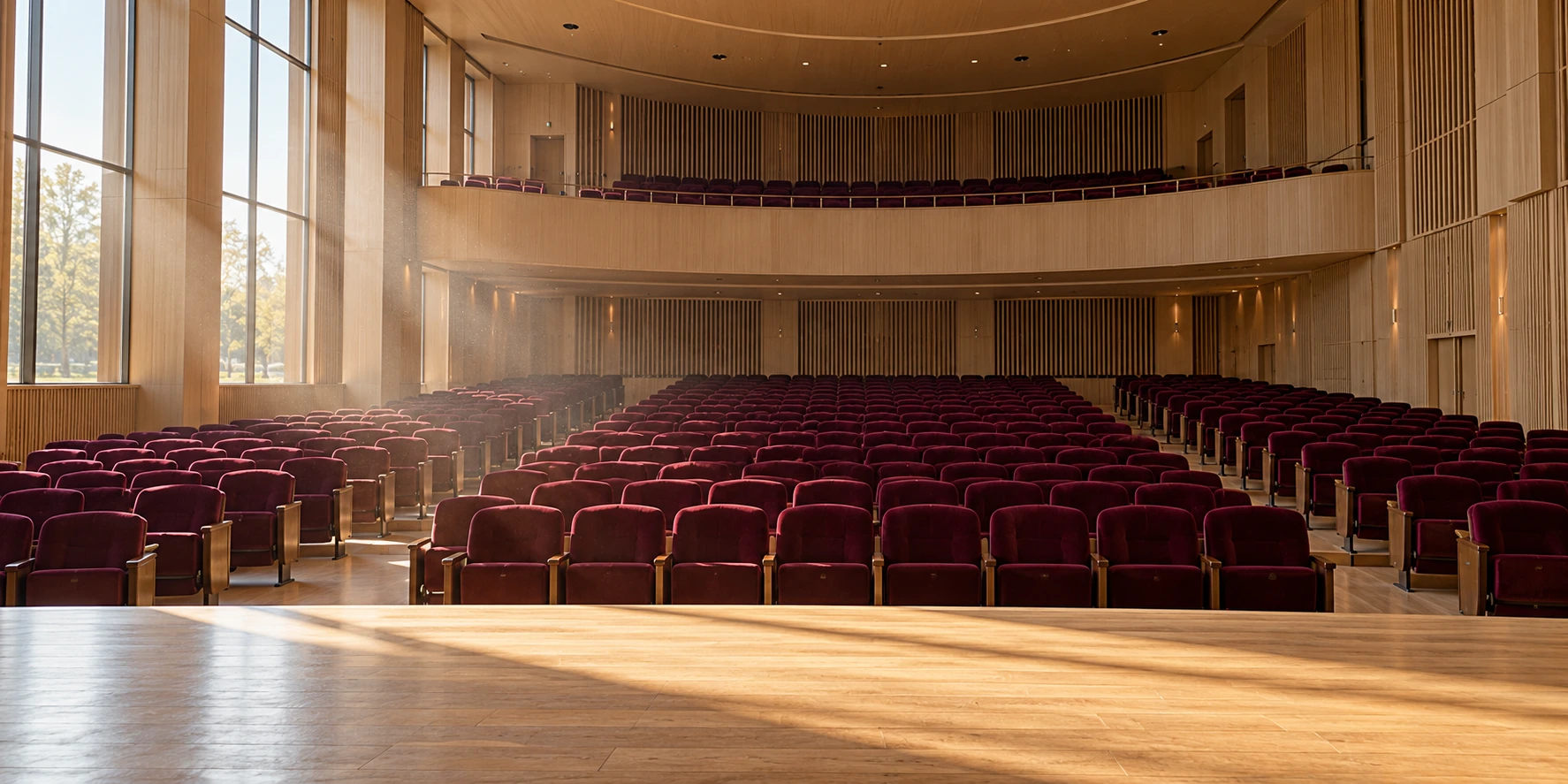
Imagine handing a small written message across a Paris post-office counter. It disappears into a cylindrical carrier. Somewhere below the street, a pressure difference moves it through a metal tube. The next person to touch the message may be in another neighborhood. Yet the most important part of the journey could still be ahead: getting it from that receiving office to the correct door.
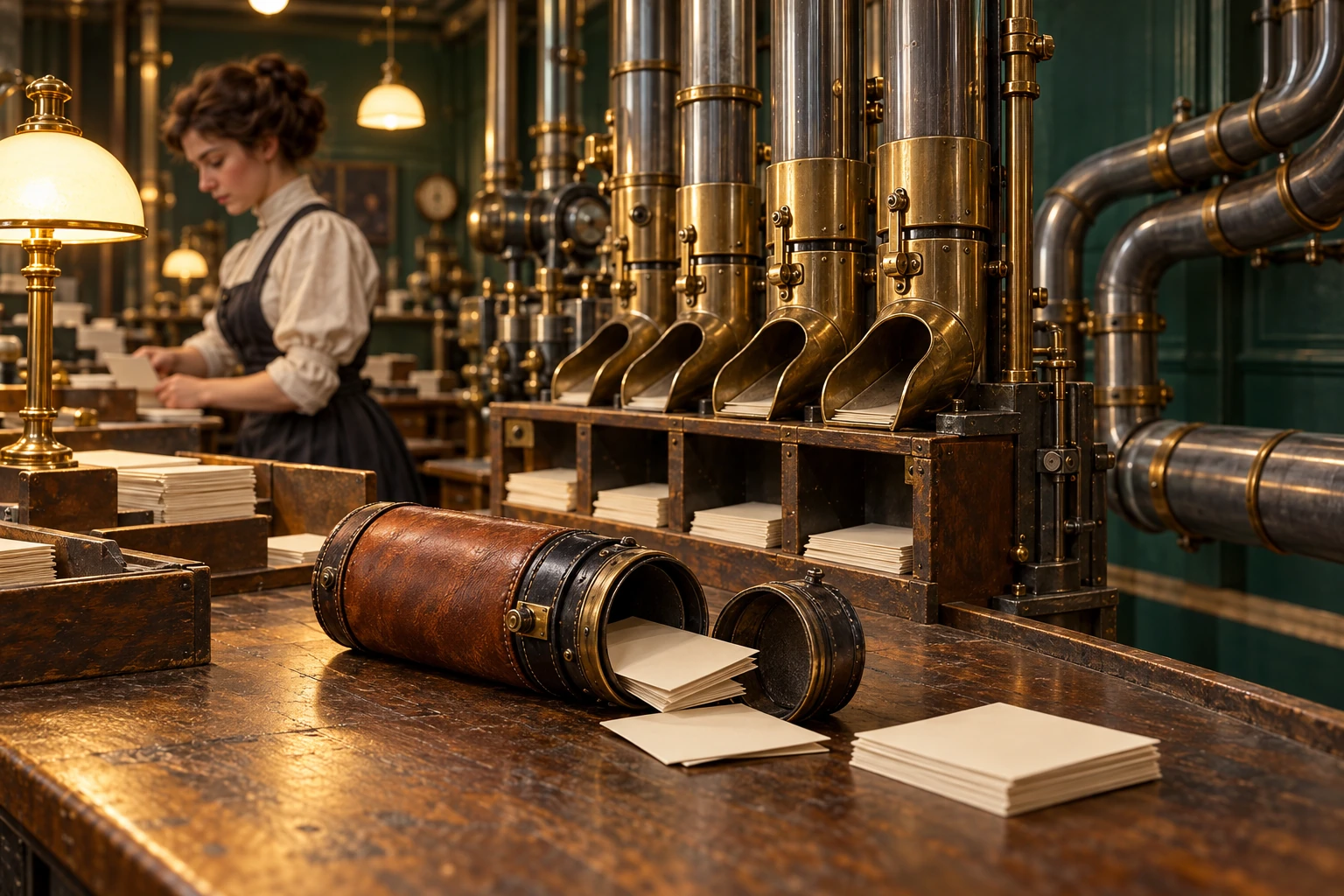
The pneumatic post invites a wonderfully physical question. When we say a message arrived quickly, which arrival do we mean? A carrier reaching a terminal is one event. A person receiving a legible message is another. Paris built an urban service around the distance between them.
Three journeys inside one delivery
Anne-Laure Cermak's research summary for La Poste describes steel tubes, cylindrical carriers and propulsion by a pressure difference. Staff collected the arriving correspondence and special delivery workers carried it onward. The network joined mechanical transport to sorting and street work.
Trace an invented delivery on a sheet of paper. Draw a sender, two post offices and a recipient. Connect only the offices with a tube. Now put a small mark wherever someone must make a decision: accept the item, choose a route, unload the carrier, identify the destination and complete delivery. There are more decisions than pipes.
This exercise is deliberately not a map of the historical Paris network. Its purpose is to make the hidden handovers visible. A tube can carry a letter beautifully while a wrong destination or a waiting courier delays the actual service. Improving one component does not automatically improve the whole journey.
Air moved the carrier; organization moved the message
The postal history committee's overview places the system within the relationship between post and telegraph services. Paris did not simply choose an entertaining alternative to walking. It developed another means of moving urgent correspondence through a busy city.
A physical carrier also has to return, be reused or be replaced by another available carrier. Empty space, staff time and terminal capacity all belong in a realistic account of the network. They do not appear in the memorable picture of a message rushing underground, but they decide how often that picture can be repeated.
Try the little timing planner below. It lets you invent a plausible sequence of waits and journeys, then compare an improvement to tube travel with an improvement to the final delivery. Its numbers are yours, not measured Paris operating data.
Plan the entire delivery
Enter invented stage times and discover which component determines the total.
Make the tube portion very short. Does the total become equally short? Then set the final walk to zero. Which change has more effect under your assumptions? The point is not to discover a universal winner. It is to notice that the biggest component can move when the route, staffing or demand changes.
An old network can be modern in one respect and fragile in another
La Poste's account of Henri Rouart identifies his involvement in developing the Paris system and records its final closure on 30 March 1984. That end date is a useful anchor. It stops us from placing every pneumatic scene safely in a remote nineteenth-century world.
But a long operating life does not mean the system remained unchanged. Nor does closure mean the physical principle stopped working. A service can lose its place because the surrounding mix of maintenance, demand and competing methods changes. Those are questions about a city and its institutions, not just the ability of air to move an object.
A small investigation for your next museum visit
Look at a terminal, carrier or network map and ask what is missing from the display. Can you find evidence for the address labels, routing rules, staff roles or delivery bags? If only the machinery survives in view, write down which parts of the service you are reconstructing from a description rather than seeing directly.
The same habit works in a modern parcel locker or a restaurant collection shelf. Watch where the object stops and a human decision begins. A successful delivery is an agreement among locations, labels and people as much as a movement through space.
Paris's underground messages are compelling because they make communication tangible. A folded card occupied a carrier, a carrier occupied a tube, and someone waited at the far end. The astonishing machine becomes more interesting when we follow the message beyond it, all the way to the hand that opened the card.
Sources and further exploration: La Poste: Cermak research summary; La Poste: Le réseau avant l’heure; La Poste: Henri Rouart and the pneumatic service.
Explore all 50 new articles · Browse the complete illustrated collection
Explore more art, ideas, and independent projects at Incoprea.