Case 17 · visual · Easy · About 3–5 minutes
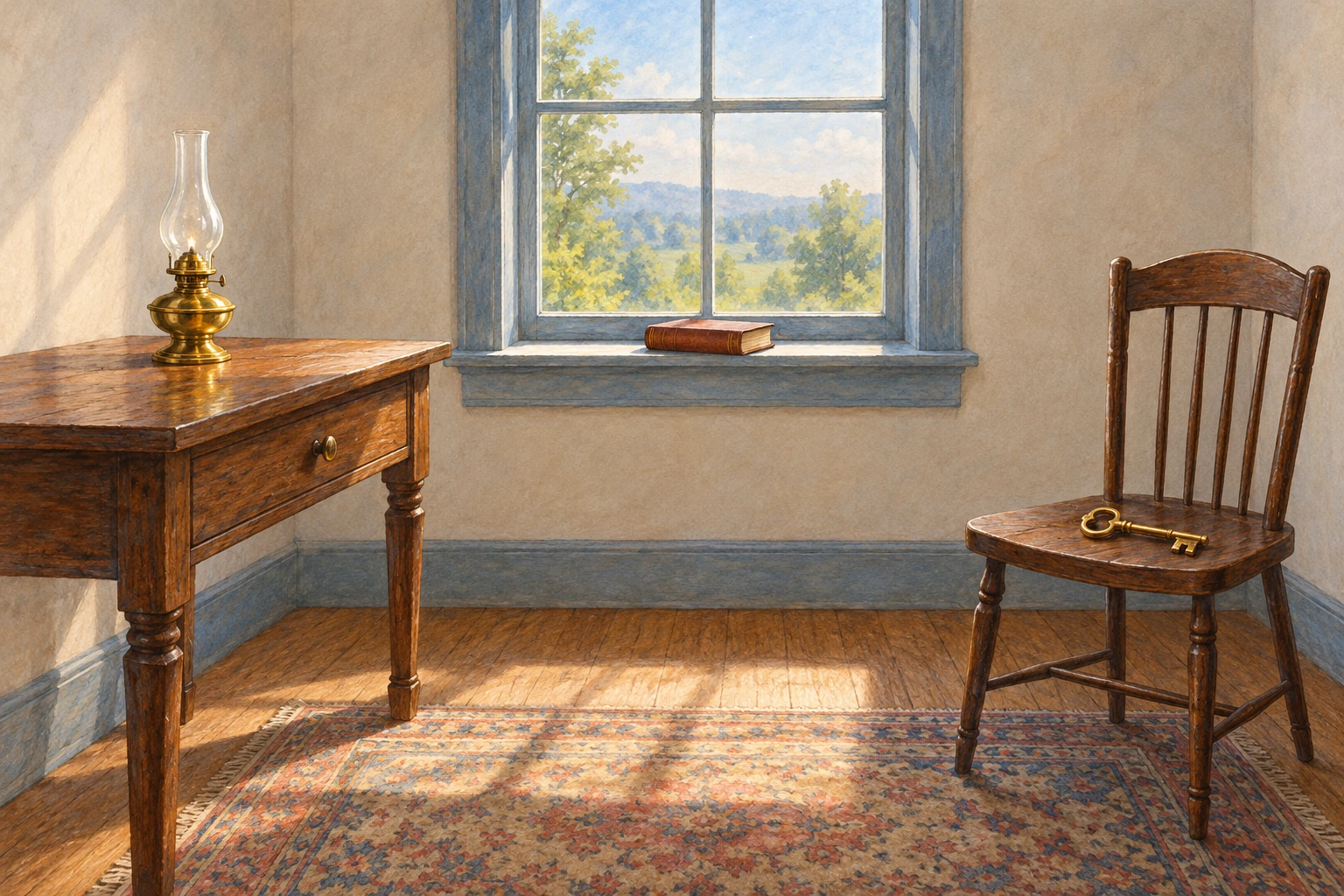
The museum’s reading room has been staged incorrectly for an inspection. The caretaker says one temporary pass was used after the room’s morning inventory. Inspector Vale has the authorized inventory, the pass register, and the room as it now appears.
No knowledge about flames, sunshine, dust, or shadows is needed. This case concerns locations and one precisely defined action.
Before the visit
The signed inventory puts the closed book on the desk, the brass lamp on the window sill, and the large brass key on the chair seat.
What the register guarantees
- Exactly one visitor entered, using exactly one of the three passes listed below.
- The visitor performed that pass’s exchange once: the two named objects traded locations.
- No other movable object was touched. The furniture stayed in place, and no object was added or removed.
- Restorer’s pass: exchange the book and lamp.
- Guide’s pass: exchange the book and key.
- Porter’s pass: exchange the lamp and key.
Picture evidence
Accessible evidence transcript: The lamp is on the desk at left. The closed book is on the central window sill. The key is on the chair seat at right.
Which pass was used? Identify the object that stayed in its original location, then explain why neither alternative pass fits the scene. The pass identifies the authorized action, not the personal identity of whoever borrowed it.
Hint 1 - reveal when you want a nudge
Compare the key’s location before and after the visit.
Hint 2 - reveal when you want a nudge
An exchange involving the key would necessarily move it. Which registered exchange leaves it alone?
Reveal the solution and explanation
The restorer’s pass was used. The key remained on the chair. The book and lamp exchanged the desk and window sill.
The guide’s pass would leave the lamp on the window sill, put the key on the desk, and put the book on the chair. That is not the pictured arrangement.
The porter’s pass would leave the book on the desk, put the key on the window sill, and put the lamp on the chair. That also fails.
These are all three permitted actions, and only the book–lamp exchange produces the observed room. The picture cannot identify the visitor’s face or establish a motive. The deduction is exactly the pass and exchange, with the unmoved key providing the quickest route.
Solve another: The Cabinet of Fifty Mysteries · Browse all 50 cases




