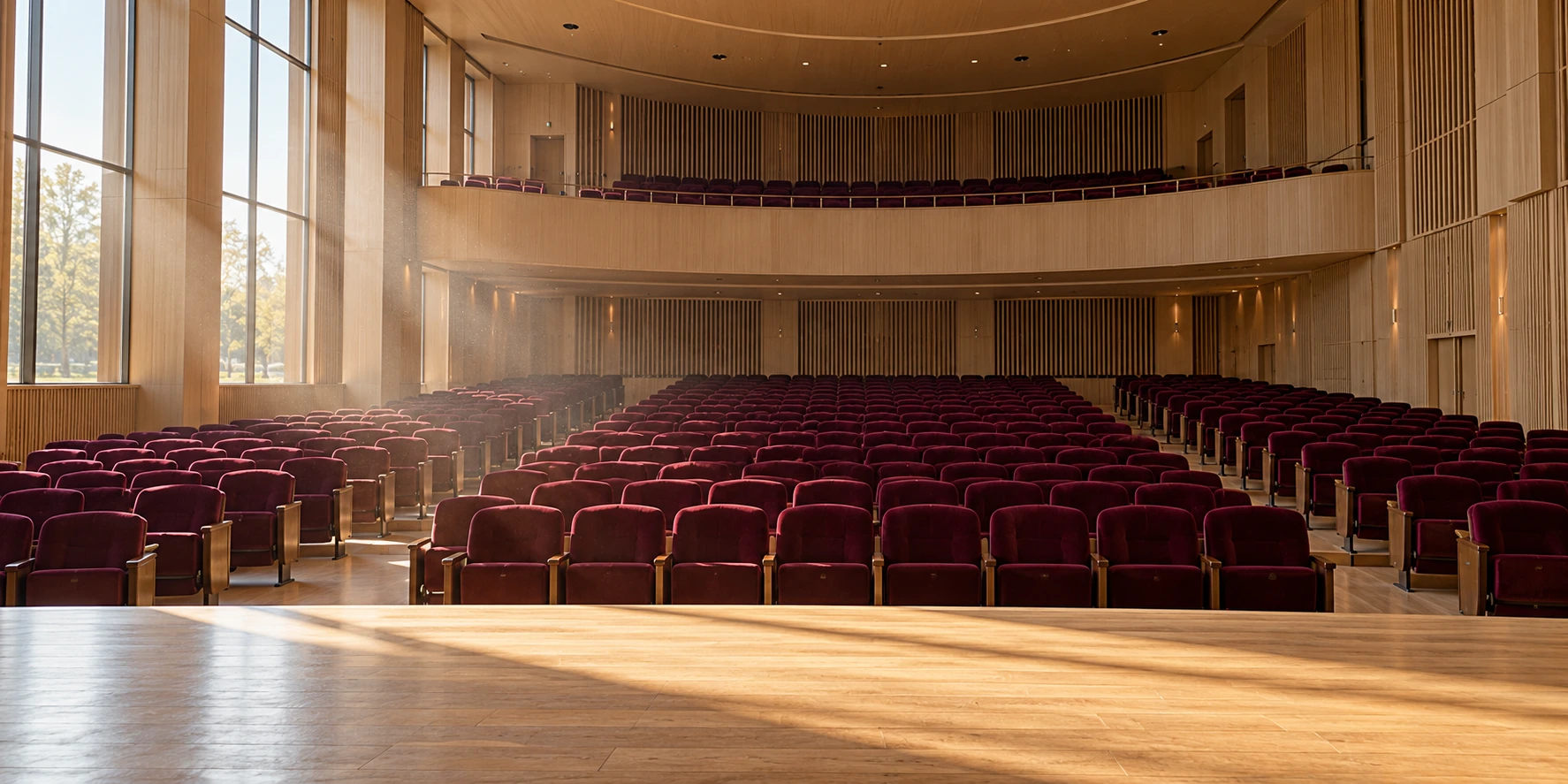
Close the shutters on a bright garden and leave a small opening. On a suitable surface inside the darkened room, a faint picture can appear. The branches point downward. The sky arrives below them. Nothing outside has turned over; the route taken by the light has organized the scene differently.
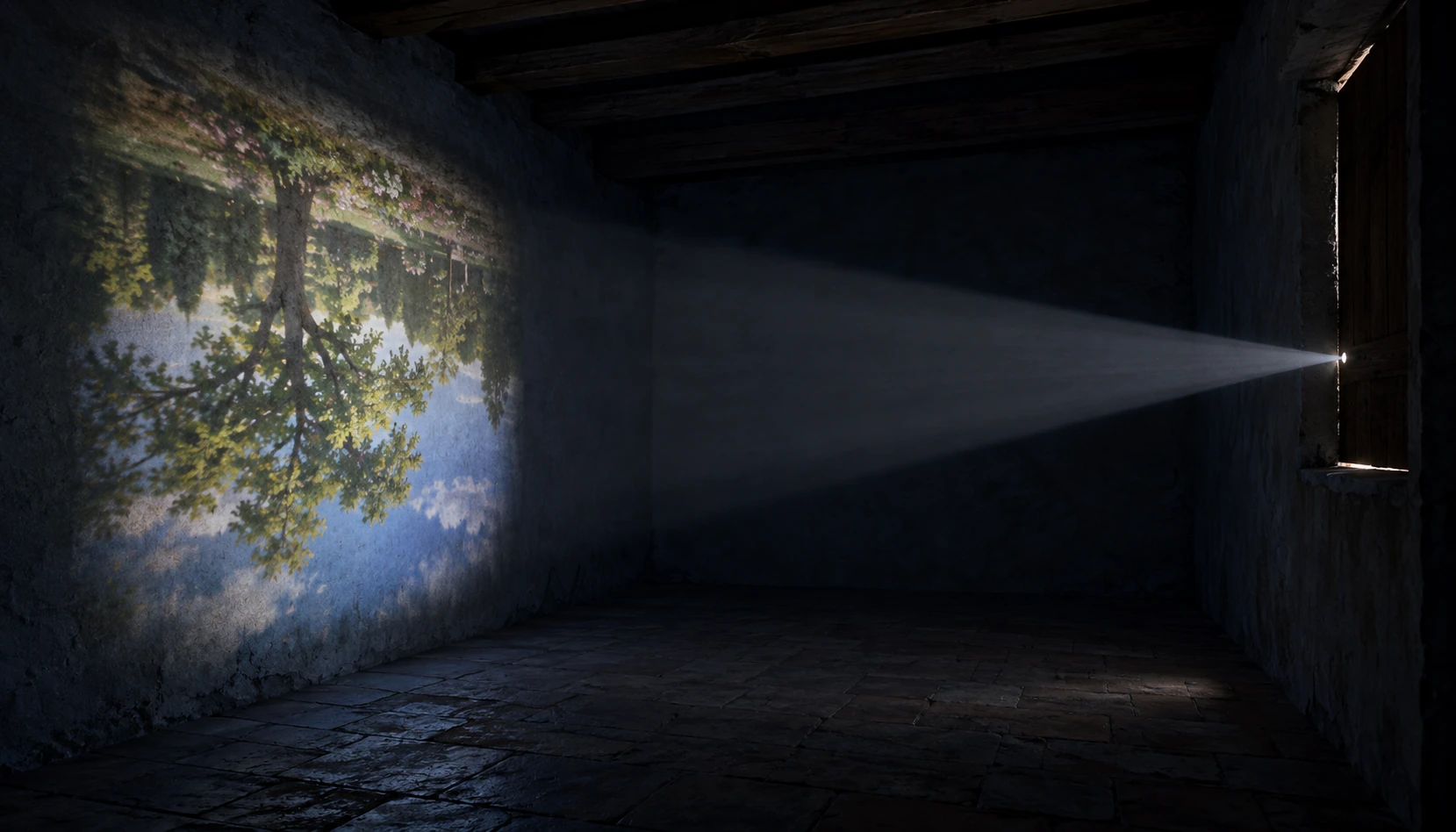
A camera obscura is a place to watch an image happen. It can be a room, a tent or a small box. The essential pleasure is the same: a scene appears on a surface without anybody drawing its outline.
Follow the top of the tree
The National Gallery's explanation describes light from an outside subject passing through an opening and lens into a darkened enclosure. A simple pinhole version can form an image without a lens. In both cases, we can learn something by following light from individual parts of the scene.
Imagine a straight line from the top of the tree through the small opening. Continue it until it reaches the opposite wall. It arrives below the opening. A line from the tree's base arrives above. Those crossing routes explain the inversion more clearly than saying the camera has somehow flipped the world.
Use the geometric model to move the screen without moving the object. Its colored points stand for just two locations in a scene. No actual tree or photograph is being simulated.
Follow two rays through the opening
Change object and screen distances in an ideal geometric projection with visible assumptions.
Increase the screen distance. The separation between the projected points grows. Now hold that distance fixed and move the object farther away. The projected separation shrinks. The displayed ratio comes from similar triangles, with the opening treated as an ideal point.
Why a bigger opening is not simply better
A dark image tempts you to enlarge the hole. That admits more light, but it also lets light from one point in the scene reach a wider patch of the screen. Nearby patches can overlap. Brightness and geometric sharpness pull in different directions.
Making the hole extremely small brings another effect into importance: diffraction. The simple straight-ray model does not include it. That is why its neat lines should not be read as advice that the smallest imaginable physical opening must produce the sharpest possible image.
The Exploratorium's Cracks in a Door exhibit account began with an observation of light forming an image of an exterior column through a narrow gap. It is a reminder that an optical instrument can begin as something noticed in an ordinary building.
A box changes the work of drawing
A camera obscura in the Science Museum Group collection, made before 1753, used a lens and a mirror set at 45 degrees to project onto ground glass on top of a box. Paper could be placed there to copy the image. The instrument made the view available in a practical position for drawing.
That detail opens a useful distinction. A pinhole room shows the core projection effect. A lens-and-mirror drawing box adds decisions about brightness, focus, orientation and the artist's working posture. “Camera obscura” can therefore name related instruments whose user experiences differ considerably.
Look at the collection photographs and locate the viewing screen. Imagine trying to trace an image on a vertical wall, then on a horizontal glass surface. The optics matter, but so does where your hand can comfortably move.
A quiet indoor investigation
You do not need to black out a whole room to explore the idea. A commercially made pinhole viewer or a small enclosed demonstration with a translucent screen can make the relationship visible. Observe an ordinary bright scene, and keep the Sun out of the experiment. Never look at the Sun through a hole, lens or improvised optical device.
Before changing anything, predict which side of the screen will receive a bright object near the top of the view. Then compare the result. A prediction is more revealing than simply saying the picture looks strange after you see it.
What counts as a successful observation?
You may get a dim, soft image rather than a crisp picture. Record which shapes you can distinguish, the orientation and what happens when the screen position changes. That is useful evidence about your setup. A disappointing photograph of the projection does not mean your eyes saw nothing.
A camera obscura rewards patience because it turns a room into an explanation. Light from many parts of the garden has always been available. Restrict its routes, darken the competing background and give it a surface, and the garden arrives again—faint, inverted and unexpectedly intimate.
Sources and further exploration: National Gallery: camera obscura; Exploratorium: Cracks in a Door; Science Museum Group: camera obscura before1753.
Explore all 50 new articles · Browse the complete illustrated collection
Explore more art, ideas, and independent projects at Incoprea.