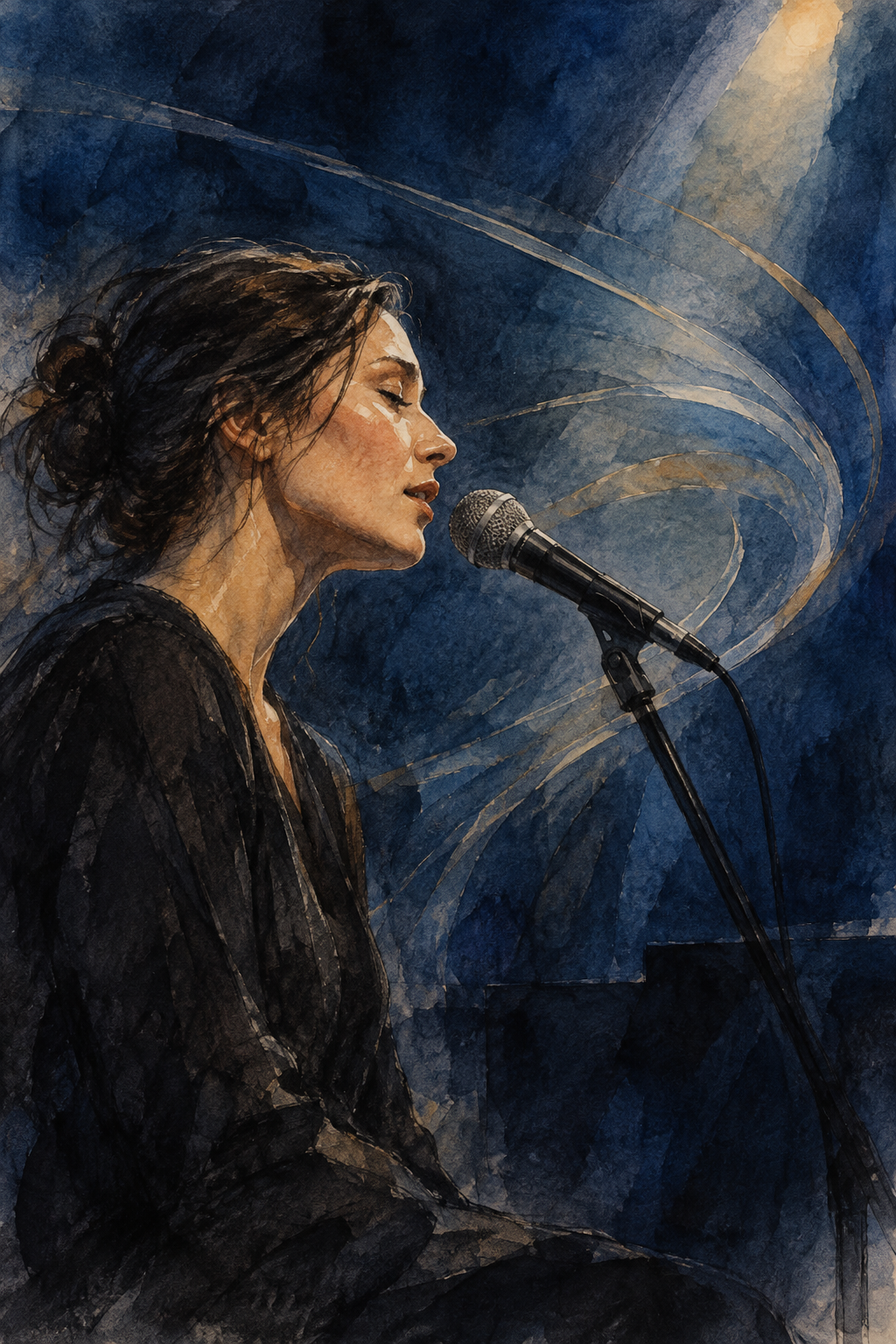
A musical portrait need not describe a person in a sequence of verses. In Sámi joik traditions, a voice can evoke a person, an animal or a place through a distinctive musical expression. The relationship is central: the performance is not simply a tune with an interesting subject attached.
The Sámi Information Centre describes joik as a tradition of memory. People, places and experiences can be brought into shared remembrance through it. That offers a different starting point for listening than asking whether a piece has the familiar structure of a popular song.
More than singing about something
The centre explains a distinction often expressed by practitioners: one joiks something, rather than merely singing about it. This phrasing emphasizes the connection between the performer and what is evoked. A personal joik can express affection and maintain a relationship in memory.
Such explanations should not be turned into a rule that every Sámi person has an identical musical experience. Traditions vary, people have different relationships to them, and historical suppression disrupted their transmission. Living performers and communities are the appropriate guides to their own practices.
The terminology also varies across the Sámi area. The centre discusses South Sámi vuollie, North Sámi luohti and the distinct Skolt Sámi leu'dd tradition. Recognizing those differences is more useful than treating all Sámi vocal music as one standardized sound.
A living practice, not a frozen relic
Joik has faced opposition, including religious condemnation and broader pressures on Sámi culture. It has also continued through families, performers, recordings, teaching and new artistic work. Both the difficulty of transmission and the creativity of present-day musicians belong in its history.
At Nord University, composer and performer Frode Fjellheim presents joik as a form of communication that requires cultural understanding. His teaching encourages attention to language, history and relationships, rather than listening only for an unusual vocal effect.
Contemporary artists may work with ensembles, electronic sound or other musical settings. Innovation does not automatically make a tradition less meaningful. The useful questions are who is creating the work, what they intend and how they situate it within their own experience.
Listen with the performer in view
Smithsonian Folkways' archival joik recording page credits individual performers, including Per Henderak Haetta and Inga Susanne Haetta. Its historical album title uses older terminology; the credits and context help identify the people behind the recordings.
An archive is one encounter with particular performances, not a complete portrait of Sámi music today. Pair it with the Sámi Information Centre's explanation and contemporary practitioners' accounts.
The interest of joik lies in what a voice can carry: identity, recognition, memory and relationship. Careful listening begins by making room for those meanings, rather than reducing the tradition to a sound to imitate.
Sources and further reading: Sámi Information Centre: Joik and memory; Nord University: Frode Fjellheim on joik as communication; Smithsonian Folkways: Archival joik recordings and performer credits.
Explore more creative discoveries at Incoprea.




