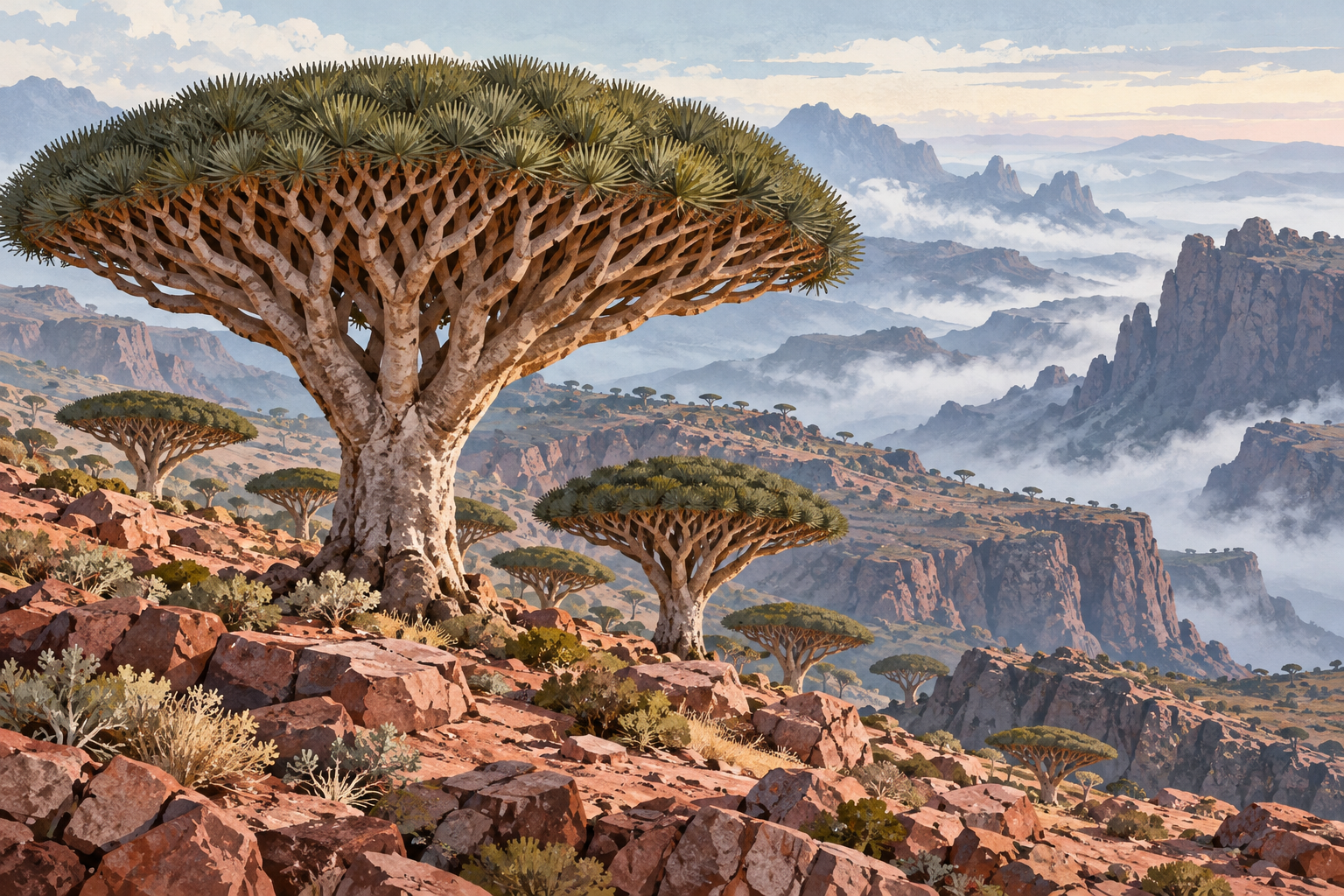
The silhouette looks almost designed: a sturdy trunk divides into a branching framework that holds a dense, flattened crown. Socotra's dragon's blood tree, Dracaena cinnabari, is famous for this umbrella shape. Its stranger-sounding name comes from red resin, rather than anything supernatural.
The tree grows wild on Socotra, part of Yemen. It belongs to an island landscape with many distinctive species and a long relationship between people and their environment. Looking at the crown is a good beginning; understanding the tree requires looking beneath it too.
A crown that changes conditions below
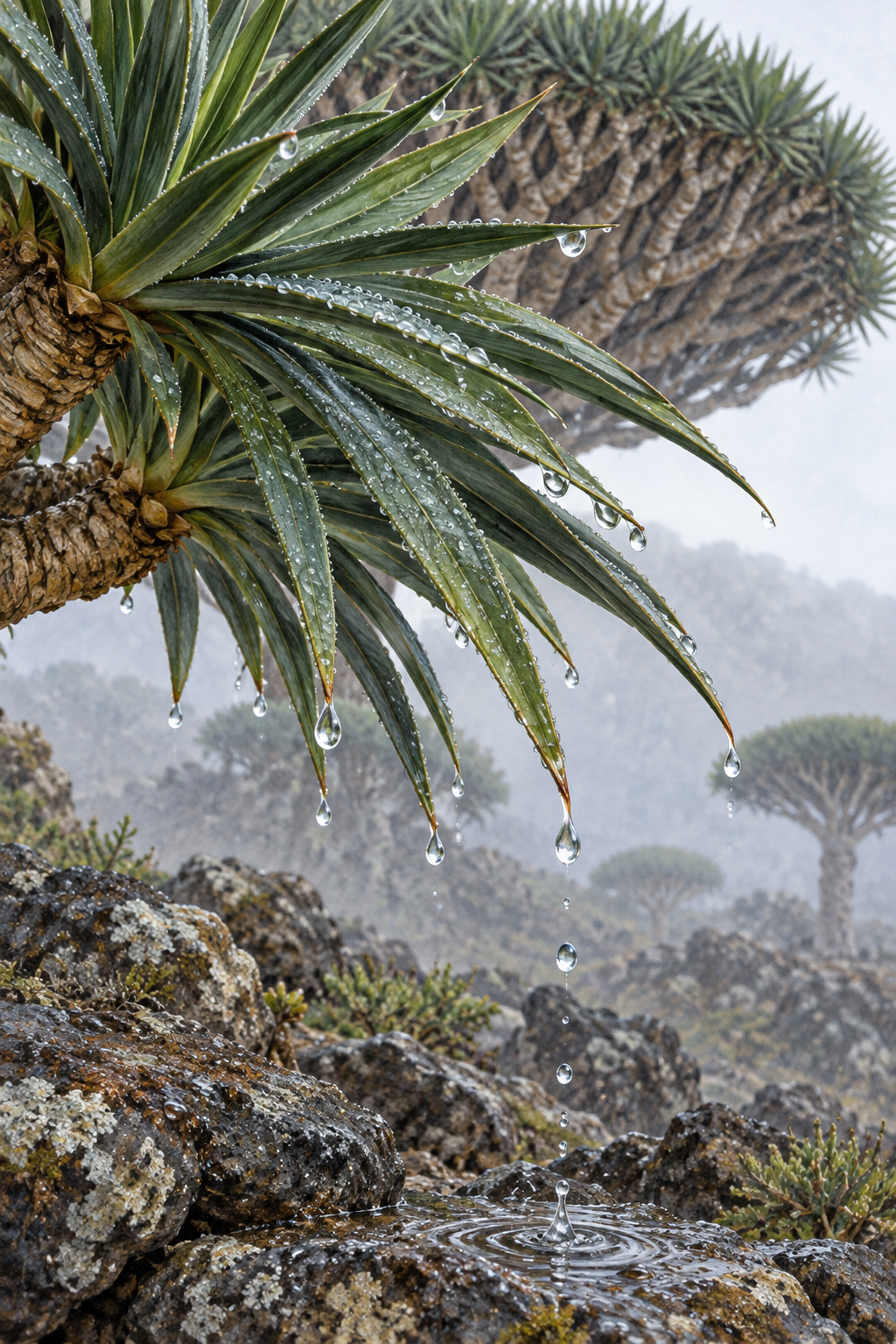
The Royal Botanic Garden Edinburgh explains how tough leaves help conserve moisture and intercept passing mist. Water droplets can collect on their surfaces and reach the ground. A dense canopy also shades the soil, reducing the drying effect of direct sun.
The tree's architecture therefore has consequences beyond its outline against the sky. Leaves, branches, moisture and shade interact with a demanding environment. A photograph captures the form, while the slower movement of water helps explain why the form matters.
Resin has also linked the species with human use, including dyes. Historical use is a cultural fact, rather than proof that a material has a particular medical benefit. The tree is valuable without turning its dramatic name into a miraculous-product claim.
The vulnerable stage is small
An impressive stand of mature trees can make a population look secure. Yet a population needs new generations. Young dragon's blood trees are vulnerable to grazing, and poor regeneration is an important conservation concern.
A study by Irena Hubálková and colleagues followed seedlings grown under controlled conditions from two Socotran populations. It examined germination and early growth, documenting variation in development and seasonal patterns. Such work helps address stages that are easy to miss in photographs of mature crowns.
Controlled cultivation is informative, but its results should not be treated as a guarantee of survival in the wild. Establishment also depends on conditions at the site, protection from browsing and the wider environment. The question is not only whether a seed can germinate, but whether a young plant can persist.
A landscape shared with people
UNESCO's account of Socotra emphasizes the close bond between island biodiversity and local inhabitants. It also describes pressures from changing climate and unsustainable resource use, alongside examples of Socotran people taking the lead in protection.
That human dimension matters. Conservation is more than preserving an attractive silhouette for distant admirers. It involves knowledge, livelihoods and decisions about land that people use every day. Local participation is part of the tree's future.
The next time an umbrella-shaped crown catches your attention, imagine the small plants that must grow into its successors. The mature tree is the visible achievement. The seedlings, soil and community around it are where much of the future is being decided.
Sources: Royal Botanic Garden Edinburgh: Dracaena cinnabari · UNESCO: nature and people in Socotra · Hubálková and colleagues: seedling growth research
Explore more creative curiosities at Incoprea.




