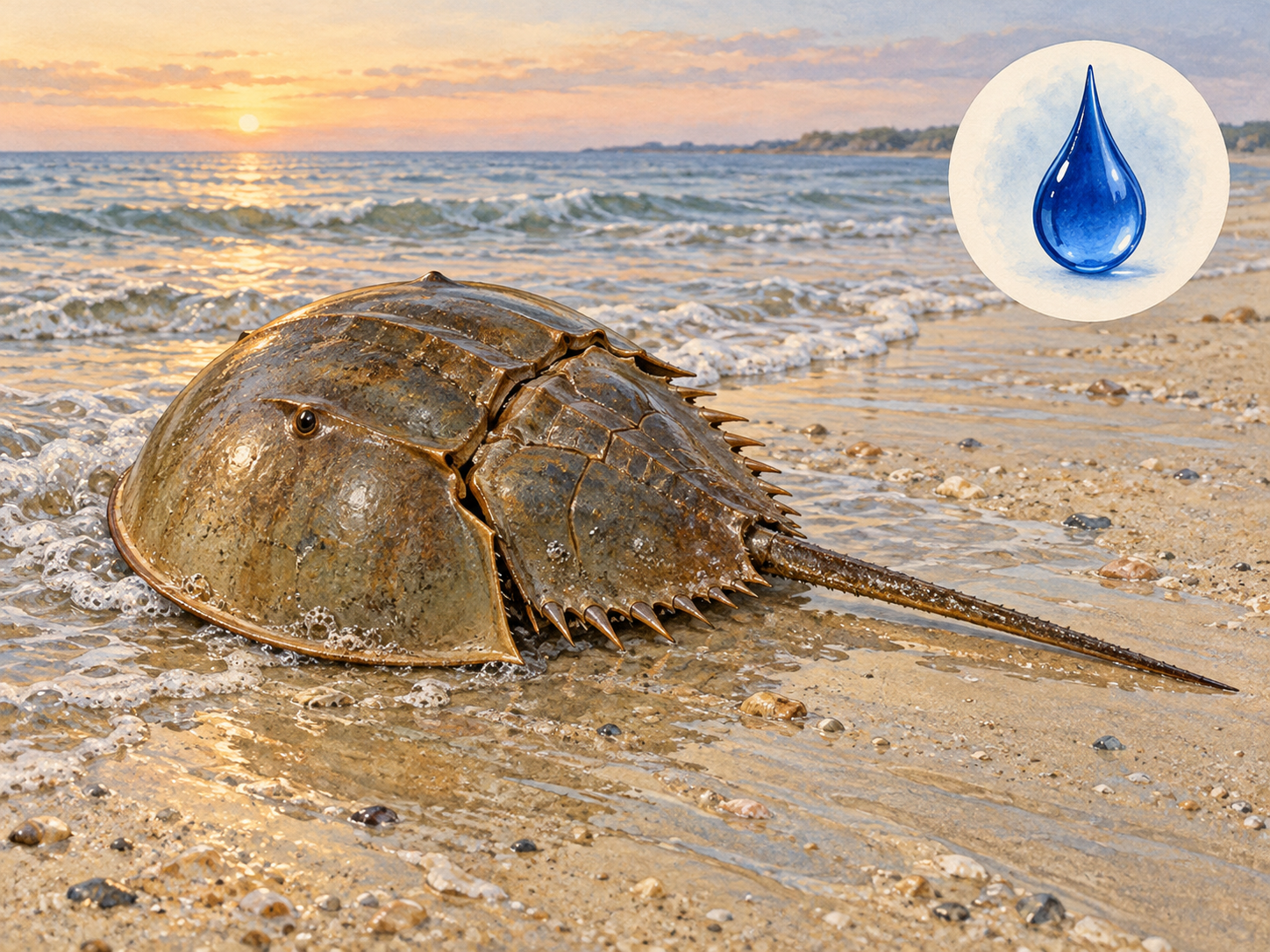
A horseshoe crab looks like a small armored visitor from another age. Its helmet-shaped shell and long tail spine make it distinctive before you discover its most famous hidden feature: blue blood. That color has a chemical explanation, while the blood's role in laboratory testing has a different one.
Separating those stories makes the animal more understandable. The molecule that carries oxygen is not simply the same thing as the cellular system that reacts to bacterial material.
Copper helps carry the oxygen
Horseshoe crabs use hemocyanin, a copper-containing protein, to transport oxygen in their circulatory fluid. When oxygenated, this protein gives the fluid its blue color. Human red blood relies on a different oxygen-carrying protein, hemoglobin, whose iron-containing heme contributes the familiar red.
The contrast is about organized proteins and their chemistry, rather than a body filled with ordinary dissolved copper pigment. Hemocyanin binds oxygen and releases it under appropriate conditions, serving a physiological transport job.
Research on Limulus polyphemus, the Atlantic horseshoe crab, has examined how its hemocyanins bind oxygen and how conditions such as acidity affect that behavior. “Blue blood” is an arresting description of a functional molecular system.
Immune cells detect bacterial material
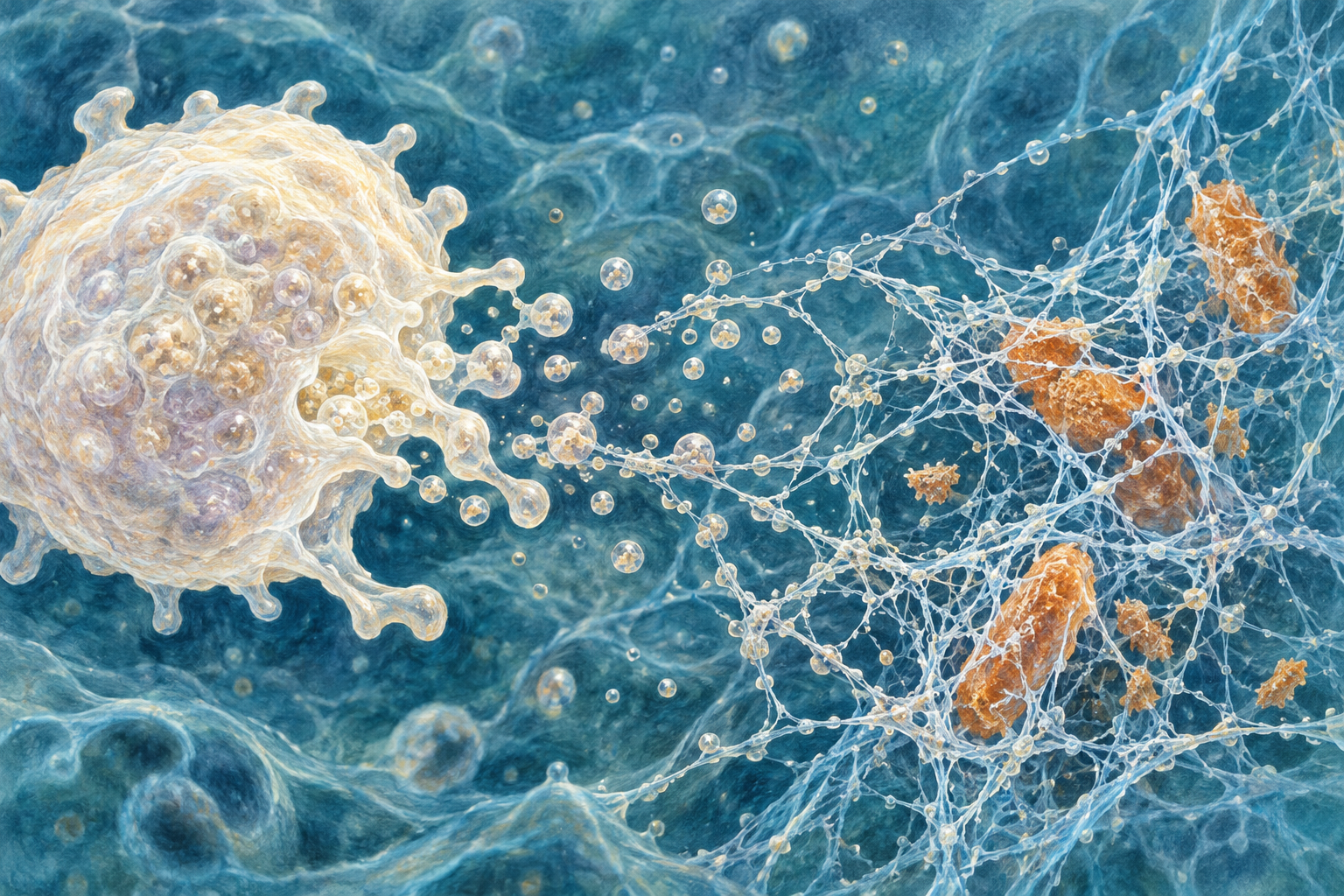
The testing story begins with amebocytes, blood cells involved in the animal's defense. Their contents include a coagulation system that reacts to bacterial lipopolysaccharide, commonly discussed as endotoxin.
Limulus amebocyte lysate, or LAL, is an extract prepared from those cells. It contains the components used in assays for bacterial endotoxin. It is therefore misleading to describe LAL as the blue oxygen-carrying pigment, or as a single enzyme identical to hemocyanin.
A 1993 study in Infection and Immunity investigated proteins involved in binding lipopolysaccharide within this system. The reaction is a cascade: recognition of particular molecular material activates processes that lead toward coagulation.
The specificity matters. An endotoxin assay asks a defined question; it is not a universal detector of every possible contaminant. The animal's evolved defense mechanism became useful because researchers learned what that reaction could reveal.
A remarkable animal with a wider role
Horseshoe crabs belong to the chelicerate branch of arthropods and are more closely related to spiders and scorpions than to true crabs. Their everyday biology includes finding food, molting, and reproducing along suitable shorelines. Their importance does not begin and end in a laboratory.
The Smithsonian's National Zoo also notes the costs associated with collecting and bleeding them: some animals die after being returned. That makes the biological resource a conservation concern as well as a scientific one.
The useful lesson is a double discovery. Hemocyanin explains the unexpected color; amebocyte chemistry explains a sensitive response to bacterial endotoxin. Together they show how one animal's internal systems can become windows into both physiology and the practical questions humans bring to biology.
Sources and further reading: Smithsonian National Zoo: Horseshoe crab; Functional differences in horseshoe-crab hemocyanins; Lipopolysaccharide-binding proteins of Limulus amebocyte lysate.
Explore more creative work at Incoprea.