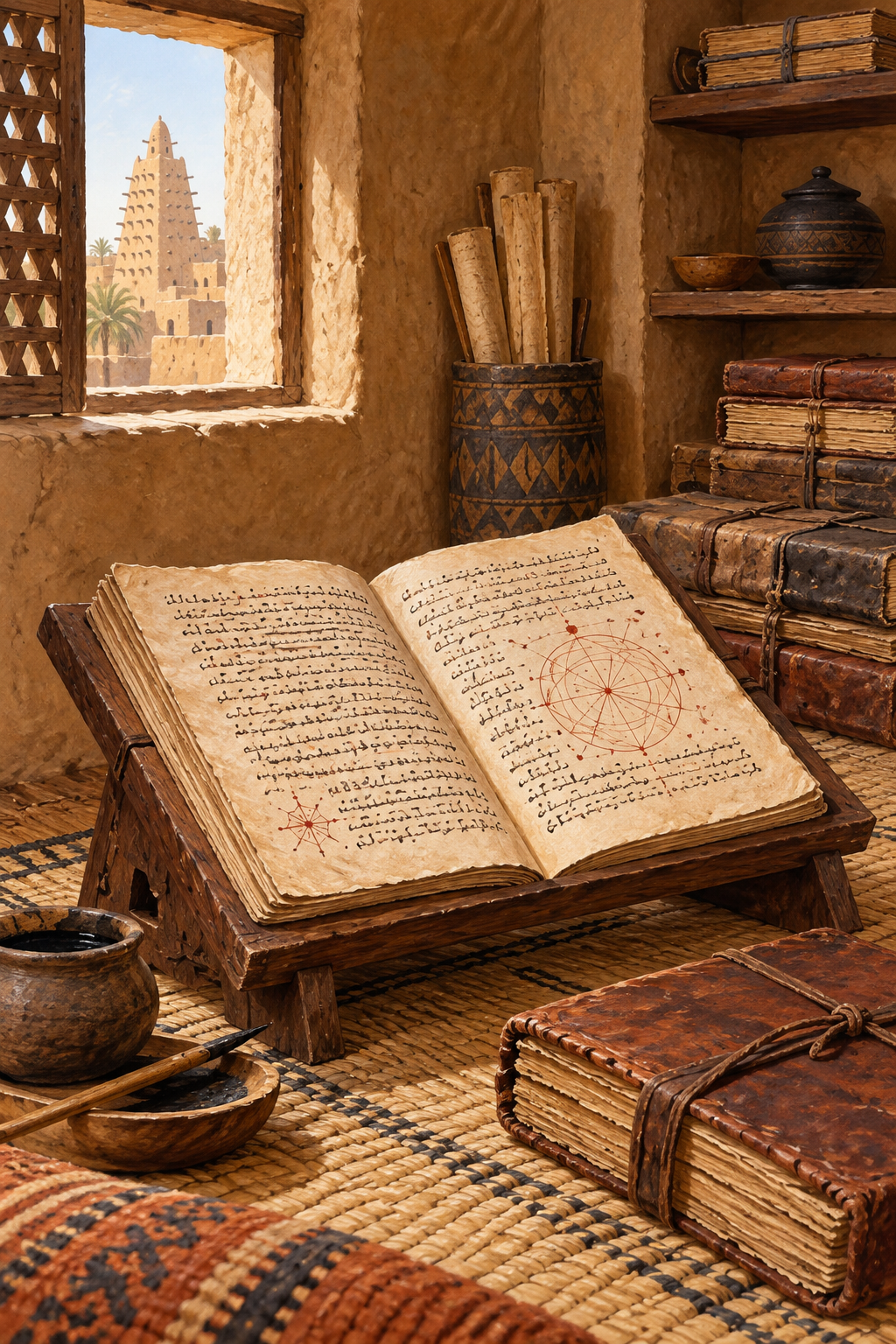
Timbuktu is often used as a synonym for somewhere impossibly distant. Its manuscripts tell a different story. This West African city was a place people traveled toward for knowledge, commerce and religious study. Its handwritten books preserve an intellectual world that is easier to appreciate by opening specific pages than by repeating a legend about hidden treasures.
What was on the page?
The Library of Congress's exhibition of manuscripts from Timbuktu includes works on astronomy, arithmetic, Islamic law, commerce and ethical conduct. These subjects belonged to a scholarly culture in which learning could connect religious understanding with practical questions.
One arithmetic commentary explains operations through charts and worked problems. Another manuscript uses verse to help students remember aspects of commercial law. A text on astronomy includes a diagram of the heavens and discusses using stellar motions to reckon the seasons.
The examples make the collection feel less abstract. A manuscript could train a student, organize an argument or address a legal problem. It was an object used in a practice, not simply a beautiful page intended for a modern display case.
A copy can contain a history
Many manuscripts preserve copies of works rather than unique authorial originals. That does not make them uninteresting duplicates. Producing a copy took labor, materials and choices, and the resulting object could acquire notes and a history of use.
A University of Hamburg research project examines scribes and copying practices in the broader Middle Niger manuscript collections. Its questions include how the work of professional copyists differed from that of students and scholars, and what decoration and materials can reveal about production.
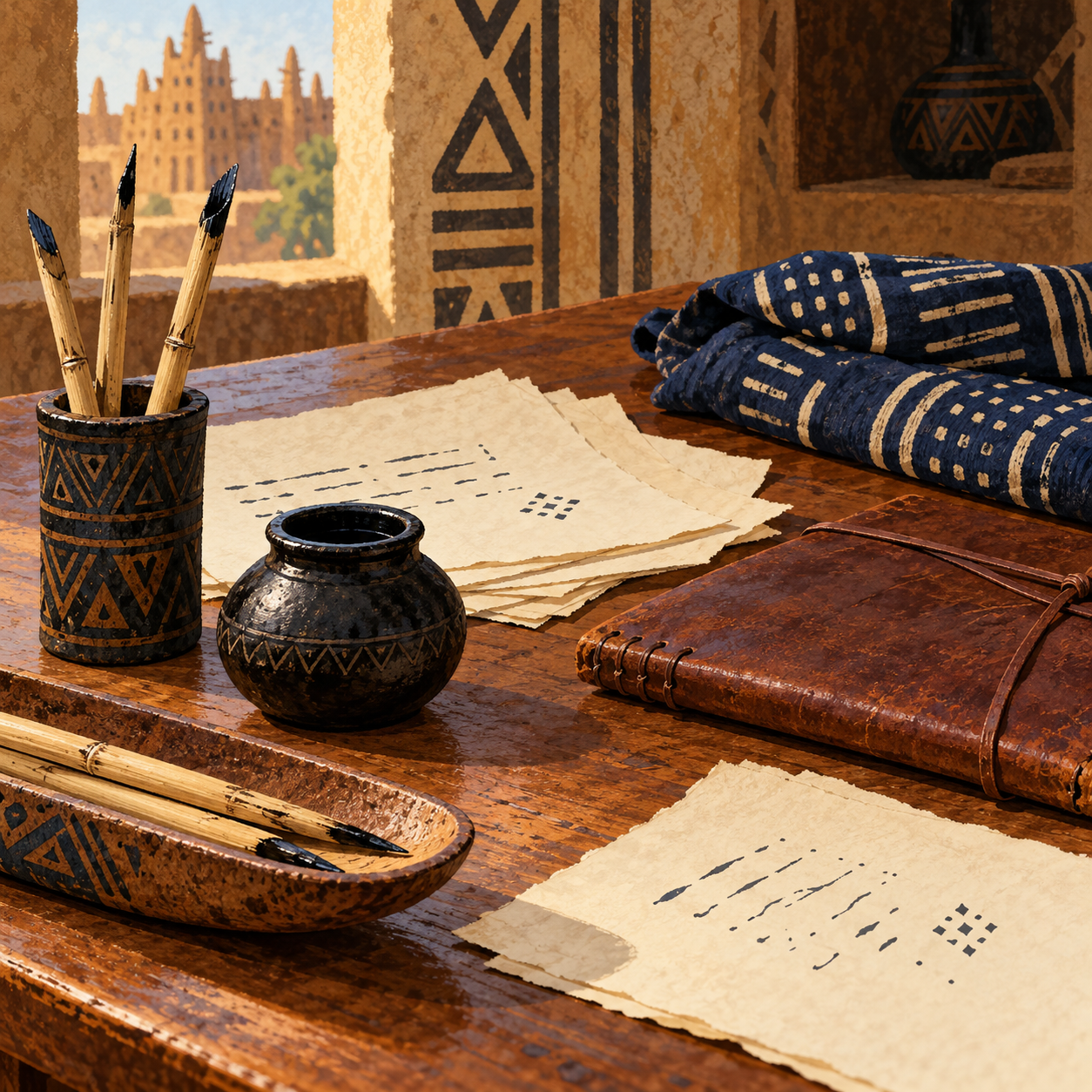
The project also draws on contemporary testimony and the practices of living scribes. This links the physical archive with knowledge that does not reside on the page alone. A pen, an inkpot or a leather cover can be part of the scholarly story too.
Reading beyond the treasure label
A famous collection can attract attention through its scale, age or survival. Those are important features, but they should lead toward studying content. Which works were read? How were they taught? What kinds of commentary or correspondence survive? Different collections and periods may give different answers.
The phrase Timbuktu manuscripts also needs care. It can refer broadly to collections with connections beyond the city itself. The history of ownership, copying and movement matters when explaining an individual item.
Digital displays provide a useful starting point. The Library of Congress exhibition lets readers inspect selected pages with descriptions explaining their subjects. Even without reading the script, one can notice diagrams, layout and the material character of a particular manuscript.
The strongest reason to preserve these books is that people can continue to study them. They show scholarship as an activity carried by writers, teachers, readers and custodians. Timbuktu becomes more interesting when it stops being a shorthand for distance and becomes a place of intellectual work.
Sources and a page to explore: Library of Congress: Timbuktu's scholarly history; Browse manuscript pages and their subjects; University of Hamburg: scribes and copying practices.
Explore more art, ideas and creative work at Incoprea.