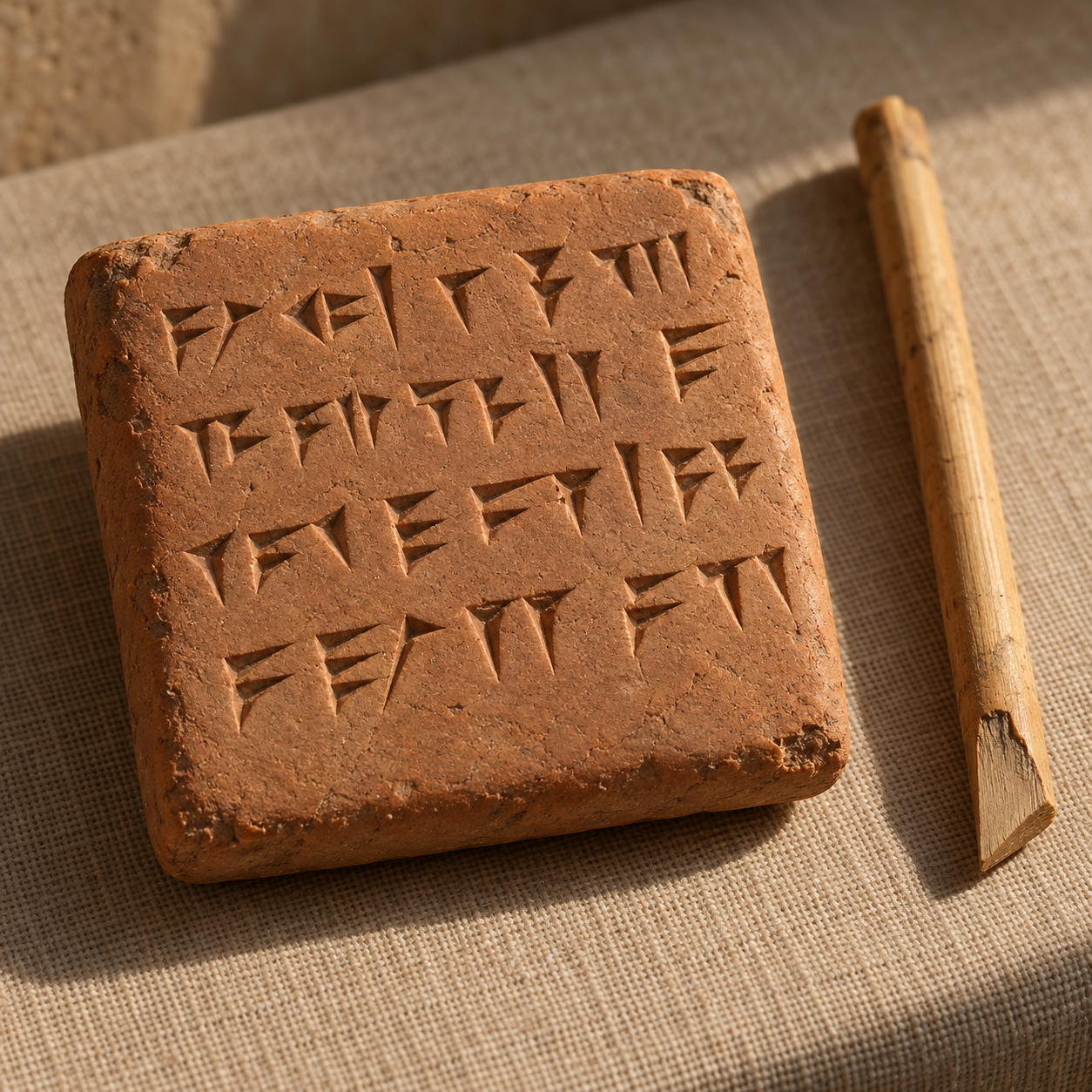
A clay tablet covered with wedge-shaped marks might seem to belong to a single familiar category: cuneiform. But the shape of a mark does not tell you how a writing system works. At ancient Ugarit, scribes used wedges to write an alphabet.
Ugarit stood on the coast of what is now Syria, at the site called Ras Shamra. Its Late Bronze Age texts preserve a world of administration, correspondence and literature. Among them are tablets that show a compact alphabetic system alongside other languages and scripts.
A familiar tool, a different principle
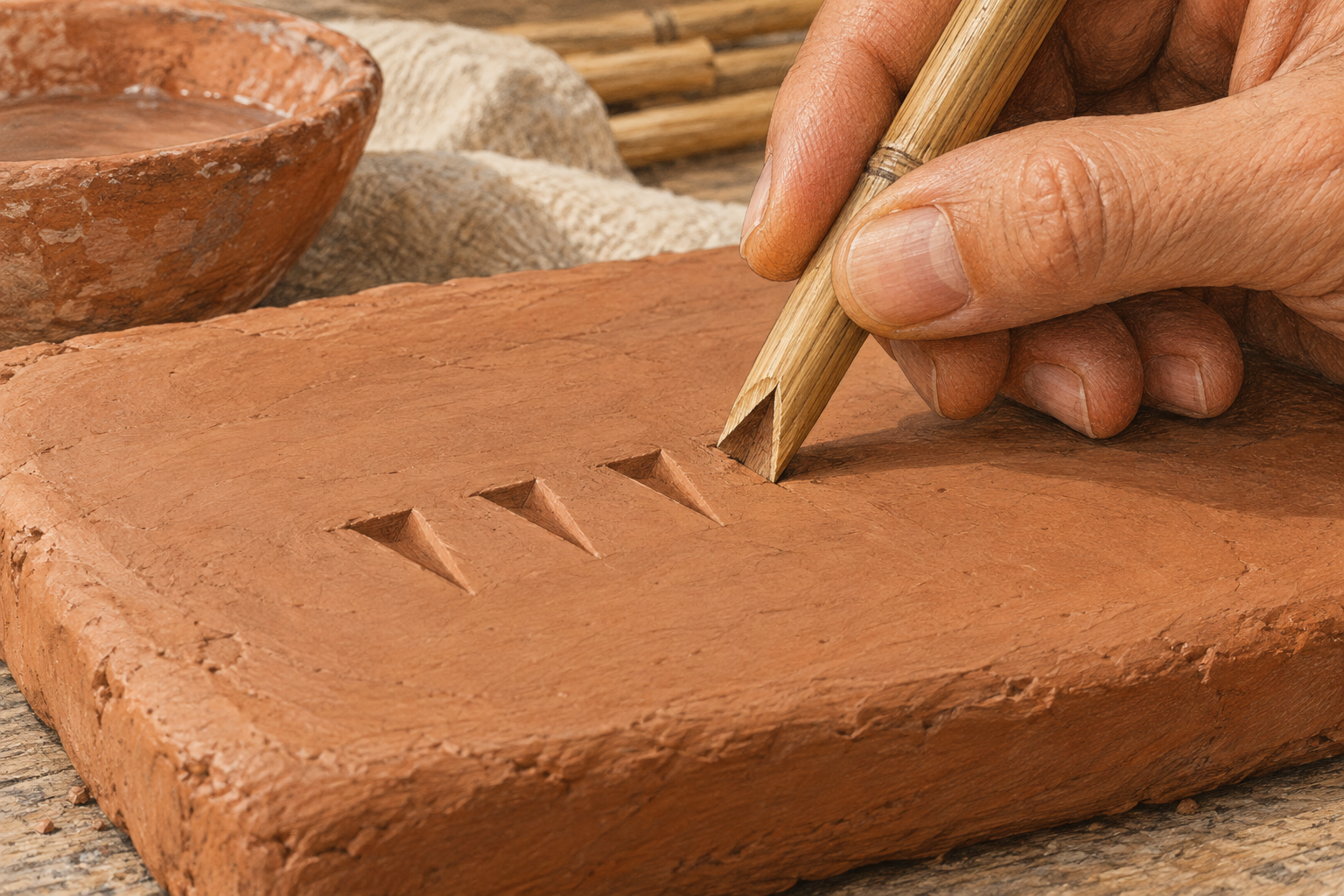
Cuneiform describes writing made from wedge-like impressions. A stylus pressed into clay produces those shapes efficiently. The older Mesopotamian traditions used many signs with word and syllabic values. Ugaritic alphabetic cuneiform applied a different organizing idea to the same writing material and general technique.
The standard long Ugaritic alphabet has 30 signs. It primarily represents consonants, with some special treatment of glottal-stop signs associated with vowels. It is often described more precisely as an abjad. That is different from a syllabary, in which a sign commonly represents an entire syllable.
So two tablets can look broadly similar while encoding language differently. The tool helps explain the visual appearance; the relationship between signs and sounds explains how the text can be read.
School exercises preserve the order
Abecedaries are texts that list alphabetic signs in sequence. Ugaritic examples provide unusually direct evidence for how scribes organized their writing system. A complete standard list contains 30 signs, and the sequence has important relationships with later alphabetic traditions.
The evidence is more varied than one perfect classroom chart. Shorter alphabetic forms and an alternative ordering are also documented. That variation matters when reconstructing how writing circulated and how different scribal communities used it.
Ugarit's multilingual setting is part of the story. Its scribes also used Akkadian cuneiform, including for communication beyond the city. The alphabetic script was not simply a universal replacement for every other writing practice. Different systems served different languages and purposes.
A glimpse of an alternative alphabetic future
Ugaritic texts include lists and contracts as well as literary and religious works. They therefore reveal both the practical work of a city and the stories its scribes preserved. The system was not the world's first alphabet, and the history of alphabetic writing cannot be reduced to one invention in one place.
What makes Ugaritic especially striking is the combination: a small sign inventory expressed through a technique usually associated with much larger inventories. Penn Museum's illustrated discussion compares this route with other paths in alphabetic history.
Modern letters make the alphabet feel inevitable. Ugarit's wedges show that the same broad principle could wear a very different visual form. Written language is both a system of meaning and a technology shaped by hands, tools and materials.
Sources and further reading: Penn Museum: The alphabet’s different histories; Scuola Normale Superiore Mnamon: Ugaritic writing; French Ministry of Culture: Ugaritic abecedary RS 12.033.
Explore more creative discoveries at Incoprea.




