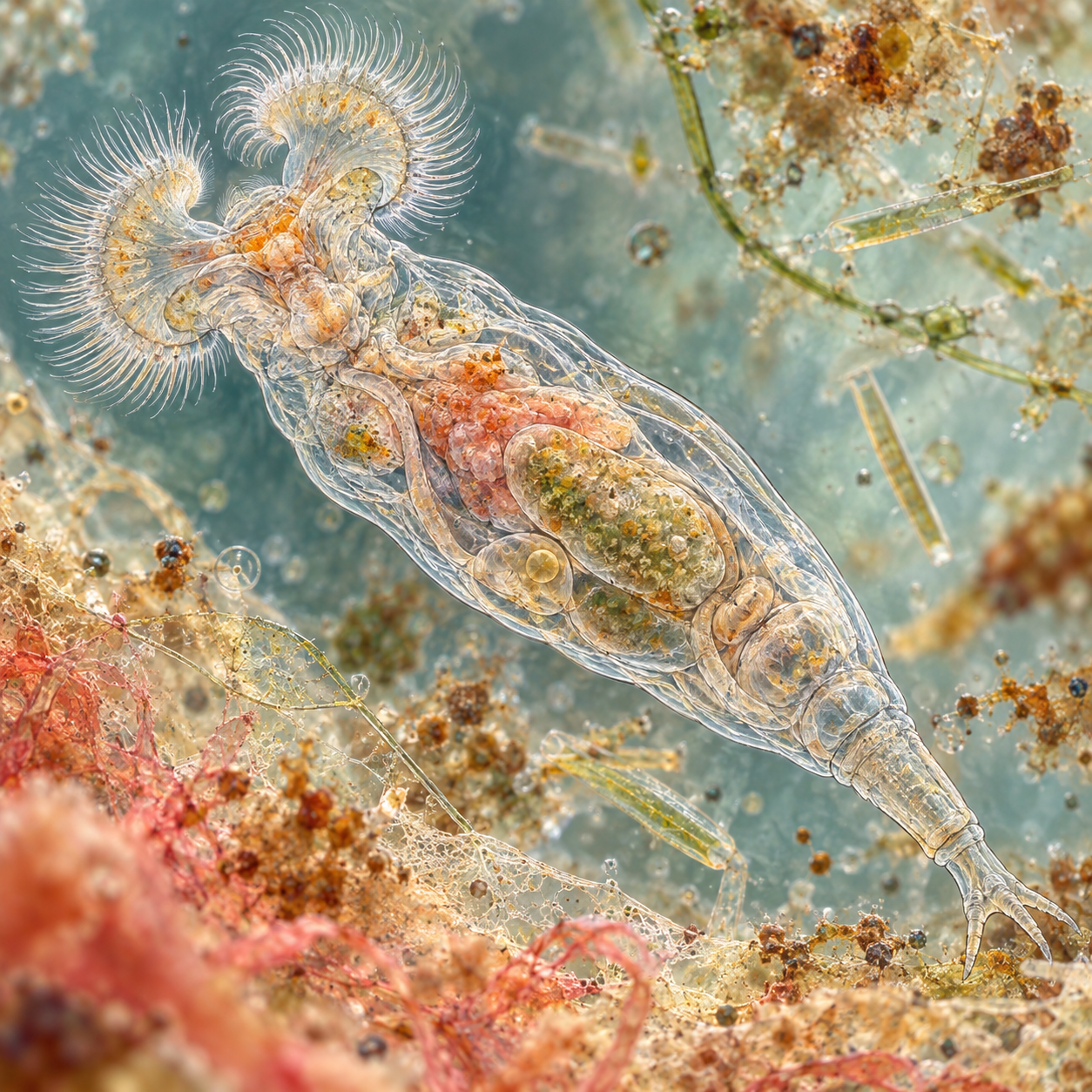
A bdelloid rotifer can look like a transparent animal fitted with two little spinning wheels. Those wheels are moving cilia, beating hairs that help bring food toward its mouth. Under a microscope, the animal stretches, feeds and contracts. It is easy to forget that an entire multicellular creature can fit within a speck of freshwater habitat.
Bdelloids attract attention for more than their size. Many tolerate severe drying, some endure freezing, and their reproductive history presents a longstanding biological puzzle. Each discovery is remarkable enough without turning them into supposedly indestructible animals.
Surviving a pause in ordinary life
When water disappears, some bdelloids can enter a state of greatly reduced activity and later resume functioning after rehydration. This ability is useful in habitats where films of water around moss or soil come and go. It does not mean every species survives every treatment, or that a dried animal continues feeding and growing.
Freezing creates different difficulties, including damage from ice and changes in the chemistry of the remaining liquid. Survival depends on the species and conditions. Studying a successful recovery can reveal protective biology, but it cannot establish an unlimited tolerance to cold or time.
The permafrost report
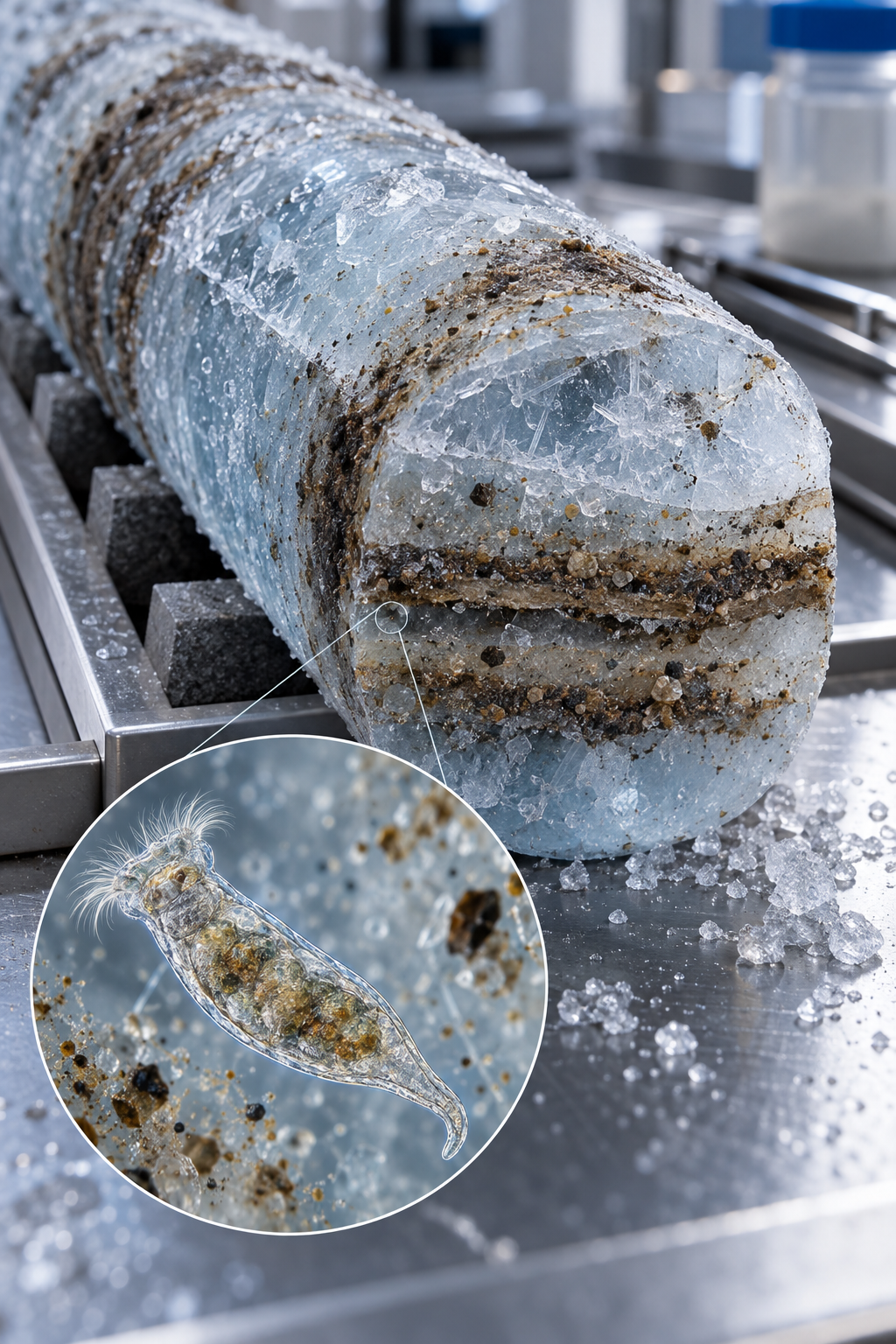
In 2021, researchers reported a living bdelloid rotifer recovered from Siberian permafrost whose sediment was dated to around 24,000 years ago. After thawing, the animal reproduced, allowing a culture to be established. The researchers also investigated how related rotifers handled controlled freezing in the laboratory.
The dating distinction matters: the age comes from the surrounding permafrost material, rather than from a direct birth-date measurement of the individual animal. The report supports extraordinary long-term survival in that setting. It is not evidence that all rotifers routinely live for tens of thousands of years.
A frozen core is therefore both a biological sample and a historical context. Researchers must connect the organism, the sediment, the dating and the handling procedures. The headline number is only one part of the evidence.
The reproduction puzzle is still alive
Bdelloids have famously been described as an ancient asexual group. Females reproduce through parthenogenesis, in which offspring develop without fertilization, and males have not been observed. That made them a fascinating test of ideas about why sexual reproduction is so widespread.
However, “no observed males” and “no genetic exchange of any kind” are different claims. A 2020 study of wild Adineta vaga genomes found signatures of recombination and exchange between individuals. Exactly how such exchange occurs remains an important question. It is more accurate to describe the mystery than to declare that an entire lineage has certainly avoided sex for an exact span of millions of years.
The best reason to appreciate bdelloids is this combination: ordinary microscopic feeding, unusual ways of enduring stress, and open questions about heredity. Their small bodies have made them unusually large participants in debates about survival and evolution.
Sources and further reading: Shmakova and colleagues: Living rotifer from Arctic permafrost; Genomic signatures of recombination in Adineta vaga; Cambridge: Early research on bdelloid desiccation and reproduction.
Explore more creative discoveries at Incoprea.




