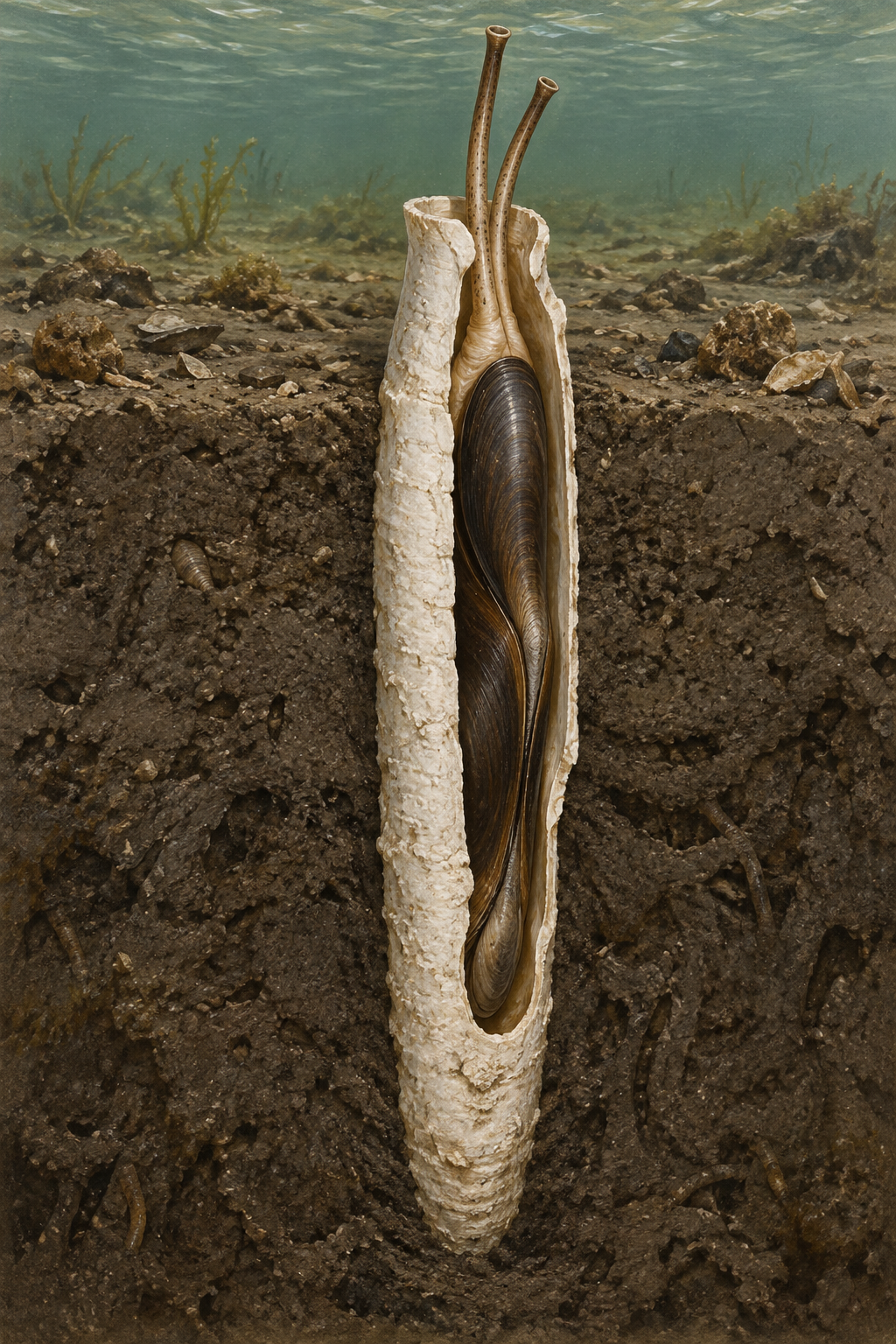
A long, pale tube stands buried in coastal mud, resembling a submerged tusk. Inside lives a dark, elongated animal that can reach extraordinary size for a bivalve. The giant shipworm Kuphus polythalamius has a misleading everyday name: it is a mollusk related to clams, rather than a true worm.
Its most interesting difference from familiar shipworms concerns food. Large mud-dwelling adults rely on bacteria that use sulfur chemistry to produce nourishment. A family famous for consuming wood includes an animal with a very different partnership.
A shell-shaped clue to a hidden animal
The long calcareous tubes were known well before researchers could closely investigate living animals. Finding intact specimens in the Philippines allowed an international team to study the organism and its microbes in detail. Their results appeared in 2017.
The animal lives within a protective tube, with siphons connecting it to the water above the sediment. Its stretched-out body departs dramatically from the compact clam shape most people recognize. Classification follows its evolutionary relationships and anatomical details, rather than the silhouette alone.
Ordinary wood-feeding shipworms use small shell valves to bore into wood and work with bacteria involved in processing that material. The giant species' adult life in sediment therefore raised a question: what supported an animal with reduced digestive structures?
A meal made through chemical energy
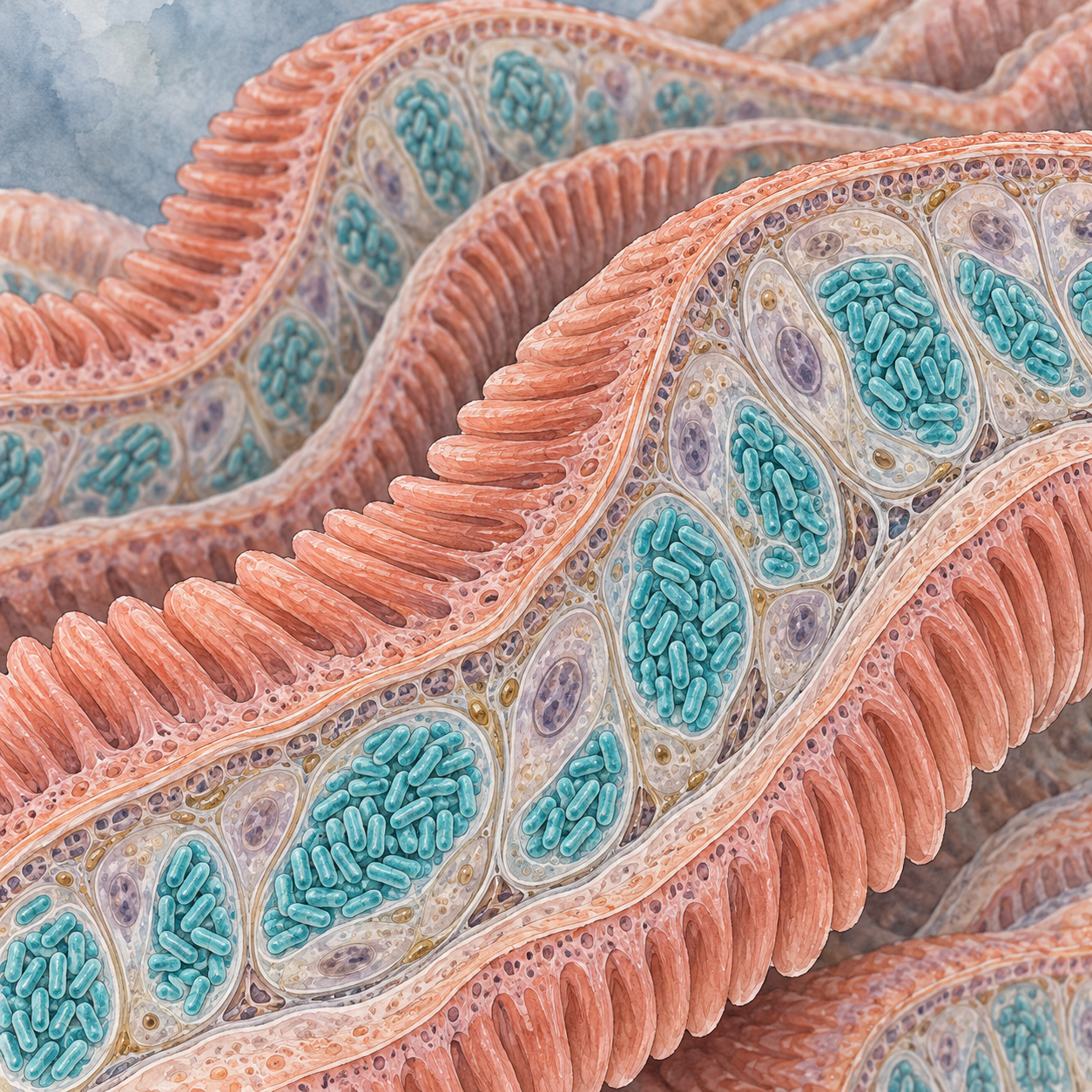
Researchers found sulfur-oxidizing bacteria in the giant shipworm's gills. Those symbionts can use energy from hydrogen sulfide chemistry to fix carbon into organic compounds. The animal benefits from that production.
This is chemosynthesis, an alternative to using sunlight as the energy source for building organic matter. In an organic-rich muddy habitat, microbes breaking down material can help supply sulfide. The surrounding ecosystem therefore remains part of the food story, even when the animal is not chewing the decaying material itself.
The partnership resembles arrangements in some animals near deep-sea vents, but Kuphus need not live at a hydrothermal vent to obtain chemically fueled nourishment. Suitable chemistry can occur in shallow marine sediment too.
Changing partners can change a lifestyle
The findings supported a proposed evolutionary connection between wood-associated ancestors and sulfur-dependent symbiosis. The suggestion is that a different microbial partnership helped open a different way of living. An evolutionary hypothesis should be distinguished from a directly observed transition through every intermediate stage.
Life history adds another reason for careful wording. Later research examined small individuals in wood as well as large sediment-dwelling animals. Describing adult Kuphus as different from wood-feeding relatives is more accurate than declaring that wood has no role anywhere in its life.
The giant shipworm rewards looking past a spectacular size or unsettling shape. Its body is only one part of the organism's working economy. Inside the gills, bacteria help translate the chemistry of muddy water into food, showing how a change in a tiny partner can accompany a major change in an animal's world.
Sources and further reading: Distel et al.: Giant shipworm chemosynthetic symbiosis; University of Utah: Investigating living giant shipworms; Shipway et al.: Life history and geographic range.
Explore more creative curiosity at Incoprea.