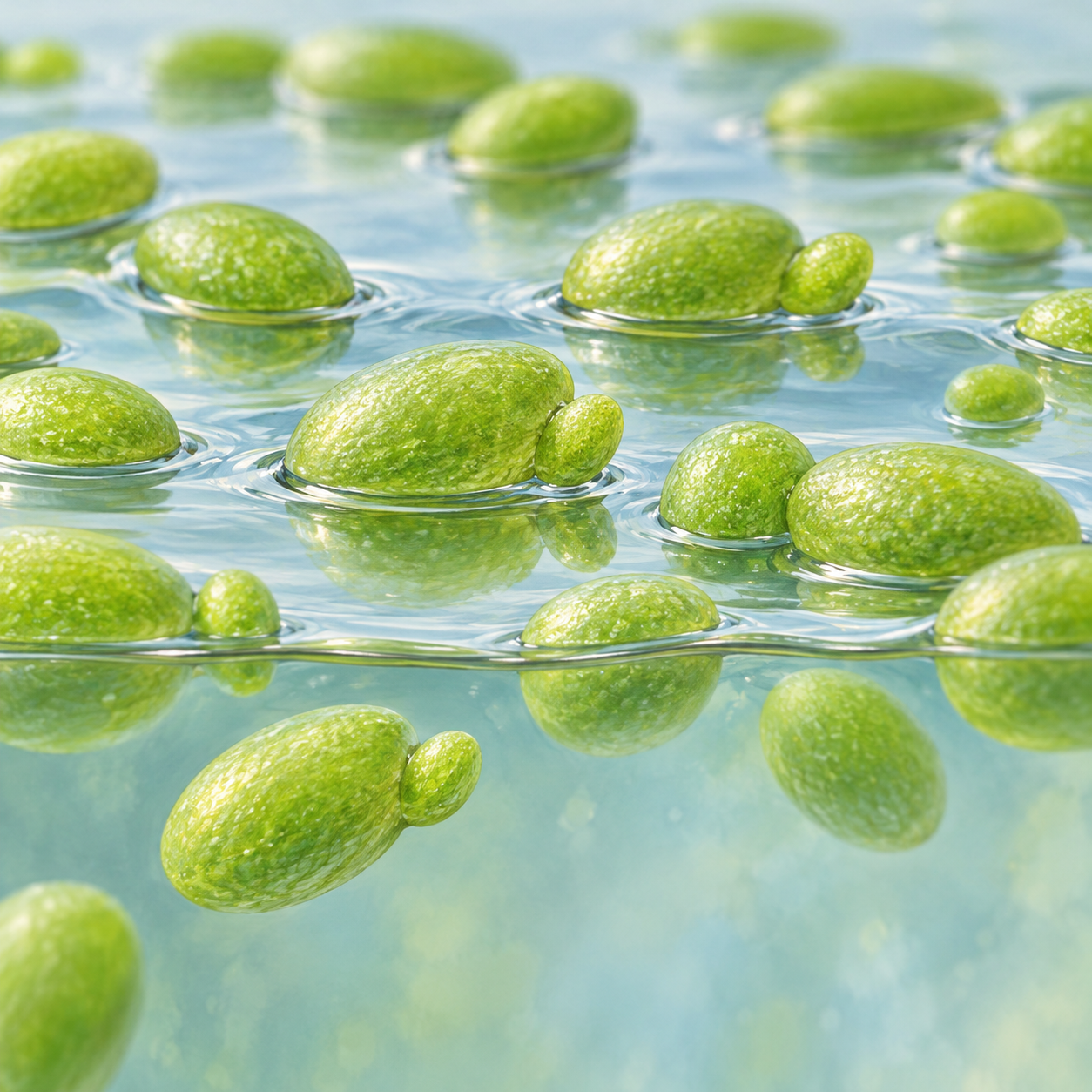
A pond sprinkled with tiny green grains may seem to be carrying algae or loose seeds. Some of those specks can be entire flowering plants. Wolffia, commonly called watermeal, includes extraordinarily small aquatic plants with a radically reduced body plan.
The surprise is not simply size. These plants lack roots and the familiar division into obvious leafy shoots, yet still belong among flowering plants. They make us reconsider how much visible architecture a plant needs.
A complete plant in a minute body
A Wolffia body is often described as a frond, combining a highly simplified shoot structure. The plants float at or near the water surface, where they obtain light and interact directly with their surroundings.
Different species have different dimensions. Kew's description of Wolffia globosa, for example, gives fronds around 0.4–0.8 millimeters long in the flora it cites. A precise size claim should identify the species and whether it describes the plant body, flower or another structure.
That distinction helps with the headline “the world's smallest flowering plant.” Several sources use the phrase in discussing Wolffia or particular species. The defensible general point is that the genus contains some of the smallest flowering plants known, rather than treating every green speck as one identical record holder.
Small flowers, frequent budding
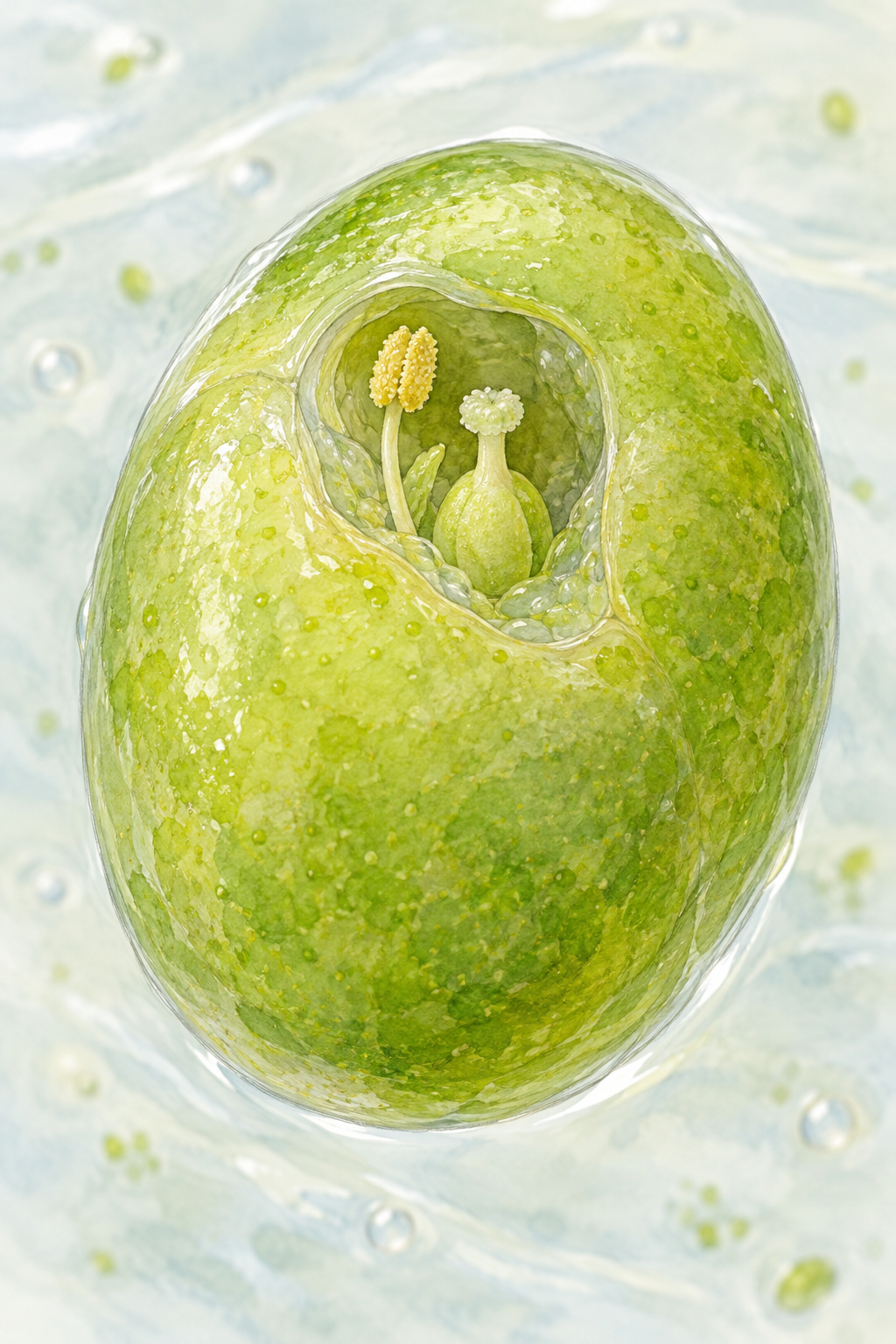
Wolffia can produce highly reduced flowers, with a single stamen and a single pistil. There is no need for a miniature daisy with showy petals. The reproductive structures belong to a different visual strategy.
Flowers are not the only way the plants multiply. Daughter fronds can bud from a mother plant. This vegetative reproduction lets populations grow quickly under suitable conditions, sometimes producing extensive patches on sheltered water.
Fast growth depends on conditions and the material being studied. A reported short doubling time is not a guarantee that every population doubles on schedule in every pond. Light, nutrients and the particular plant line still matter.
A minimalist body with a research future
Researchers have sequenced Wolffia genomes to investigate how its simplified form and growth relate to its genes. Studies of Wolffia australiana found changes and losses in gene families associated with features such as roots and other aspects of plant development.
A reduced body does not mean a plant has no complex biology. It still carries out photosynthesis, manages cellular processes and responds to its environment. Researchers use the unusual form to ask which parts of a plant's organization are essential and which can change.
Some Wolffia is also used as food, and scientists study its nutritional and cultivation potential. That established use should be distinguished from assuming any wild pond sample is a suitable food source.
The next time a water surface looks dusty green, consider the change in scale. What appears to be a scattering of pieces may be a crowd of whole plants. A flower's family can extend far beyond the shapes we usually recognize as flowers.
Sources and further reading: Kew Science: Wolffia globosa description; Salk Institute: Wolffia growth and genome research; Library of Congress: The smallest flowers.
Explore more creative curiosity at Incoprea.